
- Batterier
- Reologi
- LFA
- DSC
02.06.2021Bringing New Possibilities in Developing Next Generation Batteries
Many companies are in a race to patent critical next generation battery technologies and battery management systems. We are right there with you! Learn how we support you in enhancing process efficiency and quality control as well as in developing new battery materials!
- Polymerer
- Additiv tillverkning
- DSC 204 F1 Phoenix®
- Proteus®
31.05.2021How Specific Heat Capacity of Filled Powders Affects SLS Processing Parameters
The modification of Selective Laser Sintering (SLS) powders with fillers is a good way to modify the properties of the produced parts without the necessity for new powder materials. Learn how to assess the effect of copper fillers on the processing behavior.

- Kosmetika
- Reservdelar & tillbehör
- DMA 242 E Artemis
27.05.2021How Shampoo Influences Human Hair
From liquids to highly-filled thermosets to metals and ceramics – all such materials can be measured with the DMA 242 E Artemis. We even evaluate hair samples and the influence of hair care products.
- Polymerer
- Additiv tillverkning
26.05.2021Material Science in Additive Manufacturing: What are Thermoplastics?
Thermoplastics are materials that become pliable when heated to a specific temperature and solidify upon cooling. Learn about their molecular structure, amorphous and semi-crystalline thermoplastics and more!

- Kosmetika
- Reologi
- Reometer
- Kinexus Prime-serien
20.05.2021Rheology: The Reason for Beautiful Nails
In the last few years, the nail polish industry has really opened up its beauty box of tricks and on the market today. Surely there must be some exciting science behind it all? Learn about curing and the influence of pigment - all measured with a Kinexus Rotational Rheometer!

- Polymerer
- DSC
- Kompositer
- DSC 214 Polyma
17.05.2021How Fillers Affect the Crystallization Behavior of SLS Powders
Due to the still limited number of available materials for the Selective Laser Sintering process, there is a constant demand for materials with different properties. The addition of any filler to SLS powder typically has an effect on the processing behavior. Today, we investigate the crystallization behavior of PA12 powder filled with copper spheres and flakes.
- Polymerer
- Additiv tillverkning
12.05.2021Material Science in Additive Manufacturing: Thermoplastics and Thermosets
Thermoplastics and thermosets are important materials in Additive Manufacturing. Learn about the difference between monomers and polymers, their molecular structures and distinct characteristics.

- e-bok
- Reologi
- Kinexus Prime-serien
10.05.2021Our Free Booklet about Rotational Rheology: Indispensable for your Work!
Paints, coatings and inks, polymers, food, pharmaceuticals and cosmetics, bitumen and petrochemical – the list goes on! These and many other materials have unique properties that are researched and quality-controlled using rheological test methods. Our new free-of-charge booklet is helpful to understand how the flow properties of materials can be related to their rheological analysis!
- Byggnadsmaterial
- HFM
- HFM 446 Lambda Eco-Line
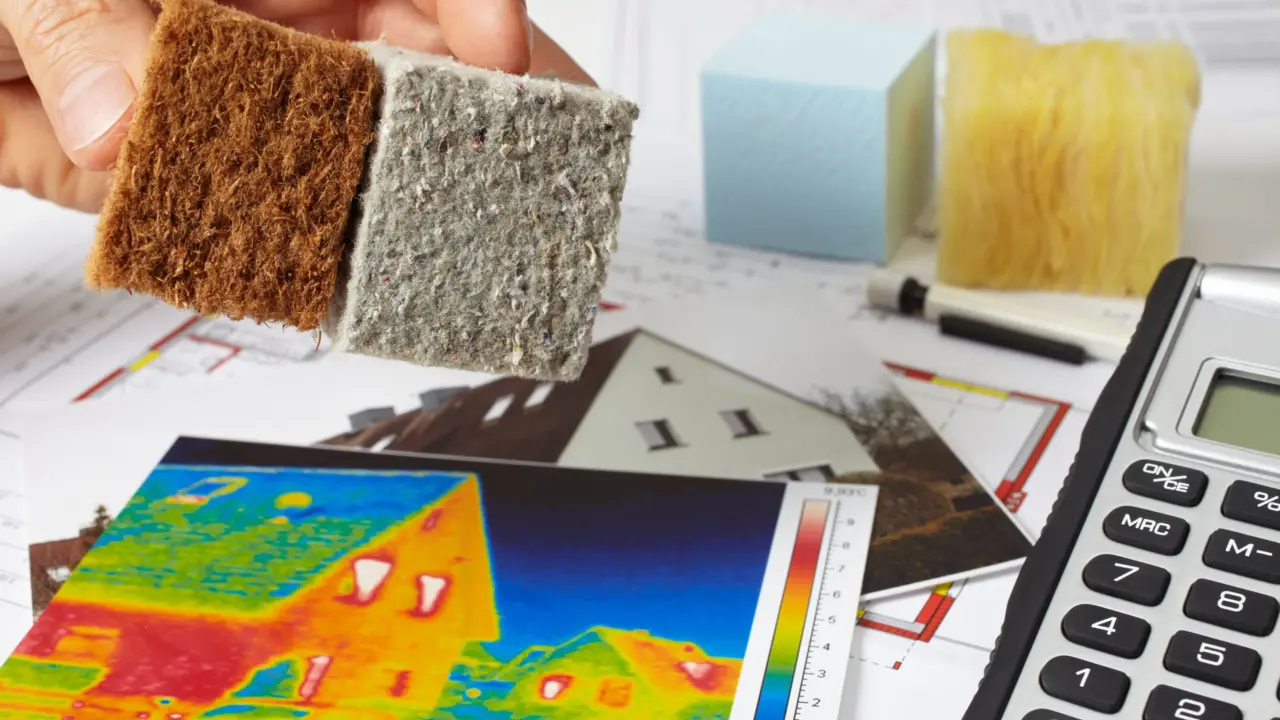
03.05.2021Why NETZSCH Heat Flow Meters Support Reduction of C02 Emissions
Governments set strict building insulation regulations in place to reduce carbon emissions. Consequently, a lot of effort goes into the engineering of materials with very low thermal conductivity to supply the market with even better thermal insulation materials. Learn how the NETZSCH HFM 446 Lambda Eco-Line allows accurate and fast determination of thermal conductivity and thermal resistance!
- Additiv tillverkning
- Polymerer
- Metaller och legeringar
28.04.2021Material Science in Additive Manufacturing: Which Materials are Commonly Used?
Before we dive into the material science of processing materials with different Additive Manufacturing technologies, we introduce common material groups, distinct molecular structures of material classes as well as discuss other materials used for non-technical applications.