
- Polymers
- TMA
- Composites
- TMA 402 F1 /F3 Hyperion®
- TMA 402 F3 Hyperion® Polymer Edition
12.10.2020Why Knowledge About Anisotropy is Crucial when Designing High-Performance Composite Parts
Fiber-reinforced composite materials, which combine the properties of fibers and a polymer matrix, have been around for decades. There are different ways to incorporate the fiber into the thermoplastic matrix ‒ randomly oriented fibers, unidirectional continuous fibers or multi-directional fabric. The orientation of the added fibers plays an important part when it comes to part properties. Learn why anisotropic behavior of the composite is favorable and how to measure it with the TMA 402 F3 Hyperion® ® Polymer Edition.

- Polymers
- TMA
- Composites
- TMA 402 F3 Hyperion® Polymer Edition
07.10.2020What TMA Measurements Can Tell About Filler Orientation in Injection Molding
Fillers have long played an important role in the polymer manufacturing industry. An important property to measure how the filled material changes in length when being heated or cooled is the coefficient of thermal expansion. Knowledge about this material behavior is required to be able to determine important design values. Learn how the flow field and sample preparation influences the property and see how measurements with the TMA 402 F3 Hyperion® ® Polymer Edition are carried out.
- Polymers
- TMA
- Composites
- TMA 402 F3 Hyperion® Polymer Edition
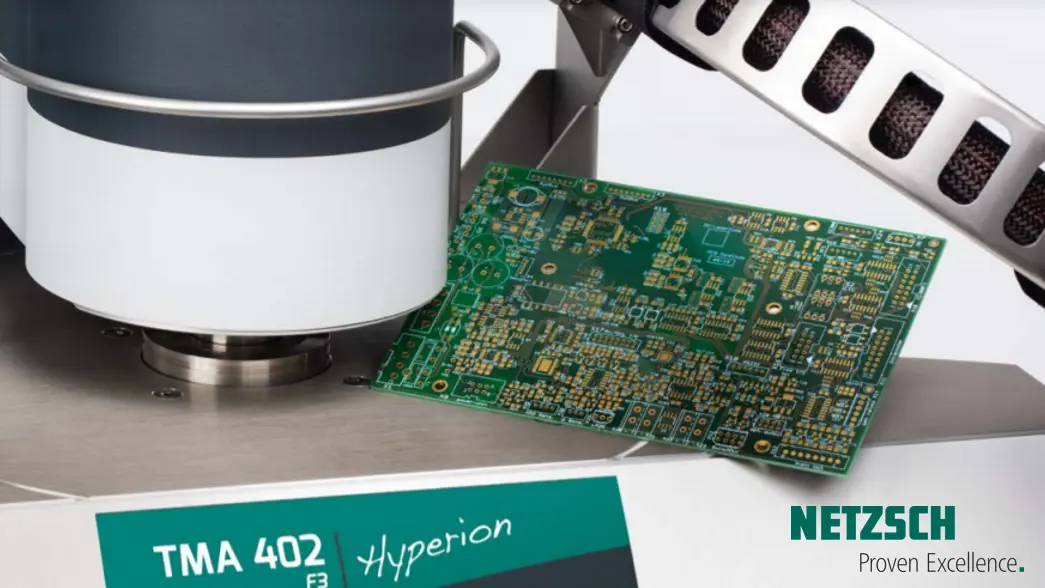
02.10.2020Quality Control of Electronic Assemblies Using Thermomechanical Analysis
A major source of failure of electronic assemblies is thermal expansion and the problems it causes. To make sure that the circuit base boards conform to a certain quality, IPC standards were put into place that require measurement of the thermal expansion, glass transition and softening point. Learn how you can comply to the standard with the new TMA 402 F3 Hyperion® ® Polymer Edition.
- Polymers
- DMA
- Composites
- DMA 242 E Artemis
17.09.2020Measuring Viscoelastic Properties of Fiber-Reinforced Epoxy
When it comes to the characterization of fiber reinforced composites with dynamic measuring techniques many options are available, but they all have pros and cons for different materials and applications. In their paper, Huayamares et al. set out to answer some relevant questions by comparing measurements in 3-point bending and torsion mode. We summarize the main findings of the scientific paper and explain the measurements as well as the corresponding interpretation of the results depending on the use case.

- TGA
- Software
- STA
- STA 449 F1 Jupiter®
- Proteus®
16.09.2020Detection of Ultra-Small Residual Masses: Weigh The Little Bird!
Thermogravimetry (TGA) is frequently applied for the compositional analyses of such materials as, for example, fiber-reinforced polymer composites. The residual mass at the end of a TGA experiment reflects the filler or glass fiber content as well as the presence of impurities. By using a relatively large sample volume in a top-performing thermobalance along with the intelligent Proteus®® software by NETZSCH, it is possible to detect ultra-small residual masses with concentrations down to the ppm (= 10-6) range! Such small concentrations can be illustrated by a little bird with a mass of a few grams sitting on the back of an elephant weighing a few tons.

- Software
- Polymers
- Inorganics
- Organics
- Kinetics Neo
15.09.2020Lifetime Predictions Based on Climate Temperature Profiles
The Kinetics Neo software by NETZSCH allows for advanced analytics. Learn how to predict the decomposition behavior of materials under different climatic conditions and how to estimate thermal risks and hazards.
- LFA
- LFA 467 HyperFlash®
08.09.2020LFA Measurements with Graphite Coating: Tips and Tricks
Thermal conductivity and diffusivity are the most important thermophysical material parameters for the description of the heat transport properties of a material or component. Since the Laser Flash Analysis is an optical method that needs to eliminate reflection, special attention needs to be put on the sample preparation, for instance with a graphite coating. Learn in the video below why the way of coating a highly conductive sample depends on which material property is to be determined.
- Rheology
- Rheometer
- Kinexus Prime Series
- Rosand RH2000
- Rosand RH7/RH10
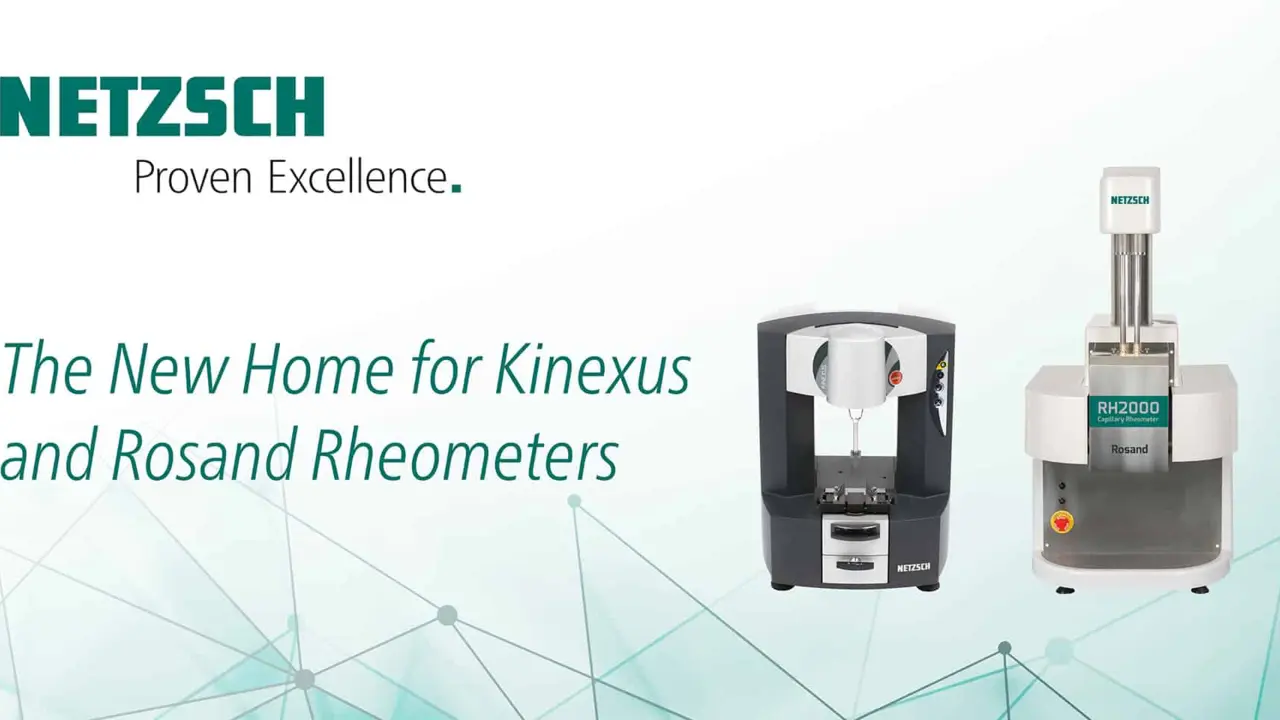
02.09.2020The New Home for Kinexus and Rosand Rheometers
NETZSCH Analyzing & Testing acquired the rheology product line, including a team of international specialists, from Malvern Panalytical in January 2020. We are very excited about the future of our new rheology products. Today, we are reaching out to all of our Kinexus and Rosand rheometer users to answer any questions you may have in this article.
- Software
- Kinetics Neo
01.09.2020NETZSCH Sets out Recommendations for Kinetic Analysis of Multi-Step Processes
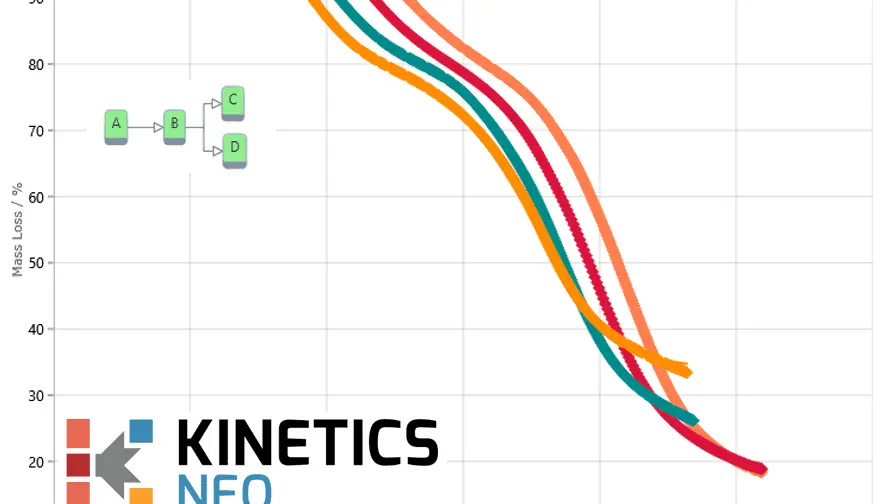
During 16th ICTAC, it was decided to develop recommendations for the kinetic analysis of multi-step reactions. NETZSCH Analyzing & Testing is the only enterprise specialized in the development and production of commercial kinetics software that was invited to participate in this project to develop these recommendations. We are proud to announce that the recommendations are now available!
- Software
- Polymers
- Kinetics Neo
25.08.2020Streamline your Product Development Process with NETZSCH Kinetics Neo
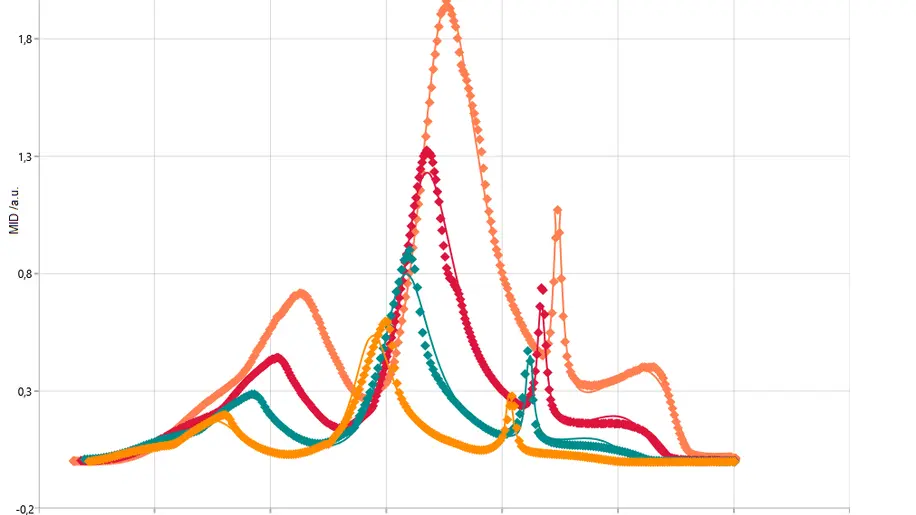
The NETZSCH Kinetics Neo software is used for the analysis of chemical processes. It enables analysis of temperature-dependent processes. The result of such analysis is a kinetics model or method that correctly describes experimental data under various temperature conditions. Get an overview and watch the video to find out how it works!