Simultaneous Thermal Analysis
Simultaneous Thermogravimetry and Differential Scanning Calorimetry by NETZSCH
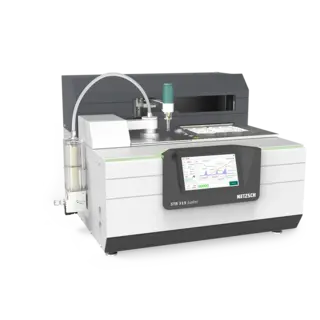
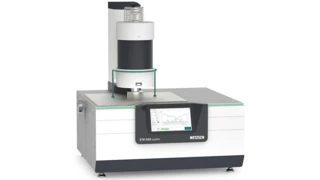
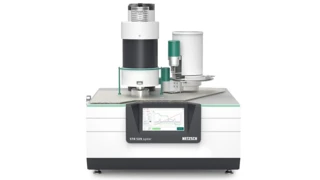
Simultaneous Thermal Analysis (STA) generally refers to the simultaneous application of Thermogravimetry (TGA for measuring mass changes) and Differential Scanning Calorimetry (DSC for measuring energy conversion) to one and the same sample with a single instrument.
The modular design of NETZSCH simultaneous thermal analyzers allows for easy exchange of furnaces and sensors to accommodate multiple applications over a wide temperature range from -150°C to 2400°C. The top-loading design provides ideal performance and ease of use, making it the obvious choice for a flexible analytical system and evolved gas analysis such as MS, FT-IR, or GC-MS systems. A wide range of accessories, including humidity and water vapor generators, expand the application possibilities.
Our Simultaneous Thermal Analyzers
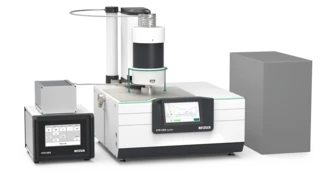
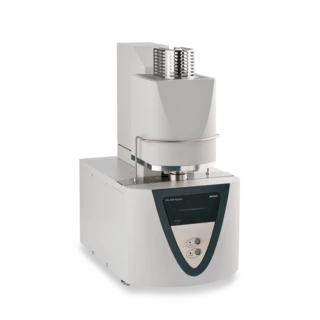
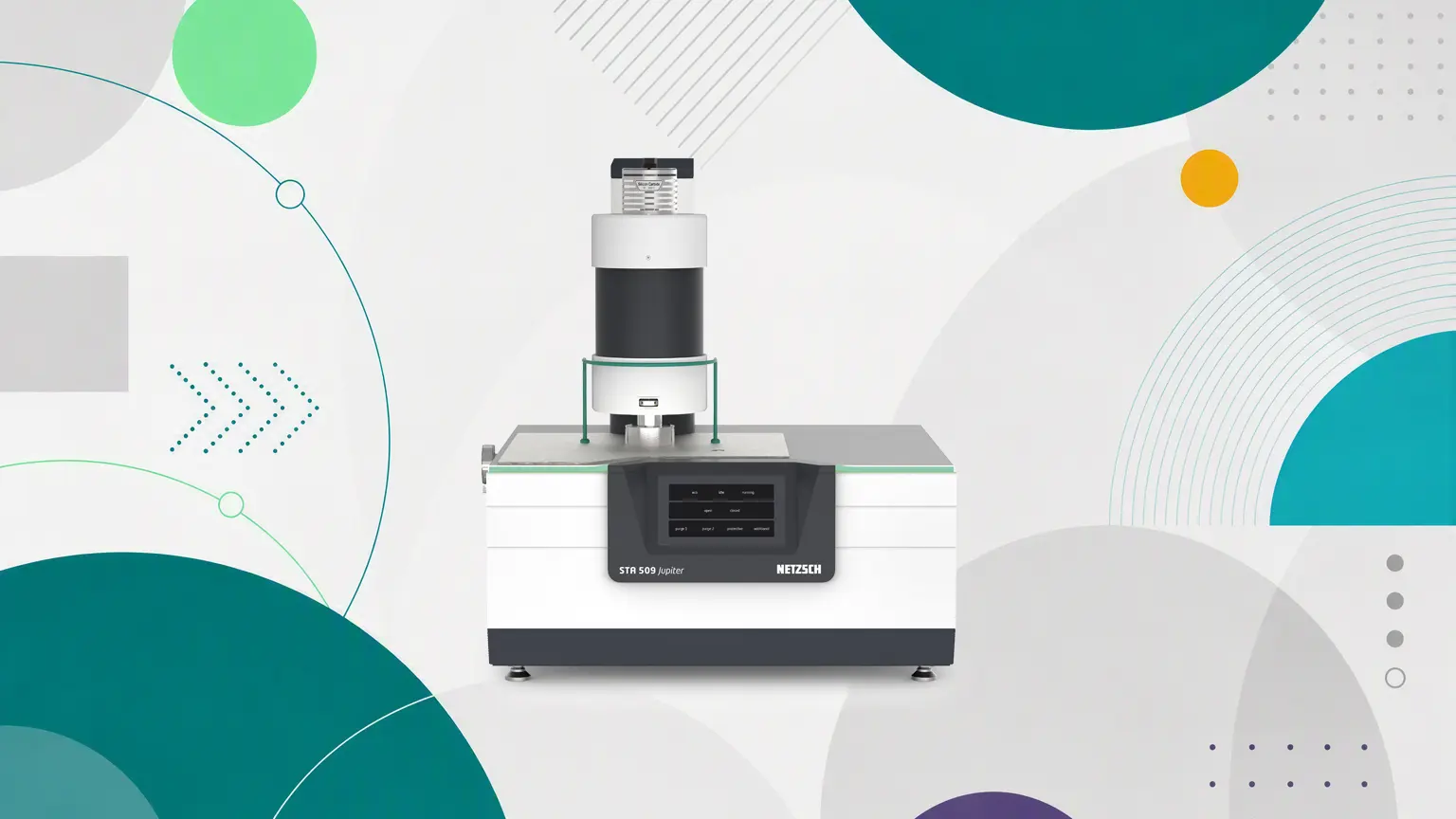
Explore the range of NETZSCH STA instruments
The STA Masterclass:
Your Monthly STA Webinar Series
Our webinar series brings you practical, application-first sessions on STA - from phase changes to OxidationOxidation can describe different processes in the context of thermal analysis.oxidation. Learn directly from NETZSCH experts and enhance your daily analysis work.

Thermal Analysis Under Hydrogen
The new H₂Secure concept developed for NETZSCH simultanous thermal analyzers features a complete solution for conducting tests in environments with varying concentrations of hydrogen while providing utmost safety.
This concept enables safe experimentation in a 100%H2 environment or with lower concentrations ofH2 mixed with non-flammable gases such as nitrogen (N2) or argon (Ar) atmospheres. It is TÜV-certified.
Accessories for DSC/TGA and STA
Get an overview of all crucibles and sensors for DTA, DSC, TGA and STA measurements.
You will find many different crucible materials listed, and a variety of types and special shapes. From among these options, we can assist you in selecting the appropriate crucible size and material for your specific application, whether standard or special. In addition to standard aluminum crucibles, our portfolio includes autoclaves with low to medium or high-pressure tightness, as well as ones for determining the Oxidative-Induction Time (Oxidative-Induction Time (OIT) and Oxidative-Onset Temperature (OOT)Oxidative Induction Time (isothermal OIT) is a relative measure of the resistance of a (stabilized) material to oxidative decomposition. Oxidative-Induction Temperature (dynamic OIT) or Oxidative-Onset Temperature (OOT) is a relative measure of the resistance of a (stabilized) material to oxidative decomposition.OIT) and solid fat index (SFI). We offer crucibles made of ceramics or metals covering a wide temperature range.

Detect and Identify Evolved Gases with NETZSCH STA Instruments
By coupling gas analysis techniques such as FT-IR (Fourier Transform Infrared), MS (Mass Spectrometry) or GC-MS (Gas Chromatography – Mass Spectrometry) to an STA 509 Jupiter®, information about the nature of the evolved gases as a function of time or temperature can be obtained.
About the STA Method

Simultaneous Application of DSC and TGA
The simultaneous application of Thermogravimetric Analysis (TGA) and Differential Scanning Calorimetry (DSC) to a single sample in an STA instrument yields more information than separate application with two different instruments. Simultaneous TGA-DTA/DSC measures both the heat flow (DSC) and mass change (TGA) of a sample as a function of temperature or time under a controlled atmosphere.
- The test conditions are perfectly identical for the TGA and DSC signals (same atmosphere, flow rate, vapor pressure on the sample, heating rate, thermal contact to the sample crucible and sensor, radiation effect, etc.).
- Analyzability of the signals is improved, since two or more sets of information concerning sample behavior are always simultaneously available (differentiation between phase transformation and Decomposition reactionA decomposition reaction is a thermally induced reaction of a chemical compound forming solid and/or gaseous products. decomposition, between addition and condensation reactions, recognition of PyrolysisPyrolysis is the thermal decomposition of organic compounds in an inert atmosphere.pyrolysis, OxidationOxidation can describe different processes in the context of thermal analysis.oxidation, and combustion reactions, etc.)
Your Benefits
>400000
>26000
12
Why Should You Choose a NETZSCH STA 509 Instrument for Your Thermal Analysis Needs?
Today, the STA is one of the most flexible analytical instruments in the NETZSCH portfolio. Users can select from among various types of furnaces, sensors, sample carriers, thermocouples, crucibles and other accessories. By using special furnaces, also measurements under humid atmospheres can be carried out under certain corrosive conditions or even at the highest temperature range.
- Wide Temperature Range
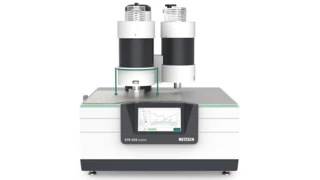
The NETZSCH STA 509 Jupiter® covers an extremely wide temperature range from -150°C to 2400°C, thanks to the possibility choosing from among 12 different user-exchangeable furnace types. Furthermore, the Select and Supreme versions can be both equipped with a second furnace. - Special Setups for Special Atmospheres
Our STA supports mid-test atmosphere changes, making it ideal for studying hydrogen- or moisture-sensitive materials. Optional features, such as the coupling possibility to evolved gas analyzers (FT-IR, MS and GC-MS), humidity generators and the advanced H2Secure system, further enhance its capabilities. For highly sensitive applications, a glovebox version is available. - Modular System with Quick Sensor Exchange
The NETZSCH STA 509 system is a highly modular platform, that can be tailored to nearly all customer needs in terms of temperature range, atmospheres and sensor technology. Thanks to its top-loading design, it features a "Quick-Connect" system that allows sample carriers (TGA-DSC, TGA-DTA and pure TGA) to be changed in seconds. In addition, each sensor is automatically recognized by the Proteus® software and stored in a sample carrier database. - Expert Support and Training
Benefit from the expertise of our dedicated and continuously trained professionals across our service, laboratory, training, and sales departments. Our team with an experience of several decades is committed to provide exceptional support and comprehensive training to ensure that you get the most out of your STA instrument. - Proven Excellence in German Engineering Paired with Unlimited Warranty
NETZSCH STA instruments are synonymous with German engineering excellence, offering top-tier quality and exceptional durability. With a minimum spare parts availability of 10 years, our instruments promise longevity and reliable performance. And to underline the quality and long-term availability of services, we offer unlimited warranty for the STA 509 instrument series.

Our Quality Promise:
NETZSCH’s Unlimited Warranty
At NETZSCH, our commitment to quality goes beyond the instruments themselves. We understand that your investment in advanced technology is a long-term one, and and that’s why we offer something truly unique – our Unlimited Warranty.
Frequently Asked Questions
The simultaneous application of Thermogravimetry (TGA) and Differential Scanning Calorimetry (DSC) to one and the same sample in a single STA instrument yields more information than separate application in two different instruments:
- The test conditions are perfectly identical for the TGA and DSC signals (same atmosphere, flow rate, vapor pressure on the sample, heating rate, thermal contact to the sample crucible and sensor, radiation effect, etc.).
- Analyzability of the signals is improved, since two or more sets of information concerning sample behavior are always simultaneously available (differentiation between phase transformation and Decomposition reactionA decomposition reaction is a thermally induced reaction of a chemical compound forming solid and/or gaseous products. decomposition, between addition and condensation reactions, recognition of PyrolysisPyrolysis is the thermal decomposition of organic compounds in an inert atmosphere.pyrolysis, OxidationOxidation can describe different processes in the context of thermal analysis.oxidation, and combustion reactions, etc.)
DSC Possibilities
- Melting Temperatures and EnthalpiesThe enthalpy of fusion of a substance, also known as latent heat, is a measure of the energy input, typically heat, which is necessary to convert a substance from solid to liquid state. The melting point of a substance is the temperature at which it changes state from solid (crystalline) to liquid (isotropic melt).Melting behavior
- CrystallizationCrystallization is the physical process of hardening during the formation and growth of crystals. During this process, heat of crystallization is released.Crystallization behavior
- Solid-solid transitions
- PolymorphismPolymorphism is the ability of a solid material to form different crystalline structures (synonyms: forms, modifications).Polymorphism
- Degree of Crystallinity / Degree of CrystallinityCrystallinity refers to the degree of structural order of a solid. In a crystal, the arrangement of atoms or molecules is consistent and repetitive. Many materials such as glass ceramics and some polymers can be prepared in such a way as to produce a mixture of crystalline and amorphous regions.crystallinity
- Glass Transition TemperatureThe glass transition is one of the most important properties of amorphous and semi-crystalline materials, e.g., inorganic glasses, amorphous metals, polymers, pharmaceuticals and food ingredients, etc., and describes the temperature region where the mechanical properties of the materials change from hard and brittle to more soft, deformable or rubbery.Glass transitions
- Curing (Crosslinking Reactions)Literally translated, the term “crosslinking“ means “cross networking”. In the chemical context, it is used for reactions in which molecules are linked together by introducing covalent bonds and forming three-dimensional networks.Cross-linking reactions
- Oxidative stability
- Purity Determination
- Specific Heat Capacity (cp)Heat capacity is a material-specific physical quantity, determined by the amount of heat supplied to specimen, divided by the resulting temperature increase. The specific heat capacity is related to a unit mass of the specimen.Specific heat capacity
- Thermokinetics
TGA Possibilities
- Mass changes
- Thermal StabilityA material is thermally stable if it does not decompose under the influence of temperature. One way to determine the thermal stability of a substance is to use a TGA (thermogravimetric analyzer). Temperature stability
- OxidationOxidation can describe different processes in the context of thermal analysis.Oxidation/reduction behavior
- Decomposition reactionA decomposition reaction is a thermally induced reaction of a chemical compound forming solid and/or gaseous products. Decomposition
- Thermal Corrosion StudiesThermal corrosion or high-temperature corrosion is a chemical interaction of a material (typically a metal) with the surrounding gas atmosphere as a result of heating.Corrosion studies
- Compositional analysis
- Thermokinetics
Simultaneous Thermal Analysis (STA) is based on standards, e.g., ISO 11358, ASTM E793, DIN 51004, DIN 51006 and DIN 51007. The respective instrument and application standards for TGA and DSC (see respective sections) are, of course, also met by NETZSCH STA instruments.
The NETZSCH STA 509 Jupiter® series is a highly adaptable simultaneous thermal analysis system with a variety of furnaces designed to meet different temperature ranges and material characterization needs. This article series explores the technical features and applications of each furnace to help determine the best setup for your specific analytical needs.
Chapter 1: High-Temperature Furnaces
The choice of a simultaneous thermal analysis (STA) system or separate thermogravimetric analysis (TGA) and differential scanning calorimetry (DSC) has significant impact on the quality and depth of your findings. Each method has distinct advantages, depending on the materials and objectives of your study.
Therefore, NETZSCH presents an overview of the differences and the unique benefits of each method to help you choose the most appropriate solution for your specific needs.
Watch this video to learn more:
The STA is one of the most flexible analytical instruments in our portfolio. You can select from among various types of furnaces, sensors, sample carriers, thermocouples, crucibles and other accessories.
Accordingly, the cost of a NETZSCH STA instrument can vary significantly depending on the model, features, and any additional accessories or software options you may require.
To get an accurate and up-to-date price for your individual NETZSCH STA, please contact your local NETZSCH representative or one of our authorized distributors. We will provide a quote tailored to your specific requirements, including any necessary training, installation, or additional features.
Our current delivery time is approximately 6 weeks, depending on the specific configuration of the STA and current demand. For more complex customizations or during periods of high demand, the delivery time may extend beyond this range.
For the most up-to-date information, we encourage you to contact us directly with a specific request. This will ensure that we can provide you with an accurate timeline tailored to your specific needs.
Some NETZSCH STA instruments such as the STA 449 Series are no longer in our NETZSCH portfolio. However, accessories and spare parts are still available for you. You can find information about our legacy products at the following link, see below.
To ask for service and support for your instrument, please contact your local service partner. We're here to assist you with any service needs or queries about your instrument!
Applications for Simultaneous Thermal Analysis
Simultaneous Thermal Analysis (STA) finds applications across a wide range of industries and research fields due to its ability to simultaneously measure mass changes (via TGA) and thermal events (via DSC or DTA). Read more about the key application areas:
Polymers and Plastics

- Thermal StabilityA material is thermally stable if it does not decompose under the influence of temperature. One way to determine the thermal stability of a substance is to use a TGA (thermogravimetric analyzer). Thermal Stability: Evaluating Decomposition reactionA decomposition reaction is a thermally induced reaction of a chemical compound forming solid and/or gaseous products. decomposition temperatures and stability under heat.
- Phase TransitionsThe term phase transition (or phase change) is most commonly used to describe transitions between the solid, liquid and gaseous states.Phase Transitions: Studying Glass Transition TemperatureThe glass transition is one of the most important properties of amorphous and semi-crystalline materials, e.g., inorganic glasses, amorphous metals, polymers, pharmaceuticals and food ingredients, etc., and describes the temperature region where the mechanical properties of the materials change from hard and brittle to more soft, deformable or rubbery.glass transition (Tg), melting, and CrystallizationCrystallization is the physical process of hardening during the formation and growth of crystals. During this process, heat of crystallization is released.crystallization behavior.
- Degradation Analysis: Investigating polymer Decomposition reactionA decomposition reaction is a thermally induced reaction of a chemical compound forming solid and/or gaseous products. decomposition and OxidationOxidation can describe different processes in the context of thermal analysis.oxidation processes.
Metals and Alloys

- OxidationOxidation can describe different processes in the context of thermal analysis.Oxidation and Corrosion Studies: Analysis of OxidationOxidation can describe different processes in the context of thermal analysis.oxidation kinetics and high-temperature corrosion.
- Phase TransitionsThe term phase transition (or phase change) is most commonly used to describe transitions between the solid, liquid and gaseous states.Phase Transitions: Determining melting points, solid-solid transitions, and other phase changes.
- Thermal Expansion and Reactions: Investigating reactions at high temperatures in controlled atmospheres.
Pharmaceuticals

- Stability Testing: Determining Thermal StabilityA material is thermally stable if it does not decompose under the influence of temperature. One way to determine the thermal stability of a substance is to use a TGA (thermogravimetric analyzer). thermal stability and Decomposition reactionA decomposition reaction is a thermally induced reaction of a chemical compound forming solid and/or gaseous products. decomposition of active ingredients and excipients.
- Compatibility Studies: Assessing the thermal behavior of drug formulations and excipient mixtures.
- PolymorphismPolymorphism is the ability of a solid material to form different crystalline structures (synonyms: forms, modifications).Polymorphism: Identifying and analyzing different polymorphic forms of drugs.
Ceramics and Glass

- SinteringSintering is a production process for forming a mechanically strong body out of a ceramic or metallic powder. Sintering Studies: Monitoring weight loss and energy changes during SinteringSintering is a production process for forming a mechanically strong body out of a ceramic or metallic powder. sintering processes.
- Thermal StabilityA material is thermally stable if it does not decompose under the influence of temperature. One way to determine the thermal stability of a substance is to use a TGA (thermogravimetric analyzer). Thermal Stability: Analyzing thermal shock resistance and stability at elevated temperatures.
- CrystallizationCrystallization is the physical process of hardening during the formation and growth of crystals. During this process, heat of crystallization is released.Crystallization Behavior: Understanding the CrystallizationCrystallization is the physical process of hardening during the formation and growth of crystals. During this process, heat of crystallization is released.crystallization kinetics of glass or ceramic materials.
Inorganic Materials

- Decomposition reactionA decomposition reaction is a thermally induced reaction of a chemical compound forming solid and/or gaseous products. Decomposition Reactions: Studying decomposition processes and gas release in materials such as carbonates or hydrates.
- Reduction and OxidationOxidation can describe different processes in the context of thermal analysis.Oxidation: Investigating reactions in controlled environments (inert, oxidizing, reducing atmospheres).
Composite Materials

- Thermal Decomposition reactionA decomposition reaction is a thermally induced reaction of a chemical compound forming solid and/or gaseous products. Decomposition: Evaluating the Thermal StabilityA material is thermally stable if it does not decompose under the influence of temperature. One way to determine the thermal stability of a substance is to use a TGA (thermogravimetric analyzer). thermal stability and decomposition of composites.
- Component Interaction: Monitoring the interaction between different components during heating.
Environmental and Waste

- Waste Characterization: Analyzing the thermal decomposition and OxidationOxidation can describe different processes in the context of thermal analysis.oxidation behavior of industrial or hazardous waste.
- Recycling Processes: Studying the thermal behavior of recycled materials, especially in plastics and polymers.
Energy Storage Materials
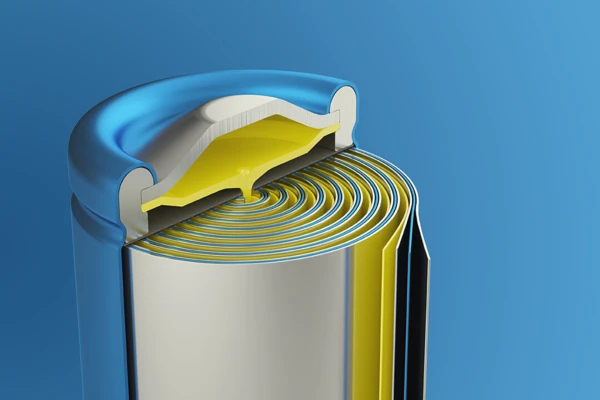
- Battery Materials: Analysis of Thermal StabilityA material is thermally stable if it does not decompose under the influence of temperature. One way to determine the thermal stability of a substance is to use a TGA (thermogravimetric analyzer). thermal stability and phase changes in battery components like electrodes and electrolytes.
- Fuel Cells: Studying OxidationOxidation can describe different processes in the context of thermal analysis.oxidation/reduction behavior and stability of fuel cell materials.
Food and Agriculture

- Nutrient Stability: Evaluating the Thermal StabilityA material is thermally stable if it does not decompose under the influence of temperature. One way to determine the thermal stability of a substance is to use a TGA (thermogravimetric analyzer). thermal stability of food ingredients and additives.
- Moisture Content: Analyzing water content and loss during thermal processes.

STA Case Studies
NETZSCH STA instruments are powerful tools for characterizing thermal properties, Phase TransitionsThe term phase transition (or phase change) is most commonly used to describe transitions between the solid, liquid and gaseous states.phase transitions, and decomposition behavior across these varied fields, making it an essential instrument in material science, quality control, and research.
Learn how our high-quality analytical instruments have changed the work of our customers.
Here's what our customers say about using the NETZSCH STA
"With the accurate measurement by means of our NETZSCH STA instruments, we are able to convert solid waste into energy materials."
"The NETZSCH STA helps investigate the DebindingDebinding is one of the main production steps in the ceramic and powder-metallurgical industries. It refers to the thermal or catalytic removal of additives used in steps prior to production such as casting.debinding behavior or gas reactions in the production of ceramic or powder metallurgical materials."
"Our STA 449 is integrated in an inert gas box for the analysis of samples that are particularly sensitive to air and/or moisture."
E-Learning
Media
Brochures
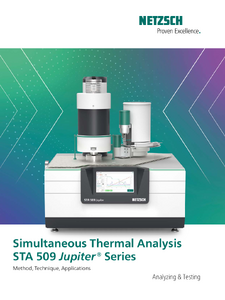
- STA 509 Jupiter® SeriesBrochure(pdf – 2.71 MB)
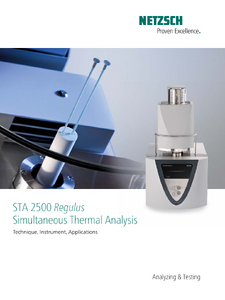
- Simultaneous Thermal Analysis - STA 2500 RegulusBrochure(pdf – 1.33 MB)
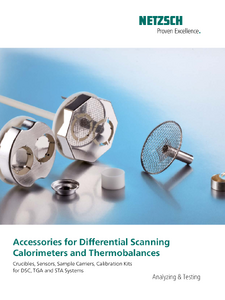
- Accessories for Differential Scanning Calorimeters and ThermobalancesAccessories Catalogue(pdf – 7.37 MB)
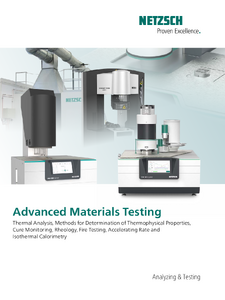
- Advanced Materials TestingBrochure(pdf – 3.67 MB)
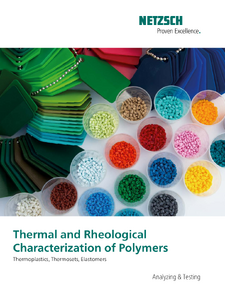
- Thermal and Rheological Characterization of PolymersBrochure(pdf – 6.2 MB)
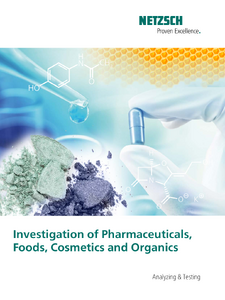
- Investigation of Pharmaceuticals, Foods, Cosmetics and OrganicsBrochure(pdf – 4.43 MB)
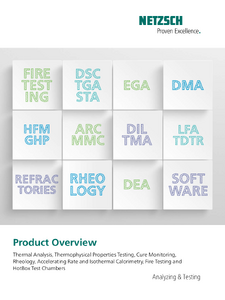
- Product Overview(pdf – 1.65 MB)
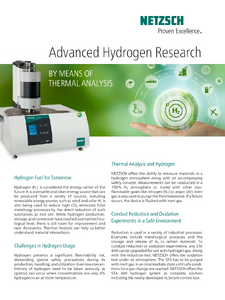
- H₂Secure Flyer plus STA 449_en(pdf – 471 KB)
Application Literature about Simultaneous Thermal Analysis
Our latest blog articles about Simultaneous Thermal Analysis
- 18.11.2026
Understanding Citric Acid Decomposition: Deeper Insights with STA-FT-IR Analysis
- 02.06.2026
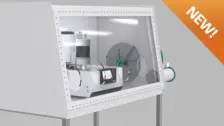
STA 509 Jupiter®-Glovebox and DSC 500 Pegasus®-Glovebox: Thermal Analysis Under Controlled Atmospheres
- 19.05.2026
Understanding Cement Raw Materials: STA-FT-IR Analysis for Deeper Insight into Thermal Processes
- 05.05.2026
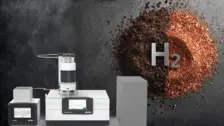
Thermogravimetry Meets Hydrogen (Part 3): Investigating Cu and CuO Redox Reactions under Hydrogen Atmospheres
- 08.04.2026
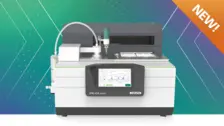
Brand-new: The NETZSCH STA 319 Jupiter® – The Cost Effective Solution for Reliable Simultaneous Thermal Analysis to 1100°C
- 11.03.2026
Thermogravimetry Meets Hydrogen (Part 2): Studying the Reduction of Fe₂O₃ under Different Hydrogen Concentrations

Videos about Simultaneous Thermal Analysis (STA)

FAQs about NETZSCH STA Service
Our NETZSCH applications laboratory is providing contract testing services for a wide range of industries and research centers. It is equipped with state-of-the-art STA testing instruments allowing for a variety of thermal analysis measurements to be carried out.
Consult with the experts in our applications labs to choose the best-suited measuring method for your specific needs.
Some NETZSCH STA instruments, like the STA 449 series, are no longer in our NETZSCH portfolio. However, accessories and spare parts are still available for you. You can find information about our legacy products at the following link, see below.
To ask for service and support for your instrument, please contact your local service partner. We're here to assist you with any service needs or queries about your instrument!
Benefit from our free e-learning basic courses:
Our basic e-learning courses are available free of charge on our website, designed to support you exactly where learning really happens: in everyday lab work. Whether you’re new to thermal analysis, rheology, or fire testing or simply want to refresh your knowledge: Our expert-led video courses help you:
✔ start measurements with confidence
✔ understand results correctly
✔ reduce operator errors
✔ save time searching for solutions
All courses are created by NETZSCH experts with decades of hands-on experience, sharing real knowledge you can directly apply in the lab.
👉 Start learning for free: netzs.ch/e-learning
Moreover, we offer
- online training via our NETZSCH Online Academy NOA,
- 1:1 remote training and
- on-site training at your location or our training centers.
Simply contact your sales representative or go to Know-How - NETZSCH Analyzing & Testing
Yes, we offer maintenance contracts for your instruments according to the different regional and individual customer requirements. Please feel free to contact our Service Department or take a closer look at our website section Service-Level Agreement - NETZSCH Analyzing & Testing.
Furthermore, we offer unlimited warranty for STA 509 instruments!
We offer:
- Installation and Commissioning
- Relocation of your instrument
- Maintenance and inspection
- Calibration
- Repair
- Comprehensive training from basic to advanced use of the instrument - on-site and online.
Please note that our service may vary from region to region.
Our Remote Service is available worldwide.
Inspection of the pressure ofLN2 containers can either be carried out at your site (if you are in the area of Germany, Austria and Switzerland), or at our factory in Selb.
To learn more, please visit our service website:
You find them in the Accessories Catalog for DSC, TGA and STA instruments, on the product page for your DSC instrument or in consultation with your contact person at NETZSCH.
Moreover, you can find them in the Proteus® Crucible Manager or on the label of your current crucible.
NETZSCH STA instruments come with state-of-the-art Proteus® analysis software, which includes features such as AutoEvaluation for automatic data analysis, SmartMode for simplified operation, and Identify for material identification. This software is designed to be easy to use while providing advanced functionality for experienced users.
The NETZSCH Proteus® 9 software for the STA 509 Series introduces practical features designed to enhance efficiency and usability. The "Customized Menu" and "Workspaces" allow you to adapt the analysis environment to your preferences, making it easier to access and manage the functions you use most frequently.
Besides, the Proteus® Search Engine simplifies file management by enabling fast searching, filtering, and sorting of measurement and analysis files, allowing you to find and organize your data quickly and efficiently.
Use the F1 key in Proteus® software to jump to the help for the current software action.
More information can also be found here: Proteus® for Thermal Analyzers - NETZSCH Analyzing & Testing