Customer SUCCESS STORY
NETZSCH Analysis Instruments in Use at South Korean Research Institutes
Read this success story to learn how the renowned South Korean institutions, KAERI and KRISS, use NETZSCH thermal analysis instruments to generate certified reference data, promote nuclear safety, and advance thermophysical research.
Explore how KAERI and KRISS use NETZSCH instruments to obtain certified material data, nuclear safety, and perform high-precision thermophysical analysis.
NETZSCH Analysis Instruments in Use at Leading South Korean Research Institutes
South Korea's commitment to technological advancement and scientific rigor is exemplified by the work of esteemed institutions such as the Korea Atomic Energy Research Institute (KAERI) and the Korean Research Institute of Standards and Science (KRISS). These organizations rely on NETZSCH's advanced thermal analysis instruments to meet the highest standards in nuclear safety, materials research, and national certification.
From decades of consistent use to collaborative service excellence, these success stories illustrate how NETZSCH instruments have become an integral part of South Korea's research landscape. Learn how KAERI develops reference standards for nuclear fuel performance evaluation and how KRISS ensures unparalleled accuracy in thermophysical properties measurements, setting the standard for research and innovation worldwide.
Explore the insights and experiences of two Korean research experts and discover how NETZSCH instruments support their work in thermal science.
Read both interview excerpts in detail:
1.
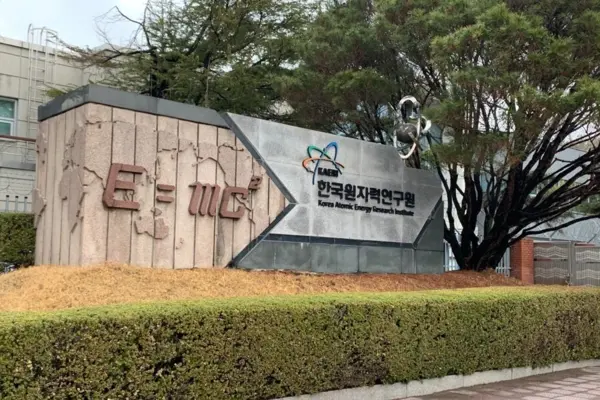
Setting High Standards for Nuclear Safety and Reliability with NETZSCH instruments: Interview with Kwonho Kang from Korea Atomic Energy Research Institute


“The relationship between NETZSCH Korea employees and our instrument users is very good. We can reach out for service anytime.”
“I’m Kwonho Kang from Korea Atomic Energy Research Institute, Nuclear fuel development department. My main task is to measure physical properties and produce physical property data for nuclear fuel manufacturing and nuclear fuel performance evaluation. Because of that, among the thermophysical instrument. I have used so far, I have measured Thermal DiffusivityThermal diffusivity (a with the unit mm2/s) is a material-specific property for characterizing unsteady heat conduction. This value describes how quickly a material reacts to a change in temperature.thermal diffusivity, thermal expansion, OxidationOxidation can describe different processes in the context of thermal analysis.oxidation behavior, and specific heat.
We determine physical properties of materials by means of NETZSCH instruments. The data we measure produces data called reference standards, which are recognized and certified by the country.
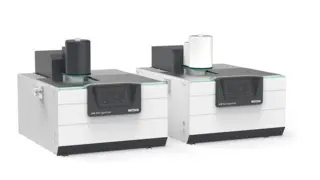
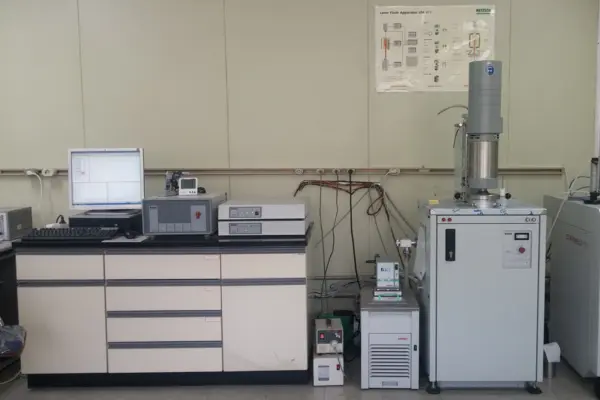
The NETZSCH instrument is a LFA 427 model, a Thermal DiffusivityThermal diffusivity (a with the unit mm2/s) is a material-specific property for characterizing unsteady heat conduction. This value describes how quickly a material reacts to a change in temperature.thermal diffusivity measurement device purchased in 2010. I used it to calculate the heat conversion of a material called Hana-6, one of the nuclear fuel cladding materials. We produce data and a reference standard certified by the government through evaluation of the conformity of the data and self-calibration of the instrument.
We also have a specific heat measurement instrument purchased in 2008 and a thermal expansion measurement device purchased in 2005. We received *KOLAS certification (*KOLAS: Korea Laboratory Accreditation Scheme) with thermal expansion measurement equipment purchased in 2005.
About the NETZSCH service, we can say that the relationship between NETZSCH Korea employees and users is very good; we can reach out for service anytime.”
2.
Measuring Thermophysical Properties by Means of NETZSCH LFA, DSC and DIL:
Interview with Sanghyun Lee, Korea Research Institute of Standards and Science.
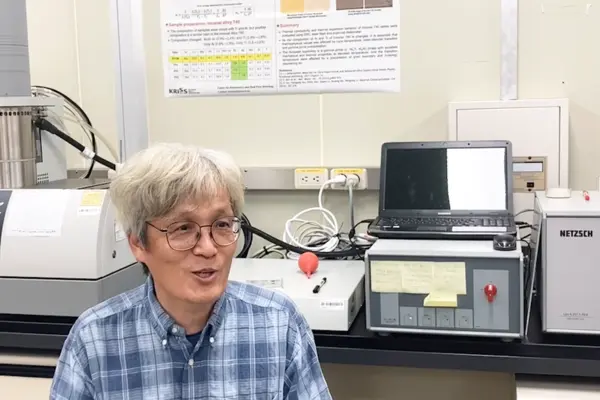
“I’m Sanghyun Lee. I am working at the Korea Research Institute of Standards and Science.
It's been 38 years since I originally started thermophysical science. I joined the research institute in 1987, and we started researching thermophysical properties in 1988.
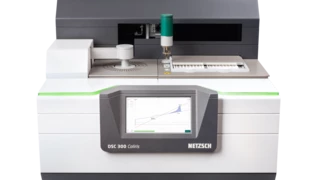
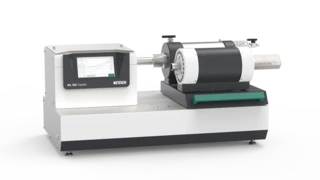
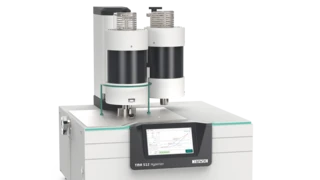
We use a NETZSCH Laser Flash Analyzer, a Dilatometer, a High-Temperature DSC, a DMA, a High-Pressure DSC, a TMA and a GHP in our lab. I guess we could have been the first in Korea to buy a Dilatometer and DSC. I don't remember exactly, but I think it was in the early 2000s. The LFA came a bit later, in 2009. I was very interested in DSC, so it was the first instrument I bought. ;-). The furnace was changed after 20 years. What came to my mind before we started the interview was that the parts were always easily replaced, so the devices were maintained for a long time. That’s how we keep it in its original state. I also always change parts and things like this in advance if they are performing a little strange, and it is very advantageous to have those parts replaced and maintains the instrument regularly for over 20 years. That's why I like using these instruments. I would be grateful if NETZSCH could continue producing such good instruments. We also have quite a few unique things we use in different situations. So, for example, we developed new sample holders and used them for our research work. We’d appreciate a broader range of accessories; however, we understand that expanding the selection may not represent the most strategic investment for the company. That said, we recognize that the company is continuously developing new accessories.”
Thank you both, Kwonho Kang and Sanghyun Lee, for these insights!
Read further Customer Success Stories from all over the world: