Multiple Module Calorimeter
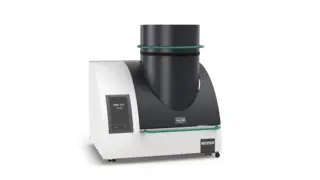
Multiple Module Calorimeter Technology (Multiple Module Calorimeter (MMC)A multiple mode calorimeter device consisting of a base unit and exchangeable modules. One module is prepared for accelerating rate calorimetry (ARC), the ARC-Module. A second one is used for scanning tests (Scanning Module) and a third and fourth one is related to battery and polymer, pharmaceztical testing for coin cells (Coin Cell Module).MMC) by NETZSCH
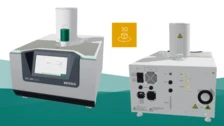
A NETZSCH Multiple Module Calorimeter (MMC)A multiple mode calorimeter device consisting of a base unit and exchangeable modules. One module is prepared for accelerating rate calorimetry (ARC), the ARC-Module. A second one is used for scanning tests (Scanning Module) and a third and fourth one is related to battery and polymer, pharmaceztical testing for coin cells (Coin Cell Module).MMC is a highly flexible calorimeter system consisting of a base unit with integrated electronics and interchangeable calorimeter modules. It can perform multiple types of thermal analysis, such as Thermal runawayA thermal runaway is the situation where a chemical reactor is out of control with respect to temperature and/or pressure production caused by the chemical reaction itself. Simulation of a thermal runaway is usually carried out using a calorimeter device according to accelerated rate calorimetry (ARC).thermal runaway testing, phase changes, process safety evaluations, and battery charging and discharging. It can also determine the Melting Temperatures and EnthalpiesThe enthalpy of fusion of a substance, also known as latent heat, is a measure of the energy input, typically heat, which is necessary to convert a substance from solid to liquid state. The melting point of a substance is the temperature at which it changes state from solid (crystalline) to liquid (isotropic melt).melting temperature, enthalpy and glastransition of polymers and characterize pharmaceuticals in gram-size samples.
Of the four available modules, one is specialized for accelerating rate calorimetry (Accelerating Rate Calorimetry (ARC)The method describing isothermal and adiabatic test procedures used to detect thermally exothermic decomposition reactions.ARC®), a second one is used for screening tests (Scanning ModuleA calorimeter module being part of the Multipe Module Calorimeter (MMC) allowing for scanning test of a sample. This procedure can serve as a screening test in order to detect a thermal hazard potential within a reasonably short measurement time.Scanning Module) and another two modules are designed for battery testing on coin cells or characterization of polymers and pharmaceuticals (Coin Cell ModuleA calorimeter module being part of the Multiple Module Calorimeter (MMC) allowing for scanning and isothermal tests of complete coins of variable size. The DSC-like twin design gives a differential signal of the heat signature during a heating ramp or charging and discharging of batteries.Coin Cell Module).
Our Multiple Module Calorimeter
About the Methods
MMC – The modular calorimeter platform combining three powerful methods in one instrument
MMC – Principle of Operation
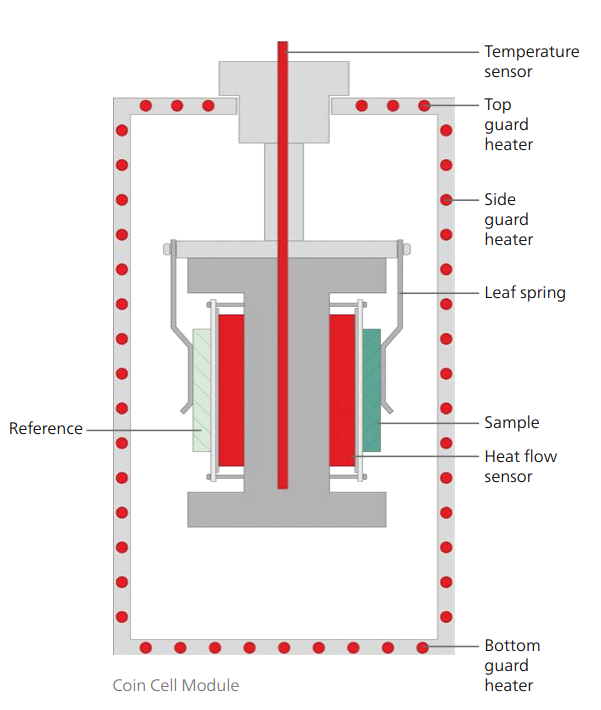
The Multiple Module Calorimeter (MMC)A multiple mode calorimeter device consisting of a base unit and exchangeable modules. One module is prepared for accelerating rate calorimetry (ARC), the ARC-Module. A second one is used for scanning tests (Scanning Module) and a third and fourth one is related to battery and polymer, pharmaceztical testing for coin cells (Coin Cell Module).Multiple Module Calorimeter (MMC) is a highly sensitive technique used to measure small heat effects in materials. It operates using several exchangeable calorimeter modules, depending on the experiment’s needs. When a sample is placed in one of the modules, it is subjected to a controlled temperature program, and highly sensitive sensors detect the heat flow in and out of the sample. This allows for precise detection of even minute changes in thermal energy, making the Multiple Module Calorimeter (MMC)A multiple mode calorimeter device consisting of a base unit and exchangeable modules. One module is prepared for accelerating rate calorimetry (ARC), the ARC-Module. A second one is used for scanning tests (Scanning Module) and a third and fourth one is related to battery and polymer, pharmaceztical testing for coin cells (Coin Cell Module).MMC particularly useful for studying small-scale thermal events such as Phase TransitionsThe term phase transition (or phase change) is most commonly used to describe transitions between the solid, liquid and gaseous states.phase transitions, chemical reactions, or material degradation. The modular setup offers flexibility, enabling the investigation of various materials or conditions making it ideal for materials science and chemistry applications.
The NETZSCH MMC is a modular calorimeter platform offering four powerful modules in one space-saving base unit:
- Accelerating Rate Calorimetry (ARC)The method describing isothermal and adiabatic test procedures used to detect thermally exothermic decomposition reactions.ARC® Module – for AdiabaticAdiabatic describes a system or measurement mode without any heat exchange with the surroundings. This mode can be realized using a calorimeter device according to the method of accelerating rate calorimetry (ARC). The main purpose of such a device is to study scenarios and thermal runaway reactions. A short description of the adiabatic mode is “no heat in – no heat out”.adiabatic process safety testing using the Heat-Wait-Search (HWS)Heat-Wait-Search is a measurement mode used in calorimeter devices according to accelerating rate calorimetry (ARC).Heat-Wait-Search method.
- Scanning ModuleA calorimeter module being part of the Multipe Module Calorimeter (MMC) allowing for scanning test of a sample. This procedure can serve as a screening test in order to detect a thermal hazard potential within a reasonably short measurement time.Scanning Module – for constant heating rate or constant power tests; ideal for high-enthalpy reaction screening.
- Two Coin Cell ModuleA calorimeter module being part of the Multiple Module Calorimeter (MMC) allowing for scanning and isothermal tests of complete coins of variable size. The DSC-like twin design gives a differential signal of the heat signature during a heating ramp or charging and discharging of batteries.Coin Cell Modules – for the thermal and electrochemical testing of Coin Cell ModuleA calorimeter module being part of the Multiple Module Calorimeter (MMC) allowing for scanning and isothermal tests of complete coins of variable size. The DSC-like twin design gives a differential signal of the heat signature during a heating ramp or charging and discharging of batteries.coin cell batteries with synchronized data from the calorimeter and battery cycler. They are also suitable for the measurement of high-volume polymer and pharmaceutical samples, in which the Coin Cell ModuleA calorimeter module being part of the Multiple Module Calorimeter (MMC) allowing for scanning and isothermal tests of complete coins of variable size. The DSC-like twin design gives a differential signal of the heat signature during a heating ramp or charging and discharging of batteries.coin cell acts as a measurement container.
What Makes NETZSCH MMC Instruments Unique?
- Four modules – one instrument: Accelerating Rate Calorimetry (ARC)The method describing isothermal and adiabatic test procedures used to detect thermally exothermic decomposition reactions.ARC®, Scanning, and two Coin Cell ModuleA calorimeter module being part of the Multiple Module Calorimeter (MMC) allowing for scanning and isothermal tests of complete coins of variable size. The DSC-like twin design gives a differential signal of the heat signature during a heating ramp or charging and discharging of batteries.Coin Cell Modules (high-temperature and high-sensitive)
- Broad application range from chemical safety and battery R&D to characterization of polymers and pharmaceuticals
- Space-saving design as compared to standalone Accelerating Rate Calorimetry (ARC)The method describing isothermal and adiabatic test procedures used to detect thermally exothermic decomposition reactions.ARC® or DSC systems
- Wide measurement capabilities: Temperature: RT to 500°C I Pressure: up to 150 bar I Tracking rate: up to 50 K/min
- Flexible sample containers made of stainless steel, Hasteloy and titanium as well as for standard coin cells
- Patented VariPhi option for low Phi and scanning tests
- Shorter test times in Scanning ModuleA calorimeter module being part of the Multipe Module Calorimeter (MMC) allowing for scanning test of a sample. This procedure can serve as a screening test in order to detect a thermal hazard potential within a reasonably short measurement time.Scanning Module compared to Heat-Wait-Search (HWS)Heat-Wait-Search is a measurement mode used in calorimeter devices according to accelerating rate calorimetry (ARC).HWS tests
Long Instrument Life
Always There for You
Proven Excellence in Service
Frequently Asked Questions
Your Benefits
> 60
4
> 50
NETZSCH MMC Application Fields
The NETZSCH MMC combines multiple calorimetric methods in a single, modular platform, making it a versatile tool for both research and safety testing. Its flexible configuration — including ARC®, Scanning, and Coin Cell ModuleA calorimeter module being part of the Multiple Module Calorimeter (MMC) allowing for scanning and isothermal tests of complete coins of variable size. The DSC-like twin design gives a differential signal of the heat signature during a heating ramp or charging and discharging of batteries.coin cell modules — allows the instrument to cover a wide spectrum of applications.
Whether you work in the chemical, polymer, pharmaceutical, or energy storage industry, the MMC delivers precise, reliable data for:
- Process safety: analysis of Thermal runawayA thermal runaway is the situation where a chemical reactor is out of control with respect to temperature and/or pressure production caused by the chemical reaction itself. Simulation of a thermal runaway is usually carried out using a calorimeter device according to accelerated rate calorimetry (ARC).thermal runaway, onset temperatures, TMR, and reaction enthalpies.
- Battery research: heat generation during charge/discharge cycles, efficiency, and performance.
- Reaction screening: evaluation of exo- and EndothermicA sample transition or a reaction is endothermic if heat is needed for the conversion.endothermic processes in solids and liquids.
- Material development: phase change, Decomposition reactionA decomposition reaction is a thermally induced reaction of a chemical compound forming solid and/or gaseous products. decomposition, and stability studies.
- Quality Control/Quality Analysis in chemicals, pharma, polymers and energy storage.
Where Does Your Battery’s Energy Really Go?
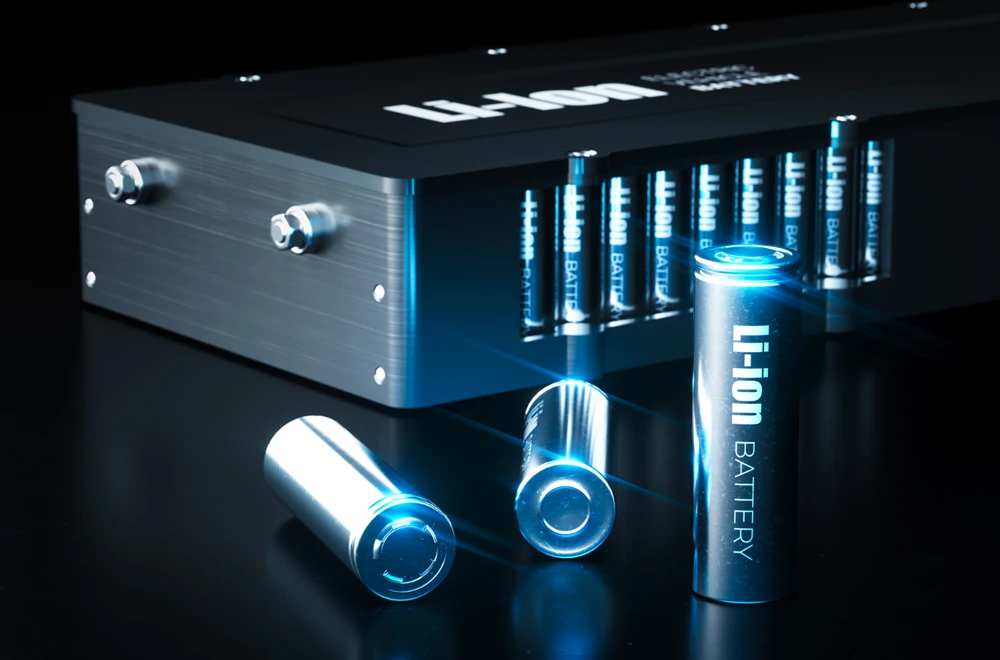
How much of the energy you put into a lithium-ion battery is available for use, and how much is lost as heat?
The Coin Cell ModuleA calorimeter module being part of the Multiple Module Calorimeter (MMC) allowing for scanning and isothermal tests of complete coins of variable size. The DSC-like twin design gives a differential signal of the heat signature during a heating ramp or charging and discharging of batteries.Coin Cell Module of the NETZSCH Multiple Module Calorimeter quantifies charging and discharging efficiency under realistic conditions helping you optimize performance and extend battery life.
Media and Training


Application Literature about MMC
Blog articles about NETZSCH Multiple Module Calorimeter


Videos that may be of interest to you

Consultancy & Sales
Do you have further questions about our instruments or the method? Would you like to speak to a sales representative?
Service & Support
Do you already have an instrument and need technical support or spare parts?
FAQs about NETZSCH Service