Multiple Module Calorimeter
Multiple Module Calorimeter Technology (Multiple Module Calorimeter (MMC)A multiple mode calorimeter device consisting of a base unit and exchangeable modules. One module is prepared for accelerating rate calorimetry (ARC), the ARC-Module. A second one is used for scanning tests (Scanning Module) and a third and fourth one is related to battery and polymer, pharmaceztical testing for coin cells (Coin Cell Module).MMC) by NETZSCH
A NETZSCH Multiple Module Calorimeter (MMC)A multiple mode calorimeter device consisting of a base unit and exchangeable modules. One module is prepared for accelerating rate calorimetry (ARC), the ARC-Module. A second one is used for scanning tests (Scanning Module) and a third and fourth one is related to battery and polymer, pharmaceztical testing for coin cells (Coin Cell Module).MMC is a highly flexible calorimeter system consisting of a base unit with integrated electronics and interchangeable calorimeter modules. It can perform multiple types of thermal analysis, such as Thermal runawayA thermal runaway is the situation where a chemical reactor is out of control with respect to temperature and/or pressure production caused by the chemical reaction itself. Simulation of a thermal runaway is usually carried out using a calorimeter device according to accelerated rate calorimetry (ARC).thermal runaway testing, phase changes, process safety evaluations, and battery charging and discharging. It can also determine the Melting Temperatures and EnthalpiesThe enthalpy of fusion of a substance, also known as latent heat, is a measure of the energy input, typically heat, which is necessary to convert a substance from solid to liquid state. The melting point of a substance is the temperature at which it changes state from solid (crystalline) to liquid (isotropic melt).melting temperature, enthalpy and glastransition of polymers and characterize pharmaceuticals in gram-size samples.
Of the four available modules, one is specialized for accelerating rate calorimetry (Accelerating Rate Calorimetry (ARC)The method describing isothermal and adiabatic test procedures used to detect thermally exothermic decomposition reactions.ARC®), a second one is used for screening tests (Scanning ModuleA calorimeter module being part of the Multipe Module Calorimeter (MMC) allowing for scanning test of a sample. This procedure can serve as a screening test in order to detect a thermal hazard potential within a reasonably short measurement time.Scanning Module) and another two modules are designed for battery testing on coin cells or characterization of polymers and pharmaceuticals (Coin Cell ModuleA calorimeter module being part of the Multiple Module Calorimeter (MMC) allowing for scanning and isothermal tests of complete coins of variable size. The DSC-like twin design gives a differential signal of the heat signature during a heating ramp or charging and discharging of batteries.Coin Cell Module).
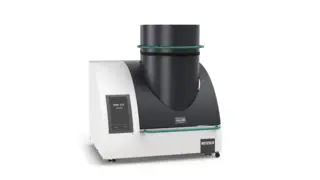
Our Multiple Module Calorimeter
About the Methods
MMC – The modular calorimeter platform combining three powerful methods in one instrument
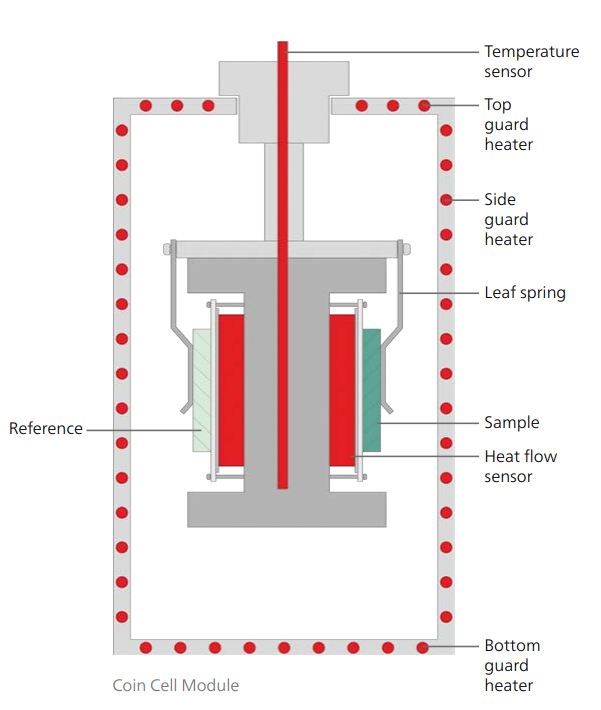
MMC – Principle of Operation
The Multiple Module Calorimeter (MMC)A multiple mode calorimeter device consisting of a base unit and exchangeable modules. One module is prepared for accelerating rate calorimetry (ARC), the ARC-Module. A second one is used for scanning tests (Scanning Module) and a third and fourth one is related to battery and polymer, pharmaceztical testing for coin cells (Coin Cell Module).Multiple Module Calorimeter (MMC) is a highly sensitive technique used to measure small heat effects in materials. It operates using several exchangeable calorimeter modules, depending on the experiment’s needs. When a sample is placed in one of the modules, it is subjected to a controlled temperature program, and highly sensitive sensors detect the heat flow in and out of the sample. This allows for precise detection of even minute changes in thermal energy, making the Multiple Module Calorimeter (MMC)A multiple mode calorimeter device consisting of a base unit and exchangeable modules. One module is prepared for accelerating rate calorimetry (ARC), the ARC-Module. A second one is used for scanning tests (Scanning Module) and a third and fourth one is related to battery and polymer, pharmaceztical testing for coin cells (Coin Cell Module).MMC particularly useful for studying small-scale thermal events such as Phase TransitionsThe term phase transition (or phase change) is most commonly used to describe transitions between the solid, liquid and gaseous states.phase transitions, chemical reactions, or material degradation. The modular setup offers flexibility, enabling the investigation of various materials or conditions making it ideal for materials science and chemistry applications.
The NETZSCH MMC is a modular calorimeter platform offering four powerful modules in one space-saving base unit:
- Accelerating Rate Calorimetry (ARC)The method describing isothermal and adiabatic test procedures used to detect thermally exothermic decomposition reactions.ARC® Module – for AdiabaticAdiabatic describes a system or measurement mode without any heat exchange with the surroundings. This mode can be realized using a calorimeter device according to the method of accelerating rate calorimetry (ARC). The main purpose of such a device is to study scenarios and thermal runaway reactions. A short description of the adiabatic mode is “no heat in – no heat out”.adiabatic process safety testing using the Heat-Wait-Search (HWS)Heat-Wait-Search is a measurement mode used in calorimeter devices according to accelerating rate calorimetry (ARC).Heat-Wait-Search method.
- Scanning ModuleA calorimeter module being part of the Multipe Module Calorimeter (MMC) allowing for scanning test of a sample. This procedure can serve as a screening test in order to detect a thermal hazard potential within a reasonably short measurement time.Scanning Module – for constant heating rate or constant power tests; ideal for high-enthalpy reaction screening.
- Two Coin Cell ModuleA calorimeter module being part of the Multiple Module Calorimeter (MMC) allowing for scanning and isothermal tests of complete coins of variable size. The DSC-like twin design gives a differential signal of the heat signature during a heating ramp or charging and discharging of batteries.Coin Cell Modules – for the thermal and electrochemical testing of Coin Cell ModuleA calorimeter module being part of the Multiple Module Calorimeter (MMC) allowing for scanning and isothermal tests of complete coins of variable size. The DSC-like twin design gives a differential signal of the heat signature during a heating ramp or charging and discharging of batteries.coin cell batteries with synchronized data from the calorimeter and battery cycler. They are also suitable for the measurement of high-volume polymer and pharmaceutical samples, in which the Coin Cell ModuleA calorimeter module being part of the Multiple Module Calorimeter (MMC) allowing for scanning and isothermal tests of complete coins of variable size. The DSC-like twin design gives a differential signal of the heat signature during a heating ramp or charging and discharging of batteries.coin cell acts as a measurement container.
What Makes NETZSCH MMC Instruments Unique?
- Four modules – one instrument: Accelerating Rate Calorimetry (ARC)The method describing isothermal and adiabatic test procedures used to detect thermally exothermic decomposition reactions.ARC®, Scanning, and two Coin Cell ModuleA calorimeter module being part of the Multiple Module Calorimeter (MMC) allowing for scanning and isothermal tests of complete coins of variable size. The DSC-like twin design gives a differential signal of the heat signature during a heating ramp or charging and discharging of batteries.Coin Cell Modules (high-temperature and high-sensitive)
- Broad application range from chemical safety and battery R&D to characterization of polymers and pharmaceuticals
- Space-saving design as compared to standalone Accelerating Rate Calorimetry (ARC)The method describing isothermal and adiabatic test procedures used to detect thermally exothermic decomposition reactions.ARC® or DSC systems
- Wide measurement capabilities: Temperature: RT to 500°C I Pressure: up to 150 bar I Tracking rate: up to 50 K/min
- Flexible sample containers made of stainless steel, Hasteloy and titanium as well as for standard coin cells
- Patented VariPhi option for low Phi and scanning tests
- Shorter test times in Scanning ModuleA calorimeter module being part of the Multipe Module Calorimeter (MMC) allowing for scanning test of a sample. This procedure can serve as a screening test in order to detect a thermal hazard potential within a reasonably short measurement time.Scanning Module compared to Heat-Wait-Search (HWS)Heat-Wait-Search is a measurement mode used in calorimeter devices according to accelerating rate calorimetry (ARC).HWS tests
Frequently Asked Questions
Like a Differential Scanning Calorimeter (DSC), the Multiple Module Calorimeter (MMC)A multiple mode calorimeter device consisting of a base unit and exchangeable modules. One module is prepared for accelerating rate calorimetry (ARC), the ARC-Module. A second one is used for scanning tests (Scanning Module) and a third and fourth one is related to battery and polymer, pharmaceztical testing for coin cells (Coin Cell Module).Multiple Module Calorimeter (MMC) measures chemical reactions and phase changes, but on gram-size samples.
A calorimeter device consists of a base unit and exchangeable modules. The NETZSCH MMC system supports three interchangeable modules:
- Accelerating Rate Calorimetry (ARC)The method describing isothermal and adiabatic test procedures used to detect thermally exothermic decomposition reactions.ARC® Module prepared for Accelerating Rate Calorimetry (ARC)The method describing isothermal and adiabatic test procedures used to detect thermally exothermic decomposition reactions.Accelerating Rate Calorimetry – Performs AdiabaticAdiabatic describes a system or measurement mode without any heat exchange with the surroundings. This mode can be realized using a calorimeter device according to the method of accelerating rate calorimetry (ARC). The main purpose of such a device is to study scenarios and thermal runaway reactions. A short description of the adiabatic mode is “no heat in – no heat out”.adiabatic testing using the Heat-Wait-Search (HWS)Heat-Wait-Search is a measurement mode used in calorimeter devices according to accelerating rate calorimetry (ARC).Heat-Wait-Search method to detect Thermal runawayA thermal runaway is the situation where a chemical reactor is out of control with respect to temperature and/or pressure production caused by the chemical reaction itself. Simulation of a thermal runaway is usually carried out using a calorimeter device according to accelerated rate calorimetry (ARC).thermal runaway and measure key process safety parameters.
- Scanning ModuleA calorimeter module being part of the Multipe Module Calorimeter (MMC) allowing for scanning test of a sample. This procedure can serve as a screening test in order to detect a thermal hazard potential within a reasonably short measurement time.Scanning Module for scanning tests – Operates under constant heating rate or constant power, ideal for reaction screening and enthalpy measurements.
- Two Coin Cell ModuleA calorimeter module being part of the Multiple Module Calorimeter (MMC) allowing for scanning and isothermal tests of complete coins of variable size. The DSC-like twin design gives a differential signal of the heat signature during a heating ramp or charging and discharging of batteries.Coin Cell Modules (High Sensitivity and High Temperature) for battery testing and DSC-like measurements – Measures thermal behavior of Coin Cell ModuleA calorimeter module being part of the Multiple Module Calorimeter (MMC) allowing for scanning and isothermal tests of complete coins of variable size. The DSC-like twin design gives a differential signal of the heat signature during a heating ramp or charging and discharging of batteries.coin cell
batteries during charge/discharge cycles, with optional integration of cycler data – DSC-like characterization of polymers and pharmaceuticals using coin cells as crucibles
All modules can be easy installed or exchanged by the operator, allowing one instrument to cover multiple application areas.
Yes. The ARC® module in the MMC can be equipped with VariPhi for low Phi and enhanced enthalpy measurements.
VariPhi is the internal heater that compensates for heat losses, enabling low Phi testing, faster scans, and precise enthalpy measurements.
Yes, the NETZSCH MMC platform is fully modular and expandable.
The modular concept allows for starting with the base unit and one module — ARC®, Scanning, or one of the Coin Cell Modules.
Expand your system at any time with additional modules. Each module can be easily installed and exchanged by the user without making any modifications. This feature enables you to adapt your instrument to new applications or research areas.
This scalability makes the Multiple Module Calorimeter ideal for laboratories with evolving needs, ranging from process safety to battery development.
All MMC modules are operated via the easy-to-use NETZSCH Proteus® software, controlling the calorimeter and recording all thermal, pressure, and optional electrical data. For the Coin Cell ModuleA calorimeter module being part of the Multiple Module Calorimeter (MMC) allowing for scanning and isothermal tests of complete coins of variable size. The DSC-like twin design gives a differential signal of the heat signature during a heating ramp or charging and discharging of batteries.Coin Cell Module, Proteus® also integrates data from connected battery cyclers, allowing thermal and electrochemical results to be displayed in one graph for direct correlation.
ARC®/Scanning Modules handle volumes from 0.1 ml to 8.5 ml; the Coin Cell Modules support standard commercial Coin Cell ModuleA calorimeter module being part of the Multiple Module Calorimeter (MMC) allowing for scanning and isothermal tests of complete coins of variable size. The DSC-like twin design gives a differential signal of the heat signature during a heating ramp or charging and discharging of batteries.coin cell sizes.
The cost of a NETZSCH Multiple Module Calorimeter can vary depending on the modules, features, and any additional accessories or software options you may require.
To get an accurate and up-to-date price for your individual NETZSCH MMC instrument, please contact your local NETZSCH representative or one of our authorized distributors. We will provide a quote tailored to your specific requirements, including any necessary training, installation, or additional features.
Our current delivery time is approximately 8-10 weeks, depending on the specific configuration of the MMC and current demand. For more complex customizations or during periods of high demand, the delivery time may extend beyond this range.
For the most up-to-date information, we encourage you to contact us directly with a specific request. This will ensure that we can provide you with an accurate timeline tailored to your specific needs.
Your Benefits
> 60
4
> 50
NETZSCH MMC Application Fields
The NETZSCH MMC combines multiple calorimetric methods in a single, modular platform, making it a versatile tool for both research and safety testing. Its flexible configuration — including ARC®, Scanning, and Coin Cell ModuleA calorimeter module being part of the Multiple Module Calorimeter (MMC) allowing for scanning and isothermal tests of complete coins of variable size. The DSC-like twin design gives a differential signal of the heat signature during a heating ramp or charging and discharging of batteries.coin cell modules — allows the instrument to cover a wide spectrum of applications.
Whether you work in the chemical, polymer, pharmaceutical, or energy storage industry, the MMC delivers precise, reliable data for:
- Process safety: analysis of Thermal runawayA thermal runaway is the situation where a chemical reactor is out of control with respect to temperature and/or pressure production caused by the chemical reaction itself. Simulation of a thermal runaway is usually carried out using a calorimeter device according to accelerated rate calorimetry (ARC).thermal runaway, onset temperatures, TMR, and reaction enthalpies.
- Battery research: heat generation during charge/discharge cycles, efficiency, and performance.
- Reaction screening: evaluation of exo- and EndothermicA sample transition or a reaction is endothermic if heat is needed for the conversion.endothermic processes in solids and liquids.
- Material development: phase change, Decomposition reactionA decomposition reaction is a thermally induced reaction of a chemical compound forming solid and/or gaseous products. decomposition, and stability studies.
- Quality Control/Quality Analysis in chemicals, pharma, polymers and energy storage.
Where Does Your Battery’s Energy Really Go?
How much of the energy you put into a lithium-ion battery is available for use, and how much is lost as heat?
The Coin Cell ModuleA calorimeter module being part of the Multiple Module Calorimeter (MMC) allowing for scanning and isothermal tests of complete coins of variable size. The DSC-like twin design gives a differential signal of the heat signature during a heating ramp or charging and discharging of batteries.Coin Cell Module of the NETZSCH Multiple Module Calorimeter quantifies charging and discharging efficiency under realistic conditions helping you optimize performance and extend battery life.
Media and Training
Application Literature about MMC
Blog articles about NETZSCH Multiple Module Calorimeter
- 15.12.2025
Introducing the MMC 315 Nexus®: Higher Sensitivity, More Possibilities, One Modular Platform
- 11.11.2025
Tech Talk 2/2025: Breakthrough Innovations in Materials and Battery Testing

- 06.11.2023
NETZSCH 360 Degrees: Discover Our Analytical Instruments in Interactive 3D View
- 08.05.2023
The Importance of Plastics for the Energy Storage Function of Batteries

Videos that may be of interest to you

FAQs about NETZSCH Service
Our NETZSCH applications laboratory provides contract testing services for a wide range of industries and research centers. It is equipped with state-of-the-art testing instruments allowing for a variety of measurements to be carried out.
Consult with the NETZSCH experts in our applications labs to choose the best-suited measuring method for your specific needs. You will be working with our experienced scientists (physicists, chemists, materials scientists), possessing consolidated knowledge of the most varied methods and materials spectra.
Benefit from our free e-learning basic courses:
Our basic e-learning courses are available free of charge on our website, designed to support you exactly where learning really happens: in everyday lab work. Whether you’re new to thermal analysis, rheology, or fire testing or simply want to refresh your knowledge: Our expert-led video courses help you:
✔ start measurements with confidence
✔ understand results correctly
✔ reduce operator errors
✔ save time searching for solutions
All courses are created by NETZSCH experts with decades of hands-on experience, sharing real knowledge you can directly apply in the lab.
👉 Start learning for free:netzs.ch/e-learning
Moreover, we offer
- online training via our NETZSCH Online Academy NOA,
- 1:1 remote training and
- on-site training at your location or our training centers.
Simply contact your sales representative or go to Know-How - NETZSCH Analyzing & Testing
We offer:
- Installation and Commissioning
- Relocation of your instrument
- Maintenance and inspection
- Calibration
- Repair
- Comprehensive training from basic to advanced use of the instrument – on-site and online.
Please note that our service may vary from region to region.
Our Remote Service is available worldwide.
Yes, we offer maintenance contracts for your instruments according to the different regional and individual customer requirements. Please feel free to contact our Service Department or take a closer look at our website section Service-Level Agreement - NETZSCH Analyzing & Testing.