applications
Thermal Insulation Materials
Thermal insulation materials are specifically designed to reduce the heat flow by limiting heat conduction, convection and radiation.
During development and quality control, the extent to which thermal insulation materials fulfill their performance expectations is continuously scrutinized. NETZSCH offers a broad range of instruments for the characterization of Thermal ConductivityThermal conductivity (λ with the unit W/(m•K)) describes the transport of energy – in the form of heat – through a body of mass as the result of a temperature gradient (see fig. 1). According to the second law of thermodynamics, heat always flows in the direction of the lower temperature.thermal conductivity and other properties of insulating materials.
To analyze insulations with respect to their heat transfer behavior, a heat flow meter (HFM) or guarded hot plate (GHP) is normally used. These standardized measurement methods directly yield the Thermal ConductivityThermal conductivity (λ with the unit W/(m•K)) describes the transport of energy – in the form of heat – through a body of mass as the result of a temperature gradient (see fig. 1). According to the second law of thermodynamics, heat always flows in the direction of the lower temperature.thermal conductivity of insulation materials or the thermal resistance of multi-layer systems.
Using other thermoanalytical measurement techniques, the Thermal StabilityA material is thermally stable if it does not decompose under the influence of temperature. One way to determine the thermal stability of a substance is to use a TGA (thermogravimetric analyzer). thermal stability or composition of insulating materials can be investigated. The Curing (Crosslinking Reactions)Literally translated, the term “crosslinking“ means “cross networking”. In the chemical context, it is used for reactions in which molecules are linked together by introducing covalent bonds and forming three-dimensional networks.curing behavior of organic binders used in insulation materials can also be characterized by means of DEA (Dielectric Analysis).
- Nanoporous Insulation — Thermal Conductivity
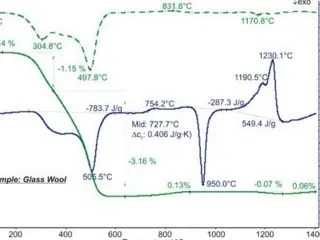
- Glass Wool — Phase Transitions
- Polystyrene (PS)
- Extruded Polystyrene Foam (XPS)
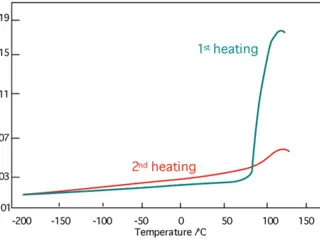
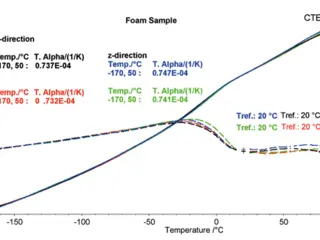
- Thermal Expansion of PUR Foams
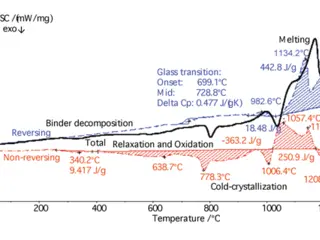
- Mineral Fiber Insulation — Temperature-Modulated DSC (TM-DSC)
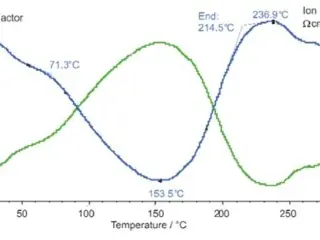
- Rock Mineral Wool — DEA Measurement
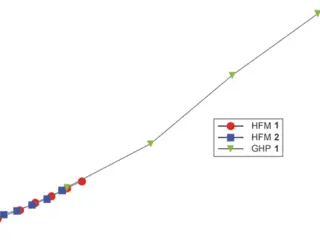
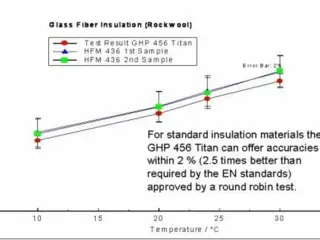
- Mineral Fiber Insulation — Thermal Conductivity
- Expanded Polystyrene — Thermal Conductivity
- PUR Foam Measurements
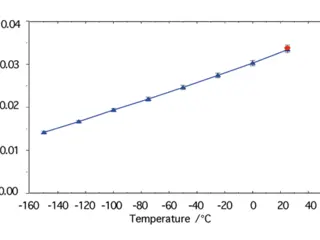
- Aerogel — Thermal Conductivity
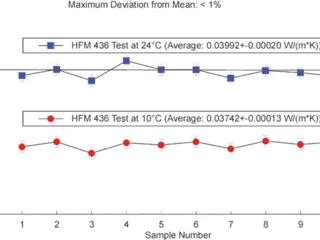
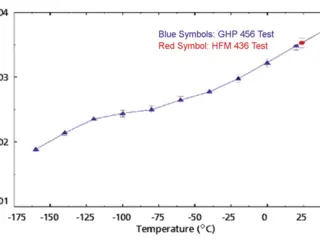
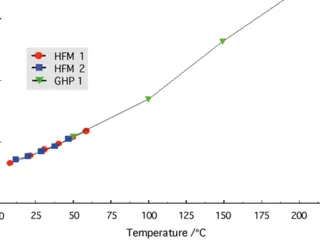
Application Literature
Our latest blog articles
- 21.01.2026
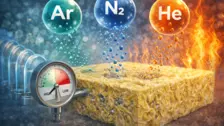
The Guarded-Hot-Plate Method: How Gas Type and Pressure Can Change the Thermal Conductivity of Your Insulation Materials
- 23.11.2022
60 Years of NETZSCH-Gerätebau: Master of Fire

- 10.11.2022
60 Years of NETZSCH-Gerätebau: Fire Testing and Thermal Conductivity Product Range
- 03.11.2022
60 Years of NETZSCH-Gerätebau: Fire Testing and Thermal Conductivity Made in Weimar
- 21.07.2022
60 Years of NETZSCH-Geraetebau: NETZSCH as Part of the NRG STORAGE project

- 14.07.2022
60 Years of NETZSCH-Geraetebau: Saving Energy with the HFM Eco-Line