Gas Chromatography-Mass Spectrometry (GC-MS)
NETZSCH Thermal Analyzers Coupled to GC-MS Systems
Gas Chromatography-Mass Spectrometry (GC-MS) combines high-efficiency chromatographic separation with precise identification of volatile and semi-volatile compounds. In this approach, evolved gases released during thermal analysis are separated in a capillary column based on their interaction with the stationary phase, transported by an inert carrier gas, and then identified through their mass-to-charge (m/z) ratio and characteristic fragmentation pattern in the mass spectrometer.
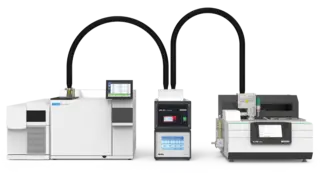
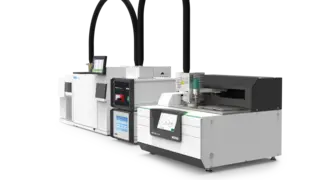
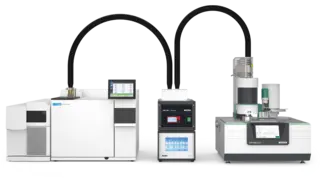
Coupling NETZSCH thermal analyzers with GC-MS enables detailed, near real-time Evolved Gas Analysis (EGA) of complex mixtures - even at trace levels. This powerful combination is ideal for identifying Decomposition reactionA decomposition reaction is a thermally induced reaction of a chemical compound forming solid and/or gaseous products. decomposition products, outgassing components, or residual solvents in materials such as polymers, chemicals, and pharmaceuticals.
Our Gas Chromatography-Mass Spectrometry Coupling Solutions
Explore the range of our NETZSCH Coupling Solutions
About the GC-MS Coupling Method
Perfectly Coupled for Precise Results
What is a coupling?
What is GC-MS?
What is GC-MS used for?
Smart Gas Injection for Efficient GC-MS Coupling
Since gas separation in the GC column requires a certain amount of time - depending on the sample characteristics, column flow rate, column length, and stationary phase properties - it is not possible to couple the GC with a continuous online sample gas flow.
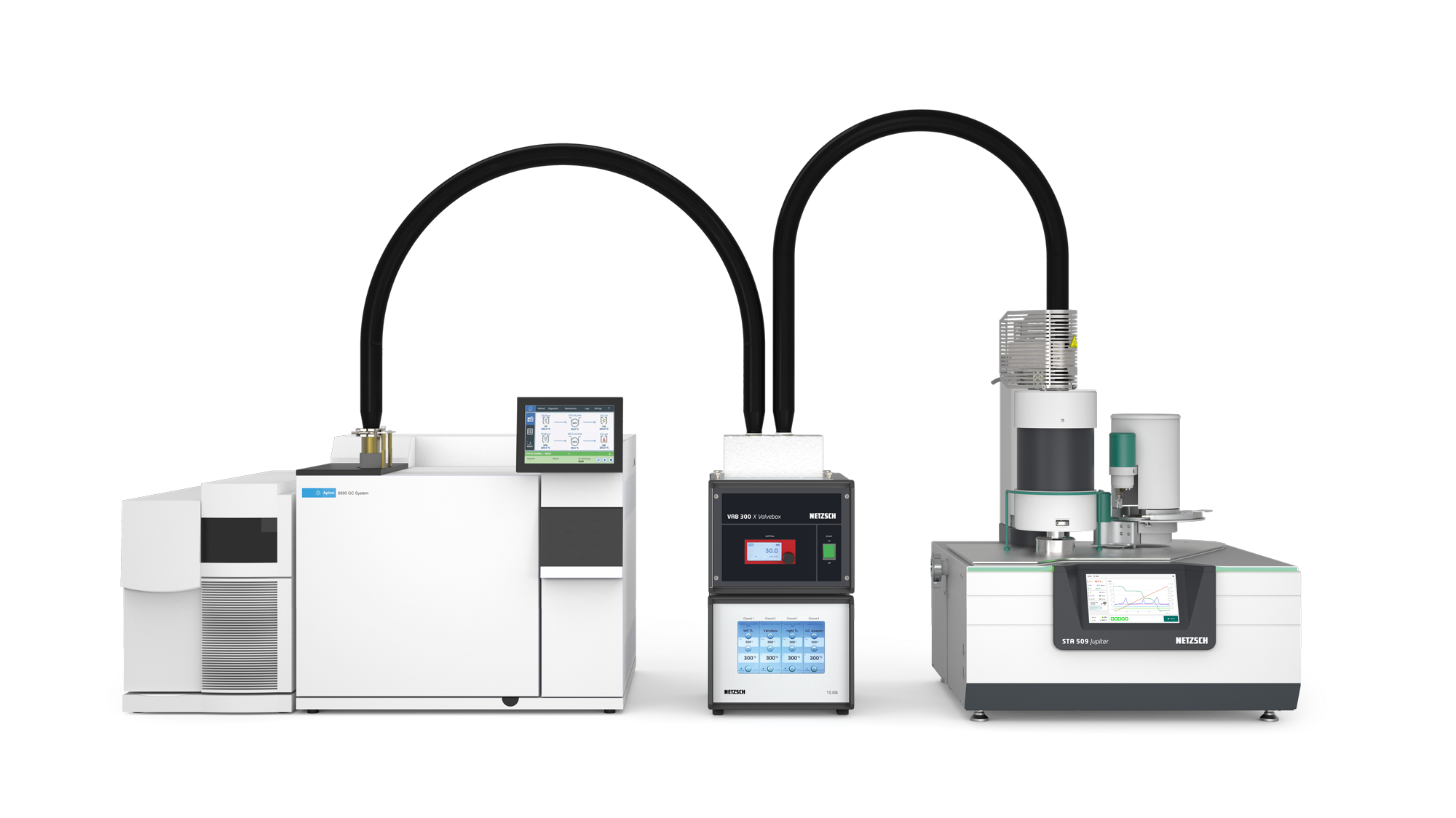
To address this issue, NETZSCH developed a direct coupling in a quasi-continuous mode using a heated automatic valve system. This system enables software-controlled gas sampling via a flow-through sampling loop and allows for gas injection at short, defined intervals, all managed within the NETZSCH Proteus® software.
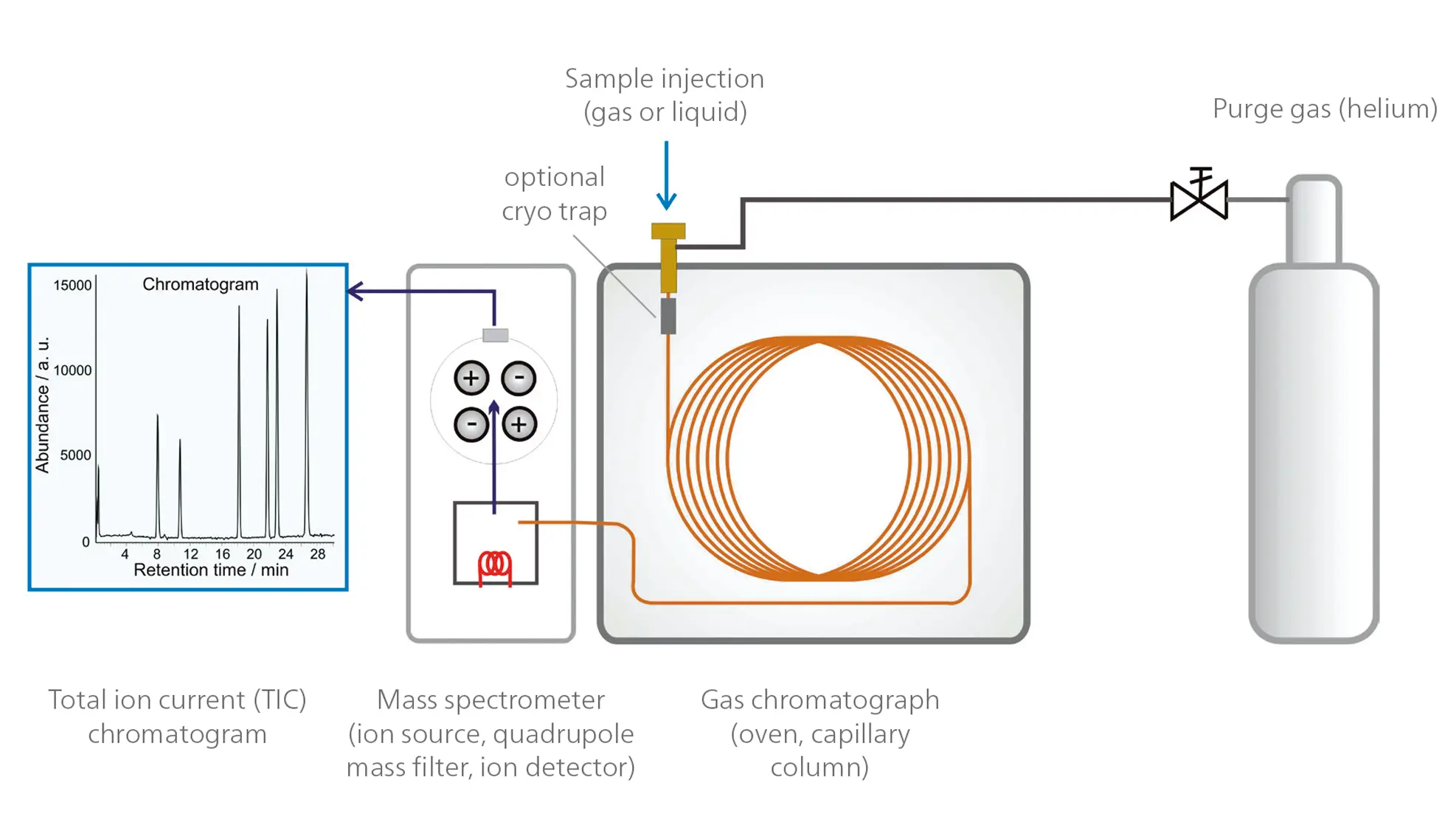
The injected gas mixture from the sampling loop (or a portion of it in split mode) passes through the GC separation column under controlled flow conditions (e.g., constant carrier gas flow of 1.5 to 2 ml/min). After a final pressure reduction step, the separated gas components arrive as a molecular beam at the ion source of the quadrupole mass spectrometer. The GC column can be operated at a constant high temperature for quasi-continuous injection mode, or temperature-programmed from low to high temperatures in event-controlled mode. The mass spectrometer detects all volatile products and records them as a function of time. The resulting total ion current (TIC) versus retention time produces a chromatogram. Peaks in the chromatogram arise from the interaction of the sample gases with the stationary phase and the volatility of the individual components. These retention peaks are analyzed by the MS software to identify the contributing substances.
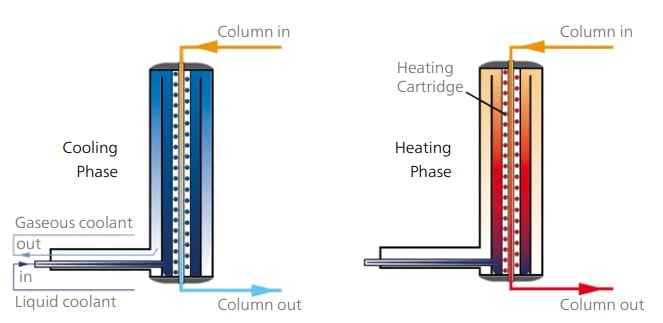
Multi-Injection and Cryo Trap Mode
A cryo trap is a device used in gas analysis systems to condense and collect volatile compounds at very low temperatures. As illustrated in the image on the left, during a TGA or STA measurement, the outer jacket of the cryo trap is cooled with liquid nitrogen (cooling phase) to condense and concentrate volatile outgassing compounds. Once gas collection is complete, the trap is rapidly heated using the built-in heating cartridge (heating phase), releasing the concentrated gases in a sharp pulse for injection into the GC column.
Valve Box
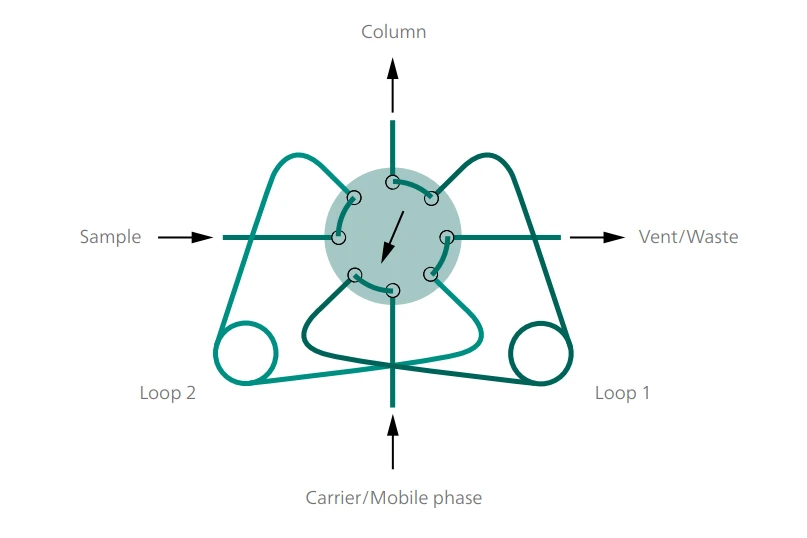
The NETZSCH valve box features a heated double-loop system designed for precise and flexible gas injection during evolved gas analysis. The entire operation of the valve - including timing, injection intervals, and mode selection - is fully controlled by the NETZSCH Proteus® software.
This system supports two main injection modes:
- Continuous injections: Recurrent injections at defined intervals, with the number and timing of injections set by the user. This is ideal for monitoring gas evolution over time.
- Event-controlled injections: Injections triggered by specific events detected by TGA or STA during thermal analysis (such as a peak in the mass loss rate), allowing targeted sampling of gases released during key thermal events.
The heated design of the valve box prevents condensation and ensures reliable transfer of all evolved gases to the GC column for subsequent separation and analysis.
Maximum Flexibility
In addition to the possibility of achieving higher concentrations of the evolved gas species with the optional cryo trap described above, our system also allows the GC column to be bypassed entirely, enabling direct injection of the gas mixture into the mass spectrometer. This stand-alone operation is useful for more rapid analysis, independent of a TGA or STA run.
Flexible GC-MS Solutions through Strong Partnerships
At NETZSCH, we collaborate with a wide range of trusted partners to offer flexible and high-performance GC-MS coupling solutions. Whether you prefer a specific GC or MS manufacturer, our systems are designed for seamless integration, ensuring reliable, application-specific evolved gas analysis tailored to your laboratory needs.
Your Benefits
> 60
> 50
Gas Chromatography–Mass Spectrometry (GC-MS) Coupled to NETZSCH Thermal Analysis – Your Benefits:
- High-efficiency chromatographic separation and identification of evolved gases:
GC-MS combines the separation power of gas chromatography with the molecular identification capabilities of mass spectrometry, enabling the detection and analysis of complex gas mixtures released during TGA or STA measurements. - Precise analysis of overlapping or similar gases:
Unlike direct MS coupling, GC separates gases before they enter the mass spectrometer, allowing even chemically similar or simultaneously released components to be distinguished and identified. - Comprehensive insight into Decomposition reactionA decomposition reaction is a thermally induced reaction of a chemical compound forming solid and/or gaseous products. decomposition and reaction mechanisms:
By analyzing both the thermal behavior (mass changes, thermal events) and the chemical nature of the g0ases evolved, TGA or STA-GC-MS coupling provides a detailed picture of thermal decompositions or reaction processes - ideal for research, failure analysis, or material development. - High sensitivity for volatile and semi-volatile compounds:
GC-MS enables detection down to trace levels (ppb), making it suitable for identifying even low-concentration byproducts or contaminants that are critical in quality control and regulatory testing. - Seamless integration with NETZSCH thermal analyzers:
Coupling via an optimized interface ensures synchronized thermal and gas analysis data, resulting in reliable, reproducible measurements and full understanding of thermal events and the corresponding species evolved.
Why Should you Choose a NETZSCH Thermal Analyzer for your Coupling?
We deliver tailored solutions that go beyond measurement data and provide insight by smart approaches.
At NETZSCH Analyzing & Testing, we combine precision thermal analysis with advanced gas analysis using GC-MS to deliver unmatched analytical depth.
If you work with complex material systems, Decomposition reactionA decomposition reaction is a thermally induced reaction of a chemical compound forming solid and/or gaseous products. decomposition studies, or need regulatory-level gas identification, here’s why NETZSCH is your ideal partner:
- Advanced Data Interpretation with the Proteus® Software
Our Proteus® software supports the GC-MS coupling by offering synchronized evaluation of thermal and evolved gas data. Software features such as AutoEvaluation, Identify (for comparison with material libraries), and peak deconvolution help extract maximum insight from complex gas mixtures separated by the GC column and identified via MS. - Modular Flexibility with the AutoSampler
The AutoSampler enhances your GC-MS setup with automation and flexibility. Whether you're screening multiple materials or conducting long-term studies, the system can be adapted to match your laboratory workflow, increasing efficiency and throughput. - Tailored Furnace and Interface Solutions for GC Coupling
Our system configurations include furnace and interface options that ensure optimal gas transfer to the GC inlet. This guarantees minimal condensation and accurate correlation between thermal events and gas release profiles - critical for reliable GC separation and detection. - Guidance from Concept to Commissioning
From selecting the right coupling configuration to ensuring a clean GC interface and calibrating your detection parameters, our experts support you at every step. We provide individualized consultations and full installation service tailored to your analytical goals. - Expertise You Can Rely On
Our experienced team in applications, service, and training will help you master both thermal and GC-MS data. Whether you’re new to coupled systems or looking to expand your capabilities, our team ensures you extract real value from every measurement. - Durability and Support You Can Trust
Engineered in Germany, NETZSCH instruments are built for long-term performance and sustainability. With a minimum of 10 years spare parts availability and proven robustness, your investment in a NETZSCH-GC-MS solution is built to last.
Long Instrument Life
Always there for You
Unlimited Warranty

Our Quality Promise:
NETZSCH’s Unlimited Warranty
At NETZSCH, our commitment to quality goes beyond the instruments themselves. We understand that your investment in advanced technology is a long-term one, and and that’s why we offer something truly unique – our Unlimited Warranty.
Applications for Gas Chromatography (GC) & Mass Spectrometry (MS)
Gas Chromatography-Mass Spectrometry (GC-MS) is a powerful analytical technique that combines the separation capabilities of gas chromatography with the molecular identification precision of mass spectrometry. At NETZSCH Analyzing & Testing, our integrated GC-MS solutions provide high-resolution analysis of complex gas mixtures evolved during thermal analysis, enabling both qualitative and quantitative insights with exceptional sensitivity.
Whether you’re analyzing decomposition products, identifying contaminants, or studying reaction mechanisms, GC-MS coupling with NETZSCH instruments ensures accurate, selective, and reliable results across a wide range of materials and industries.

Polymers and Plastics
Combining thermal analysis with GC-MS allows for the molecular identification of evolved gases, additives, and degradation products. This approach clarifies chemical reaction mechanisms and chemical-physical changes that cannot be resolved by TGA alone.
- Benefit: Deeper understanding of polymer aging, decomposition, and formulation design.
Biomass
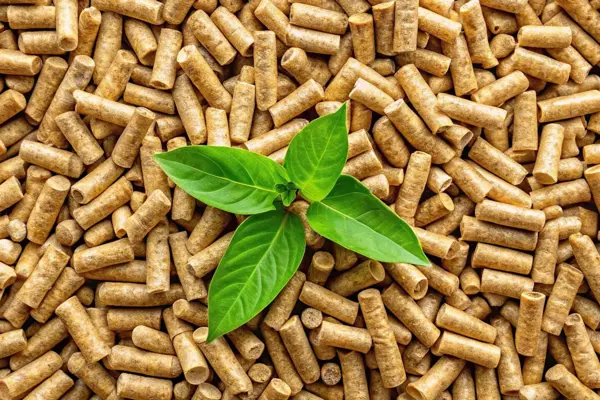
GC-MS coupling enables detailed analysis of PyrolysisPyrolysis is the thermal decomposition of organic compounds in an inert atmosphere.pyrolysis gases and bio-based decomposition products, supporting the evaluation of conversion efficiency and by-product formation during thermal processing.
- Benefit: Optimized biomass utilization and improved process development for energy and materials.

Pharmaceuticals
GC-MS coupling helps characterize residual solvents, degradation products, and reaction by-products in active ingredients and formulations. The technique supports regulatory compliance and stability studies.
- Benefit: Improved safety assessment and enhanced control of purity and stability.
Food and Beverages
GC-MS coupled with thermal analysis allows for precise identification of volatile compounds, flavor markers, and potential contaminants released during heating. This supports product safety, quality control, and formulation optimization.
- Benefit: Reliable detection of trace contaminants and flavor-related compounds.


Cosmetics
By monitoring volatile components and decomposition pathways, GC-MS provides valuable information on ingredient compatibility, long-term stability, and potential allergenic substances.
- Benefit: Better product safety and optimized formulation performance.

Consultancy & Sales
Do you have further questions about the instrument or the method? Would you like to speak to a sales represenative?
Service & Support
Do you already have an instrument and need technical support or spare parts?
Media and Training

Become an Expert for Thermal Analyzers coupled to Evolved Gas Analyzers!
Our Training Department offers exciting training courses on various methods throughout the year.
Find out more about our courses we offer and register now!
Brochures and Data Sheets


Application Literature about Gas Chromatography (GC) & Mass Spectrometry (MS)
Our latest blog articles about Gas Chromatography (GC) & Mass Spectrometry (MS)

Videos about Gas Chromatography (GC) & Mass Spectrometry (MS)