applications
Batteries
For the development, the manufacturing and the use of the most varied of batteries, knowledge of the thermal properties, safety assessment and life cycle plays a decisive role.
The primary objectives of current battery design strategy include a long service life, a multitude of complete charging and discharging cycles, and a continuous release of the stored electric energy. By means of modern thermo analytical and calorimetry measuring methods, it is possible to select and optimize the materials for anode, cathode, electrolytes, separators and to optimize the cells build with these materials. The three main battery components (anode, cathode, electrolyte etc) all jointly contribute to thermal instability. Additionally, the cell voltage exasperates the thermal instability problems. Once those cells are assemble in new battery stacks, calorimetry is the best solution to study hazard & thermal safety of, i.e. lithium ion batteries. Accelerated Rate Calorimeter (ARC®) enable not only to analyze life cycle efficiency and performance of these batteries, it allows also to run abuse testing: shorting, overvoltage, nail penetration and crunch tests.
The design loop of new batteries can be summarized as follow, from raw material testing, cell design, abuse testig to recycling.
NETZSCH is the only supplier of solutions for each of these different steps.
Battery Testing by means of Thermal Analysis and Rheology
Select your method according to your needs
| DSC | TG | STA | EGA | DIL | LFA | MMC | ARC® | Kinexus | Kinetics Neo | |
| Battery Raw Material | +++ | +++ | +++ | +++ | + | + | n.a. | n.a. | +++ | + |
| Components (Anodes / Cathodes / Separators / PCT) | +++ | + | ++ | + | +++ | +++ | ++ | + | + | + |
| Cell Design | n.a. | n.a. | n.a. | n.a. | n.a. | +++ | n.a. | +++ | ||
| Performance & Safety | +++ | + | +++ | +++ | n.a. | n.a. | +++ | ++ | + | |
| Life Cycle | n.a. | n.a. | n.a. | n.a. | n.a. | n.a. | n.a. | +++ | ||
| Recycling | +++ | +++ | +++ | +++ | +++ | n.a. | n.a. | ++ |
Considerable efforts are currently being channeled into battery research. The target is to find new materials enabling better energy and power DensityThe mass density is defined as the ratio between mass and volume. density as well as more efficient energy storage. This requires sophisticated instrumentation for the production and characterization of materials such as anode and cathode materials, separators, electrolytes, boundary layers.
If you develop or produce raw materials for the battery industry, you may want to:
- Characterize nano/amorphous/ poorly crystalline materials
- Understand material behavior and materials stability as a function of temperature
- Obtain the chemical identification of evolved gases (reaction, Decomposition reactionA decomposition reaction is a thermally induced reaction of a chemical compound forming solid and/or gaseous products. decomposition, desorption)
- Understand Thermal StabilityA material is thermally stable if it does not decompose under the influence of temperature. One way to determine the thermal stability of a substance is to use a TGA (thermogravimetric analyzer). thermal stability of battery raw materials
- Obtain phase transformations, phase diagrams
- Obtain thermal property data for inclusion into thermal modeling programs of cells and packs
Once new raw materials have been selected, the design of electrodes leads to questions related to their manufacturing and use. We at NETZSCH bring a full set of instruments to characterize those electrodes, separators, electrolytes.
If you develop or produce battery components, you may want to:
- Characterize thermo mechanical properties such as shrinkage and weight loss during SinteringSintering is a production process for forming a mechanically strong body out of a ceramic or metallic powder. sintering and thermal expansion
- Characterize the Thermal ConductivityThermal conductivity (λ with the unit W/(m•K)) describes the transport of energy – in the form of heat – through a body of mass as the result of a temperature gradient (see fig. 1). According to the second law of thermodynamics, heat always flows in the direction of the lower temperature.thermal conductivity of the electrode
- Measure the heat capacity and thermal conductance of electrodes of the same porosity
- Improve Thermal StabilityA material is thermally stable if it does not decompose under the influence of temperature. One way to determine the thermal stability of a substance is to use a TGA (thermogravimetric analyzer). thermal stability of your cathode
- Analyze the electrode thermal behavior under high pressure
- Detect incompatibility issues between components
- Develop QC methods for manufacturing and process scale-up
Every application has different performance requirements and constraints. No one chemistry is the right solution for all applications. Changes in components may be required as the needs of the application change and as new technologies become available. A well-designed thermal management system is critical to the life and performance of battery cells. As electrochemical devices, batteries’ performance and lifespan are affected by temperature. High temperatures increase side reactions and Decomposition reactionA decomposition reaction is a thermally induced reaction of a chemical compound forming solid and/or gaseous products. decomposition of interfacial boundaries, shortening battery life and increasing battery replacement costs.
Development of precisely-calibrated battery systems rely on accurate measurements of heat generated by battery cells during the full range of charge/discharge cycles, as well as the behavior during abuse testing.
If you develop or produce battery cells, you may want to:
- Understand the impact of the cell design on the battery performance
- Know the temperature at which lithium ion cells or their components can exhibit a highly ExothermicA sample transition or a reaction is exothermic if heat is generated.exothermic reaction
- Know the amount of energy released during a reaction, the speed of the reaction and the pressure levels arising as a result of the Decomposition reactionA decomposition reaction is a thermally induced reaction of a chemical compound forming solid and/or gaseous products. decomposition gas formed
- Assess the impact of a nail penetration or crush testing in the battery
When a battery is charged or discharged, heat is generated and absorbed. IsothermalTests at controlled and constant temperature are called isothermal.Isothermal calorimetry in connection with battery cyclers is a smart way to charaterize the heat flow, and therefore to analyze the battery life cycle. Temperature, charge/discharge rates and the Depth of Discharge each have a major influence on the cycle life of the cells. New Battery designs (choice of new material and/or new assembly of components) can be evaluated thanks to calorimetry mesurement. The Accelerating Rate Calorimeter (ARC®) allows testing in an IsothermalTests at controlled and constant temperature are called isothermal.isothermal mode in complete safety for the instrument and the operator.
If you analyze a battery performance, you may want to:
- Collect accurate heat generation data from battery module
- Run in complete safety a charge/discharge test without taking any risk to destroy the instrument
- Understand if there has been any deterioration in original performance
- Obtain a performance signature over time to evaluate the effects of aging and cycling
- Evaluate physical and electrochemical design changes that could lead to better battery module
When batteries have reached their end of life, they are collected to be either reconditioned or reused in less demanding application, or the battery is disassembled and each single component is recycled. Batteries are built with assemblies of different polymers, oxides, metallic materials. Thermal analysis is useful characterization tools in this field.
If you are in the business of battery recycling, you may want to:
- Evaluate the feasibility of physical separation of its main components
- Evaluate the efficiency of the liberation of different components when the battery is converted into fragments
- Characterize each components of the battery, when fragmented
- Understand material behavior of the recycled materials stability as a function of temperature
Lithium ion battery technology offers many advantages in portable power application but one major concern is safety. Battery developers need tools which allows them to design safer batteries without compromising performance.
By means of a “Worst-Case ScenarioRelated to a chemical reactor, a worst-case scenario is the situation where temperature and/or pressure production caused by the reaction runs out of control.worst-case scenario” (Thermal runawayA thermal runaway is the situation where a chemical reactor is out of control with respect to temperature and/or pressure production caused by the chemical reaction itself. Simulation of a thermal runaway is usually carried out using a calorimeter device according to accelerated rate calorimetry (ARC).thermal runaway) scheme, AdiabaticAdiabatic describes a system or measurement mode without any heat exchange with the surroundings. This mode can be realized using a calorimeter device according to the method of accelerating rate calorimetry (ARC). The main purpose of such a device is to study scenarios and thermal runaway reactions. A short description of the adiabatic mode is “no heat in – no heat out”.adiabatic calorimetry can provide many pertinent answers, including the temperature at which lithium ion cells or their components can exhibit a highly ExothermicA sample transition or a reaction is exothermic if heat is generated.exothermic reaction and the associated pressure. With IsothermalTests at controlled and constant temperature are called isothermal.isothermal calorimetry, information for thermal management, obtained by means of Thermal runawayA thermal runaway is the situation where a chemical reactor is out of control with respect to temperature and/or pressure production caused by the chemical reaction itself. Simulation of a thermal runaway is usually carried out using a calorimeter device according to accelerated rate calorimetry (ARC).thermal runaway, can be directly obtained.
If you develop or produce raw materials for battery, design battery cells and packs you may want to:
- Analyze the pressure generated when the battery cell explodes in the calorimeter
- Understand at what temperature internal short circuit occurs due to the Decomposition reactionA decomposition reaction is a thermally induced reaction of a chemical compound forming solid and/or gaseous products. decomposition of the individual components
- Understand what happens chemically and thermally when internal short circuits produce hot spots within the cell
- Design cells which are designed to decrease the likelihood of hot spot growth and consumption of the cell
- Design, select, or specify thermal safety devices (i.e., vent, CID, PTC) based on temperature and pressure data inside a cell during thermal Decomposition reactionA decomposition reaction is a thermally induced reaction of a chemical compound forming solid and/or gaseous products. decomposition and to know how well these devices work in mitigating consequences of failures
- Classify individual cells with regards to their potential risks and hazards
- Run in complete safety an IsothermalTests at controlled and constant temperature are called isothermal.isothermal charge/discharge test without risk of destroying the instrument
- Reduce the likelihood of a chain reaction of cell failures due to heat transport between adjoining cells
Application Literature
Our latest blog articles
- 29.01.2026
Identification of Battery Separator Materials by Means of TGA-FT-IR

- 15.12.2025
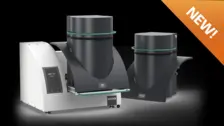
Introducing the MMC 315 Nexus®: Higher Sensitivity, More Possibilities, One Modular Platform
- 03.12.2025
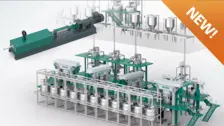
Optimizing Electrode Production with Real-Time Viscosity Measurement
- 03.09.2025
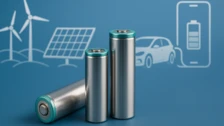
Improving Lithium-Ion Battery Safety: Thermal and Kinetic Analysis of LiPF₆ Electrolytes with the NETZSCH DSC & Kinetics Neo
- 11.03.2025
Understanding the Role of Tar Materials in Anode Production by Means of NETZSCH Analysis Instruments

- 31.07.2024
Investigation of the Thermal Stability of Li-Ion Battery Materials by Means of DSC and TGA