applications
Thermoelectric Materials
Thermoelectricity refers to a class of phenomena in which a temperature difference creates an electric potential or an electric potential creates a temperature difference.
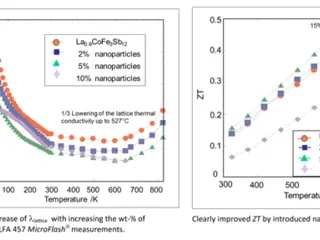
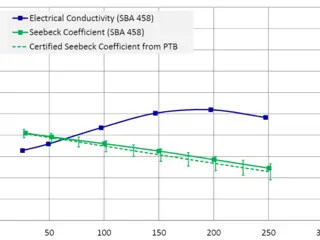
Various metals and semiconductors are generally employed in these applications. NETZSCH offers comprehensive tools for material optimization and characterization in this area. To optimize thermoelectric devices, thermal properties must be known. The Thermal ConductivityThermal conductivity (λ with the unit W/(m•K)) describes the transport of energy – in the form of heat – through a body of mass as the result of a temperature gradient (see fig. 1). According to the second law of thermodynamics, heat always flows in the direction of the lower temperature.thermal conductivity has a direct impact on the efficiency of a thermoelectric material.


Application Literature
Our latest blog articles
- 23.02.2026
Enabling Breakthroughs in Thermal Transistor Research

- 26.08.2025
Boosting Thermoelectric Power with Nanoribbon Ceramics – A New Route to High-Performance Calcium Cobaltites

- 06.08.2025
Unlocking Waste Heat Recovery: Calcium Cobaltites at the Forefront of Thermoelectric Innovation

- 29.04.2025
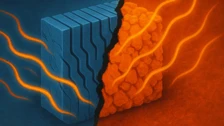
Turning Waste Heat into Power with Nanoribbon Tech - Enhancing Performance of Thermoelectrics
- 20.01.2025
How the Queensland University of Technology uses NETZSCH Instruments to Solve Thermoelectric and Building Materials Applications

- 08.01.2025
Introducing the New NETZSCH LFA 717: Precision Redefined in Thermal Conductivity Measurement