Fourier Transform Infrared Spectroscopy (FT-IR) Coupled to NETZSCH Thermal Analyzers
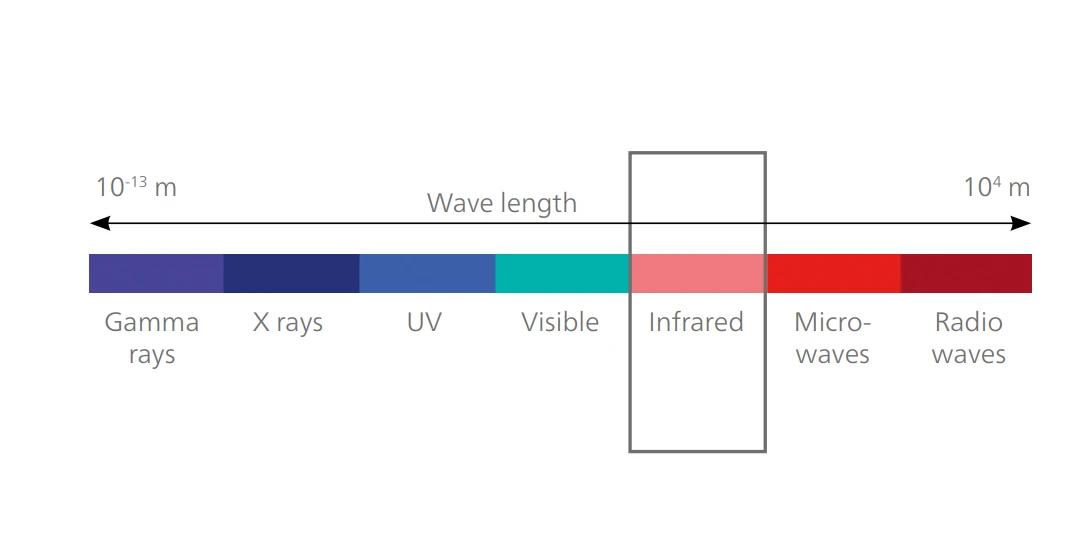
Fourier Transform Infrared Spectroscopy (FT-IR) is an analytical technique used to identify organic and polymeric materials, as well as certain inorganic compounds such as oxides, carbonates, and silicates. FT-IR analysis provides valuable insights into the chemical structure and functional groups of a sample by measuring how it absorbs infrared radiation.
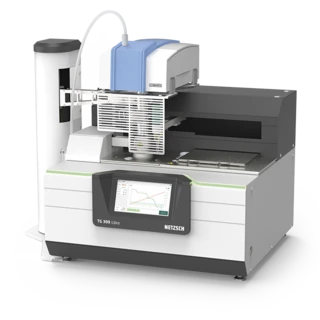
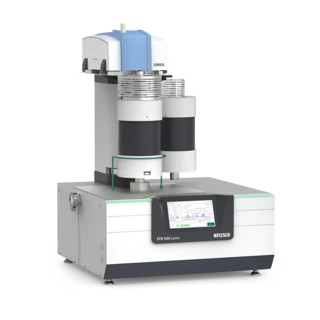
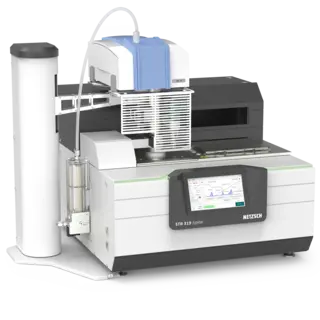
NETZSCH thermal analysis instruments coupled with an FT-IR spectrometer provide a powerful solution for analyzing evolved gases during thermal processes. This seamless integration enables the simultaneous measurement of mass changes and identification of evaporation through their infrared spectra. Whether you are working with polymers, composites, pharmaceuticals or other chemicals, our systems deliver reliable and comprehensive insights into material behavior.
Our Fourier Transform Infrared Spectroscopy Coupling Solutions
Explore the range of our NETZSCH Coupling Solutions



About the Fourier Transform Infrared Spectroscopy (FT-IR) Method
This Perfect Combination Bridges the Analytical Gap and Facilitates Fingerprint Analysis
What is a coupling?
What is FT-IR?
Thermal Analysis provides ideal tools for the characterization of a variety of organic and inorganic solids and liquids. Thermal transitions, Thermal StabilityA material is thermally stable if it does not decompose under the influence of temperature. One way to determine the thermal stability of a substance is to use a TGA (thermogravimetric analyzer). thermal stability, Decomposition reactionA decomposition reaction is a thermally induced reaction of a chemical compound forming solid and/or gaseous products. decomposition and chemical reactions can be detected and quantified with high accuracy over a broad temperature range.
In some cases, however, information about the type of evolved gases is needed to gain a clearer understanding of the chemistry behind the processes. Coupling thermal analysis with powerful infrared spectroscopy for gas analysis bridges this gap. It allows for a deeper insight into a material’s behavior and provides a spectral fingerprint of the gases evolved from the sample when heated.

Find out more about FT-IR
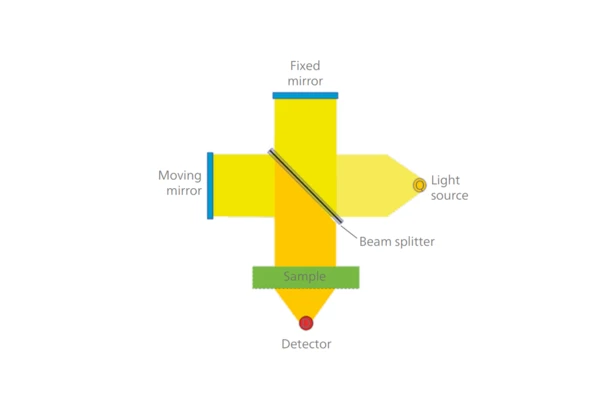
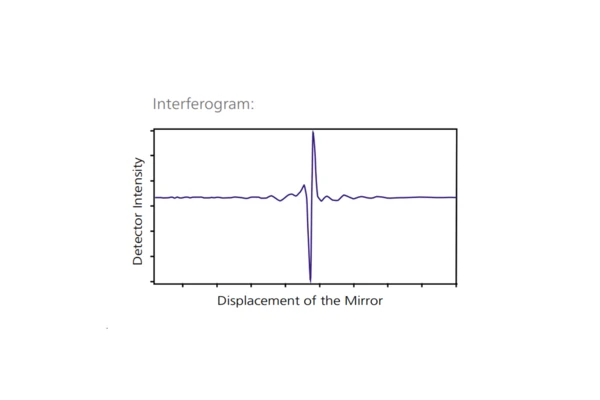
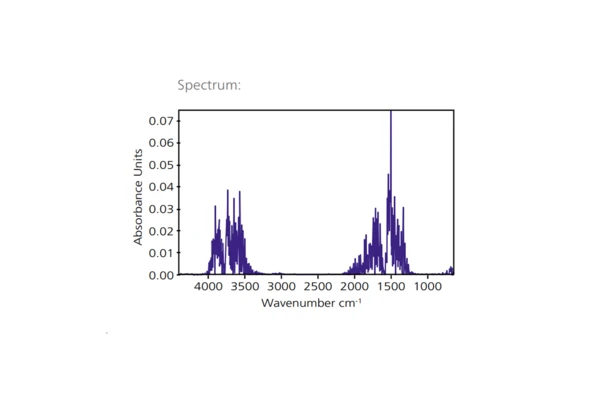

Different Types of FT-IR Couplings
Two common methods are direct coupling and coupling via a transfer line. Each offers unique advantages in terms of sensitivity, space requirements, and performance, making it important to choose the right option for your laboratory setup and analytical goals.
FT-IR Direct Coupling
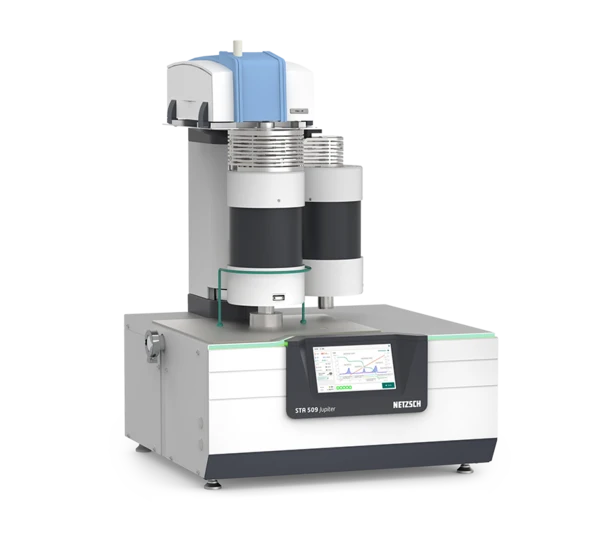
In direct coupling, the FT-IR spectrometer is connected directly to the thermal analysis instrument without a transfer line.
- Great for smaller lab spaces
- More cost-effective option
- Designed for applications requiring moderate interface temperatures
Typical Temperature Range:
- PERSEUS® TG 309 Libra®: RT - 1100°C sample temperature
- PERSEUS® STA 509 Jupiter®: -150°C - 2000°C sample temperature, depending on the furnace
FT-IR Coupling with a Transfer Line
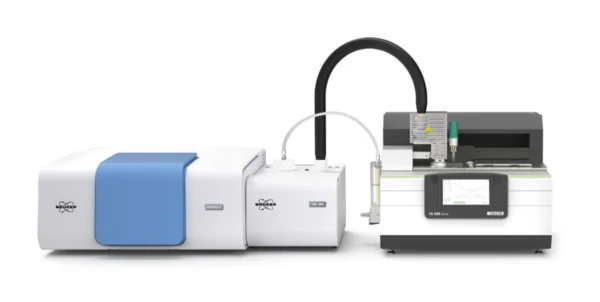
In this method, a heated transfer line connects the FT-IR spectrometer to the thermal analyzer, allowing gas transfer over a distance without the risk of condensation.
- Allows for higher interface temperatures up to 400°C for identification of high boiling organics
- Better sensitivity with high-performance detectors
- Designed for more lab space for enhanced functionality
- Incorporates advanced components, reflecting its premium value
- Provides higher accuracy for identifying evolved gases
Typical Temperature Range:
- TG 309 Libra® coupled to Bruker's INVENIO via transfer line: RT - 1100°C sample temperature
- STA 509 Jupiter® coupled to Bruker's INVENIO via transfer line: -150°C - 2000°C sample temperature, depending on the furnace
Bruker OPUS and NETZSCH Proteus® –
An Unrivaled Software Combination for Maximum Ease of Use


The alliance between the NETZSCH Proteus® software and the OPUS FT-IR software is based on synchronized data exchange, enabling coordinated operation of the coupled systems. Measurements are started via the NETZSCH Proteus® software, which simultaneously triggers data acquisition in OPUS. Users only need to input the command for measurement start and data acquisition once; both OPUS and Proteus® will then operate with the predefined parameters. Online data collection is fully synchronized, ensuring precise time and temperature correlation between all signals from the two coupled instruments during evaluation. The two software packages give users access to the full range of data evaluation and results display options in either environment at any time.
Find out even more about the software:
- Full software integration – online data exchange between the two instrument software packages during the running experiment
- Seamless instrument control, measurement definition for TGA and FT-IR entirely controlled by Proteus® software
- Segmental activation or deactivation of the FT-IR coupling with one mouse click
- Automatic saving of data sets for both measurements (TGA and FT-IR) with identical file names (but different extensions) in the same directories
- Measurements with automatic sample changer allow for individual FT-IR measurement parameters for each position
- Conjoint presentation of the Gram-Schmidt plot plus up to 30 pre-selected traces together with thermal analysis curves in Proteus® software during the experiment
- Online evaluation (SNAP SHOT) of TGA/STA/DSC measurements already including FT-IR data during the measurement
- Trace calculations with evaluation of characteristic temperatures and peak areas along with TGA and DSC curves
- Combined analysis graphics of thermal analysis and FT-IR signals
- Multi-component search in OPUS
- Identification by various gas phase libraries, e.g., TGA-FT-IR library of polymers by NETZSCH
Your Benefits
> 30
> 60
> 50
Here Are Your Benefits of Fourier Transform Infrared (FT-IR) Spectrometers Coupled to NETZSCH Thermal Analysis:
- Efficient and reliable gas transfer for accurate analysis:
The short transfer path ensures that evolved gases reach the FT-IR spectrometer quickly and without degradation, while the continuously heated interface and gas cell prevent condensation, preserving the integrity of volatile components and guarantees consistent, precise results. - Higher productivity with automated testing:
The automatic sample changer allows for the analysis of multiple samples in a single session, providing high throughput and flexible control in measurement parameters. - Proven partnership and flexible integration:
With over 30 years of successful collaboration with Bruker, we deliver seamless, single-source solutions. Our thermal analysis instruments are also compatible with other FT-IR spectrometers, offering maximum flexibility to meet your specific needs.

Over 30 Years of Successful Cooperation
For over 30 years, NETZSCH and Bruker have collaborated to provide integrated solutions for thermal analysis and gas analysis. This long standing partnership combines NETZSCH's expertise in thermal analysis with Bruker's leadership in FT-IR technology, offering customers reliable, high-quality systems tailored to their needs. Together, we deliver innovative, user-friendly solutions from a single source, ensuring seamless operation and exceptional support.
Advantages of our Cooperation at a Glance:
- Seamless integration: Optimized coupling of NETZSCH thermal analyzers with Bruker FT-IR spectrometers for reliable and efficient evolved gas analysis.
- Proven expertise: Decades of joint experience ensure high-quality, innovative solutions tailored to customer needs.
- Single-source convenience: Fully compatible systems with comprehensive support from both partners.
- Enhanced performance: Precise coordination of instruments delivers accurate and reproducible results.
- Continuous innovation: Collaboration fosters the development of cutting-edge technologies and features for advanced analysis.
- Effortless compatibility with Bruker's OPUS software: At NETZSCH, we offer seamless compatibility with Bruker’s OPUS software, allowing for a smooth workflow between both systems. This ensures an integrated and efficient experience, making the most out of both instruments.
Why Should You Choose a NETZSCH Thermal Analyzer for Your Coupling?
We deliver tailored solutions that go beyond measurement data, providing insight with smart approaches. NETZSCH Analyzing & Testing is your perfect match, offering unrivaled precision, reliability and innovation. Here’s why you should consider investing in a NETZSCH instrument for your laboratory or research facility:
- Always One Step Ahead with the Proteus® Measurement and Evaluation Software
The Proteus® software for thermal analysis and the OPUS software for FT-IR measurements are integrated to support the thermal analysis-to-FT-IR coupling. Features such as AutoEvaluation for automatic evaluation of curves, Identify for material identification and comparison via database and other advanced tools make your analysis seamless and insightful.
- Modular Flexibility with the AutoSampler
Our AutoSampler provides unparalleled modular flexibility, as it can be added to any coupling setup as an accessory. This allows you to expand and adapt your system according to your evolving needs, ensuring scalability and efficiency in your operations.
- Tailored Furnace Solutions for Coupling Systems
We offer a range of furnace options for STA couplings, ensuring that the solution perfectly matches your requirements. Our selection allows you to configure your system to precisely meet your specific application needs
- Comprehensive Support Throughout the Purchase Process
We provide extensive support during the entire purchasing process. Our team of experts will guide you through the configuration of your system, ensuring the perfect fit without compromise. From consultation to installation, we're with you every step of the way.
- Expert Support and Training
Benefit from the expertise of our dedicated and continuously trained professionals across service, laboratory, training, and sales departments. Our experienced team is committed to providing exceptional support and comprehensive training to ensure you get the most out of your instrument.
- Proven Excellence in German Engineering
NETZSCH instruments are synonymous with German engineering excellence, offering top-tier quality and exceptional durability. With a minimum guaranty of 10 years availability of spare parts, our instruments promise longevity and reliable performance for years to come.
Long Instrument Life
Always There for You
Powerful Cooperation
Unlimited Warranty

Our Quality Promise:
NETZSCH’s Unlimited Warranty
At NETZSCH, our commitment to quality goes beyond the instruments themselves. We understand that your investment in advanced technology is a long-term one, and and that’s why we offer something truly unique – our Unlimited Warranty.
Applications for Fourier Transform Infrared Spectroscopy (FT-IR)
Fourier Transform Infrared (FT-IR) Spectroscopy is a crucial analytical technique used across various industries, providing detailed insights into the chemical composition of materials. At NETZSCH Analyzing & Testing, our state-of-the-art coupling solutions integrate FT-IR with thermal analyzers to deliver unparalleled precision and reliability for a wide range of applications:
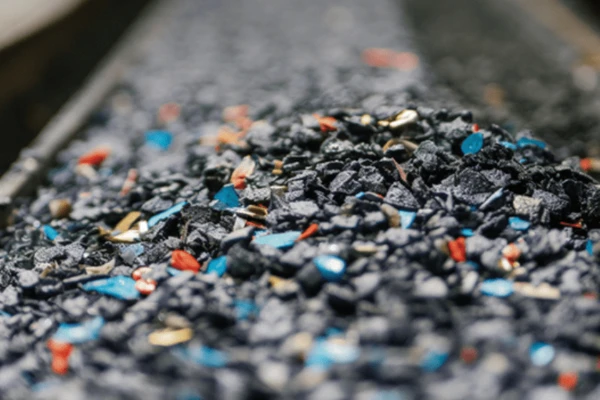
Polymers and Plastics
Thermal analysis coupled with FT-IR enables the identification of Decomposition reactionA decomposition reaction is a thermally induced reaction of a chemical compound forming solid and/or gaseous products. decomposition products and additives in polymers and plastics. This provides valuable insights into material stability, quality, and recycling potential.
- Benefit: Enhanced understanding of polymer degradation mechanisms and composition.
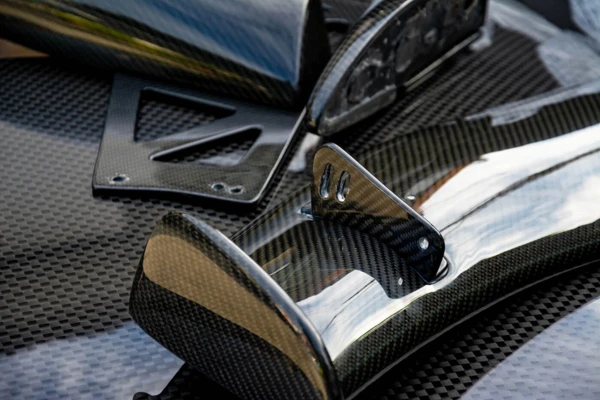
Composites and Advanced Materials
Coupling FT-IR with thermal analysis allows the analysis of matrix Decomposition reactionA decomposition reaction is a thermally induced reaction of a chemical compound forming solid and/or gaseous products. decomposition and filler content in composites. This is crucial for optimizing performance and ensuring material reliability under specific conditions.
- Benefit: Detailed insights into the chemical behavior of complex material systems.
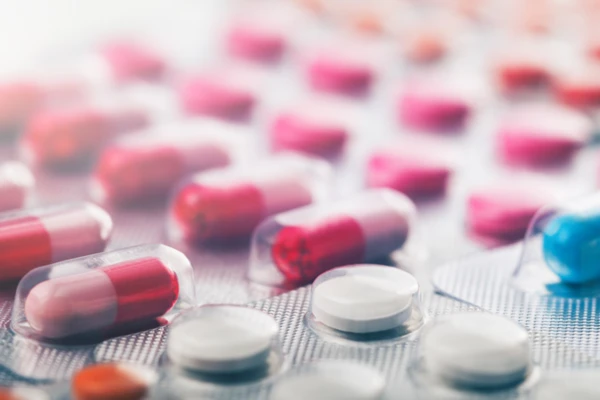
Pharmaceuticals
Thermal analysis combined with FT-IR can identify volatile compounds and support the evaluation of drug stability and component interactions during Decomposition reactionA decomposition reaction is a thermally induced reaction of a chemical compound forming solid and/or gaseous products. decomposition or synthesis processe. This ensures compliance with quality and safety standards.
- Benefit: Reliable detection of impurities, residual solvents, and stability evaluation of active pharmaceutical ingredients (APIs).
Food and Beverages
Analyzing thermal Decomposition reactionA decomposition reaction is a thermally induced reaction of a chemical compound forming solid and/or gaseous products. decomposition and evolved gases provides detailed information about food stability and contamination risks. This is essential for quality control and regulatory compliance.
- Benefit: Accurate detection of volatile compounds and spoilage indicators.
Chemicals
FT-IR coupled with thermal analysis enables the precise identification of gases evolved during Decomposition reactionA decomposition reaction is a thermally induced reaction of a chemical compound forming solid and/or gaseous products. decomposition and other reaction processes in raw materials and finished products.
- Benefit: Improved understanding of reaction mechanisms and product development.
Electronics
Thermal analysis coupled with FT-IR helps characterize the Decomposition reactionA decomposition reaction is a thermally induced reaction of a chemical compound forming solid and/or gaseous products. decomposition behavior of electronic materials, such as polymers, solder masks, and adhesives, under thermal StressStress is defined as a level of force applied on a sample with a well-defined cross section. (Stress = force/area). Samples having a circular or rectangular cross section can be compressed or stretched. Elastic materials like rubber can be stretched up to 5 to 10 times their original length.stress. This supports material selection and durability testing.
- Benefit: Ensures reliability and performance of electronic components in demanding environments.
Consultancy & Sales
Do you have further questions about the instrument or the method? Would you like to speak to a sales represenative?
Service & Support
Do you already have an instrument and need technical support or spare parts?
Media and Training

Become an Expert in Thermogravimetry (TG) and Fourier Transform Infrared Spectroscopy (FT-IR)!
Our Training Department offers exciting training courses on various methods throughout the year.
In addition to providing a solid theoretical basis, our courses focus on practical, application-specific aspects. Information on equipment technology, calibration, sample preparation, planning, preparation and execution of measurements as well as evaluation and interpretation of results will help you to master your daily measurement tasks. Find out more about the courses we offer and register now!


Application Literature about Fourier Transform Infrared Spectroscopy (FT-IR)
Our latest blog articles about Fourier Transform Infrared Spectroscopy (FT-IR)

Videos about Fourier Transform Infrared Spectroscopy (FT-IR)