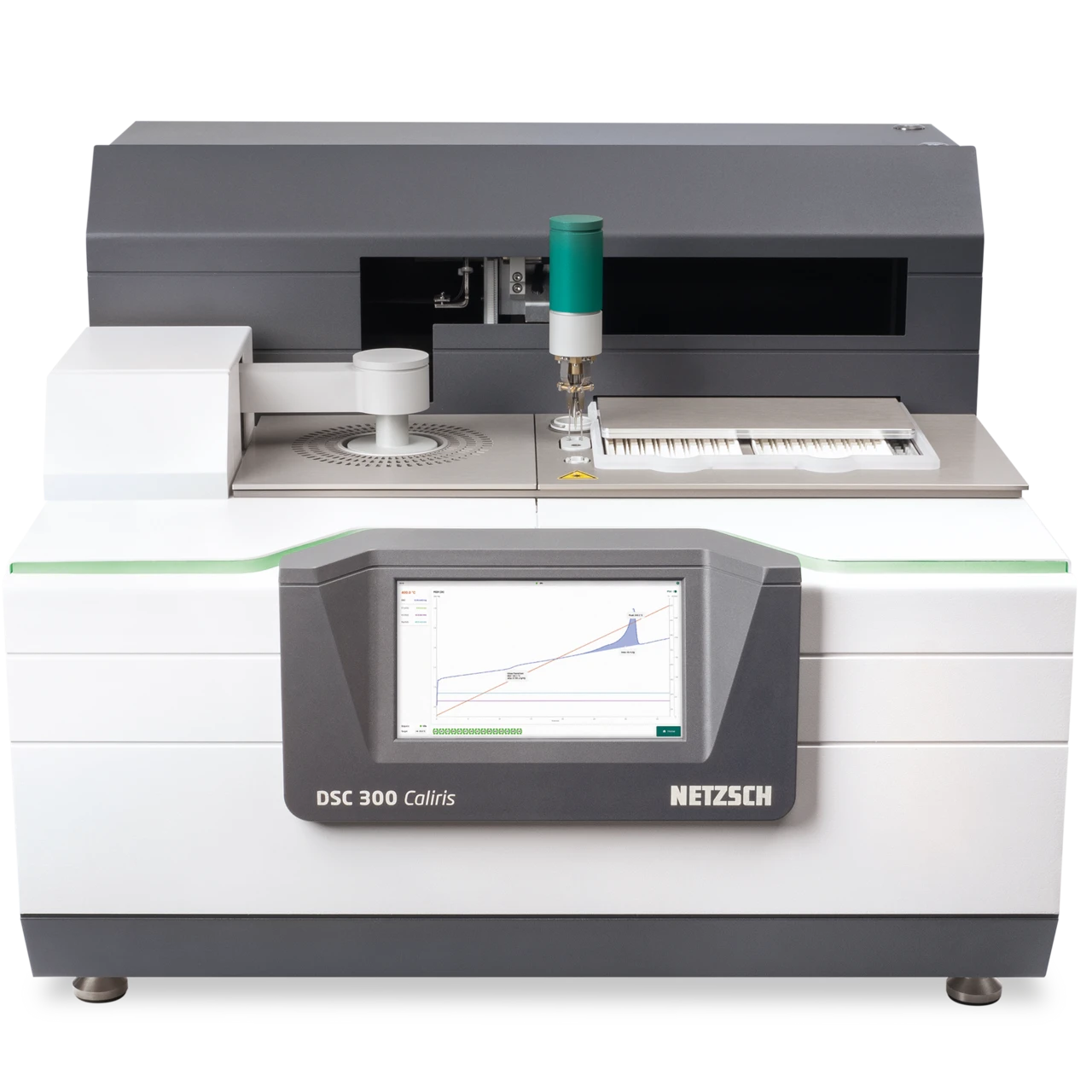
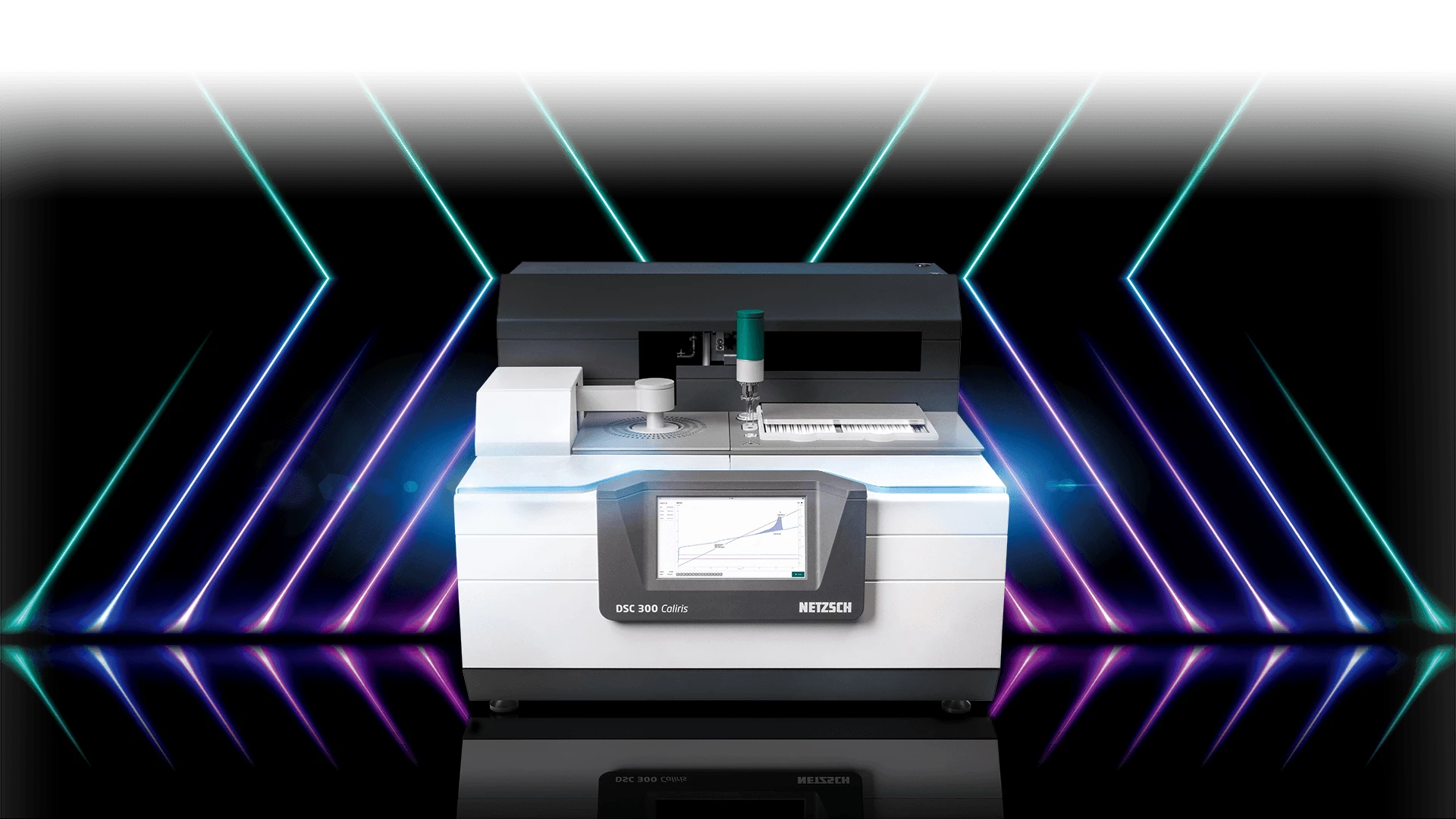
DSC 300 Caliris® Select
A versatile DSC, tailor-made for your application!
Highlights
The DSC 300 Caliris® Select is a Comprehensive, Reliable and Versatile DSC for Material Characterization and Tailor-Made for Your Applications.
No matter if you are working in research & development, quality control, contract testing or the specification of materials for certain applications, information about a material's behavior under changing temperature and different atmospheres is important.
The DSC 300 Caliris® can support:
- Material identification
- Process optimization
- Quality control
- Phase diagrams
- Kinetic analysis
- Compatibility
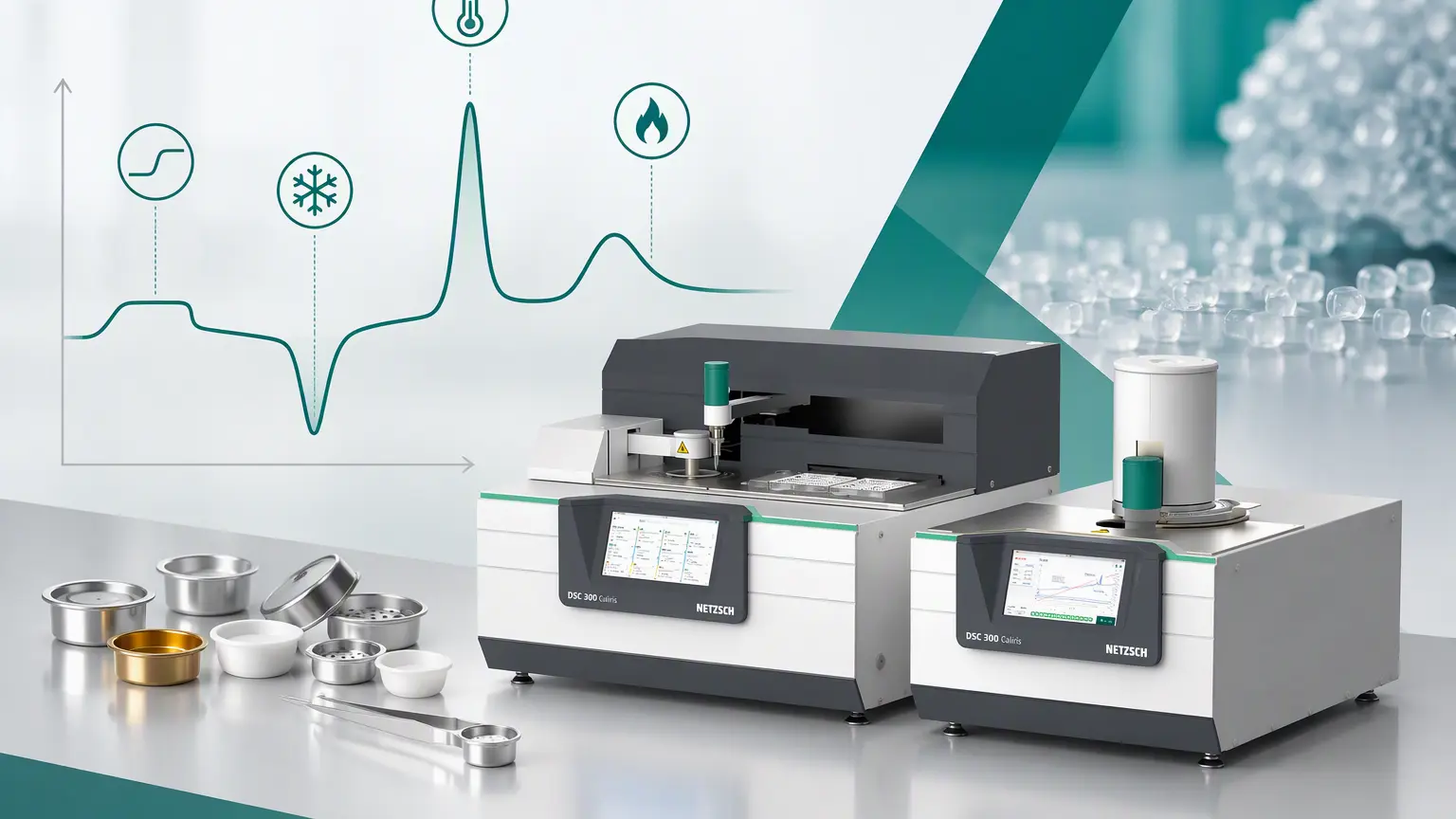
Explore our DSC Webinar Series

Our Quality Promise:
NETZSCH’s Unlimited Warranty
At NETZSCH, our commitment to quality goes beyond the instruments themselves. We understand that your investment in advanced technology is a long-term one, and and that’s why we offer something truly unique – our Unlimited Warranty.
The DSC 300 Caliris® Select – Tailor Made for Your Application
In the Select version of the DSC 300 Caliris®, there is an initial choice between three currently available modules. The maximum temperature range available in the DSC 300 Caliris® Select is -170°C to 650°C. The Select version allows for the exchange of modules of the same type avoiding instrument downtimes.
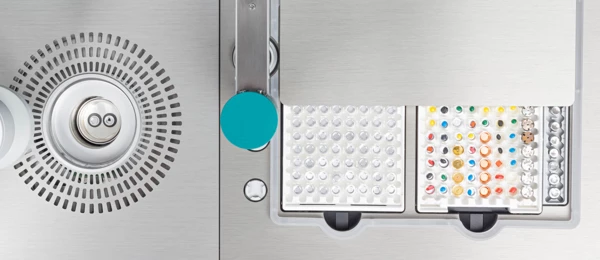
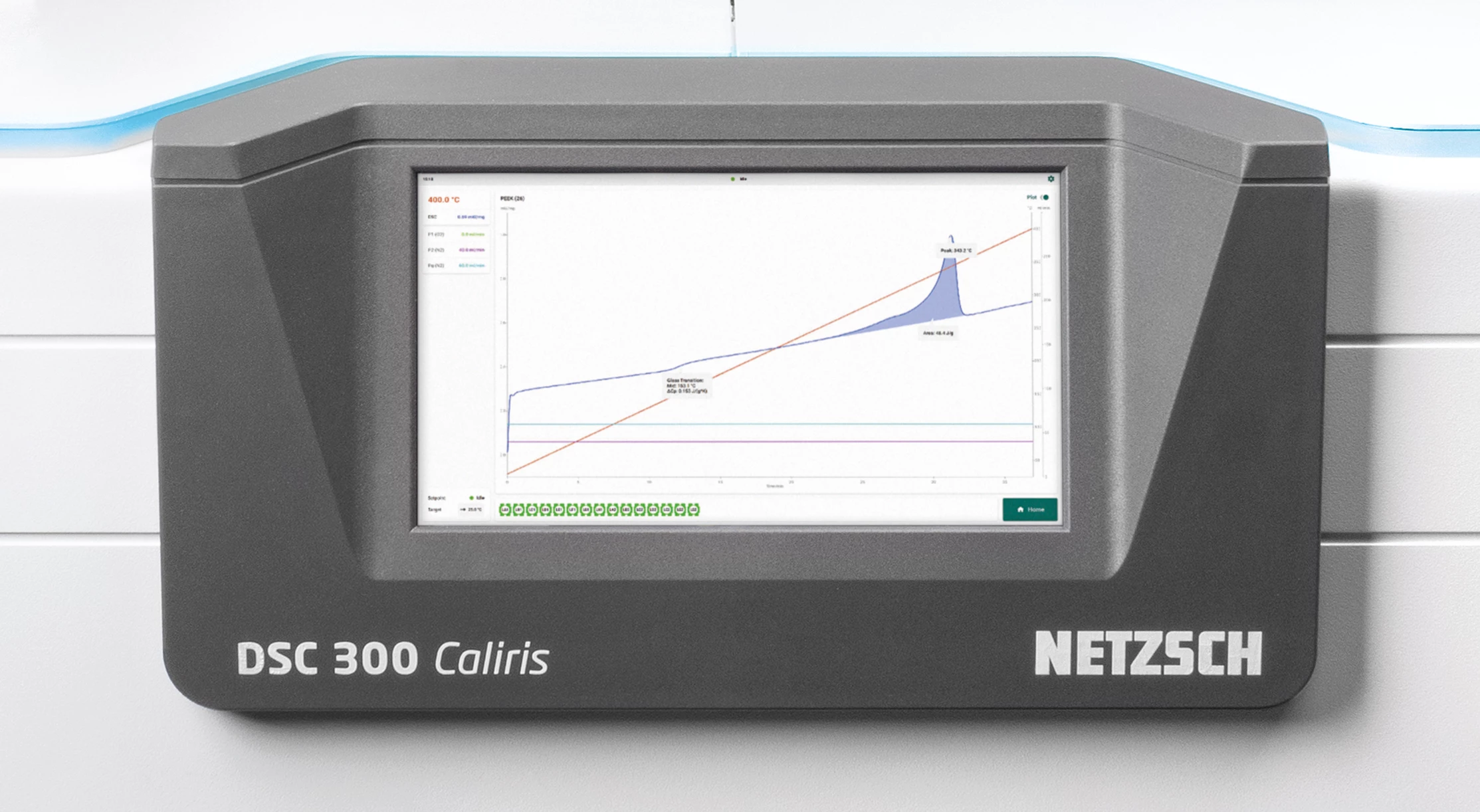
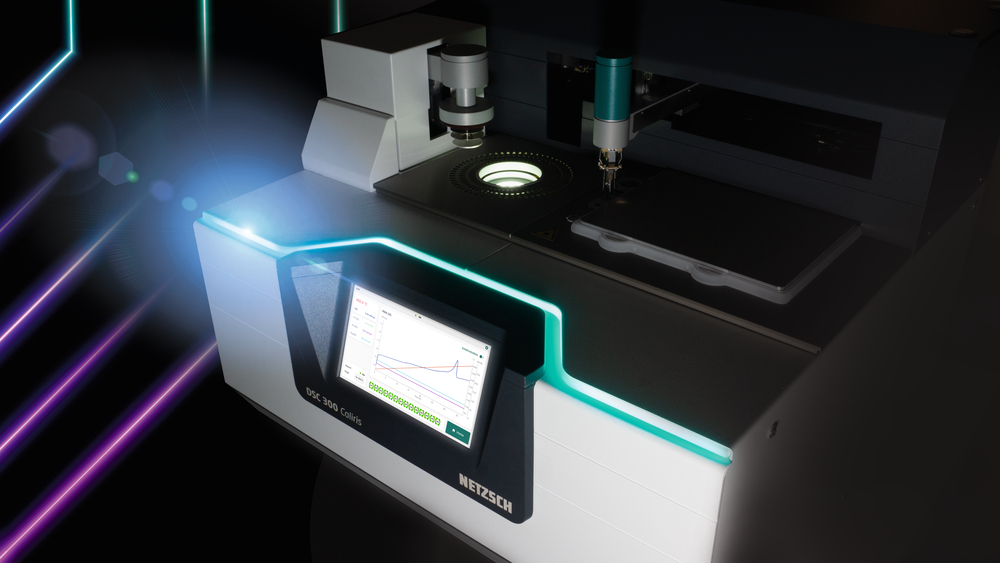
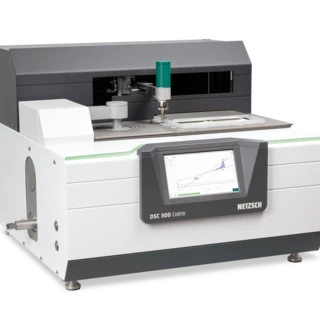
It comes with integrated color touch display, an LED status bar and can optionally be equipped with an automatic sample changer.
Modular Design – Maximum Flexibility
Ever-accelerating new material developments, triggered by fast-moving mobility and technical trends, require continuous adaptability. The new generation of NETZSCH DSCs is based on a modular concept. The DSC 300 Caliris® Series is the only instrument series of its kind with interchangeable and exchangeable sensor-furnace modules.
S-Module
The Standard Module
-170°C to 600°C
The routine module combines high stability and optimized resolution of thermal effects. Laser-guided welding processes for the sensor disks and thermocouple wires yield true sensitivity and robustness. The monolithic DSC sensor features high metrological stability and optimal resolution. The easy to handle S-module is the module of choice for industry and contract laboratories when routine measurements are the main task.
P-Module
The Polymer-Module
-170°C to 600°C
This module is perfect for all tasks in the polymer field. Its optimized low-mass furnace allows for heating rates of up to 500 K/min over a wide measurement range. Temperature profiles approximating real processing conditions can be realized. Additionally, one can speed up the measurements and thus save valuable time. The P-Module is perfect for research and development or quality control in the polymer processing industry.
H-Module
High-Performance Module
-180°C to 650°C/750°C
The premium module impresses with a perfect baseline and outstanding reproducibility. The very small peak-to-peak noise ratio allows the detection even of the smallest peaks – the gold standard for most DSC applications. In the Select version, this module covers the entire temperature range from -180 °C to 650 °C or optional up to 750 °C. The H-Module is an ideal complement for advanced materials research and development in both industry and academia.
Method
Differential Scanning Calorimetry (DSC) / Differential Thermal Analysis (DTA)
Differential scanning calorimetry (DSC) is most frequently used thermoanalytical method to determine EndothermicA sample transition or a reaction is endothermic if heat is needed for the conversion.endothermic and ExothermicA sample transition or a reaction is exothermic if heat is generated.exothermic transitions like the determination of transformation temperatures and enthalpy of solids and liquids. It measures the difference between the heat flow rate into a sample versus into a reference as a function of temperature/time.
DSC is widely used in various fields such as polymer science, pharmaceuticals, food and cosmetics, organics and inorganics. It provides critical information about material properties like melting points, CrystallizationCrystallization is the physical process of hardening during the formation and growth of crystals. During this process, heat of crystallization is released.crystallization temperatures, Phase TransitionsThe term phase transition (or phase change) is most commonly used to describe transitions between the solid, liquid and gaseous states.phase transitions and purity.
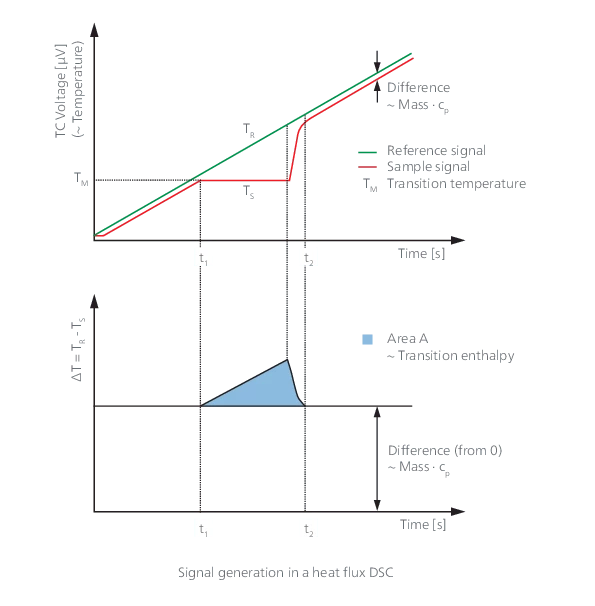
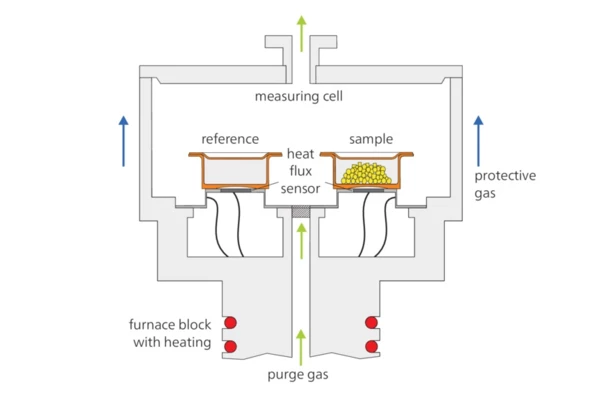
Measuring Principle of Differential Scanning Calorimetry
The measurement principle of Differential Scanning Calorimetry (DSC) is based on monitoring the difference in the amount of heat required to raise the temperature of a sample and a reference material at the same rate. Because the sample and reference are exposed to identical temperature conditions, any difference in heat flow between them is measured. This difference indicates that the sample is undergoing physical or chemical changes such as melting, CrystallizationCrystallization is the physical process of hardening during the formation and growth of crystals. During this process, heat of crystallization is released.crystallization, or chemical reactions that either absorb or release heat.
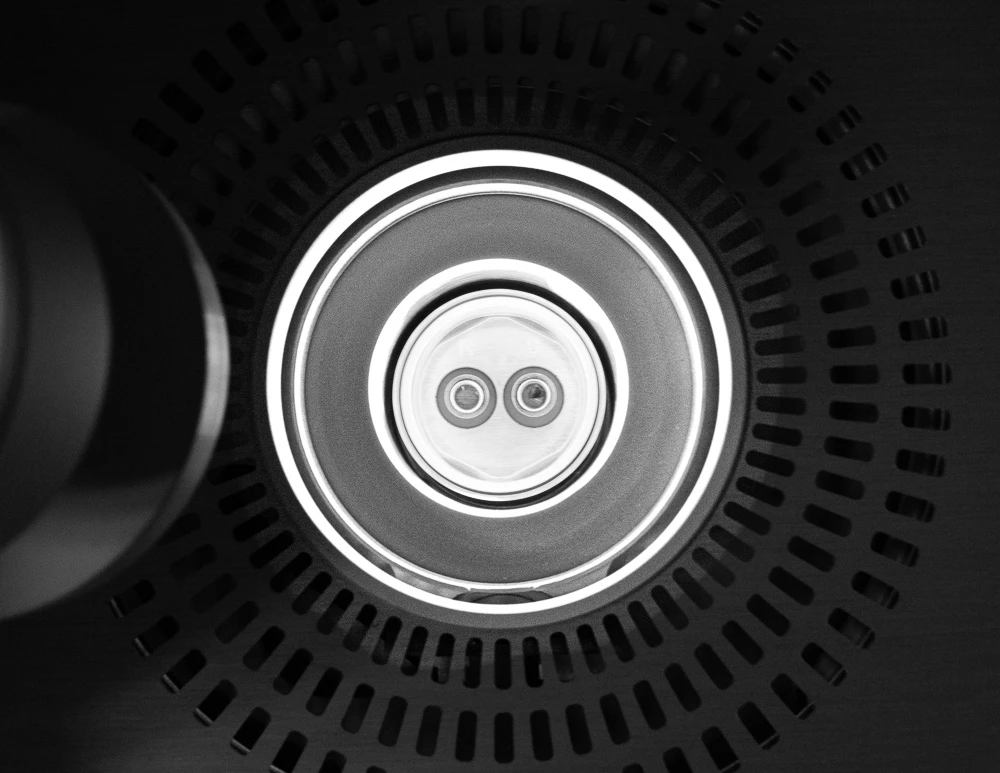
A DSC measuring cell consists of a furnace and an integrated heat-flux sensor with designated positions for the sample and reference pans.
The DSC instrument records these heat flow differences as the temperature changes, providing a detailed profile of the sample's thermal properties and transitions.
The DSC systems are based on relevant instrument and application standards, e.g., ISO 11357, ASTM E793, ASTM D3895, ASTM D3417, ASTM D3418, DIN 51004, DIN 51007.
Specifications
Technical Data
Maximum Temperature Range
Maximum Heating Rate
Automatic Sample Changer
Enthalpy precision (H-Module):
± 0.05% for indium
Temperature precision (H- and P-Module):
± 0.01 K (standard deviation from mean value, indium)
Temperature accuracy (H-Module):
± 0.05 K (Indium)
Peak-to-peak noise (H-Module):
± 2 µW
Repeatability (H-Module):
± 0.3% (peak area; In, C10H16, Zn)
Gas atmospheres:
Inert, oxidizing, static and dynamic
Cooling options:
- Compressed air cooling (RT to 650°C/750°C)
- Vortex tube (compressed air): < 0°C to 650°C/750°C
- Compressed air with switch valve RT to 650°C/750°C
- IC40 (-40°C to 600°C)
- IC70 (-70°C to 600°C)
- IC90 (-90°C to 600°C)
- LN2 (-180°C to 650°C/750°C)
Heating/cooling rate:
- H-Module: 0.001 K/min to 200 K/min
- P-Module: 0.001 K/min to 500 K/min
(Maximum rates depend upon end temperature) - S-Module: 0.001 K/min to 100 K/min

UV-Accessory:
Investigate Curing Reactions with Photo-Calorimeter.
For investigating Curing (Crosslinking Reactions)Literally translated, the term “crosslinking“ means “cross networking”. In the chemical context, it is used for reactions in which molecules are linked together by introducing covalent bonds and forming three-dimensional networks.curing reactions initiated by irradiation, such as UV or light, the ideal instrument to use is a photo-calorimeter or UV-DSC. The DSC 300 Caliris®, equipped with a UV accessory, is specifically designed for this purpose. In this instrument, the light guides are permanently installed in the moving furnace lid, ensuring immediate readiness for UV measurements. When needed, it is simple to exchange the lid to switch back to conventional DSC measurements, thus covering the entire temperature range.
Recommended light sources:
- OmniCure®® S 2000: wavelength range 320 nm to 500 nm
- LX500: wavelengths of 365 nm, 385 nm, 395 nm and 405 nm.
- However, if desired, other commercial lamps can also be adapted for use.
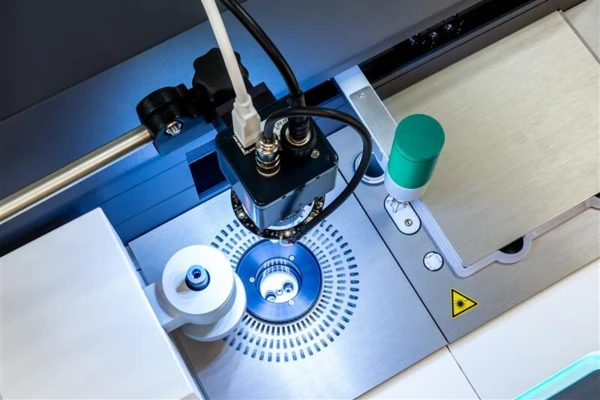
Adding a camera to your DSC
Discover our camera integration, which is designed to enhance your analysis by providing you with more detailed data and real-time insights. Track physical changes in your samples visually as they happen to gain a deeper understanding. Verify sample integrity and behaviour instantly throughout the measurement process. Optimise your sample preparation by identifying issues early on to ensure consistent, reliable results every time.
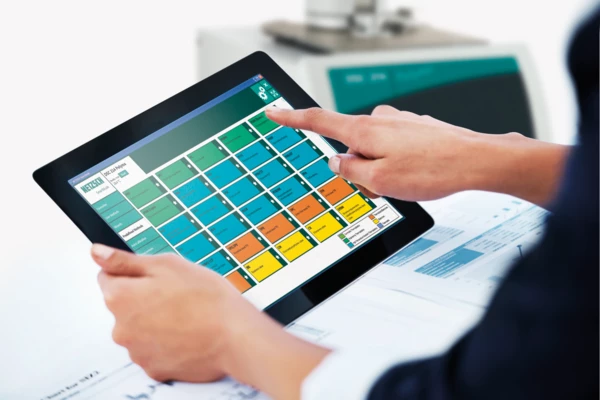
Control your measurements without logging into the PC

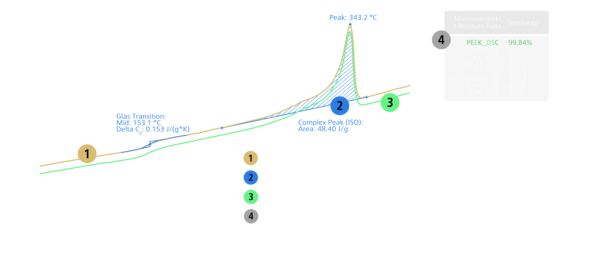
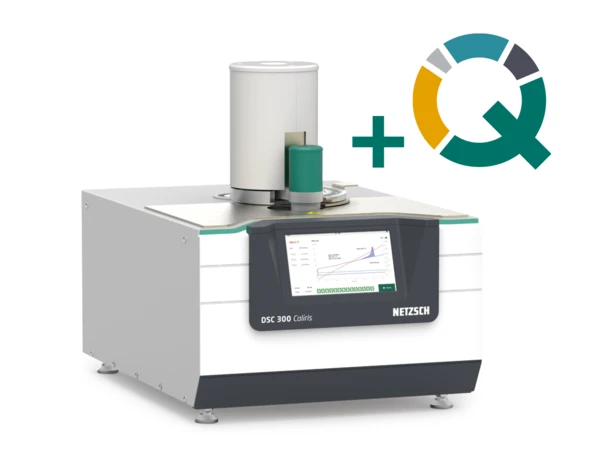
Quantify Your Polymers with AI
Software
Proteus® Software – The Easy Approach to Your Work
Proteus®: Excellent Thermal Analysis Software
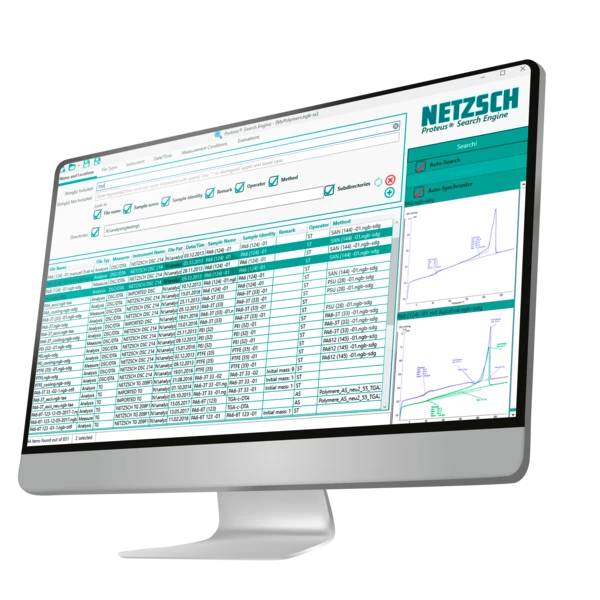
The DSC 300 Caliris® runs under Proteus® software on Windows and includes everything you need to carry out a measurement and evaluate the generated data. The combination of intuitive menus and automated routines makes data interpretation straightforward, even on advanced tasks. The Proteus® software is licensed with the instrument but can also be installed on other computer systems.

This instrument is LabV®️-ready.
Turn data into better products with LabV®—a centralized, AI-driven material intelligence platform that integrates data from this instrument and any other data sources. Designed for R&D and QC engineers, LabV® enables data-driven decision-making to drive innovation and ensure consistently high-quality results.
E-Learning
Become an Expert with our Free E-Learning Courses
All NETZSCH E-Learning Basic Courses are free of charge! The content is created by our laboratory method experts, who share their personal experiences with you. Take advantage of flexible online learning, fully adapted to your training needs!

Consultancy & Sales
Do you have further questions about the instrument, the method and would you like to speak to a sales representative?
Service & Support
Do you already have an instrument and need technical support or spare parts?
Related Devices
Downloads and Media
Brochures
 DSC 300 Caliris® SeriesBrochure(pdf – 2.75 MB)
 DSC 300 Caliris® SeriesData Sheet(pdf – 53 KB)
 Accessories for Differential Scanning Calorimeters and ThermobalancesAccessories Catalogue(pdf – 7.37 MB)
 Thermal and Rheological Characterization of PolymersBrochure(pdf – 6.2 MB)
 Shape the future of paints and coatingsBrochure together with Malvern Panalytical(pdf – 1.45 MB)
Videos
AI-Powered Polymer Quantification with DSC 300 Caliris®
Application Literature