Gaschromatographie-Massenspektrometrie (GC-MS)
NETZSCH-Thermoanalysatoren in Verbindung mit GC-MS-Systemen
Die Gaschromatographie-Massenspektrometrie (GC-MS) kombiniert eine hocheffiziente chromatographische Trennung mit der präzisen Identifizierung flüchtiger und halbflüchtiger Verbindungen. Bei diesem Verfahren werden die bei der thermischen Analyse freigesetzten Gase in einer Kapillarsäule anhand ihrer Wechselwirkung mit der stationären Phase getrennt, durch ein inertes Trägergas transportiert und anschließend im Massenspektrometer anhand ihres Masse-zu-Ladungs-Verhältnisses (m/z) und ihres charakteristischen Fragmentierungsmusters identifiziert.
Die Kopplung von NETZSCH-Thermoanalysatoren mit GC-MS ermöglicht eine detaillierte, nahezu in Echtzeit durchgeführte Emissionsgasanalyse (EGA) komplexer Gemische – selbst im Spurenbereich. Diese leistungsstarke Kombination eignet sich ideal zur Identifizierung von Zersetzungsprodukten, ausgasenden Komponenten oder Lösungsmittelrückständen in Materialien wie Polymeren, Chemikalien und Pharmazeutika.
Unsere Lösungen zur Kopplung von Gaschromatographie und Massenspektrometrie
Entdecken Sie das Angebot unserer NETZSCH-Kopplungslösungen
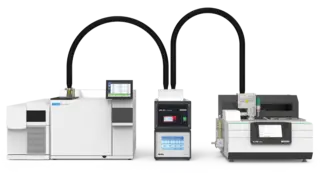
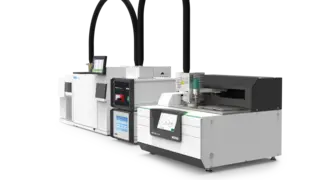
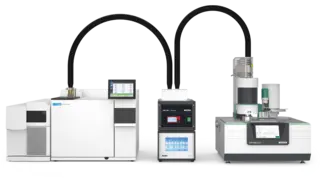
Über die GC-MS-Kopplungsmethode
Perfekt aufeinander abgestimmt für präzise Ergebnisse
Was ist eine Kopplung?
Was ist GC-MS?
Wofür wird GC-MS eingesetzt?
Intelligente Gaseinspritzung für eine effiziente GC-MS-Kopplung
Da die Gastrennung in der GC-Säule von verschiedenen Faktoren wie den Probeneigenschaften, dem Säulendurchfluss, der Säulenlänge und den Eigenschaften der stationären Phase abhängig ist und eine gewisse Zeit in Anspruch nimmt, ist eine direkte Ankopplung der GC an einen kontinuierlichen Online-Probegasstrom nicht möglich. Um dieses Problem zu lösen, hat NETZSCH eine direkte Kopplung im quasi-kontinuierlichen Modus unter Verwendung eines beheizten automatischen Ventilsystems entwickelt. Dieses System ermöglicht eine softwaregesteuerte Gasprobenahme über eine Durchfluss-Probenahmeschleife und erlaubt die Gasinjektion in kurzen, definierten Intervallen, wobei die gesamte Steuerung über die NETZSCH Proteus®-Software erfolgt.
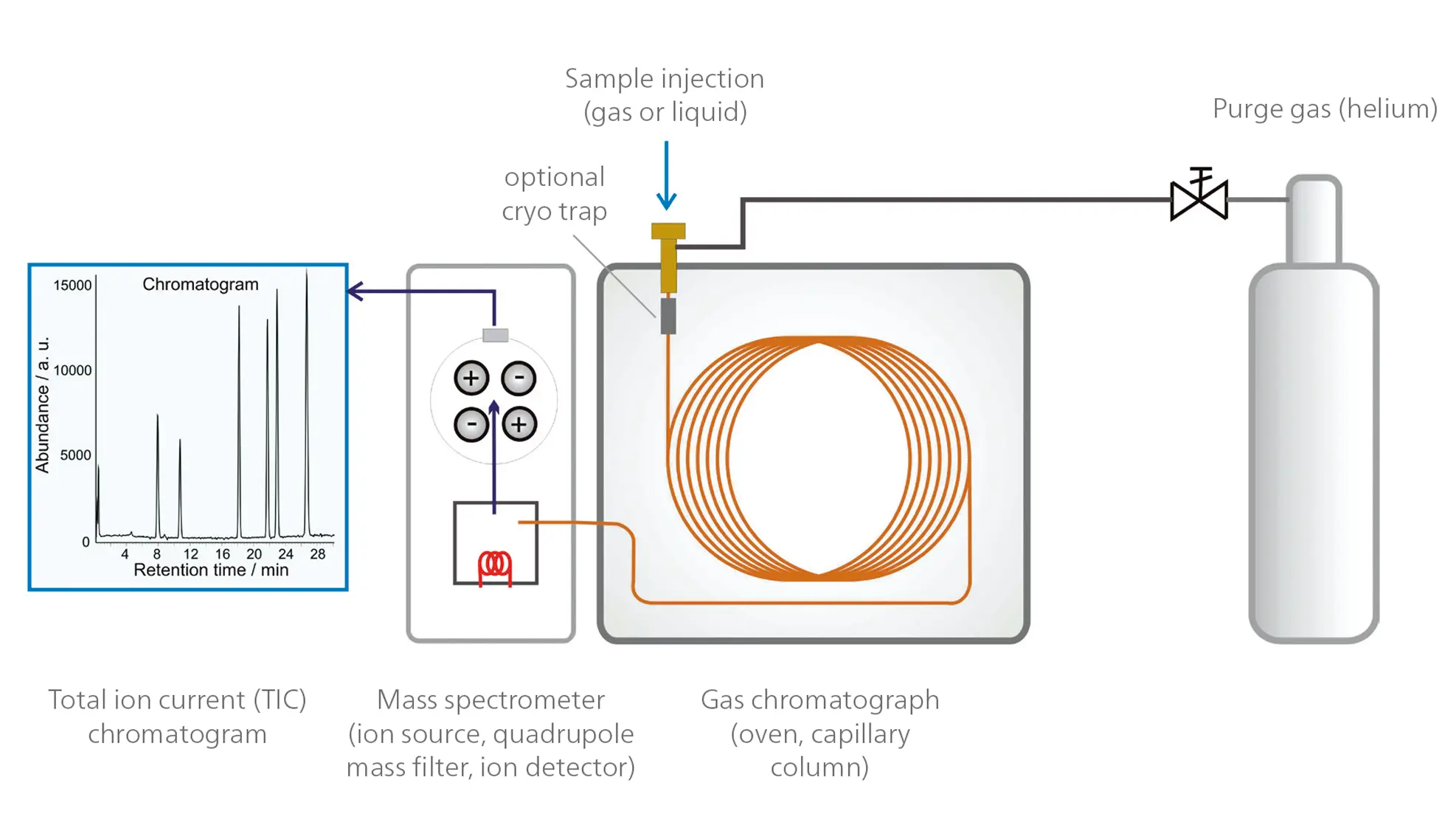
Das aus der Probenahmeschleife (oder im Split-Modus aus einem Teil davon) eingespeiste Gasgemisch durchströmt die GC-Trennsäule unter kontrollierten Durchflussbedingungen (z. B. bei einem konstanten Trägergasdurchfluss von 1,5 bis 2 ml/min). Nach einem abschließenden Druckminderungsschritt gelangen die getrennten Gaskomponenten als Molekularstrahl zur Ionenquelle des Quadrupol-Massenspektrometers. Die GC-Säule kann im quasi-kontinuierlichen Injektionsmodus bei einer konstanten hohen Temperatur betrieben oder im ereignisgesteuerten Modus von niedrigen auf hohe Temperaturen programmiert werden. Das Massenspektrometer erfasst alle flüchtigen Produkte und zeichnet sie in Abhängigkeit von der Zeit auf. In Abhängigkeit von der Retentationszeit entsteht aus dem resultierenden Gesamtionenstrom (TIC) ein Chromatogramm. Die Peaks im Chromatogramm entstehen durch die Wechselwirkung der Probengase mit der stationären Phase und die Flüchtigkeit der einzelnen Komponenten. Diese Retentionspeaks werden von der MS-Software analysiert, um die beteiligten Substanzen zu identifizieren.
Multi-Injektions- und Kryofalle-Modus
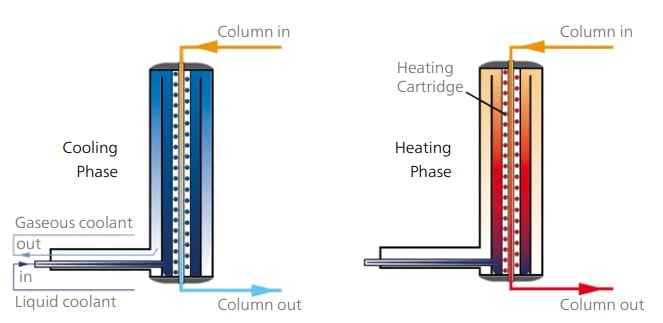
Eine Kryofalle ist eine Vorrichtung, die in Gasanalysesystemen zum Kondensieren und Sammeln flüchtiger Verbindungen bei sehr niedrigen Temperaturen eingesetzt wird. Wie in der Abbildung links dargestellt, wird während einer TGA- oder STA-Messung der Außenmantel der Kryofalle mit flüssigem Stickstoff gekühlt (Kühlphase), um flüchtige ausgasende Verbindungen zu kondensieren und zu konzentrieren. Sobald die Gassammlung abgeschlossen ist, wird die Falle mithilfe der eingebauten Heizpatrone schnell aufgeheizt (Heizphase), wodurch die konzentrierten Gase in einem scharfen Impuls freigesetzt werden, um in die GC-Säule injiziert zu werden.
Ventilbox
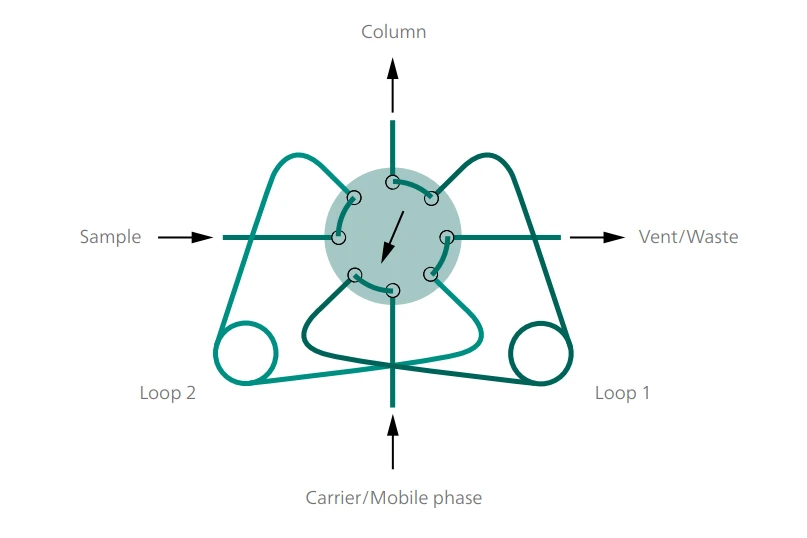
Die NETZSCH-Ventilbox verfügt über ein beheiztes Doppelschleifensystem, das für eine präzise und flexible Gasinjektion während der Entgasungsanalyse ausgelegt ist. Der gesamte Betrieb des Ventils – einschließlich Zeitsteuerung, Injektionsintervalle und Modusauswahl – wird vollständig von der NETZSCH Proteus®-Software gesteuert.
Dieses System unterstützt zwei Hauptinjektionsmodi:
- Kontinuierliche Injektionen: Wiederkehrende Injektionen in definierten Intervallen, wobei Anzahl und Zeitpunkt der Injektionen vom Anwender festgelegt werden. Dies eignet sich ideal zur Überwachung der Gasentwicklung im Zeitverlauf.
- Ereignisgesteuerte Injektionen: Injektionen, die durch bestimmte, von TG oder STA während der thermischen Analyse erkannte Ereignisse ausgelöst werden (z. B. ein Peak in der Massenverlustrate), ermöglichen eine gezielte Probenahme der bei wichtigen thermischen Ereignissen freigesetzten Gase.
Die beheizte Bauweise der Ventilbox verhindert Kondensation und gewährleistet eine zuverlässige Weiterleitung aller freigesetzten Gase zur GC-Säule zur anschließenden Trennung und Analyse.
Maximale Flexibilität
Neben der Möglichkeit, mit der oben beschriebenen optionalen Kryofalle höhere Konzentrationen der freigesetzten Gasspezies zu erzielen, lässt sich bei unserem System die GC-Säule auch vollständig umgehen, sodass das Gasgemisch direkt in das Massenspektrometer injiziert werden kann. Dieser eigenständige Betrieb eignet sich für eine schnellere Analyse, unabhängig von einem TG- oder STA-Durchlauf.
Flexible GC-MS-Lösungen durch starke Partnerschaften
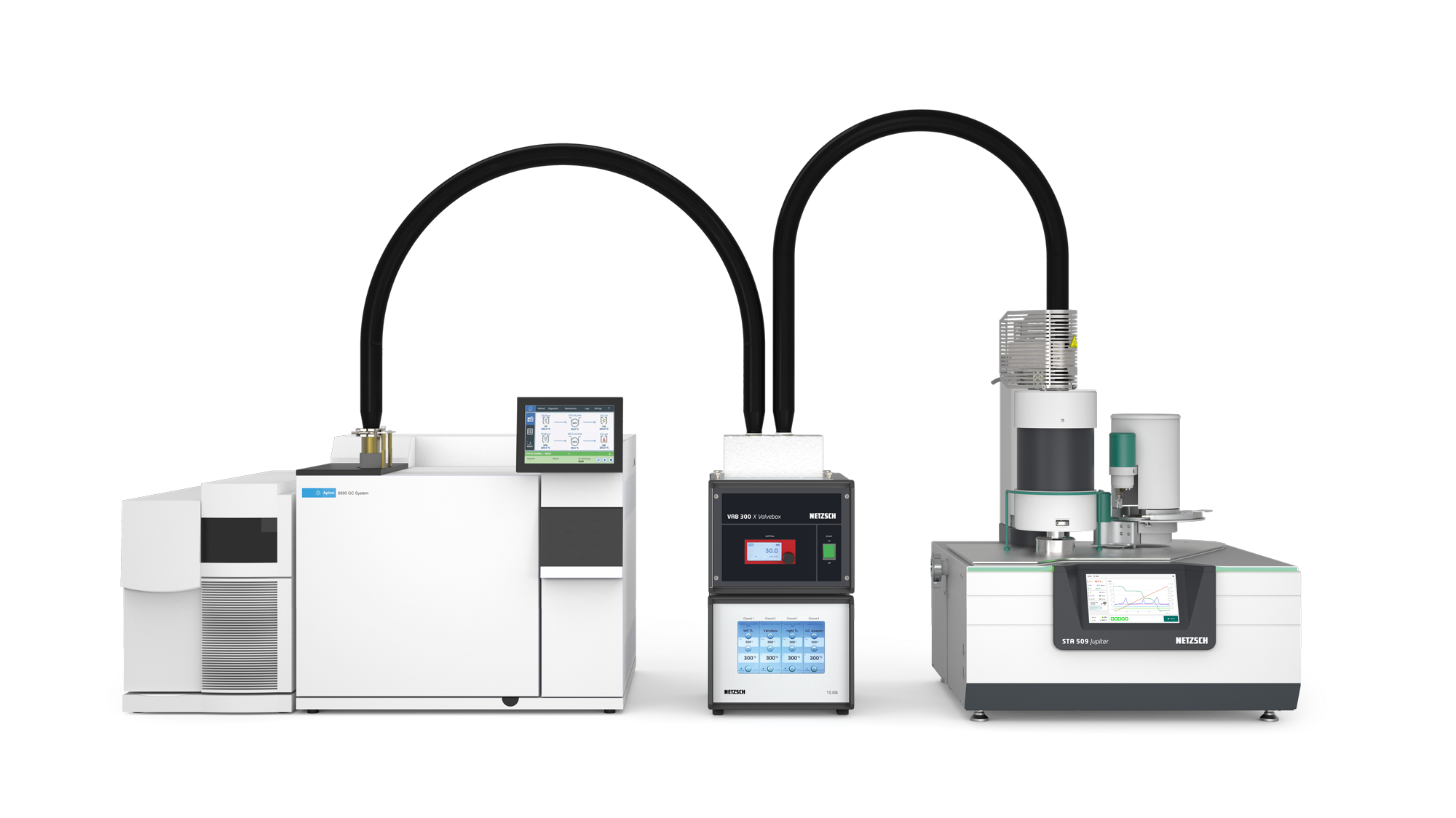
Bei NETZSCH arbeiten wir mit einer Vielzahl bewährter Partner zusammen, um flexible und leistungsstarke Lösungen für die GC-MS-Kopplung anzubieten. Ganz gleich, ob Sie einen bestimmten GC- oder MS-Hersteller bevorzugen – unsere Systeme sind auf eine nahtlose Integration ausgelegt und gewährleisten eine zuverlässige, anwendungsspezifische Analyse von Entgasungsprodukten, die genau auf die Anforderungen Ihres Labors zugeschnitten ist.
Ihre Vorteile
> 60
> 50
Gaschromatographie-Massenspektrometrie (GC-MS) in Verbindung mit der NETZSCH-Thermoanalyse – Ihre Vorteile:
- Hocheffiziente chromatographische Trennung und Identifizierung der entstehenden Gase:
GC-MS kombiniert die Trennleistung der Gaschromatographie mit den Möglichkeiten der Molekülidentifizierung durch Massenspektrometrie und ermöglicht so den Nachweis und die Analyse komplexer Gasgemische, die während TG- oder STA-Messungen freigesetzt werden. - Präzise Analyse sich überschneidender oder ähnlicher Gase:
Im Gegensatz zur direkten MS-Kopplung trennt die GC die Gase, bevor sie in das Massenspektrometer gelangen, sodass selbst chemisch ähnliche oder gleichzeitig freigesetzte Komponenten unterschieden und identifiziert werden können. - Umfassender Einblick in Zersetzungs- und Reaktionsmechanismen:
Durch die Analyse des thermischen Verhaltens (Massenänderungen, thermische Ereignisse) und der chemischen Beschaffenheit der freigesetzten Gase liefert die TG- oder STA-GC-MS-Kopplung ein detailliertes Bild von thermischen Zersetzungen oder Reaktionsprozessen – ideal für Forschung, Fehleranalyse oder Materialentwicklung. - Hohe Empfindlichkeit für flüchtige und halbflüchtige Verbindungen:
GC-MS ermöglicht den Nachweis bis hinunter in den Spurenbereich (ppb) und eignet sich somit zur Identifizierung selbst von Nebenprodukten oder Verunreinigungen in geringen Konzentrationen, die für die Qualitätskontrolle und behördliche Prüfungen von entscheidender Bedeutung sind. - Nahtlose Integration mit NETZSCH-Thermoanalysatoren:
Die Kopplung über eine optimierte Schnittstelle gewährleistet synchronisierte Daten aus der thermischen und der Gasanalyse, was zu zuverlässigen, reproduzierbaren Messungen und einem umfassenden Verständnis der thermischen Ereignisse und der entsprechenden entstehenden Spezies führt.
Warum sollten Sie sich für einen NETZSCH-Thermoanalysator für Ihre Kupplung entscheiden?
Wir liefern maßgeschneiderte Lösungen, die über reine Messdaten hinausgehen und durch intelligente Ansätze neue Erkenntnisse liefern.
Bei NETZSCH Analysieren & Prüfen kombinieren wir präzise thermische Analysen mit fortschrittlicher Gasanalyse mittels GC-MS, um eine unübertroffene analytische Tiefe zu erzielen.
Wenn Sie mit komplexen Materialsystemen oder Zersetzungsstudien arbeiten oder eine Gasidentifizierung auf behördlichem Niveau benötigen, ist NETZSCH aus folgenden Gründen Ihr idealer Partner:
- Erweiterte Datenauswertung mit der Proteus®-Software
Unsere Proteus®-Software unterstützt die GC-MS-Kopplung durch die synchronisierte Auswertung von Temperatur- und Ausgasungsdaten. Softwarefunktionen wie AutoEvaluation, Identify (zum Vergleich mit Materialbibliotheken) und die Peak-Dekonvolution helfen dabei, aus komplexen Gasgemischen, die über die GC-Säule getrennt und mittels MS identifiziert wurden, ein Maximum an Erkenntnissen zu gewinnen. - Modulare Flexibilität mit dem Autosampler
Der Autosampler erweitert Ihre GC-MS-Anlage um Automatisierung und Flexibilität. Ganz gleich, ob Sie mehrere Materialien untersuchen oder Langzeitstudien durchführen – das System lässt sich an Ihren Labor-Workflow anpassen und steigert so Effizienz und Durchsatz. - Maßgeschneiderte Ofen- und Schnittstellenlösungen für die GC-Kopplung
Unsere Systemkonfigurationen umfassen Ofen- und Schnittstellenoptionen, die einen optimalen Gastransfer zum GC-Einlass gewährleisten. Dies garantiert minimale Kondensation und eine genaue Korrelation zwischen thermischen Ereignissen und Gasfreisetzungsprofilen – entscheidend für eine zuverlässige GC-Trennung und -Detektion. - Begleitung vom Konzept bis zur Inbetriebnahme – von der Auswahl der richtigen Kopplungskonfiguration über die Sicherstellung einer sauberen GC-Schnittstelle bis hin zur Kalibrierung
Ihrer Detektionsparameter unterstützen Sie unsere Experten bei jedem Schritt. Wir bieten individuelle Beratung und einen umfassenden Installationsservice, der genau auf Ihre analytischen Ziele zugeschnitten ist. - Kompetenz, auf die Sie sich verlassen können – Unser erfahrenes Team in den Bereichen Anwendung, Service und Schulung hilft Ihnen dabei, sowohl thermische als auch GC-MS-Daten zu meistern.
Ganz gleich, ob Sie noch keine Erfahrung mit gekoppelten Systemen haben oder Ihre Möglichkeiten erweitern möchten – unser Team sorgt dafür, dass Sie aus jeder Messung den größtmöglichen Nutzen ziehen. - Langlebigkeit und Support, auf die Sie sich verlassen können
Die in Deutschland entwickelten NETZSCH-Geräte sind auf langfristige Leistung und Nachhaltigkeit ausgelegt. Mit einer Ersatzteilverfügbarkeit von mindestens 10 Jahren und bewährter Robustheit ist Ihre Investition in eine NETZSCH-GC-MS-Lösung eine Investition in die Zukunft.
Lange Lebensdauer des Geräts
Immer für Sie da
Unbegrenzte Garantie

Unser Qualitätsversprechen:
Die unbegrenzte NETZSCH-Garantie
Unser Engagement für Qualität geht weit über unsere Analysegeräte hinaus. Wir wissen, dass Ihre Investition in Spitzentechnologie eine langfristige ist. Deshalb bieten wir Ihnen etwas Einzigartiges – unsere unbegrenzte Garantie.
Anwendungen für die Gaschromatographie (GC) und Massenspektrometrie (MS)
Die Gaschromatographie-Massenspektrometrie (GC-MS) ist ein leistungsstarkes Analyseverfahren, das die Trennleistung der Gaschromatographie mit der Präzision der Massenspektrometrie bei der molekularen Identifizierung verbindet. Bei NETZSCH Analysieren & Prüfen ermöglichen unsere integrierten GC-MS-Lösungen eine hochauflösende Analyse komplexer Gasgemische, die bei der thermischen Analyse entstehen, und liefern sowohl qualitative als auch quantitative Erkenntnisse mit außergewöhnlicher Empfindlichkeit.
Ganz gleich, ob Sie Zersetzungsprodukte analysieren, Verunreinigungen identifizieren oder Reaktionsmechanismen untersuchen, die GC-MS-Kopplung mit NETZSCH-Geräten gewährleistet genaue, selektive und zuverlässige Ergebnisse für ein breites Spektrum an Materialien und Branchen.

Polymere und Kunststoffe
Die Kombination von thermischer Analyse mit GC-MS ermöglicht die molekulare Identifizierung von freigesetzten Gasen, Additiven und Abbauprodukten. Dieser Ansatz liefert Aufschluss über chemische Reaktionsmechanismen und chemisch-physikalische Veränderungen, die mit TG allein nicht aufgeklärt werden können.
- Vorteil: Ein tieferes Verständnis der Alterung und Zersetzung von Polymeren sowie der Formulierungsgestaltung.
Biomasse
Die GC-MS-Kopplung ermöglicht eine detaillierte Analyse von Pyrolysegasen und biobasierten Zersetzungsprodukten und unterstützt so die Bewertung der Umwandlungseffizienz und der Nebenproduktbildung während der thermischen Aufbereitung.
- Vorteil: Optimierte Nutzung von Biomasse und verbesserte Prozessentwicklung für Energie und Werkstoffe.


Arzneimittel
Die GC-MS-Kopplung hilft bei der Charakterisierung von Lösungsmittelrückständen, Abbauprodukten und Reaktionsnebenprodukten in Wirkstoffen und Formulierungen. Die Technik unterstützt die Einhaltung gesetzlicher Vorschriften sowie Stabilitätsstudien.
- Vorteil: Verbesserte Sicherheitsbewertung und optimierte Kontrolle von Reinheit und Stabilität.
Lebensmittel
Die Kombination von GC-MS mit thermischer Analyse ermöglicht die präzise Identifizierung flüchtiger Verbindungen, Geschmacksmarker und potenzieller Verunreinigungen, die beim Aufheizen freigesetzt werden. Dies trägt zur Produktsicherheit, zur Qualitätskontrolle und zur Optimierung der Rezeptur bei.
- Vorteil: Zuverlässiger Nachweis von Spurenverunreinigungen und geschmacksrelevanten Verbindungen.


Kosmetik
Durch die Überwachung flüchtiger Bestandteile und Abbauprozesse liefert die GC-MS wertvolle Informationen zur Verträglichkeit der Inhaltsstoffe, zur Langzeitstabilität und zu potenziellen allergenen Substanzen.
- Vorteil: Höhere Produktsicherheit und optimierte Leistungsfähigkeit der Rezeptur.

Beratung & Vertrieb
Haben Sie weitere Fragen zum Gerät oder zur Methode und möchten mit einem Vertriebsmitarbeiter sprechen?
Service & Support
Sie haben bereits ein Gerät und benötigen technische Unterstützung oder Ersatzteile?
Medien und Schulungen

Werden Sie Experte für thermische Analysatoren in Verbindung mit Gasanalysatoren!
Unsere Schulungsabteilung bietet das ganze Jahr über spannende Schulungen zu verschiedenen Methoden an.
Erfahren Sie mehr über unser Kursangebot und melden Sie sich jetzt an!
Broschüren und Datenblätter


Anwendungsliteratur zu Gaschromatographie (GC) und Massenspektrometrie (MS)
Unsere neuesten Blog-Beiträge zu den Themen Gaschromatographie (GC) und Massenspektrometrie (MS)



Videos zum Thema Gaschromatographie (GC) und Massenspektrometrie (MS)