
applications
Characterization of Nuclear Materials
Safety and Efficiency of Nuclear Materials through Advanced Thermal Analysis
Nuclear energy is reclaiming its role as a key solution to global energy demands. Safe, efficient, and low-carbon, advanced reactors and closed fuel cycles depend on a deep understanding of thermophysical properties. Thermal analysis plays a vital role in advancing nuclear fuels, reactor design, molten salt systems, and nuclear waste management.
NETZSCH Analyzing & Testing is the leading supplier of thermal analysis and thermophysical property instrumentation in the nuclear industry. Our instruments are reliable, robust, accurate, and easy to use. Thanks to their modular designs, our instruments are ideally suited for incorporation into gloveboxes and hot cells.
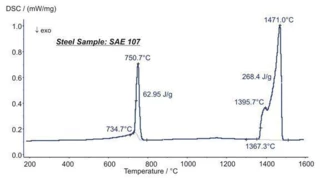
NETZSCH allows for material characterization and the study of properties including Specific Heat Capacity (cp)Heat capacity is a material-specific physical quantity, determined by the amount of heat supplied to specimen, divided by the resulting temperature increase. The specific heat capacity is related to a unit mass of the specimen.specific heat capacity, enthalpy, weight change, conductivity, diffusivity, and evolved gas analysis. The physical and chemical properties of materials that change under the influence of temperature can be systematically analyzed by applying specified variations in temperature, atmosphere, and pressure.
The DMA Eplexor® series up to ±6000 N allow for dynamic mechanical (or static) characterization of a wide range of materials.

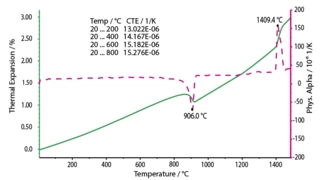
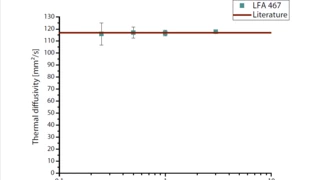
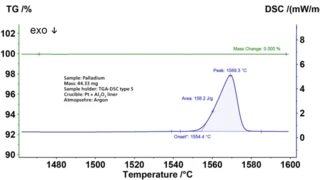
Property measurements on fission products and/or their surrogates, glasses, containment components and geological materials associated with long-term isolation in repositories are also of paramount importance. The properties of interest include but are not limited to Thermal ConductivityThermal conductivity (λ with the unit W/(m•K)) describes the transport of energy – in the form of heat – through a body of mass as the result of a temperature gradient (see fig. 1). According to the second law of thermodynamics, heat always flows in the direction of the lower temperature.thermal conductivity, Thermal DiffusivityThermal diffusivity (a with the unit mm2/s) is a material-specific property for characterizing unsteady heat conduction. This value describes how quickly a material reacts to a change in temperature.thermal diffusivity, specific heat, transformation energetics, thermal expansion, bulk DensityThe mass density is defined as the ratio between mass and volume. density, solidus/liquidus temperatures and O/M ratio.
Clearly, measurement of these properties on the materials mentioned above will necessarily be carried out in glovebox and hot cell environments as well as in cold facilities.
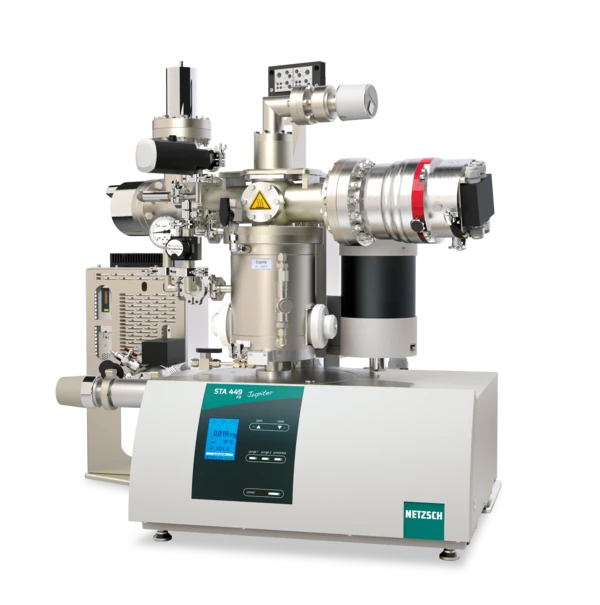
Partner with NETZSCH for your comprehensive characterization of nuclear materials!
Thermophysical Properties
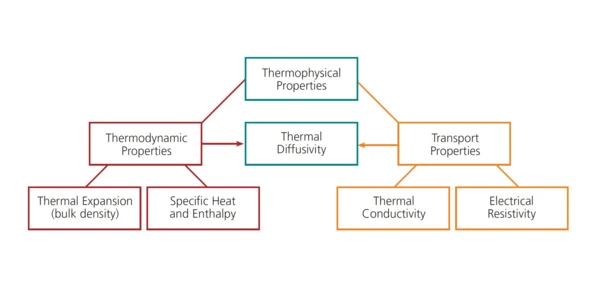
Thermophysical properties can be divided into two categories – transport and thermodynamic. Transport properties include, but are not limited to, Thermal ConductivityThermal conductivity (λ with the unit W/(m•K)) describes the transport of energy – in the form of heat – through a body of mass as the result of a temperature gradient (see fig. 1). According to the second law of thermodynamics, heat always flows in the direction of the lower temperature.thermal conductivity, Electrical ResistivityElectrical resistivity or electrical resistance is a fundamental material property that quantifies how strongly a given material opposes the flow of electric current.electrical resistivity and Thermal DiffusivityThermal diffusivity (a with the unit mm2/s) is a material-specific property for characterizing unsteady heat conduction. This value describes how quickly a material reacts to a change in temperature.thermal diffusivity. (Actually, Thermal DiffusivityThermal diffusivity (a with the unit mm2/s) is a material-specific property for characterizing unsteady heat conduction. This value describes how quickly a material reacts to a change in temperature.thermal diffusivity is a hybrid transport/thermodynamic property.) Thermodynamic properties include specific heat, transition energetics and thermal expansion (bulk DensityThe mass density is defined as the ratio between mass and volume. density).

Read the Full Brochure


Application Literature






Consultancy & Sales
Do you have further questions about the instrument, the method and would you like to speak to a sales representative?
Service & Support
Do you already have an instrument and need technical support or spare parts?