
nUCLEAR
DIL and TMA in Nuclear
Dimensional Stability Under Thermal Load
NETZSCH instruments are used worldwide in research institutes, industry and government laboratories to investigate the thermal behavior, stability and thermophysical properties of nuclear materials under controlled and reproducible conditions.
Thermal expansion and dimensional stability are key factors for nuclear materials exposed to temperature changes during operation, start-up, shutdown or accident scenarios.
NETZSCH TMA and DIL systems enable precise measurement of:
- Coefficient of thermal expansion (Coefficient of Linear Thermal Expansion (CLTE/CTE)The coefficient of linear thermal expansion (CLTE) describes the length change of a material as a function of the temperature.CTE)
- Length changes during heating and cooling
- Phase-related dimensional effects
- SinteringSintering is a production process for forming a mechanically strong body out of a ceramic or metallic powder. Sintering and CreepCreep describes a time and temperature dependent plastic deformation under a constant force. When a constant force is applied to a rubber compound, the initial deformation obtained due to the application of the force is not fixed. The deformation will increase with time.creep-related deformation
These measurements are essential for:
- Evaluating fuel-cladding interactions
- Assessing compatibility of material combinations
- Understanding thermal StressStress is defined as a level of force applied on a sample with a well-defined cross section. (Stress = force/area). Samples having a circular or rectangular cross section can be compressed or stretched. Elastic materials like rubber can be stretched up to 5 to 10 times their original length.stress development
- Supporting lifetime and safety assessments
Thanks to their robust designs, high-temperature capability and precise displacement measurement, NETZSCH TMA and DIL instruments provide reliable data for nuclear materials research and qualification.
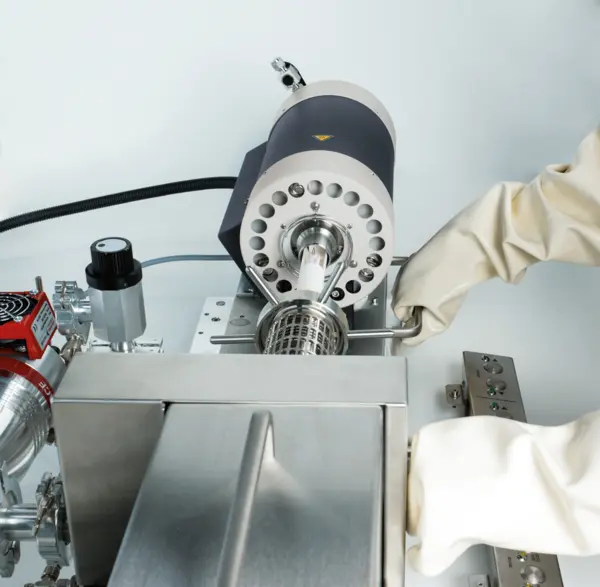
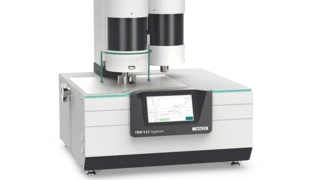
DIL
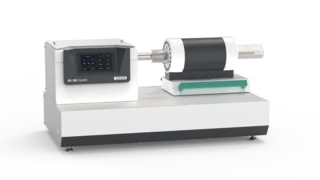
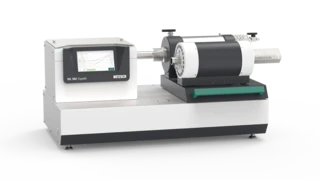
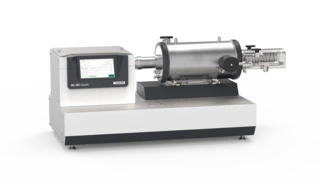
Precise knowledge of thermal expansion is essential for materials used in nuclear environments, where temperature changes can directly influence component integrity and system safety. NETZSCH Dilatometers allow for accurate determination of the linear thermal expansion, Phase TransitionsThe term phase transition (or phase change) is most commonly used to describe transitions between the solid, liquid and gaseous states.phase transitions and SinteringSintering is a production process for forming a mechanically strong body out of a ceramic or metallic powder. sintering behavior over a wide temperature range.
DIL is widely applied to characterize nuclear fuels, cladding materials, structural alloys, ceramics and graphite. The method supports material qualification by providing reliable coefficients of thermal expansion (Coefficient of Linear Thermal Expansion (CLTE/CTE)The coefficient of linear thermal expansion (CLTE) describes the length change of a material as a function of the temperature.CTE), which are critical for assessing material compatibility, thermomechanical stresses and dimensional stability during operation.
By delivering reproducible, high-resolution expansion data under controlled conditions, NETZSCH dilatometers support design calculations, safety assessments and lifetime predictions throughout the nuclear fuel cycle.
TMA
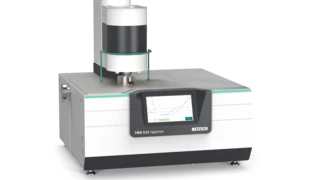
Our thermomechanical analyzers (TMA) extend dimensional analysis by combining controlled temperature programs with defined mechanical loading. This makes TMA particularly well-suited to investigating deformation, CreepCreep describes a time and temperature dependent plastic deformation under a constant force. When a constant force is applied to a rubber compound, the initial deformation obtained due to the application of the force is not fixed. The deformation will increase with time.creep behavior, softening, shrinkage and thermo-mechanical stability of nuclear-relevant materials.
Typical applications include the analysis of polymers, composites, ceramics and structural materials used in nuclear systems, where materials are exposed to both thermal and mechanical stresses. TMA allows for the evaluation of dimensional changes under load, providing valuable insight into material behavior under service-relevant conditions.
By facilitating precise thermo-mechanical characterization, NETZSCH TMA systems contribute to material selection, performance evaluation and safety-related design decisions in nuclear research and industry.

Thermal Expansion
Thermal expansion can comprise lattice, electronic, magnetic and vacancy/interstitial components, depending upon the material and temperature.
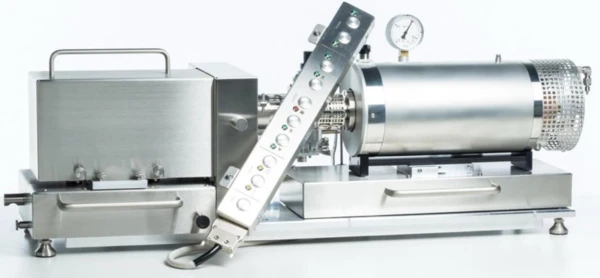
Thermal expansion data are key to both reactor and fuel design. For example, it is necessary for quantification of:
- fuel swelling during irradiation
- fuel/coating compatibility (e.g., UO2/graphite/SiC or ZrC)
- abrasion and corrosion coating/substrate compatibility
- densification during SinteringSintering is a production process for forming a mechanically strong body out of a ceramic or metallic powder. sintering
- thermal expansion coefficients
- volume change during melting/solidification
- bulk DensityThe mass density is defined as the ratio between mass and volume. density
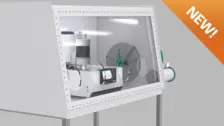
As stated earlier, the data can also be used to determine solidus and liquidus temperatures. By far the most versatile, accurate and economical technique to measure thermal expansion is pushrod dilatometry. Dilatometers are well suited for glovebox/hot cell work.
Nuclear Safety, Performance and Materials Research
NETZSCH Analyzing & Testing provides proven thermal analysis solutions that support nuclear research, fuel development, safety assessment and materials qualification. Our instruments are used worldwide in research institutes, industry and government laboratories to investigate the thermal behavior, stability and thermophysical properties of nuclear materials under controlled and reproducible conditions.
Downloads and Media
Brochures


Related Devices
Application Literature




Consultancy & Sales
Do you have further questions about the instrument, the method and would you like to speak to a sales representative?
Service & Support
Do you already have an instrument and need technical support or spare parts?