15.06.2026 by Aileen Sammler
Understanding Molten Salts for the Next Generation of Nuclear Reactors
Insights from the Idaho National Laboratory, USA, on Thermophysical Property Measurements for Molten Salt Reactor Development
An Interview about Molten Salt Reactors (MSRs)
Molten salt reactors (MSRs) are increasingly seen as one of the most promising concepts for the future of nuclear energy. Their potential advantages include improved safety, high thermal efficiency, flexible fuel concepts, and applications ranging from stationary power generation to marine reactor systems.
But before these reactors can be deployed with confidence, one major challenge must be solved: understanding the behavior of molten salts under realistic operating conditions.
Our NETZSCH expert, Melinda Tucker (Global Sector Manager Nuclear, Defense, Oil & Gas), visited the Idaho National Laboratory (INL) in the USA to speak with Dr. Toni Karlsson, lead scientist in the Molten Salt Thermophysical Examination project. The interview provided fascinating insights into how advanced thermal analysis and thermophysical property measurements support the development of future molten salt reactor technologies.
Why Molten Salts Matter
Unlike conventional solid nuclear fuels, molten salt reactors (MSRs) use liquid salt systems as fuel carriers or coolants. These salts operate at high temperatures while remaining stable over a broad liquid temperature range.
According to Dr. Karlsson, this makes MSRs particularly attractive for advanced reactor concepts:
“They have a high Melting Temperatures and EnthalpiesThe enthalpy of fusion of a substance, also known as latent heat, is a measure of the energy input, typically heat, which is necessary to convert a substance from solid to liquid state. The melting point of a substance is the temperature at which it changes state from solid (crystalline) to liquid (isotropic melt).melting point, but also a high operating window.”
Molten salts also offer:
- low viscosity for efficient pumping
- low vapor pressure
- homogeneous fuel distribution
- strong Thermal StabilityA material is thermally stable if it does not decompose under the influence of temperature. One way to determine the thermal stability of a substance is to use a TGA (thermogravimetric analyzer). thermal stability
- potential for safer reactor operation
However, these advantages also present entirely new challenges in terms of material characterization.
Measuring the Properties of Complex Salt Systems
At INL, researchers investigate a wide range of thermophysical properties of molten salts, including:
- viscosity
- DensityThe mass density is defined as the ratio between mass and volume. density
- Specific Heat Capacity (cp)Heat capacity is a material-specific physical quantity, determined by the amount of heat supplied to specimen, divided by the resulting temperature increase. The specific heat capacity is related to a unit mass of the specimen.specific heat capacity
- melting behavior
- enthalpy of fusion
- thermal expansion
- phase diagram development
- vapor pressure
The team focuses particularly on actinide-containing salt systems involving uranium, plutonium, and thorium in chloride and fluoride forms.
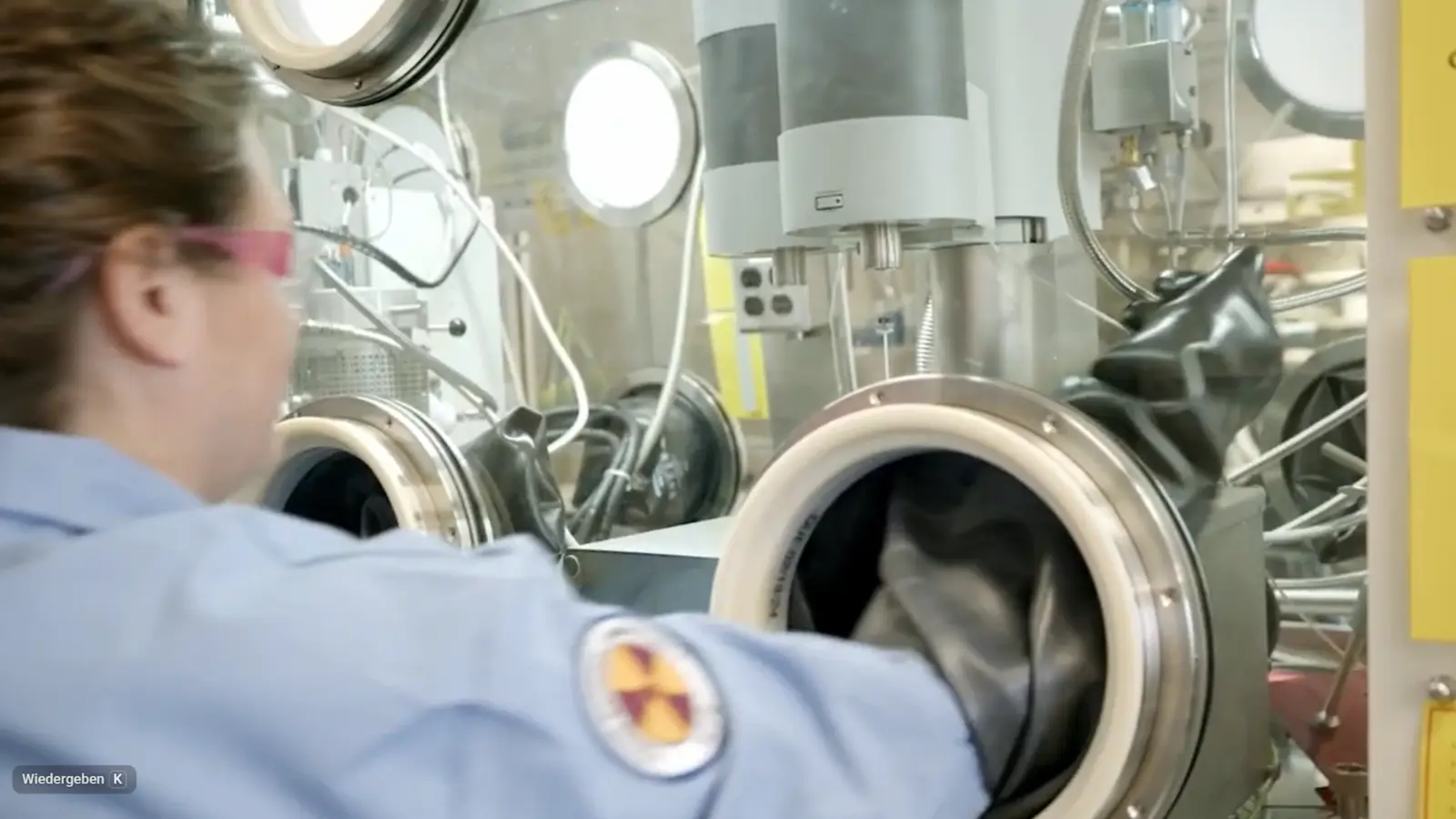
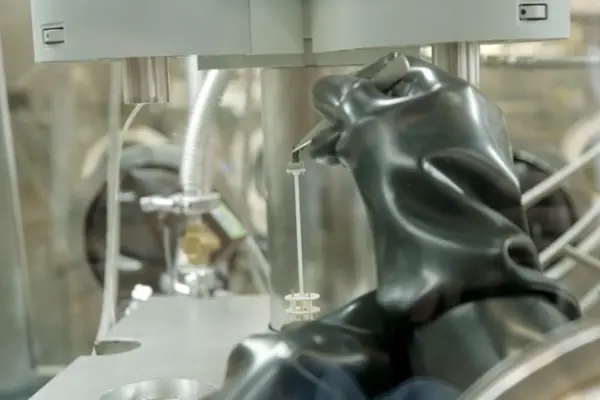
Because these materials are radioactive and difficult to obtain commercially, the researchers often synthesize their own salts in-house under carefully controlled conditions.
Why Thermal Analysis Is Essential
Understanding molten salts requires much more than simply heating a sample.
Salts can:
- absorb moisture and oxygen
- become highly corrosive
- CreepCreep describes a time and temperature dependent plastic deformation under a constant force. When a constant force is applied to a rubber compound, the initial deformation obtained due to the application of the force is not fixed. The deformation will increase with time.creep during melting
- change composition over time
- exhibit strong sensitivity to impurities
This is why thermal analysis becomes a critical tool for reactor development and safety assessment.
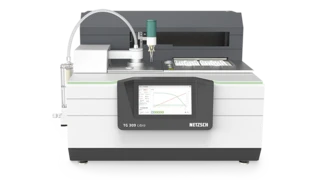
Before performing advanced measurements, the team first evaluates the salt stability using thermogravimetric analysis (TGA). These experiments help determine whether mass changes occur during heating and whether salts remain stable across the intended temperature range.
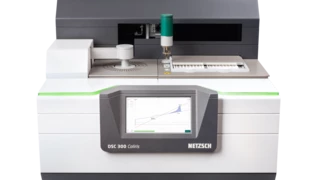
Differential Scanning Calorimetry (DSC) is then used for:
- Melting Temperatures and EnthalpiesThe enthalpy of fusion of a substance, also known as latent heat, is a measure of the energy input, typically heat, which is necessary to convert a substance from solid to liquid state. The melting point of a substance is the temperature at which it changes state from solid (crystalline) to liquid (isotropic melt).melting temperature determination
- heat capacity determination
- enthalpy of fusion
- Phase TransitionsThe term phase transition (or phase change) is most commonly used to describe transitions between the solid, liquid and gaseous states.phase transition analysis
For many measurements, INL uses specially prepared glassy carbon crucibles because they minimize salt migration and improve measurement reproducibility.
When Impurities Change Everything
One particularly interesting finding presented during the interview concerned plutonium chloride systems.
Researchers discovered that even small deviations in salt purity significantly altered the phase diagram and melting behavior of the material. Watch the full interview here:
Building the Future: The MISTEC Facility
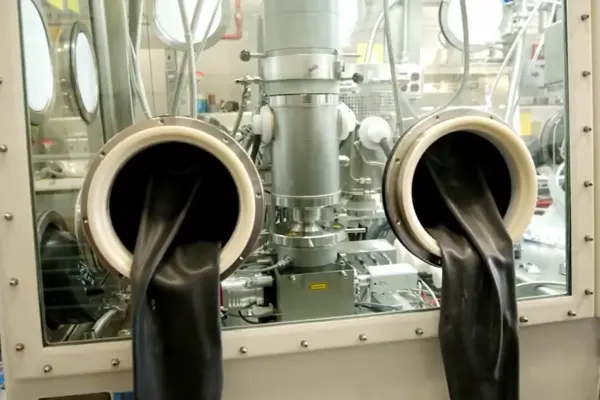
To support future molten salt reactor development, the Idaho National Laboratory established the Molten Salt Thermophysical Examination Capability (MISTEC)
This shielded combined glovebox-hot cell facilityis specifically designed for:
- irradiated salt analysis
- actinide-bearing salts
- oxide-containing systems
- reactor licensing support
- long-term burnup studies
The facility allows researchers to characterize irradiated molten salts under realistic conditions — an essential step toward commercial deployment of MSRs.
To learn more about MISTEC, watch the full interview: https://youtu.be/l_zyTxUykAg?t=2964
From Material Characterization to Nuclear Safety
The interview clearly demonstrates that advanced thermophysical property measurements are not just academic exercises.
They directly support:
- reactor design & commercial development
- safety analysis
- fuel development
- licensing strategies
- long-term operational reliability
As molten salt reactors continue to gain global attention, accurate thermal analysis and rheological characterization are becoming increasingly important for understanding these highly complex material systems.
Watch the Full Interview
The complete discussion between Melinda Tucker and Dr. Toni Karlsson provides even deeper insights into:
- molten salt characterization techniques
- challenges of actinide salt measurements
- reactor safety considerations
- future molten salt research infrastructure
- advanced thermal analysis approaches for nuclear applications
Watch the full interview here: https://youtu.be/l_zyTxUykAg?t=2964
You may also be interested in this webinar:Salt Systems Exploring Experimental Limits
Salt systems form a distinct group of materials alongside oxides and metals. Some salt mixtures can form metastable phases, which may depend on the temperature program or other parameters of the experimental equipment.
These problems and possible solutions for the investigation of salt systems with TG/DTA/DSC/TMA/LFA instruments will be discussed in our webinar.