
nUCLEAR
LFA in Nuclear Applications
Precise Thermal DiffusivityThermal diffusivity (a with the unit mm2/s) is a material-specific property for characterizing unsteady heat conduction. This value describes how quickly a material reacts to a change in temperature.Thermal Diffusivity and Conductivity Data at High Temperatures
Thermal conductivity is a critical parameter in nuclear engineering. It directly influences heat transfer, temperature gradients and overall reactor safety.
NETZSCH Laser Flash Analysis (LFA) systems are widely used to determine the Thermal DiffusivityThermal diffusivity (a with the unit mm2/s) is a material-specific property for characterizing unsteady heat conduction. This value describes how quickly a material reacts to a change in temperature.thermal diffusivity of nuclear fuels, ceramics, graphite, metals and composite materials over a broad temperature range. Combined with DensityThe mass density is defined as the ratio between mass and volume. density and specific heat data, reliable Thermal ConductivityThermal conductivity (λ with the unit W/(m•K)) describes the transport of energy – in the form of heat – through a body of mass as the result of a temperature gradient (see fig. 1). According to the second law of thermodynamics, heat always flows in the direction of the lower temperature.thermal conductivity values can be derived.
LFA is particularly suited for nuclear applications because it offers:
- Non-contact, fast measurement
- High accuracy over wide temperature ranges
- Compatibility with inert and controlled atmospheres
- Proven performance for solids used in extreme environments
These capabilities support fuel performance modeling, materials selection and validation of simulation data used in reactor design and safety analysis.

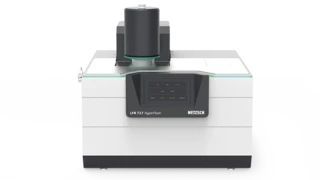
The LFA 717 HyperFlash® Series
The LFA 717 HyperFlash® series is based on a Xenon flash with a compact design. The low-temperature version covers the temperature range from -100°C to 500°C. A variety of cooling options allow for measurements to be carried out across the full temperature range of the instrument without having to change neither the furnace nor the detector. The integrated automatic sample changer (ASC) allows for unattended analyses of up to 16 samples.
The high-temperature version, the LFA 717 HyperFlash® HT, operates between RT and >1250°C. The ASC can handle up to 4 specimens.
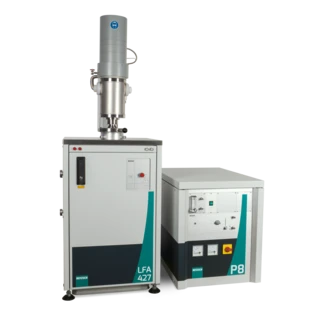
LFA 427
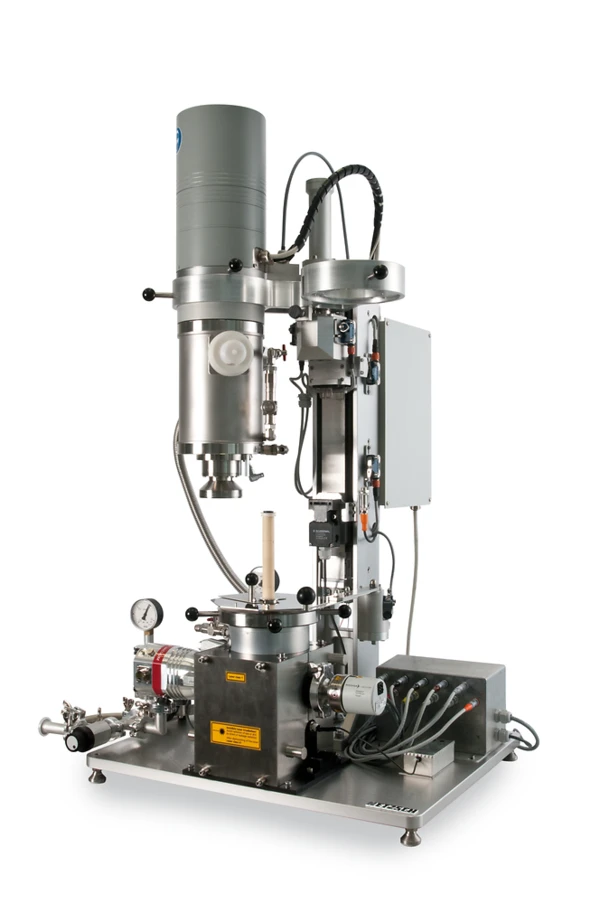
The NETZSCH LFA 427 is the most powerful and versatile LFA system for research and development as well as all for applications involving the characterization of standard and nuclear materials.
The LFA 427 stands for high precision and reproducibility, short measurement times and defined atmospheres over a temperature range of -120°C to 2800°C. Special holders for liquids, fibers, pastes, powders and laminates are available. Even fuel fragments can be tested. The system is vacuumtight to 10-5 mbar. Variable laser power and pulse width functions make it easy to optimize test parameters.
Thermal Conductivity
Thermal conductivity is perhaps the most important thermophysical property and is paramount to the design of any system operating at elevated or sub-ambient temperatures. It consists of a lattice and/or electronic component, depending on the material (other components are also possible). It is well known in the nuclear industry that Thermal ConductivityThermal conductivity (λ with the unit W/(m•K)) describes the transport of energy – in the form of heat – through a body of mass as the result of a temperature gradient (see fig. 1). According to the second law of thermodynamics, heat always flows in the direction of the lower temperature.thermal conductivity controls:
- temperature gradients in fuels
- the efficiency of cladding and heat exchangers
- the ability of geological repositories and container material to dissipate heat
- the heat transfer in multi-layer fuel systems, e.g., TRISO.
The complete list is quite long. Thermal conductivity is greatly affected by corrosion, hydriding, fouling, O/M ratio, fission product carry-over, irradiation damage, composition, porosity, etc. The Thermal ConductivityThermal conductivity (λ with the unit W/(m•K)) describes the transport of energy – in the form of heat – through a body of mass as the result of a temperature gradient (see fig. 1). According to the second law of thermodynamics, heat always flows in the direction of the lower temperature.thermal conductivity/Thermal DiffusivityThermal diffusivity (a with the unit mm2/s) is a material-specific property for characterizing unsteady heat conduction. This value describes how quickly a material reacts to a change in temperature.thermal diffusivity of almost all nuclear materials can be most efficiently measured by the laser flash technique (LFA). LFAs can readily be incorporated into gloveboxes and hot cells with the appropriate modifications.
Model | Temperature Range | Atmosphere | Energy | Detector |
|---|---|---|---|---|
LFA 717 | -100oC to 500oC | inert, oxid. | Xenon flash | InSb/MCT |
LFA 717 HT | RT to > 1250oC | inert, oxid., vac. | Xenon flash | InSb |
LFA 427 | -120oC to 2800oC | inert, oxid., red., vac., corr. | Laser | ISb/MCT |
Nuclear Safety, Performance and Materials Research
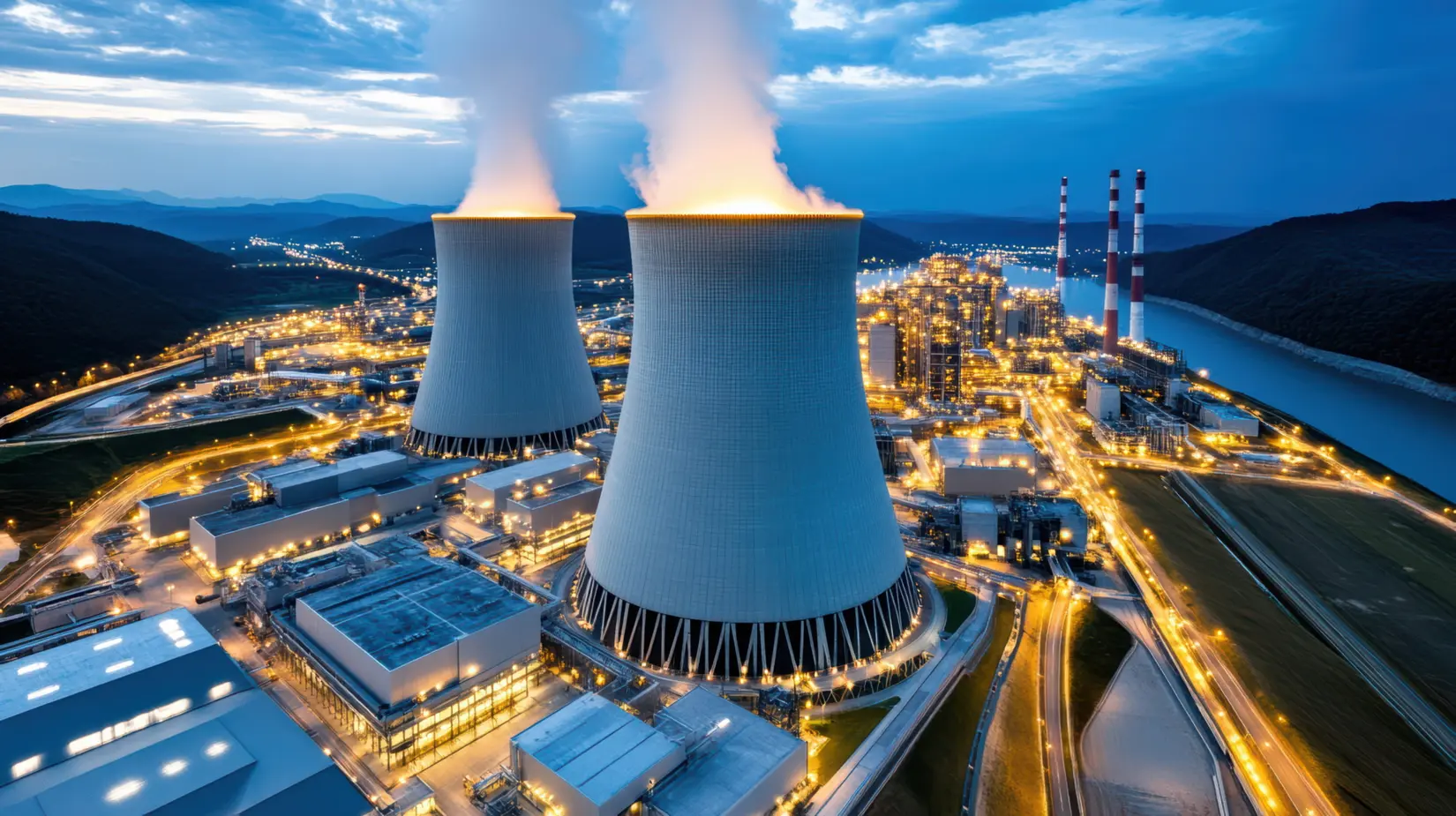
NETZSCH Analyzing & Testing provides proven thermal analysis solutions that support nuclear research, fuel development, safety assessment and materials qualification. Our instruments are used worldwide in research institutes, industry and government laboratories to investigate the thermal behavior, stability and thermophysical properties of nuclear materials under controlled and reproducible conditions.
Downloads and Media
Brochures


Related Devices
Application Literature




Consultancy & Sales
Do you have further questions about the instrument, the method and would you like to speak to a sales representative?
Service & Support
Do you already have an instrument and need technical support or spare parts?