Webinar
27.10.2026
Silicone Fiber Coatings for Cochlear Implants: From Rheology to Electrospinning
English
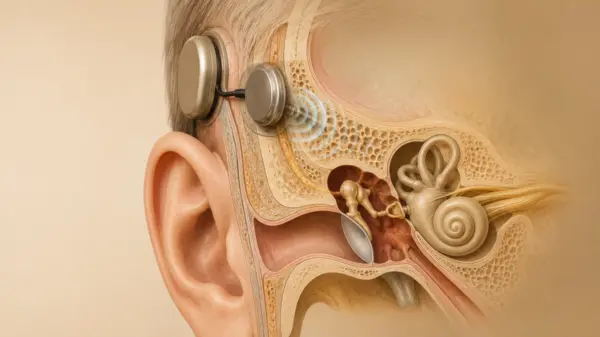
Cochlear implants have significantly improved the quality of life of patients with hearing loss. However, fibrotic tissue forming around implant electrodes can impair their performance by creating an insulating layer. One promising approach to reducing fibrosis is the use of hydrophobic, porous coatings made from electrospun silicone fibers.
In this webinar, we explore how rheology can support the development of silicone-based biomedical materials, from material characterization through to processing. Rheological measurements were used to monitor silicone Curing (Crosslinking Reactions)Literally translated, the term “crosslinking“ means “cross networking”. In the chemical context, it is used for reactions in which molecules are linked together by introducing covalent bonds and forming three-dimensional networks.curing, investigate the influence of solvents and processing conditions, and identify the material state required for successful electrospinning.
The presentation follows the development process from rheological characterization and process optimization to in situ Curing (Crosslinking Reactions)Literally translated, the term “crosslinking“ means “cross networking”. In the chemical context, it is used for reactions in which molecules are linked together by introducing covalent bonds and forming three-dimensional networks.curing and initial cell testing, demonstrating how rheology can provide valuable insights at different stages of biomedical material development.
Join us to discover how rheological analysis can help bridge the gap between material properties, processing and performance in advanced biomedical applications.
Our special guests:
M.Sc. Jan Drexler
Institute of Multiphase Processes of Leibniz University Hannover