Webinar
12.01.2027
Polymer Fingerprints with DSC – Understanding Glass Transition, Crystallinity, and Thermal History
English
Speaker: Dr. Stefan Schmölzer
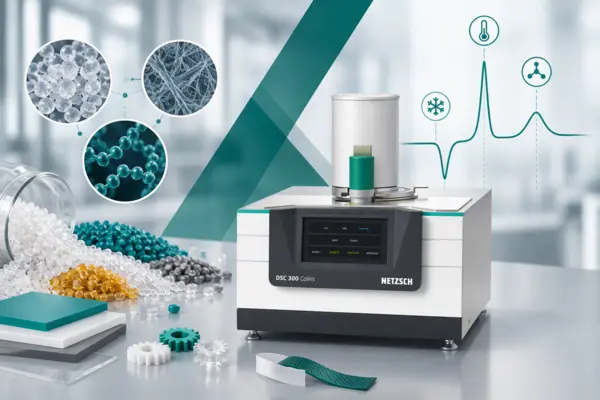
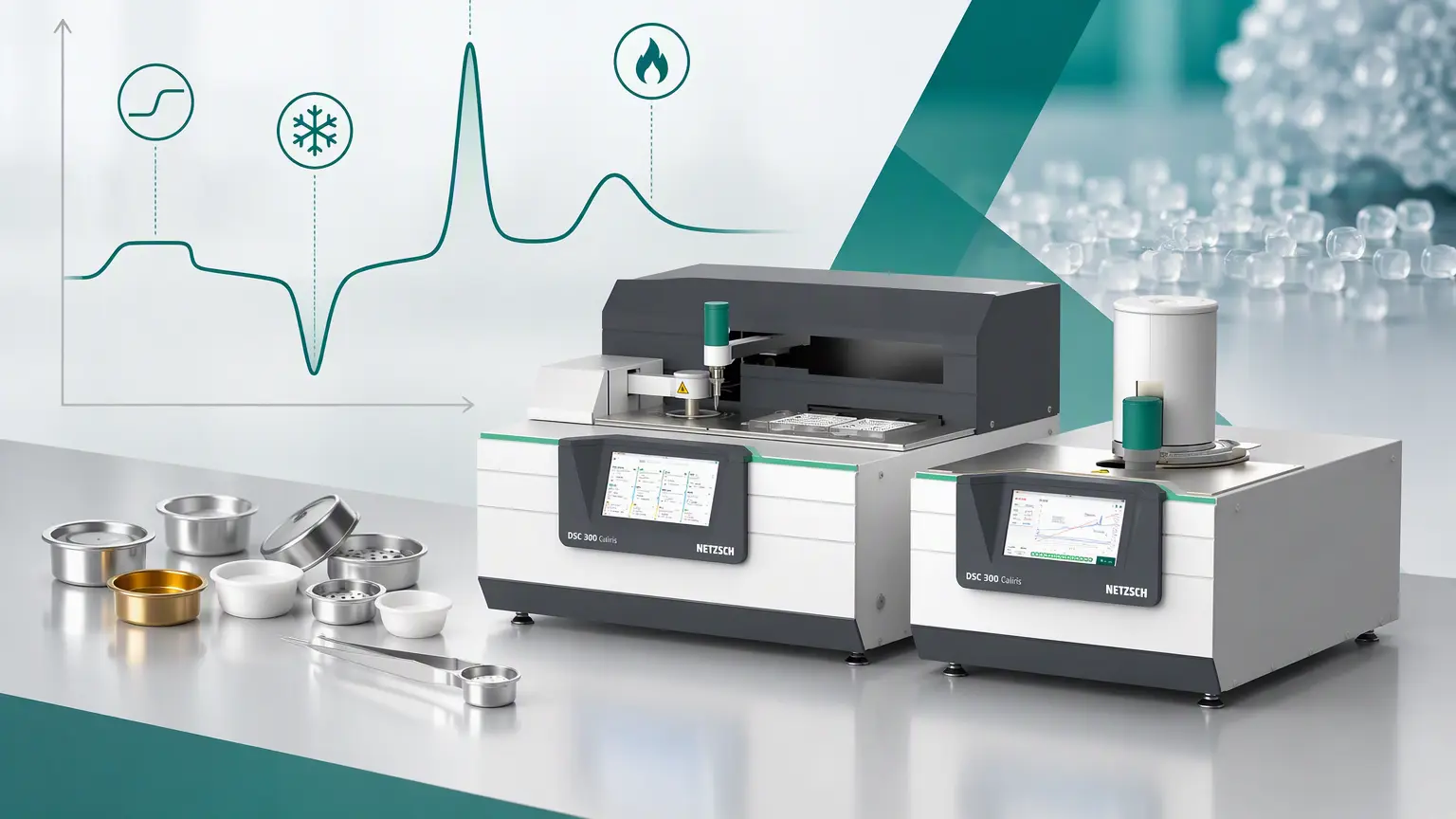
What do thermal transitions reveal about a polymer and its processing history? This webinar takes a closer look at Glass Transition TemperatureThe glass transition is one of the most important properties of amorphous and semi-crystalline materials, e.g., inorganic glasses, amorphous metals, polymers, pharmaceuticals and food ingredients, etc., and describes the temperature region where the mechanical properties of the materials change from hard and brittle to more soft, deformable or rubbery.glass transition, melting, CrystallizationCrystallization is the physical process of hardening during the formation and growth of crystals. During this process, heat of crystallization is released.crystallization, and cold CrystallizationCrystallization is the physical process of hardening during the formation and growth of crystals. During this process, heat of crystallization is released.crystallization. Learn how to determine the degree of Crystallinity / Degree of CrystallinityCrystallinity refers to the degree of structural order of a solid. In a crystal, the arrangement of atoms or molecules is consistent and repetitive. Many materials such as glass ceramics and some polymers can be prepared in such a way as to produce a mixture of crystalline and amorphous regions.crystallinity and understand how thermal history and processing conditions influence DSC curves. Application examples illustrate how DSC supports polymer identification, batch comparison, quality control, and failure analysis.
This session is designed for anyone developing, processing, or testing polymers who wants a deeper understanding of material behavior.
Register and learn to interpret the thermal fingerprint of your polymers.