Glossary
Flexometer Test
A flexometer test measures the developing heat inside a rubber material due to a cyclic compression. Heat increase inside the rubber material can cause complete internal degradation, which would be dangerous for, e.g., tire treads.

Do you have any questions?
Suitable products for your measurement
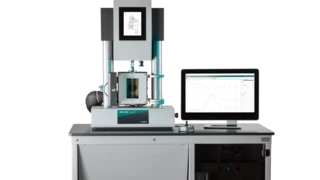
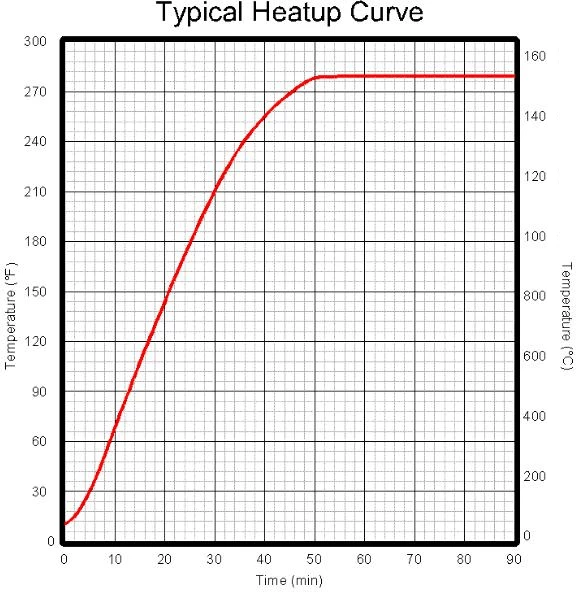
How is the basic Goodrich Flexometer Test performed – Heat-Build-Up and Blow-Out Tests?
Usually, the test is performed with 30 Hz and a static load of 1 MPa, followed by a dynamic stroke of 4.45 mm. This test is called the Heat-Build-Up (HBU) test. If the static load is raised to 2 MPa, the test is known as a blow-out (BO) test.
The measuring methods are also included in the ASTM-, DIN- and ISO- Standards, e.g., ISO 4666: Rubber, vulcanized-determination of temperature rise and resistance to fatigue in flexometer testing.
Advancement to the basic flexometer: GABOMETER®®
The GABOMETER®® is superior to the Goodrich flexometer since you can measure not only the heat build-up at the surface but also inside the rubber sample by using a needle thermocouple. The GABOMETER®® can be upgraded to a complete DMA for measuring viscoelastic properties in compression mode.