Coupling Extensions
PulseTA
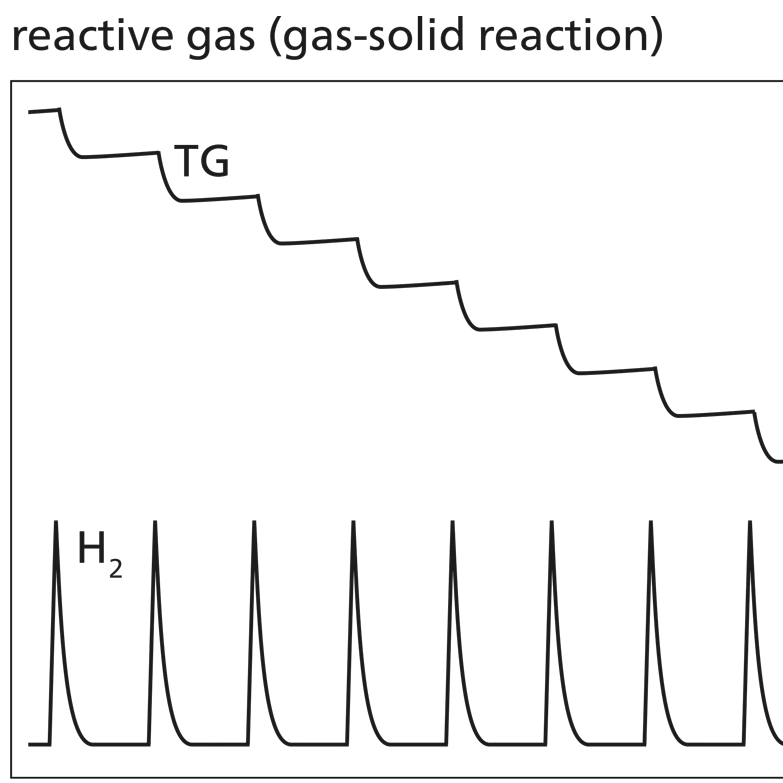
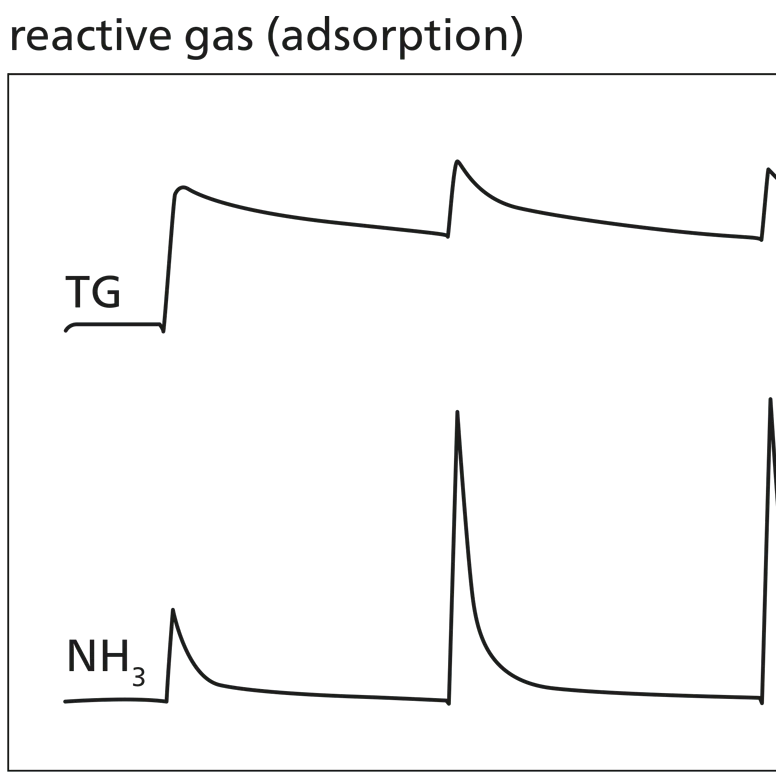
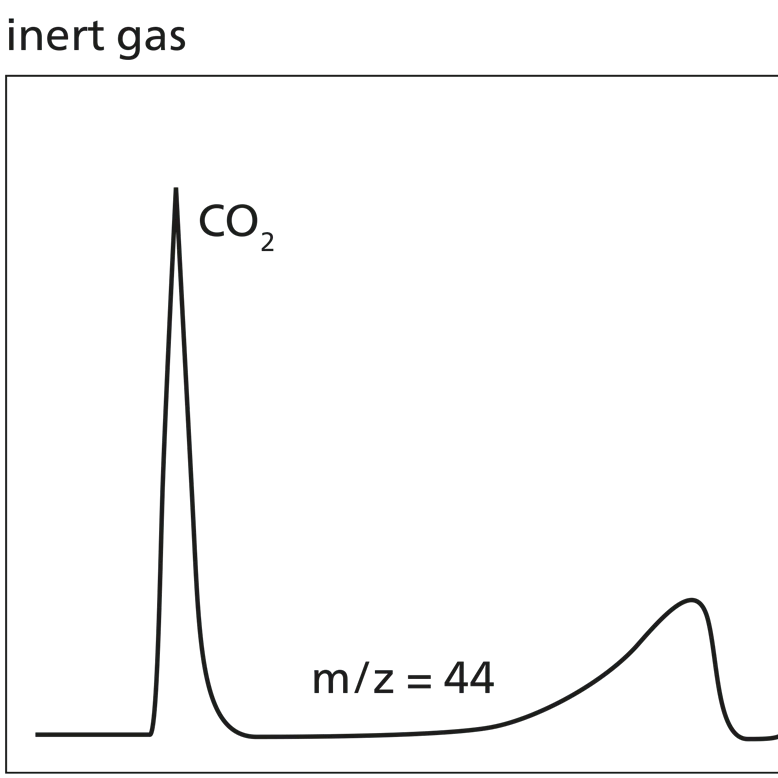
With the PulseTA technique a precisely defined quantity of gas is injected into the purge gas of the thermobalance (TGA) or the simultaneous thermal analysis instrument (STA). The injection of the gas is completely controlled by the Proteus® software.
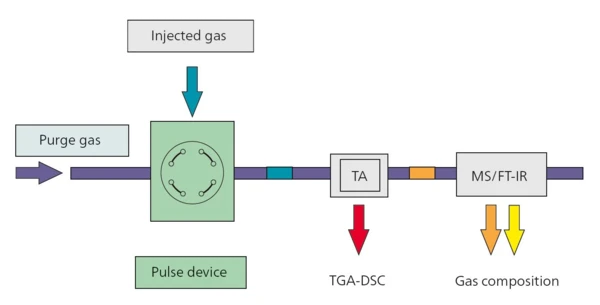
This allows for a broader spectrum of measuring possibilities:

Request a Quote
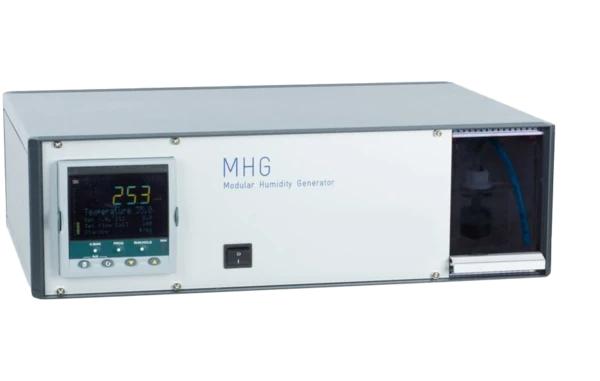
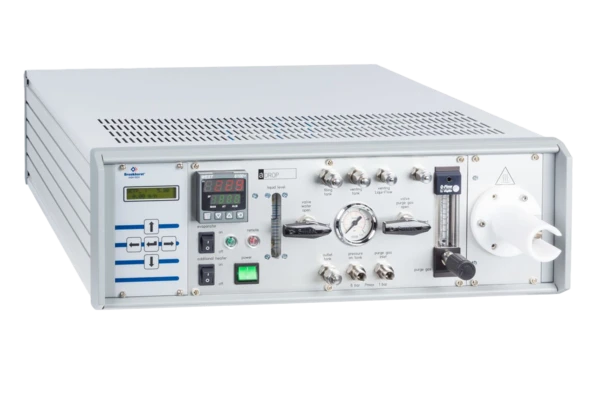
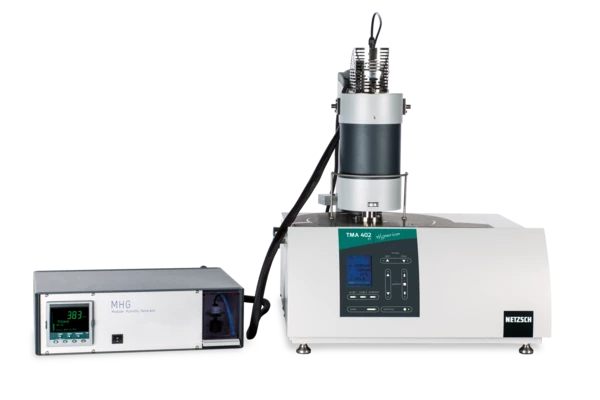
Humidity Generator
The humidity generator produces defined relative humidity by mixing wet and dry gas flows. A minimum humidity of 5% relative humidity at approx. 30°C (0.2% absolute humidity) can be achieved. The maximum humidity amounts to 90% relative humidity at 70°C (30% absolute humidity). Using a humidity generator requires a water vapor furnace for concentrations of
≥ 2% absolute humidity (100% relative humidity at 15°C). For low humidity
(≤ 2%) any furnace can be used; however, condensation must be avoided. Humid atmosphere concentration is software-controlled (programmable ramps/steps). The system allows for easy refill while a measurement is running.
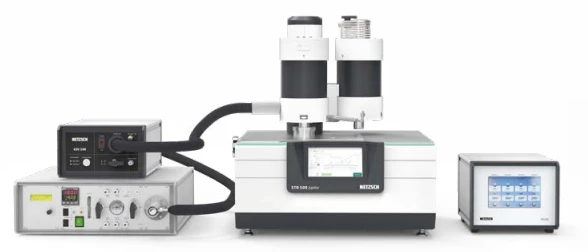
Water Vapor Generator
The water vapor generator produces steam by evaporating liquid water. Absolute humidity concentrations of approx. 5% to 100% can be achieved. Dilution by inert gas and evacuation prior to the measurement are possible. The water vapor generator requires a water vapor furnace.
Oxygen Trap System (OTS®)
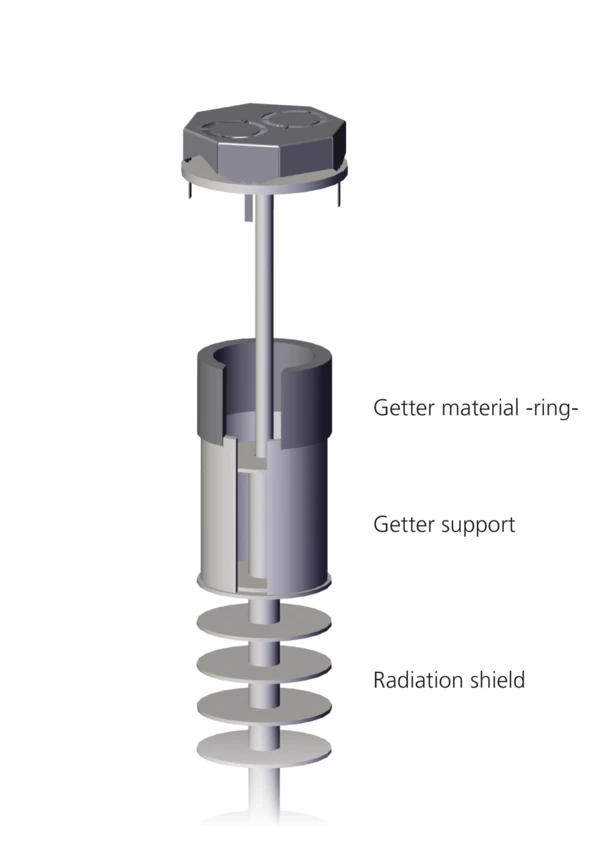
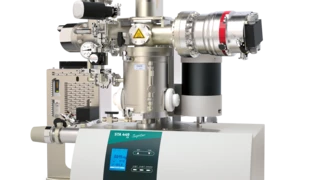
The OTS® oxygen trap system for the STA 449 F1 /F3 Jupiter® and DSC 404 F1 /F3 Pegasus® systems removes traces of residual oxygen in the gas atmosphere inside the instrument. A residual oxygen content of <1ppm can be achieved. Thanks to the getter ring, it is possible to almost entirely eliminate the residual oxygen after evacuation. Such low oxygen concentrations cannot be achieved unless the instrument is vacuum-tight and equipped with an evacuation system.
Residual O2 level is a function of:
- Vacuum tightness of the instrument
- Desorption of O2 from the walls
- Vacuum tightness of the gas supply
- Purity of the purge gas