Bioengineering
Bioengineering applies biology concepts to solve real-world problems in life sciences1. Replacing lost as well as damaged organs or tissues is one major field where tissue engineering and biofabrication are relevant strategies2.
NETZSCH offers solutions for thermal and rheological characterization along the value chain from raw materials to tissues and artificial tissues.

Raw materials (bioinks, bioresins, cell culture)
3D printing of alginate hydrogels:
- Evaluate the printability of hydrogels for extrusion-based 3D printing
- Study how drug load influences the rheological properties of hydrogels
Cryopreservation:
- Determine CrystallizationCrystallization is the physical process of hardening during the formation and growth of crystals. During this process, heat of crystallization is released.crystallization processes with the help of DSC
- Study the vitrification of cells and biopolymers during freeze drying
Real-time characterization of gelation:
- Study biopolymeric hydrogel gelation in real-time
- Study the effect of changing chemical environment while applying shear
Some of the challenges listed above arise from the complex flow behavior of multicomponent bioinks and biomaterials, where mechanical response and chemical environment are closely interconnected.
Advanced rheological techniques such as rheodialysis enable controlled changes of the sample’s chemistry during shear, allowing individual contributions to the overall rheological response to be investigated under realistic process conditions.
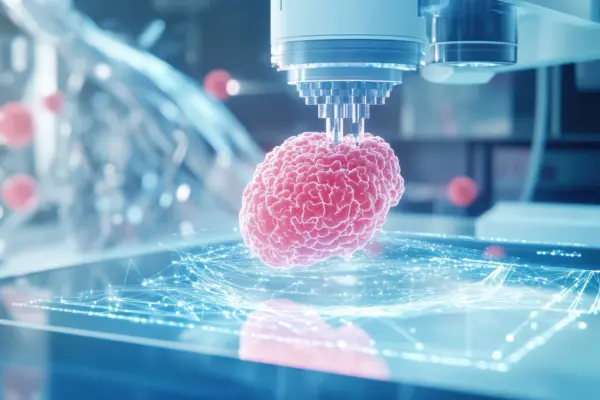
3D Bioprinting
Electro fiber spinning:
- Understand and predict the electro-fiber-spinning process by applying rheology
- Efficient process optimization based on rheological understanding
Validation of bio-inks for the calibration of 3D bio-printing processes:
- Cover an appropriately broad range of rheological properties for 3D bioprinting
- Ensure robust calibration processes by choosing suitable model materials
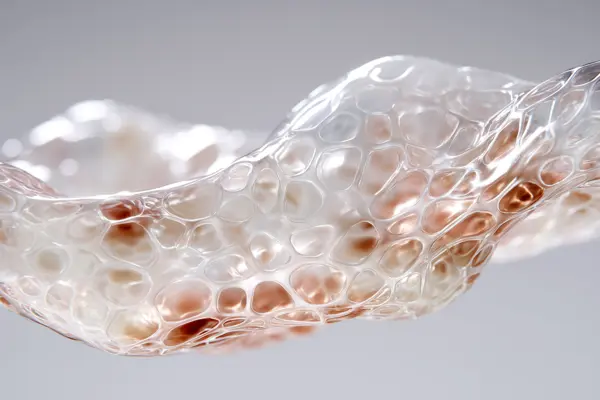
Scaffold
Denaturation of biomolecules:
- Analyze the effect of denaturation on biomolecules
- Apply for blood fiber mats and collagen
Collagen and gelatine denaturation:
- Study the denaturation of relevant components in hydrogels like collagen or gelatine
Scaffolds quality control:
- Thermal Fingerprinting for quality control by aims of DSC and TGA
- Use characteristic transitions and weight loss steps as quality control parameters
- Rapid screening for batch-to-batch consistency
- Non-destructive sample preparation in many cases
Cultivation
In cultivation processes, biological systems are often highly sensitive to changes in their surrounding chemical environment, especially under applied mechanical StressStress is defined as a level of force applied on a sample with a well-defined cross section. (Stress = force/area). Samples having a circular or rectangular cross section can be compressed or stretched. Elastic materials like rubber can be stretched up to 5 to 10 times their original length.stress.
To study how structural and rheological properties evolve during such dynamic conditions, rheodialysis allows in‑situ modification of the sample chemistry while monitoring viscoelastic behavior in real time under controlled shear.


Tissue and artificial tissue
Calcification:
- Answer questions on calcifications concerning the composition and the degree at your implants or tissues
Artificial blood:
- Ensure comparable rheological behavior of artificial blood compared to human whole blood
- Use artificial blood rheological understanding for the development of medical devices such as stents and heart valves
Skin:
- Study age-related changes to the mechanical properties of skin by aims of shear rheology
Injured brain regeneration:
- Study gelation of peptide hydrogel for injured brain regeneration
- Apply rheology for gel characterization
Some tissue‑related applications involve soft, highly dynamic materials whose mechanical properties evolve in response to changes in structure or chemical environment.
For these complex systems, advanced rheological approaches such as rheodialysis enable controlled chemical exchange during measurement, providing deeper insight into gelation and structure–property relationships under realistic mechanical loading.
Our partners


1Pavlovic, Bioengineering A Conceptual Approach, Springer, 2015, DOI 10.1007/978-3-319-10798-1
2Malda, J. et al., 25th Anniversary Article: Engineering Hydrogels for Biofabrication, Advanced Materials, 2013, https://doi.org/10.1002/adma.201302042