Take Advantage of our Application Books
Practical Knowledge for Better Material Understanding
At NETZSCH, we believe that understanding materials is the foundation for innovation, reliable processes, and better products.
Our application books combine scientific expertise with practical application knowledge from the fields of thermal analysis, rheology, and material characterization. Created by our scientists, application specialists, and industry experts, these resources help transform complex material behavior into practical understanding.
Whether you work in research, development, quality control, academia, or industrial production, our ebooks are designed to support your daily laboratory work.
The following books are available as e-book downloads free of charge:
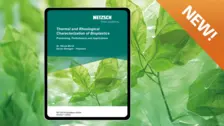
NEW: Understanding Bioplastics Through Thermal and Rheological Analysis
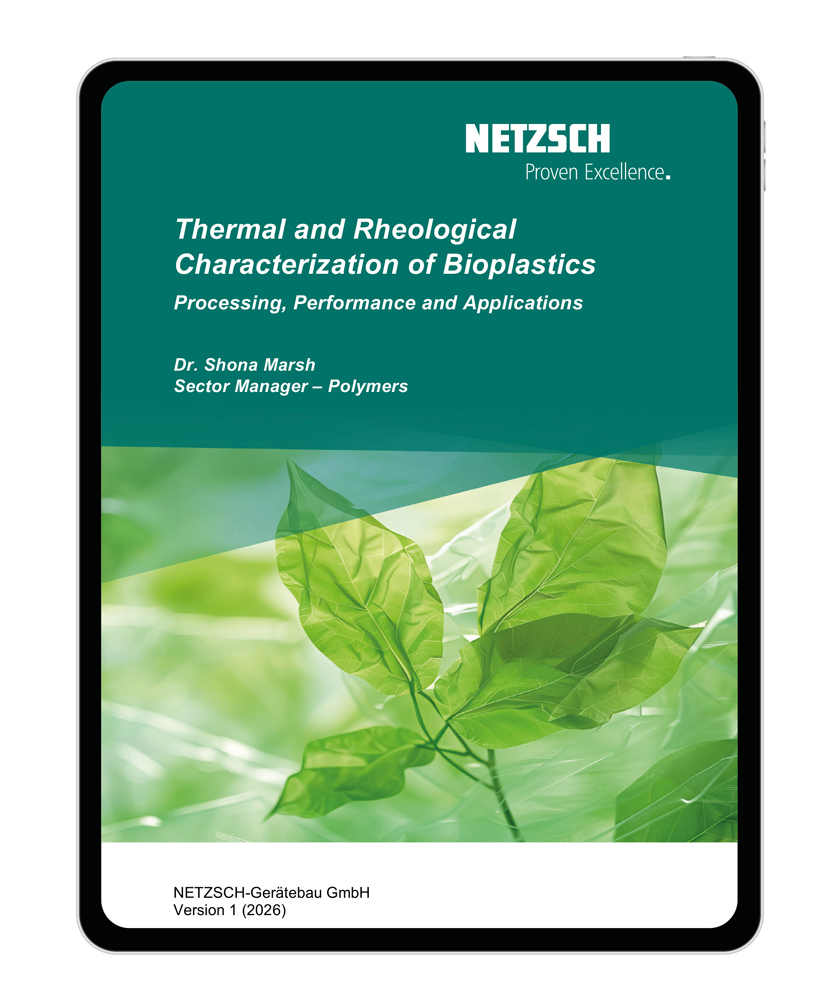
Discover what really drives the performance of bioplastics! This ebook explores how advanced material characterization techniques—particularly thermal analysis and rheology—can be used to understand, optimize, and process biodegradable polymer systems.
From moisture-sensitive starch-based materials to polymer blends and composites, this book connects fundamental material behavior with real-world processing and application challenges.
What’s inside?
- Explore key thermal analysis techniques including DSC, TGA, TMA, and DMA
- Gain insight into rheological methods such as rotational and capillary rheometry
- Understand how temperature, moisture, and formulation influence material performance
- Learn how rheology and thermal analysis support processing methods like extrusion, injection molding, and film production
- Discover real case studies on TPS/PBS blends, including unfilled and reinforced systems with minerals and natural fibers
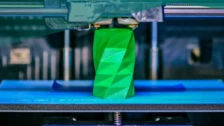
Thermal Analysis and Rheology in Polymer Additive Manufacturing (AM)
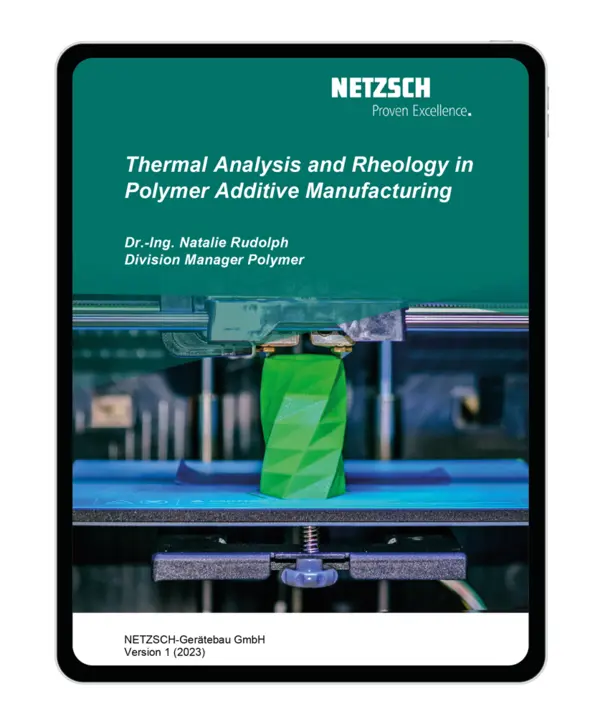
Discover the secrets behind AM's game-changing capabilities! Our newly released ebook delves deep into the heart of Additive Manufacturing, unveiling the power of reliable material characterization techniques, specifically thermal analysis and rheology.
What's inside?
- Explore various thermal analysis methods like DSC, TGA, TMA, LFA, and DMA
- Dive into the world of rheology with Rotational and Oscillation Rheometry and Capillary Rheometry
- Learn how these techniques shape the behavior of materials in AM processes like Powder Bed Fusion, Material Extrusion, Vat Photopolymerization, and more
Decoding Food Properties: Thermoanalytical and Rheological Insights
The e-book explores the crucial role of rheology and thermal analysis in understanding the physical properties and behavior of food systems. It describes shortly the methods DSC, TGA, Evolved Gas analysis, DMA, Rotational and Capillary rheometry and kinetic analysis with Kinetics Neo Software.
This book is a must-have for professionals in food science, quality assurance, product development and sensory research. It provides an overview on how to characterize key properties such as:
- PolymorphismPolymorphism is the ability of a solid material to form different crystalline structures (synonyms: forms, modifications).Polymorphism of sugars (e.g., chocolate bloom or CrystallizationCrystallization is the physical process of hardening during the formation and growth of crystals. During this process, heat of crystallization is released.crystallization of honey)
- Starch gelatinization (for baked goods and sauces)
- Stability of salad dressings with solid particles, such as herbs
- Sensory perception (e.g., the flow and mouthfeel of creams, beverages, and emulsions).
Thermal Properties of Ceramics by means of DSC, TGA, STA, DIL, LFA
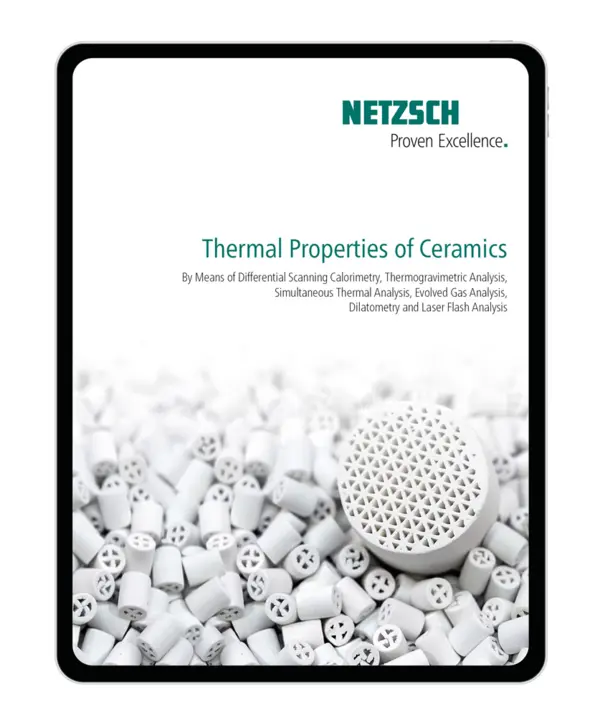
The booklet shows the wide range of applications of thermal analysis and the determination of the thermophysical properties of ceramics.
Learn about:
- Binder burnout
- Thermal shrinkage and expansion
- Thermal conductivity
- Phase changes
- Rate controlled SinteringSintering is a production process for forming a mechanically strong body out of a ceramic or metallic powder. sintering
- Kinetic simulation of SinteringSintering is a production process for forming a mechanically strong body out of a ceramic or metallic powder. sintering processes
Rotational Rheology: Interpretation of Data by Application
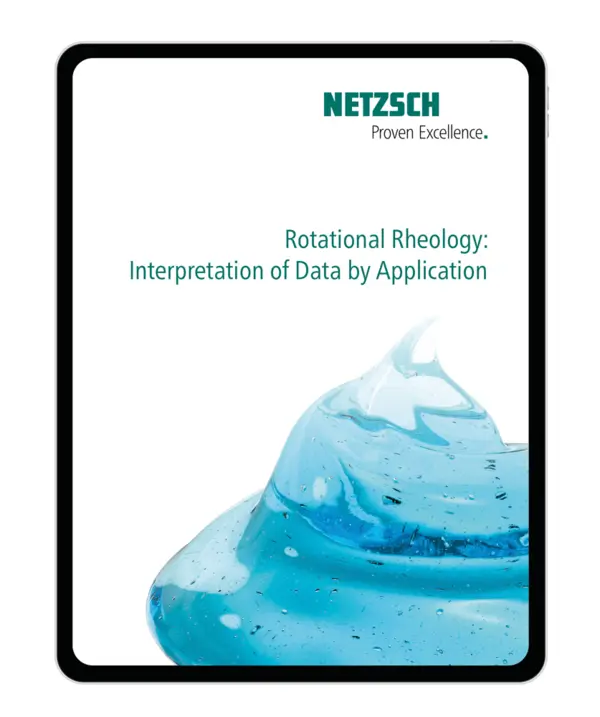
On more than 100 pages, it shows many exemplary measurements from the fields of:
- Paints, Coatings & Inks
- Polymers
- Food
- Pharmaceuticals & cosmetics
- Bitumen, petrochemical and miscellaneous.
- In an introduction, the basic concepts of rheology are explained, making this a small standard work, especially for beginners but also for advanced users.
Capillary Rheology: Interpretation of Data by Application
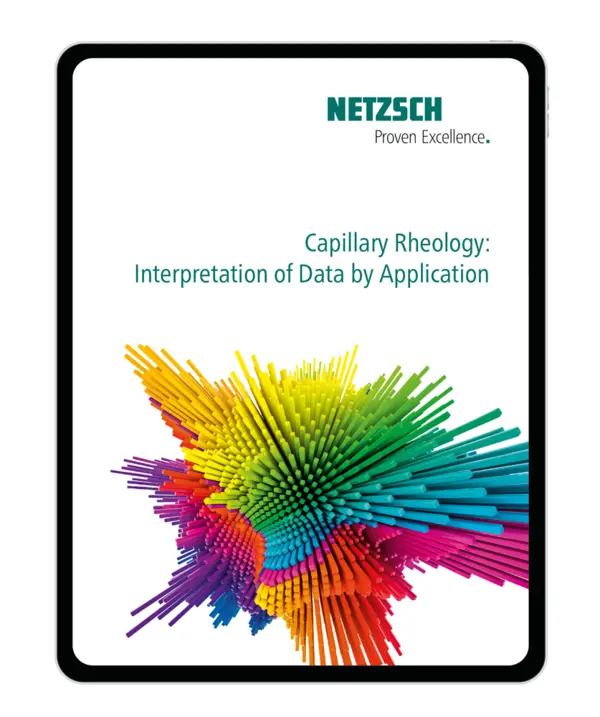
This booklet delivers an introduction to the technology and subject area, discusses application examples, shows how to characterize fundamental material properties and provides measurements using advanced techniques.
It provides an insight into how shear and extensional properties can influence behavior in application, whilst allowing processing problems to be investigated and production to continue on the factory floor.
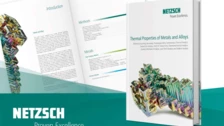
Thermal Properties of Metals and Alloys
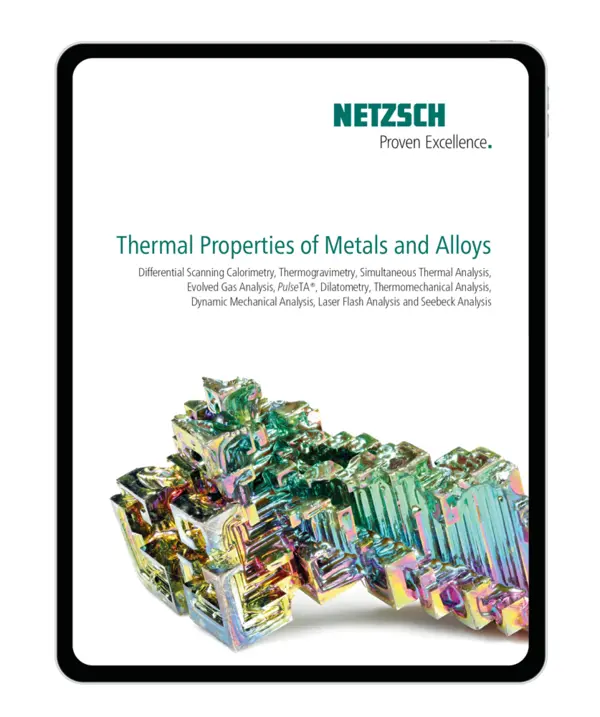
This booklet presents an introduction into the broad applications spectrum of thermoanalytical methods and illustrates how these can be used in determining thermophysical properties of metals and alloys.
After a brief outline of measurement equipment and methods, practical measurement examples on metals and alloys are shown and the effects interpreted. The work is intended to serve as both an introduction and an aid to practitioners and researchers alike.
Focus on:
Thermal Analysis of Polymers
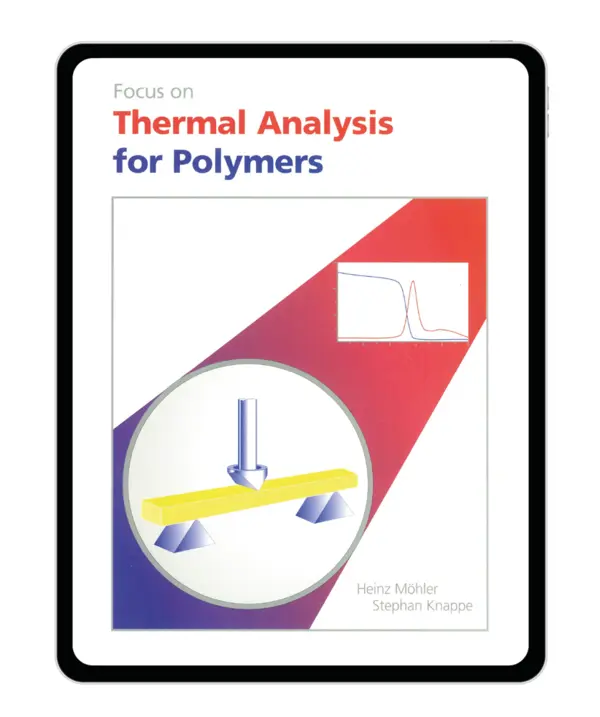
In this publication, practical industrial topics are used to explain the correlations between thermoanalytical measurement techniques and conventional test methods used in mechanics, physical chemistry and process technology.
In addition, examples are presented dealing with material and component development.
The significance of thermal analysis as a quick, economical test method is emphasized.
Focus on:
Thermal Analysis for Paints
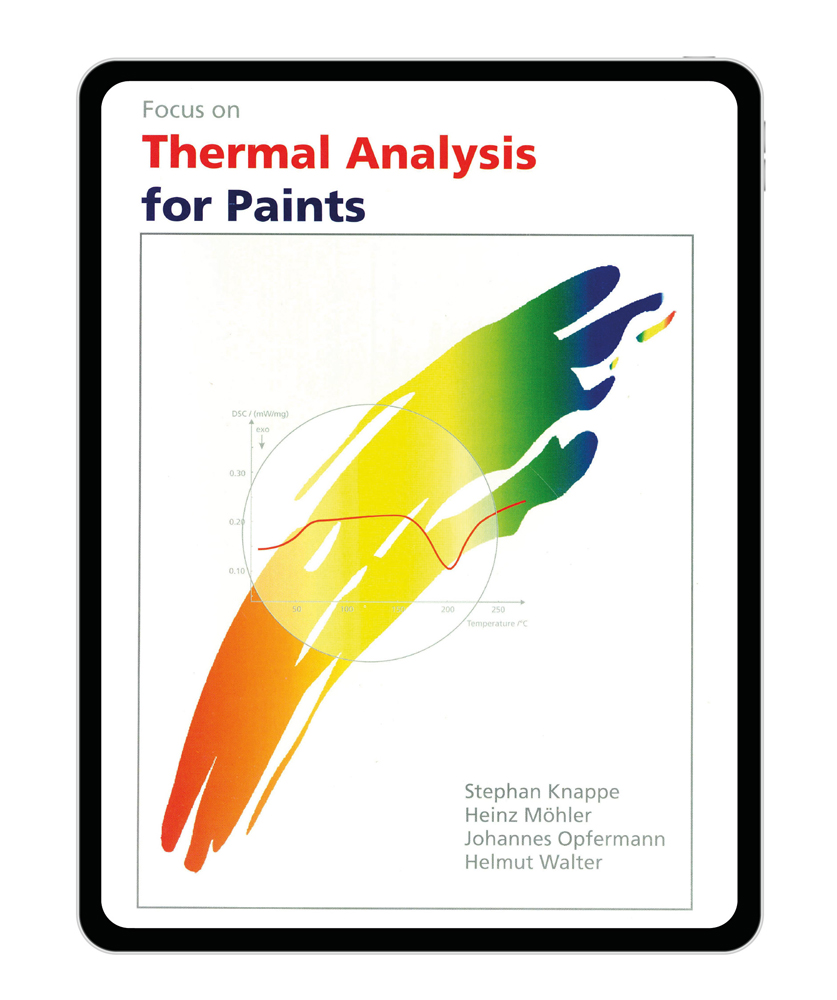
This application book features a wide range of applications with practical examples from industry:
- Is the paint already cured?
- How many and which solvents are still contained in the paint?
- Which emissions occur in the applied temperature range?
- Why can the paint be applied better by the competitor?
- Why does the painted part break?
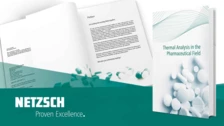
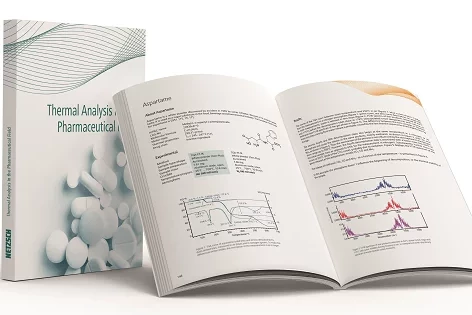
PHARMA APPLICATION BOOK: "Thermal Analysis in the Pharmaceutical Field"
The book contains the following 8 chapters on more than 260 pages:
- Methods (DSC, TGA, STA and Gas Analysis)
- Characterization of amorphous and crystalline phases
- Purity
- Thermal stability
- Oxidative stability
- Storage conditions and shelf life
- PolymorphismPolymorphism is the ability of a solid material to form different crystalline structures (synonyms: forms, modifications).Polymorphism
- Compatibility
This book uses a variety of specific application examples to illustrate how the corresponding experiments are to be carried out and what conclusions can be drawn from the results.
An introduction preceding each topic describes the necessary methods and definitions addressed within and establishes the connection to pharmaceutical issues. Appendices to various chapters provide further information; for example, following the PolymorphismPolymorphism is the ability of a solid material to form different crystalline structures (synonyms: forms, modifications).polymorphism chapter, there is a section dealing with the relationship between PolymorphismPolymorphism is the ability of a solid material to form different crystalline structures (synonyms: forms, modifications).polymorphism and thermodynamics.
The handbook is available in English language.
The Handbook "DSC on Polymers"
Knowledge Compact – The Handbook "DSC on Polymers" – Essential for the Analysis of Plastics, Rubber or Resins
The handbook DSC on Polymers provides you quickly and competently with helpful tips to enable you to carry out measurements on thermoplastics, elastomers, thermoplastic elastomers or thermosets and interpret the results. For 64 polymers, we have compiled measuring plots, measurement parameters, interpretation of the results and general material properties. Also chemical structures (if available), processing possibilities and application ranges, all of which are presented in a clearly structured and practice-oriented overview.
The introductory chapters offer an easy-to-understand introduction to DSC (including special measuring techniques such as temperature-modulated DSC, Oxidative-Induction Time (OIT) and Oxidative-Onset Temperature (OOT)Oxidative Induction Time (isothermal OIT) is a relative measure of the resistance of a (stabilized) material to oxidative decomposition. Oxidative-Induction Temperature (dynamic OIT) or Oxidative-Onset Temperature (OOT) is a relative measure of the resistance of a (stabilized) material to oxidative decomposition.OIT, specific heat), lists national and international standards important for DSC measurements and describe their recommendations for the evaluation of polymer measurements.
The DSC handbook is available in German and English.
Reserve your personal copy today.