Fire Testing Systems for Smoke Density Analysis
Smoke DensityThe mass density is defined as the ratio between mass and volume. Density Testing with the NETZSCH TRD Series (Halogen, Laser & LED)
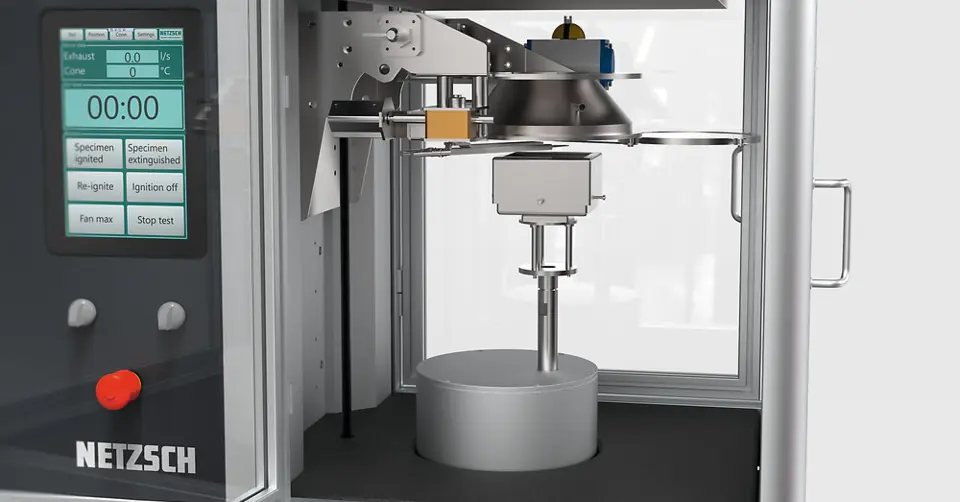
It is crucial to understand how materials generate and obscure smoke, as smoke often poses greater risks than flames, particularly with regard to visibility impairment and toxicity. The NETZSCH TRD 908 smoke DensityThe mass density is defined as the ratio between mass and volume. density system accurately measures light transmission and optical smoke DensityThe mass density is defined as the ratio between mass and volume. density in accordance with DIN 50055, ISO 3182 and ISO/TS 19850. It uses halogen, laser or LED light sources and can operate as a standalone unit or be integrated into systems such as the NETZSCH SBI 915 and TBB 913.
We can also provide further variants and individual fire testing instruments according to customer requirements.
Our Product Portfolio
Explore the range of NETZSCH Fire Testing Instruments for Smoke DensityThe mass density is defined as the ratio between mass and volume. Density Analysis
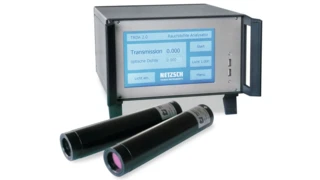

TRD_LED – The Latest Measurement Technique
In fire testing, optical methods are used for determination of the smoke DensityThe mass density is defined as the ratio between mass and volume. density. The basis for this is a light source and a light receiver.
With the newly developed TRD_LED light measurement system in accordance with ISO/TS 19850:2022, NETZSCH is setting new standards in efficiency, performance and availability over conventional technology with halogen lamps.
Frequently Asked Questions
Of course! TAURUS Instruments GmbH became part of NETZSCH Analyzing & Testing in 2020.
As of July 1, 2025, NETZSCH Taurus Instruments GmbH change its name to NETZSCH-Gerätebau GmbH. Both entities now operate under the name NETZSCH-Gerätebau GmbH.
As part of the NETZSCH Analyzing & Testing business unit, the company combines decades of fire testing expertise with NETZSCH’s global resources, innovation, and service network — offering customers a comprehensive portfolio of fire testing and Thermal ConductivityThermal conductivity (λ with the unit W/(m•K)) describes the transport of energy – in the form of heat – through a body of mass as the result of a temperature gradient (see fig. 1). According to the second law of thermodynamics, heat always flows in the direction of the lower temperature.thermal conductivity systems for building materials, cables, automotive components, and more.
Want to learn more about the history of our fire testing devices? Read the following blog articles:

The system can be equipped with halogen, laser or LED light sources, depending on testing requirements and integration setup.
LEDs offer longer lifespan, lower energy consumption and more stable light output, reducing recalibration needs.
EN 13501 is the European standard for fire-classifying construction products and building elements.
As part of the EU’s harmonized approach to fire safety, it is used across all EU member states (and many associated countries) to determine how materials and building components behave in a fire. Materials are categorized into different classes (A1 to F) based on their reaction to fire, smoke production, and flaming droplet production. This classification system helps determine the suitability of materials for various building applications. EN 13501 is divided into several parts, each covering a different type of fire performance classification:
EN 13501-1: Reaction to Fire
This part classifies how construction products (including floorings) contribute to the development of a fire.
Common classes: A1, A2, B, C, D, E, and F (A1 is non-combustible and F indicates that no performance has been determined). It also includes smoke production (s1, s2, s3) and flaming droplets/particles (d0, d1, d2).
EN 13501-2: Fire Resistance
This part classifies the fire resistance of building elements (e.g., walls, doors, floors, and beams) based on how long they maintain their integrity, insulation properties, and/or load-bearing capacity.
EN 13501-3: This part classifies the fire resistance of service installations (e.g., ducts and fire dampers).
EN 13501-4: This part classifies the fire resistance of smoke control systems.
Why It Matters:
Under the EU Construction Products Regulation (CPR), many construction products must bear a CE marking. This requires verified fire performance data according to EN 13501, which ensures that fire safety classifications are comparable and reliable across all European countries.
Meeting these fire classification requirements is critical in order for architects, builders, and material suppliers to ensure that their materials comply with building codes and can be legally placed on the market.
NETZSCH supports manufacturers and testing laboratories in achieving these certifications with its advanced fire testing instruments. Our devices, including cone calorimeters, SBI (single burning item) testers, and KBT (klein-brenner-test) systems, provide precise, standards-compliant measurements of reaction-to-fire and fire-resistance properties. These instruments enable our customers to generate accurate, repeatable data fully aligned with EN 13501 classification needs. This helps them bring safe, compliant products to market with confidence.
The cost of a NETZSCH fire testing device can vary significantly depending on the type, model, features, or any additional accessories you may require.
To get an accurate and up-to-date price for your individual NETZSCH instrument, please contact your local NETZSCH representative or one of our authorized distributors. We will provide a quote tailored to your specific requirements, including any necessary training, installation, or additional features.
Delivery times depend on the specific device and configuration. While some instruments may be available from stock, others require longer lead times. For customized systems, delivery schedules can vary accordingly.
For the most up-to-date information, we encourage you to contact us directly with a specific request. This will ensure that we can provide you with an accurate timeline tailored to your specific needs.
Your Benefits
>30
>1000
>50
What Makes the NETZSCH Smoke Density Testing System Unique?
- Flexible configuration – Available with halogen, laser, or LED light sources for a wide range of test methods.
- Versatile integration – Operates as a standalone unit or seamlessly integrates, amongst others, into NETZSCH SBI and TBB systems.
- Standards compliance – Meets DIN 50055, ISO 3182, ISO/TS 19850 and related smoke DensityThe mass density is defined as the ratio between mass and volume. density standards.
- Stable, accurate results – High-precision optical measurement with minimal drift, even in long test runs.
- User-friendly operation – Windows-based SBC control with 7" touchscreen for easy calibration and data handling.
- Low maintenance – LED option offers extended lifetime, reduced recalibration, and lower energy consumption.
- Proven Excellence – Decades of experience in fire testing and a strong reputation on the market underline the reliability of our fire testing instruments.
Applications for Smoke Density Testing
Smoke DensityThe mass density is defined as the ratio between mass and volume. density testing is essential to evaluate how materials affect visibility and safety in a fire, supporting compliance with international standards and enhancing fire protection strategies. Application areas are:
- Building products – Wall panels, floor coverings, and insulation materials.
- Cables and wiring – Sheathing and insulation for power, control, and communication cables.
- Transport interiors – Seats, panels, and other materials used in automotive, rail, marine, and aviation applications.
- Electronics housings – Casings, connectors, and enclosures for electrical and electronic devices.
- Polymer materials – Development and quality control of flame-retardant and low-smoke plastics.

Protecting Lives Through Clearer Visibility in Fire Events
In a fire, smoke can be more dangerous than flames — reducing visibility, slowing evacuation, and hiding critical hazards. With the TRD 908 series, NETZSCH delivers precise, standards-compliant smoke DensityThe mass density is defined as the ratio between mass and volume. density measurement for safer materials and products.
Whether as a standalone device or integrated into other NETZSCH fire testing systems, our technology helps manufacturers, test labs, and regulatory bodies accurately assess visibility hazards and ensure compliance.
Are you interested in fire testing devices for other industries or applications?
Feel free to take a look at our entire range of fire testing systems.
Media and Training
Blog articles about NETZSCH TRD devices
- 13.09.2023
NETZSCH TAURUS Instruments TRD_LED: The Latest Measurement Technique for Transmission and Optical Smoke Density

- 02.02.2021
Mobile Air Conditioners to Prevent an Infection With the “Coronavirus” – An Effective Solution?

- 13.01.2020
New in Our Portfolio: Fire Testers, Hotboxes and Guarded Hot Pipes

Application Literature about NETZSCH fire testing devices
Videos that may be interesting for you

FAQs about NETZSCH Service
We want you to be fully prepared when using your fire testing device!
At NETZSCH, we want to ensure that you are well-prepared when working with your fire testing instrument. That’s why we offer customized training designed around your specific equipment and operating conditions.
We prefer on-site training at your location, working directly with your instrument under your specific conditions (e.g., gas setup, pressure ranges, and gas cylinders). This ensures that everything works seamlessly and that optimal test conditions are achieved.
Of course, we also offer online training via our NETZSCH Online Academy NOA, 1:1 remote training and on-site training at your location or our training centers. Simply contact your sales representative or go to Know-How - NETZSCH Analyzing & Testing
Yes, we offer maintenance contracts for your instruments according to the different regional and individual customer requirements. Please feel free to contact our Service Department or take a closer look at our website section Service-Level Agreement - NETZSCH Analyzing & Testing.
For even greater peace of mind, we also offer Unlimited Warranty for our SBI 915 and KBT 916 fire testing instruments.
Our NETZSCH Applications Laboratory exclusively offers contract testing services for the TCC 918 Cone Calorimeter, supporting a wide range of industries and research centers. With our state-of-the-art instrumentation, we can perform detailed fire behavior analyses without requiring in-house equipment.
Although we only perform contract testing on the TCC 918, our sales and service teams are always available to assist with other fire testing inquiries, including application advice and selecting the right instrument for your needs.
Consult our NETZSCH experts to determine the best measuring method for your application. You will work with experienced scientists, including physicists, chemists, and materials specialists, who have in-depth knowledge of various test methods and material types.
We offer:
- Installation and commissioning
- Relocation of your instrument
- System upgrades
- Maintenance and inspection
- Calibration
- Repair
- Free e-learning basic courses: E-Learning - NETZSCH Analyzing & Testing
- Comprehensive training from basic to advanced use of the instrument - on-site and online.
Our Remote Service is available worldwide.