Fire Testing Systems for the Building Industry
Building Material Safety and Compliance with Fire Testing Technology by NETZSCH
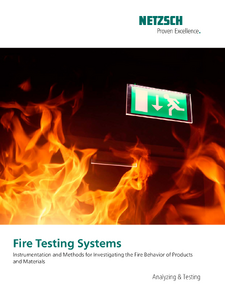
NETZSCH offers a comprehensive portfolio of fire testing instruments tailored to the building and construction industry, allowing for compliance with national and international fire safety standards for materials, components and full assemblies.
From insulation and wall coverings to flooring and complete assemblies, our instruments support all major international standards such as EN 13823, EN ISO 1182 and EN 9239-1, helping manufacturers meet fire safety regulations and achieve Euroclass EN 13501 certification.
We can also provide further variants and individual fire testing instruments according to customer requirements.
Our Product Portfolio
Explore the range of NETZSCH Fire Testing Instruments for the Building Industry
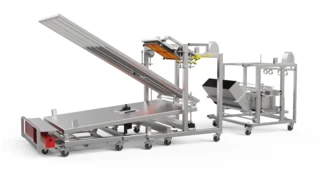
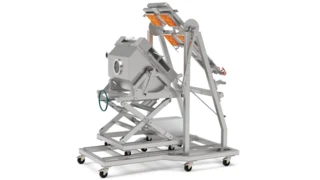
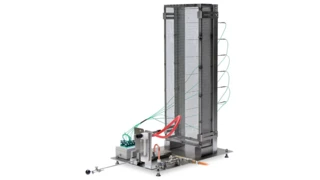


Building Materials of Nearly Any Kind
The construction industry takes a particular interest in the fire resistance of building components and the fire reaction of building materials, exploring parameters such as flammability, flame spread, flaming droplets, combustibility, heat release, calorific value and smoke production in order to establish classification according to EN 13501.
NETZSCH fire testing devices can test the reaction to fire of nearly any material used for construction, such as facades, building materials, insulation materials, plastics and floor coverings.
Looking for something specific? We also offer custom variants and individual fire testing solutions tailored to your needs in the construction industry.
Frequently Asked Questions
Of course! TAURUS Instruments GmbH became part of NETZSCH Analyzing & Testing in 2020.
In July 2025, NETZSCH Taurus Instruments GmbH changed its name to NETZSCH-Gerätebau GmbH. Both entities now operate under the name NETZSCH-Gerätebau GmbH.
As part of the NETZSCH Analyzing & Testing business unit, the company combines decades of fire testing expertise with NETZSCH’s global resources, innovation, and service network — offering customers a comprehensive portfolio of fire testing and Thermal ConductivityThermal conductivity (λ with the unit W/(m•K)) describes the transport of energy – in the form of heat – through a body of mass as the result of a temperature gradient (see fig. 1). According to the second law of thermodynamics, heat always flows in the direction of the lower temperature.thermal conductivity systems for building materials, cables, automotive components and more.
Want to learn more about the history of our fire testing devices? Read the following blog articles:
EN 13501 is the European standard for fire-classifying construction products and building elements.
As part of the EU’s harmonized approach to fire safety, it is used across all EU member states (and many associated countries) to determine how materials and building components behave in a fire. Materials are categorized into different classes (A1 to F) based on their reaction to fire, smoke production, and flaming droplet production. This classification system helps determine the suitability of materials for various building applications. EN 13501 is divided into several parts, each covering a different type of fire performance classification:
EN 13501-1: Reaction to Fire
This part classifies how construction products (including floorings) contribute to the development of a fire.
Common classes: A1, A2, B, C, D, E, and F (A1 is non-combustible and F indicates that no performance has been determined). It also includes smoke production (s1, s2, s3) and flaming droplets/particles (d0, d1, d2).
EN 13501-2: Fire Resistance
This part classifies the fire resistance of building elements (e.g., walls, doors, floors, and beams) based on how long they maintain their integrity, insulation properties, and/or load-bearing capacity.
EN 13501-3: This part classifies the fire resistance of service installations (e.g., ducts and fire dampers).
EN 13501-4: This part classifies the fire resistance of smoke control systems.
Why It Matters:
Under the EU Construction Products Regulation (CPR), many construction products must bear a CE marking. This requires verified fire performance data according to EN 13501, which ensures that fire safety classifications are comparable and reliable across all European countries.
Meeting these fire classification requirements is critical in order for architects, builders, and material suppliers to ensure that their materials comply with building codes and can be legally placed on the market.
NETZSCH supports manufacturers and testing laboratories in achieving these certifications with its advanced fire testing instruments. Our devices, including cone calorimeters, SBI (single burning item) testers, and KBT (klein-brenner-test) systems, provide precise, standards-compliant measurements of reaction-to-fire and fire-resistance properties. These instruments enable our customers to generate accurate, repeatable data fully aligned with EN 13501 classification needs. This helps them bring safe, compliant products to market with confidence.
Discover the right fire testing solution for your building products. Whether you’re evaluating wall panels, insulation, flooring, cables, or full roof assemblies, NETZSCH offers a comprehensive range of systems tailored to meet all major international fire safety standards.
The table below provides a quick comparison of each NETZSCH instrument, its application focus and relevant testing standards.
| Instrument | Test Scope | Standards | Typical Applications |
|---|---|---|---|
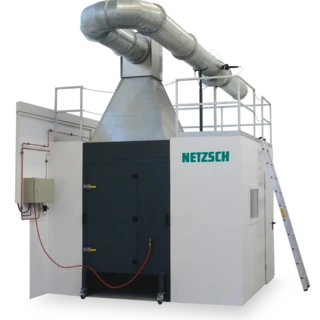
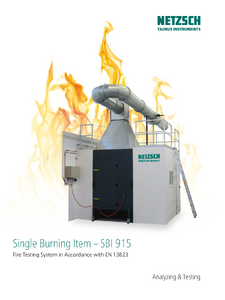
| SBI 915 | Reaction to fire, corner scenario | EN 13823, Euroclass A2–D | Wall panels, insulation, ceilings, facades |
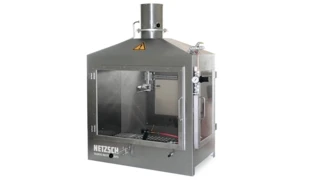
| KBK 917 | Ignitability test via flame | ISO 11925‑2 | Small panels, building components |
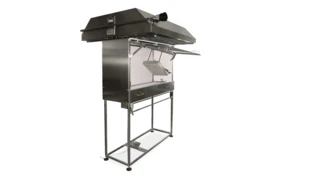
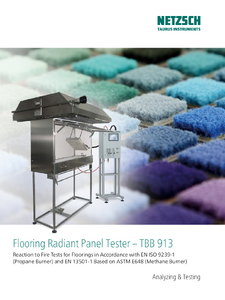
| TBB 913 | Flooring radiant exposure | EN ISO 9239‑1, ASTM E648 | Carpets, vinyl, laminate, public corridors |
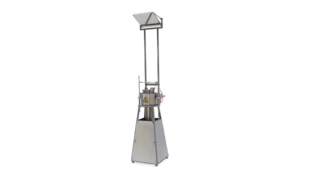
| TNB 912 | Non‑combustibility | EN ISO 1182 | Gypsum-based materials, calcium silicate, non-combustible facade materials |
| TDP T3/T4 | Roof fire under external loads | CEN/TS 1187 (Methods 3 & 4) | Multi-layer roof assemblies, fire-safe roofing systems |
| TSP 905 | Smoldering/glow tests | EN 16733:2016 | Insulation, upholstery, decorative materials |
Still not sure which instrument fits your application? Or do you need an individualized configuration?
No problem. Please contact your regional sales respresentative. We will be happy to find the best solution for your fire testing needs together:
The cost of a NETZSCH fire testing device can vary significantly depending on the type, model, features or any additional accessories you may require.
To get an accurate and up-to-date price for your individual NETZSCH instrument, please contact your local NETZSCH representative or one of our authorized distributors. We will provide a quote tailored to your specific requirements, including any necessary training, installation, or additional features.
Delivery times depend on the specific device and configuration. While some instruments may be available from stock, others require longer lead times. For customized systems, delivery schedules can vary accordingly.
For the most up-to-date information, we encourage you to contact us directly with a specific request. This will ensure that we can provide you with an accurate timeline tailored to your specific needs.
Your Benefits
>30
>1000
50
What Makes NETZSCH Fire Testing Instruments Unique?
- Standards compliance with EN ISO 13823, EN ISO 11925-2, EN 9239-1 and more — essential for Euroclass EN 13501 and global certification
- Comprehensive testing portfolio covering insulation, wall panels, flooring, cables and full building assemblies
- Flexible configuration design allowing upgrades for evolving test requirements
- User-friendly software interface for intuitive operation and accurate measurement as well as standardized and customized reporting
- High durability and long-term serviceability backed by NETZSCH’s global support and expertise
- Trusted by labs and manufacturers worldwide for reliable, repeatable and regulatory-ready fire testing
- Customized and Integrated Solutions: NETZSCH ’s wide range of instruments covering a broad application range ensures that we can meet your fire testing demands for a diverse array of materials and temperatures.
- Proven Excellence: Decades of experience in fire testing and a strong reputation in the market underline the reliability and advanced capabilities of our fire testing instruments.
- Unlimited Warranty: To emphasize the long-term availability of our services, we offer an unlimited warranty, e.g., for the SBI 915.
Applications for the Building Industry
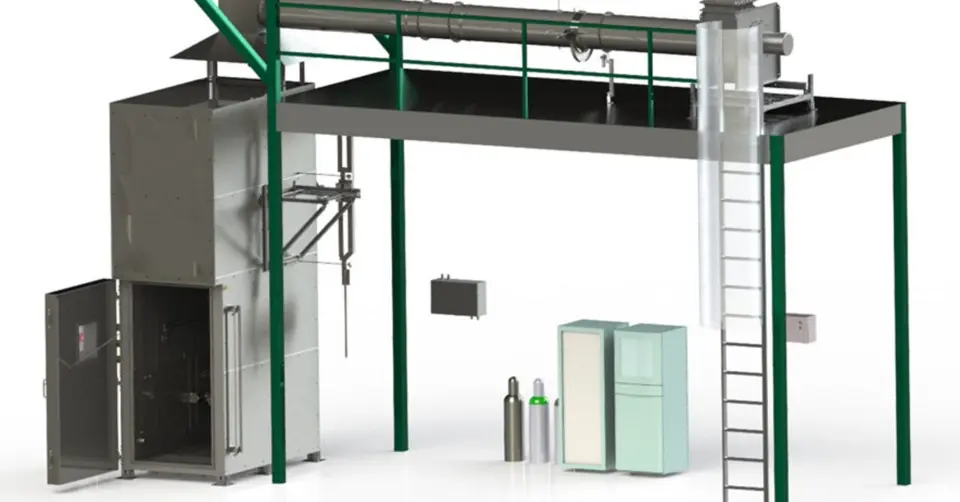
- SBI 915: The Single Burning Item (EN 13823) is used to assess the reaction to fire of building materials like wall and ceiling panels, insulation, coatings, and facade components. It simulates a single burning item igniting a corner of a room, measuring parameters including lateral flame spread, heat release, smoke generation, flaming droplets, and gas output.
- KBK 917: The Single-Flame Source Test Device (ISO 11925‑2 / EN ISO 11925‑2) is designed for ignitability testing of materials such as small-scale facade panels or claddings.
- TBB 913: The Flooring Radiant Panel Tester (EN ISO 9239‑1 / ASTM E648) evaluates critical radiant flux, flame propagation, and smoke DensityThe mass density is defined as the ratio between mass and volume. density over time to classify flooring materials such as carpets, vinyl, wood, or laminate in corridor fire scenarios typical in public buildings.
- TNB 912: The Non‑Combustibility Test Device (EN ISO 1182 / ASTM E2652 / IMO FTP Code Part 1) tests whether homogeneous or composite building products contribute to fire progression ‒ used for Euroclasses A1 or A2 via furnace heating to a defined temperature LEVEL, measuring mass loss, temperature increase and duration of flaming.
- TDP T3 & TDP T4: The NETZSCH Roof Testing Systems (DIN CEN/TS 1187) simulate fire on realistic multi-layer roof assemblies, with wind and radiant heat to assess flame spread, structural penetration, droplet fallout, and glowing behavior (TDP T3, method 3). With the TDP T4 (method 4), a two-stage test is executed ‒ initial burner exposure, then wind plus radiant heating ‒ to evaluate burn-through, flame spread radius, and dropping behavior across full roof systems. It is also possible to combine the two systems into one instrument.
- TSP 905: The Smoldering / Glow Fire Test is used for smoldering behavior analysis of materials under low-oxygen, sustained heating conditions ‒ relevant for products like insulation, upholstery or composite wall coverings that may glow or smolder without open flame.

Why Fire Testing Systems Matter for the Building Industry
NETZSCH fire testing systems are designed to evaluate the burning behavior of construction materials, such as insulation, wall panels, flooring, and roofing according to international standards.
These systems provide reliable data on essential factors such as flame spread, heat release, smoke development, and smoldering behavior. This information is crucial for product classification (EN 13501) and product development, as well as regulatory approval and building safety.
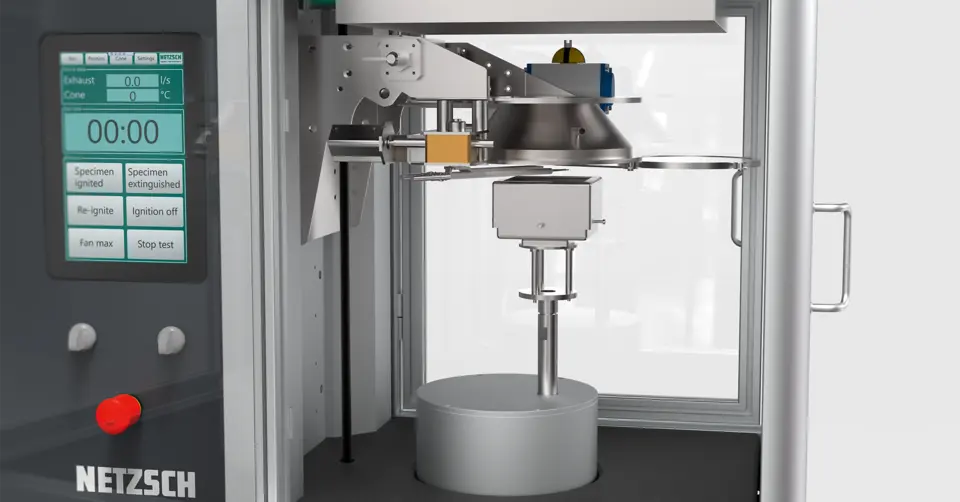
Are you interested in fire testing devices for other industries or applications?
Feel free to take a look at our entire range of fire testing systems.
Media and Training
Blog articles about NETZSCH fire testing devices
- 19.08.2025
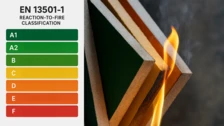
EN 13501 – Fire Classification in Europe and How NETZSCH Supports Compliance
- 13.05.2025
Peace of Mind with NETZSCH: Introducing the Unlimited Warranty

- 12.07.2023
How to Make Roofs Fireproof – The TDP T3/T4 Fire Testing Device for Roofs

- 22.12.2022
Advent, Advent – The Toy´s on Fire!

- 23.11.2022
60 Years of NETZSCH-Gerätebau: Master of Fire

- 04.07.2022
TBB 913 – Fire Testing System for Floor Coverings

- 26.01.2022
New TDP T3 Fire Testing Device for Roofs in Accordance with the European Standard DIN CEN/TS 1187

- 19.12.2021
Advent, Advent, the Christmas Tree’s on Fire – NETZSCH Can Help Prevent This!

Videos that may be interesting to you

FAQs about NETZSCH Service
We want you to be fully prepared when using your fire testing device!
At NETZSCH, we want to ensure that you are well-prepared when working with your fire testing instrument. That’s why we offer customized training designed around your specific equipment and operating conditions.
We prefer on-site training at your location, working directly with your instrument under your specific conditions (e.g., gas setup, pressure ranges, and gas cylinders). This ensures that everything works seamlessly and that optimal test conditions are achieved.
Of course, we also offer online training via our NETZSCH Online Academy NOA, 1:1 remote training and on-site training at your location or our training centers. Simply contact your sales representative or go to Know-How - NETZSCH Analyzing & Testing
Yes, we offer maintenance contracts for your instruments according to the different regional and individual customer requirements. Please feel free to contact our Service Department or take a closer look at our website section Service-Level Agreement - NETZSCH Analyzing & Testing.
For even greater peace of mind, we also offer an Unlimited Warranty for our SBI 915 and KBT 916 fire testing instruments.
Our NETZSCH Applications Laboratory exclusively offers contract testing services for the TCC 918 Cone Calorimeter, supporting a wide range of industries and research centers. With our state-of-the-art instrumentation, we can perform detailed fire behavior analyses without requiring in-house equipment.
Although we only perform contract testing on the TCC 918, our sales and service teams are always available to assist with other fire testing inquiries, including application advice and selecting the right instrument for your needs.
Consult our NETZSCH experts to determine the best measuring method for your application. You will work with experienced scientists, including physicists, chemists, and materials specialists, who have in-depth knowledge of various test methods and material types.
We offer:
- Installation and commissioning
- Relocation of your instrument
- System upgrades
- Maintenance and inspection
- Calibration
- Repair
- Free e-learning basic courses: E-Learning - NETZSCH Analyzing & Testing
- Comprehensive training from basic to advanced use of the instrument – on-site and online.
Our Remote Service is available worldwide.