NETZSCH - your local partner For Polymer Research Teams in the Massachusetts Area
Advance Your Polymer Research with the Right Characterization Method
Whether you are studying sustainable polymers, composites, thin films, or advanced material systems, selecting the right characterization approach is essential for reliable research results, publications, and shared laboratory capabilities.
NETZSCH Analyzing & Testing helps academic laboratories identify suitable thermal analysis and mechanical characterization solutions for their specific research questions.

Talk to a Polymer Characterization Specialist
Characterization Methods for Polymer Research
NETZSCH supports academic laboratories with methods designed to investigate thermal, mechanical, and processing-relevant material behavior - from fundamental research through publication-quality data generation.
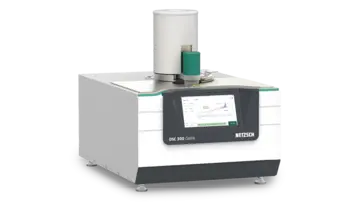
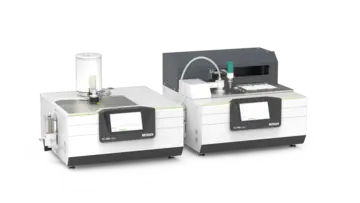
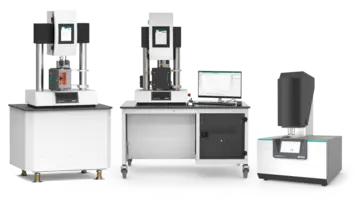
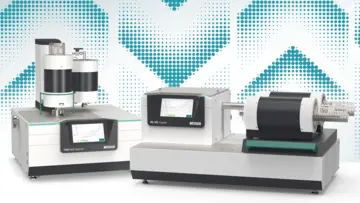
Not sure which method fits your research?
Built Around Academic Research Requirements
For university laboratories and research institutes, instrumentation decisions often need to support more than one project. The right solution should provide flexibility for evolving research topics, multiple users, robust data quality, and long-term laboratory value.
NETZSCH supports academic teams evaluating solutions for:
- Fundamental and applied polymer research
- Grant-funded research projects
- Master’s, PhD, and postdoctoral research
- Shared laboratory and core-facility environments
- Publication-oriented data generation
- Method development and cross-material comparison
- Teaching laboratories and advanced practical courses

From a single research question to a shared lab capability: we help you evaluate an approach that fits both current research and future project needs.
A Scientific Partner for Polymer Characterization
Research-focused consultation
Broad method expertise
Support beyond instrument selection
Discuss Your Polymer Research Application
Tell us what you are researching, which materials you are working with, and what you need to understand. A NETZSCH representative will connect with you to discuss suitable characterization methods and instrument options.
Find the Right Characterization Approach for Your Polymer Research
Not Ready to Talk Yet?
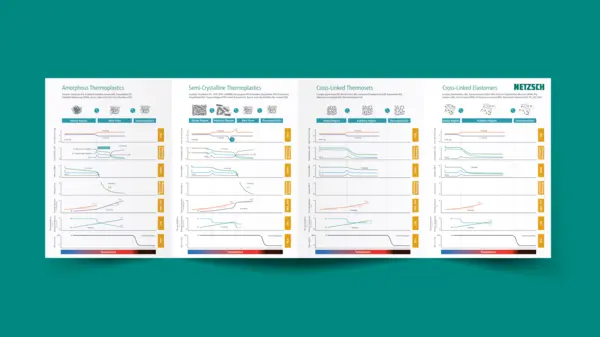
Explore the downloadable visual guide “Polymer Properties at a Glance”
See how different polymer classes behave and which insights techniques such as DSC, TGA, DMA, TMA, LFA and rheology can provide. The guide connects measurable properties - from thermal transitions and Decomposition reactionA decomposition reaction is a thermally induced reaction of a chemical compound forming solid and/or gaseous products. decomposition to mechanical behavior and melt flow - with practical questions in material development and processing.
Discover how polymer analysis can help you understand material performance and make more informed development and quality decisions.
You May Also Be Interested In
Dive deeper into the world of NETZSCH Analyzing & Testing: explore our products, discover application insights, learn about our service offering or expand your expertise through e-learning resources.