26.11.2025 by Dr. Ligia de Souza
Alternative Proteins: The Role of Thermal Characterization
Alternative proteins are booming. But only ingredients that remain stable and functional during processing can succeed in real food applications. Thermal characterization with a NETZSCH DSC and TGA reveals how proteins behave under heat, helping manufacturers optimize texture, shelf life, and production efficiency. Our latest sunflower protein study shows how these insights enable smarter formulation and more reliable plant-based product development.
Why Alternative Proteins Need More Than Nutrition: The Science Behind Structure and Stability
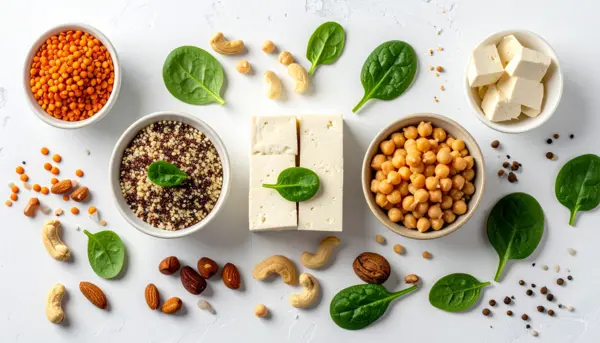
Alternative proteins are reshaping the way we think about food. For centuries, beans, lentils, peas, and seeds have been a source of plant-based protein, but today’s definition is broader. Algae, microorganisms, cultured meat, and even insects emerge as potential sources of sustainable nutrition.
The rise of alternative proteins is fueled by three key factors: the urgent need to reduce the environmental impact of livestock farming, the growing consumer interest in healthier diets, and concerns about animal welfare. However, before these proteins reach our plates, they must demonstrate not only their nutritional value, but also their functionality in food formulations. This is where science plays a decisive role.
Proteins are made up of chains of amino acids that fold into intricate three-dimensional structures. These structures are delicate — they can unfold or break down under heat, pressure, or chemical StressStress is defined as a level of force applied on a sample with a well-defined cross section. (Stress = force/area). Samples having a circular or rectangular cross section can be compressed or stretched. Elastic materials like rubber can be stretched up to 5 to 10 times their original length.stress, a process known as denaturation. When this happens, proteins may lose essential properties such as solubility or the ability to bind and stabilize textures. In food production, these changes directly affect a protein’s ability to serve as a reliable ingredient.
Cracking the Heat Code of Sunflower Protein with DSC and TGA
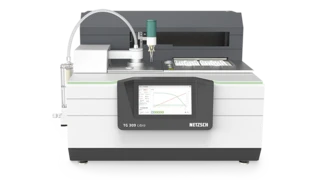
To better understand and control these properties, food scientists turn to thermal characterization techniques. Two of the most widely used methods are Differential Scanning Calorimetry (DSC) and Thermogravimetric Analysis (TGA). DSC measures the temperature at which proteins denature, providing insight into their stability during processing. TGA, on the other hand, evaluates moisture content, Thermal StabilityA material is thermally stable if it does not decompose under the influence of temperature. One way to determine the thermal stability of a substance is to use a TGA (thermogravimetric analyzer). thermal stability, and Decomposition reactionA decomposition reaction is a thermally induced reaction of a chemical compound forming solid and/or gaseous products. decomposition patterns, helping assess how proteins behave under heat.
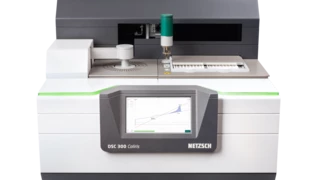
In our recent Application Note on sunflower protein, we demonstrate how thermal characterization techniques can guide ingredient development using a NETZSCH DSC 300 Caliris®. Sunflower seeds are typically processed for oil, leaving behind a protein-rich by-product. When extracted under mild conditions, this protein retains much of its native structure, making it a promising option for plant-based foods. Thermal analysis showed that sunflower protein begins to lose moisture below 100°C, while major degradation occurs only above 200°C. With a denaturation temperature around 99°C, the protein exhibits stability suitable for bakery applications, emulsions, and other plant-based formulations.
This type of analysis highlights why thermal characterization is so valuable. By examining how proteins respond to heat, scientists and manufacturers can predict shelf life, fine-tune processing methods, and ensure that functionality is preserved in the final product. In the case of sunflower protein, the results suggest real potential for creating sustainable, high-quality food alternatives.
As the consumer demand for alternative proteins continues to grow, the ability to guarantee both nutritional and functional performance will be a decisive factor for market success. Thermal analysis techniques like DSC and TGA provide the necessary tools to achieve this balance, bridging the gap between scientific precision and practical food innovation.
Read the full application note:

Webinar: Alternative Proteins – Processing and Rheological Characterization
In this webinar, we will delve into the latest extraction technologies and analytical methods used to isolate and refine functional plant proteins. We will explore how these proteins can be tailored and optimized for use in extrusion-based processing, a common method for creating meat-like textures in plant-based products. Watch this webinar on demand and for free until December 31, 2025.