08.07.2025 by Aileen Sammler
Unmatched Versatility: Introducing the NETZSCH TMA 512 Hyperion® for Thermomechanical Analysis
The latest innovation in thermomechanical analysis (TMA) from NETZSCH is here! This instrument combines high-resolution measurement with modular flexibility to provide a powerful tool for understanding material behavior under thermal and mechanical StressStress is defined as a level of force applied on a sample with a well-defined cross section. (Stress = force/area). Samples having a circular or rectangular cross section can be compressed or stretched. Elastic materials like rubber can be stretched up to 5 to 10 times their original length.stress.
Precision Meets Practicality
Thermomechanical Analysis (TMA) is a method used to measure the dimensional (length) changes of a material under controlled temperature and force conditions – key parameters for understanding expansion, shrinkage, softening, and CreepCreep describes a time and temperature dependent plastic deformation under a constant force. When a constant force is applied to a rubber compound, the initial deformation obtained due to the application of the force is not fixed. The deformation will increase with time.creep.
With its vertical orientation and ultra-sensitive LVDT (linear variable displacement transducer) sensors, our new TMA 512 Hyperion® is ideal for testing delicate structures, such as films and fibers. It eliminates the gravity-induced bending, common in horizontal setups.
Select or Supreme? Choose your Perfect NETZSCH TMA Match!
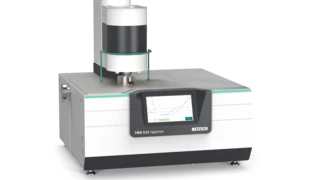
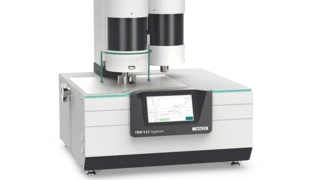
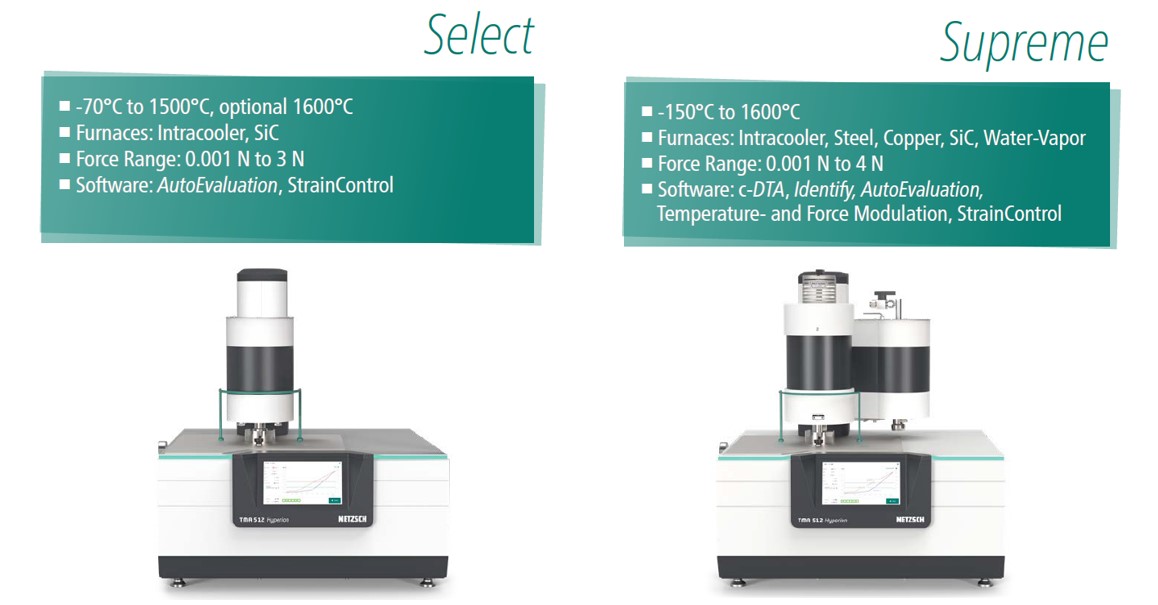
The TMA 512 is available in two models: Supreme and Select. While both models have many features in common, the Supreme version stands out with its ability to exert a maximum force of up to four newtons and its dual furnace option with five available furnace types. This flexibility allows users to easily switch between temperature ranges and accommodate a wide array of experimental needs.
Intuitive Control and Smart Accessories for the Measurement on Molten Salts, Molten Metals and Hydrogen
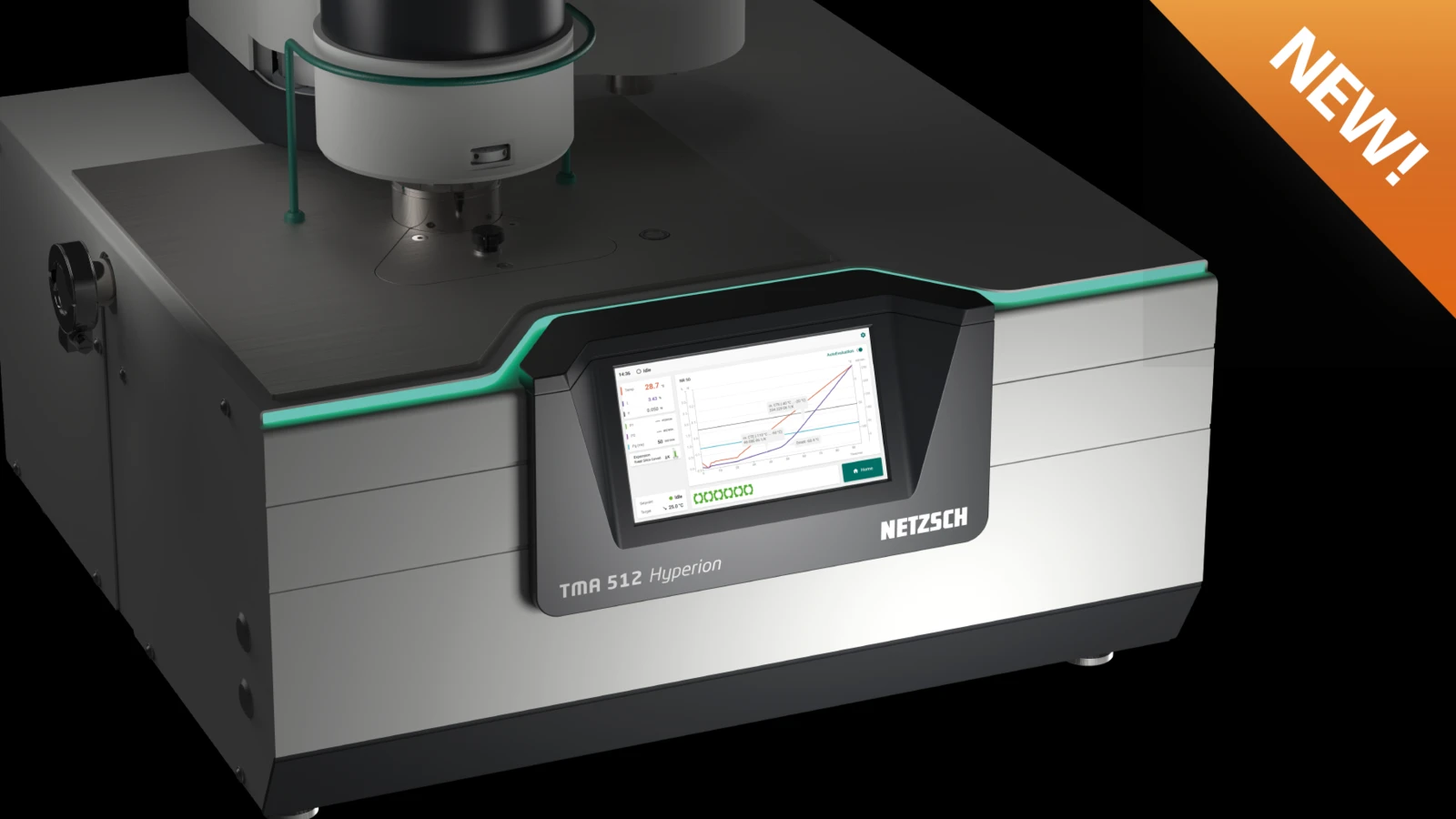
The new touch display streamlines every step of operation, from pushrod movement to real-time control of sample contact and selection of sample holder.
A humidity control option in the Proteus® measurement and evaluation software and innovative accessories, such as a graphite piston container for molten salts or a beaker setup for hydrogel swelling, expand the scope of what's possible.
For high-temperature applications, such as the investigation of molten salts, the NETZSCH TMA 512 Hyperion® offers specialized accessories, including a graphite container for containing challenging substances. These accessories highlight the TMA 512's adaptability and versatility in addressing various research challenges.
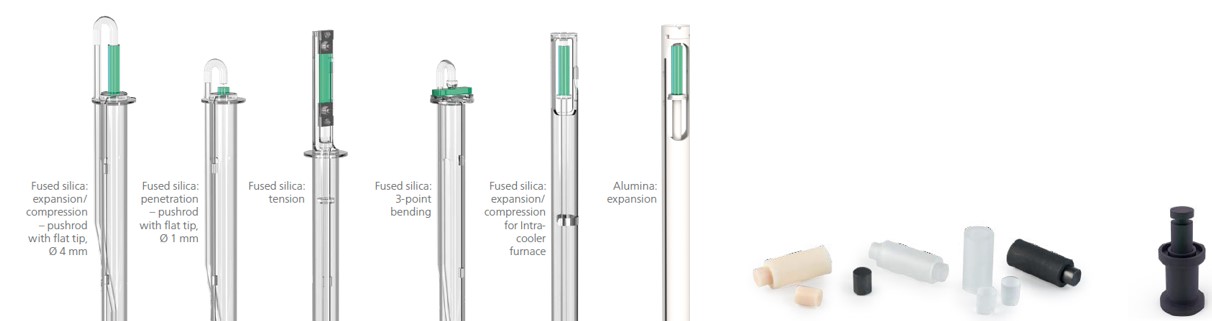
From CreepCreep describes a time and temperature dependent plastic deformation under a constant force. When a constant force is applied to a rubber compound, the initial deformation obtained due to the application of the force is not fixed. The deformation will increase with time.creep experiments to studying the swelling behavior of hydrogels, the TMA 512 opens up a world of possibilities. Whether your goal is to analyze Thermal StabilityA material is thermally stable if it does not decompose under the influence of temperature. One way to determine the thermal stability of a substance is to use a TGA (thermogravimetric analyzer). thermal stability, predict component behavior, or explore new materials under extreme conditions, the TMA 512 provides the versatility, precision, and peace of mind you need.
The new NETZSCH TMA series includes integrated safety systems that support measurements under 100% hydrogen, making it ideal for cutting-edge energy research. This safety feature continuously monitors oxygen and hydrogen concentrations, allowing for a safe working environment by automatically shutting off the hydrogen supply and flushing the instrument with inert gas when necessary.
Learn more about our H₂Secure System here:

Thermal Analysis Under Hydrogen
The H2Secure concept developed for NETZSCH thermal analyzers features a complete solution for conducting tests in environments with varying concentrations of hydrogen while providing utmost safety.
This concept enables safe experimentation in a 100% H2 environment or with lower concentrations of H2 mixed with non-flammable gases such as nitrogen (N2) or argon (Ar) atmospheres. It is TÜV-certified.

Sustainability: Benefit from our Unlimited Warranty
Investing in NETZSCH’s high-quality laboratory instruments is a smart long-term decision. Whether you're conducting cutting-edge research or ensuring precise quality control, your equipment needs to deliver reliable performance for the years to come. That’s why we offer something truly unique:
Our Unlimited Warranty for NETZSCH TMA 512 instruments!
Download here the full brochure and the accessories catalog:


Watch also the video excerpt of our NETZSCH Tech Talk July 2025:
Analyze dimensional changes under real-world conditions, from humidity to high-temperature CreepCreep describes a time and temperature dependent plastic deformation under a constant force. When a constant force is applied to a rubber compound, the initial deformation obtained due to the application of the force is not fixed. The deformation will increase with time.creep, with precision and ease.
Discover the new products in detail: