H₂Secure Concept
Safe Examination of Materials Under Hydrogen
Thermal Analysis under Hydrogen
The Key to a Better Understanding of Material Interactions
Hydrogen (H2) is gaining attention for its potential role in sustainable practices and green technology. Research into the interaction of materials with hydrogen is critical for developing eco-friendly solutions that can significantly reduce environmental impact.
One notable application is the use of hydrogen to mitigate high CO2 emissions from metallurgical processes through direct reduction, such as in iron ore reduction. Chemical hydrogen storage, particularly through the use of metal hydrides, is another important avenue of research. Scientists are working to enhance volumetric and gravimetric capacities, as well as hydrogen adsorption/desorption kinetics and the life cycle of potential material candidates. Improving these aspects of materials can lead to more efficient and practical hydrogen storage solutions, which are vital for various applications including transportation, energy storage, and renewable energy systems.

Safe Measurements in Reducing or Oxidizing Atmospheres
The H2Secure concept developed by NETZSCH features a complete solution for conducting tests in environments with varying concentrations of hydrogen while providing utmost safety. This concept enables safe experimentation in a 100% H2 environment or with lower concentrations of H2 mixed with non-flammable gases such as nitrogen (N2) or argon (Ar) atmospheres. This flexibility is achieved through a comprehensive safety protocol embedded in the system.
One of the key features of the H2Secure concept is its ability to seamlessly perform complex OxidationOxidation can describe different processes in the context of thermal analysis.oxidation-reduction cycles. This involves switching between hydrogen- and oxygen-containing atmospheres within a single measurement, allowing for precise analysis of reaction kinetics and material behavior under different conditions. During these tests, it is crucial to maintain safety at all times. Therefore, in an intermediate state, the sample and testing apparatus are purged with inert gas. This purging process continues until safe conditions are reached for a gas change, minimizing any potential risks associated with handling hydrogen or oxygen.
The NETZSCH H2Secure concept is TÜV-certified.
The STA Masterclass:
Your Monthly STA Webinar Series
Method

Simultaneous Thermal Analysis
Simultaneous Thermogravimetry – Differential Scanning Calorimetry
Simultaneous Thermal Analysis (STA) is a method used to analyze the Thermal StabilityA material is thermally stable if it does not decompose under the influence of temperature. One way to determine the thermal stability of a substance is to use a TGA (thermogravimetric analyzer). thermal stability and composition of materials. It combines two techniques: Thermogravimetric Analysis (TGA) and Differential Scanning Calorimetry (DSC).
TGA measures the weight change of a material when it is heated or cooled, providing information on Decomposition reactionA decomposition reaction is a thermally induced reaction of a chemical compound forming solid and/or gaseous products. decomposition temperatures, moisture content, and Thermal StabilityA material is thermally stable if it does not decompose under the influence of temperature. One way to determine the thermal stability of a substance is to use a TGA (thermogravimetric analyzer). thermal stability. DSC measures the amount of heat required to increase the temperature of a sample, providing insights into Phase TransitionsThe term phase transition (or phase change) is most commonly used to describe transitions between the solid, liquid and gaseous states.phase transitions, heat capacity, and reaction enthalpies.
Thermomechanical Analysis
Thermomechanical analysis (TMA) is a technique for determining the dimensional changes in solids, liquids or pasty materials as a function of temperature and/or time under a defined mechanical force (DIN 51005, ASTM E 831, ASTM D696, ASTM D3386, ISO 11359 – Parts 1 to 3). Itis closely related to dilatometry, which determines the length change of specimens under negligible load (DIN 51045).
H2Secure Concept
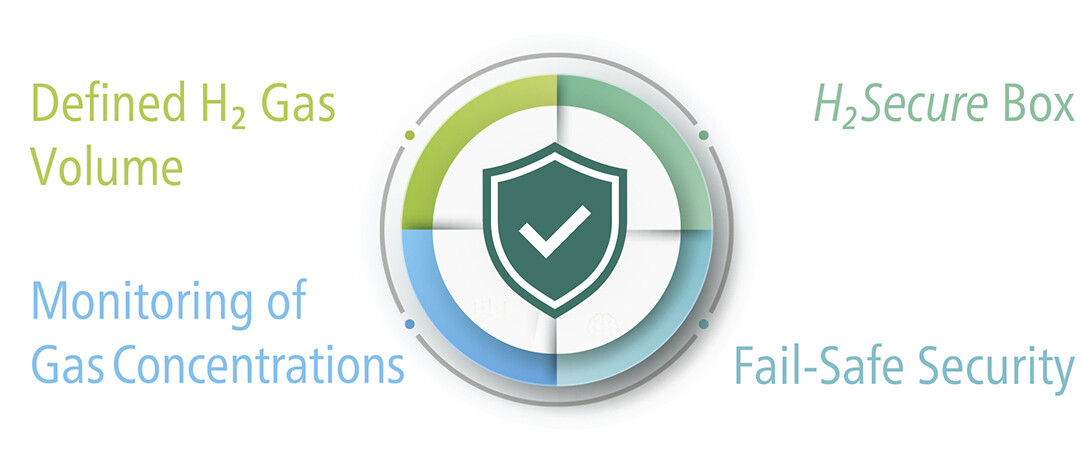
- The volume of H2 is precisely regulated by introducing hydrogen at the top of the furnace and confining it to a defined space above the continuously purged balance chamber.
- Gas concentrations of H2 and O2 are continuously measured for safe handling.
- The central communication unit, the H2Secure box, processes the overall information and controls the gas flows on the basis of pre-defined safety limits.
- Fail-safe operation is achieved by opening the magnetic valves in the event of a power failure, thus releasing an inert gas that removes the hydrogen from the system.
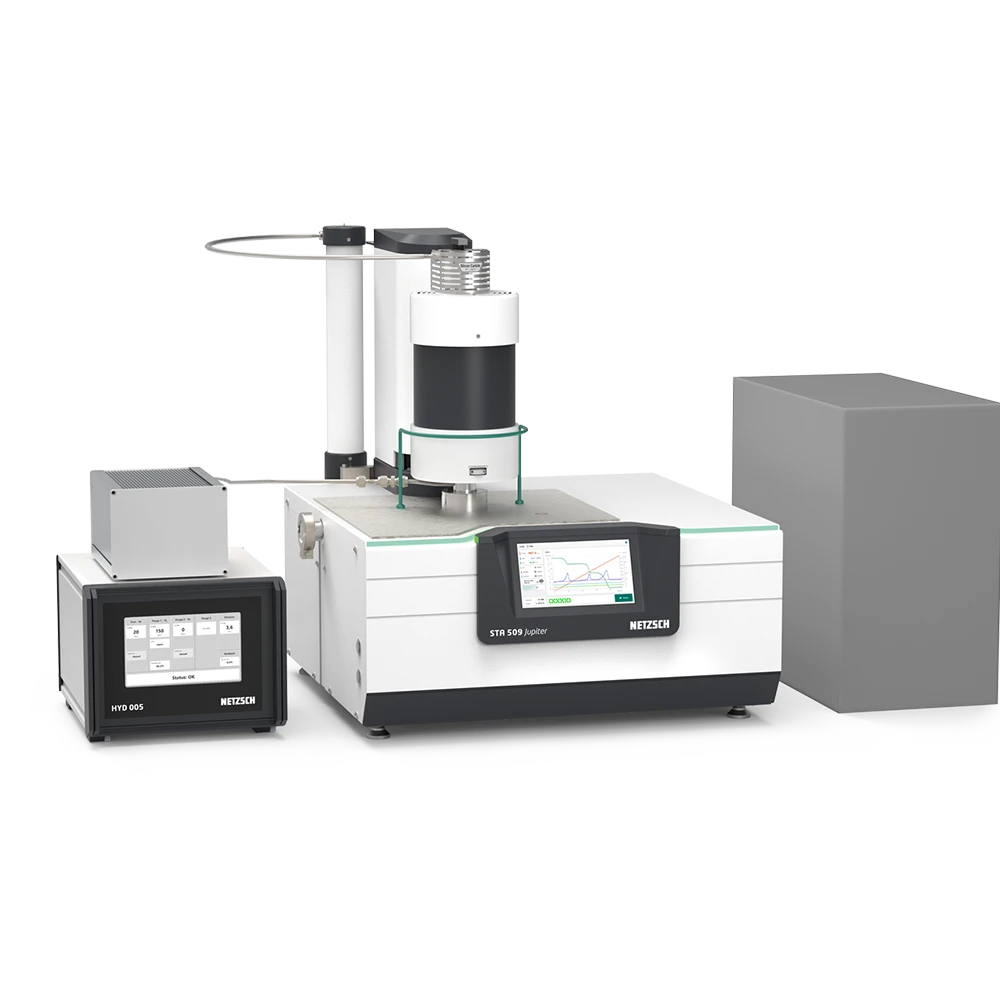
Set Up of the H2Secure Concept
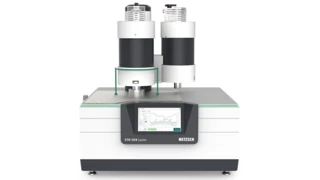
Concept for the STA 509 Series
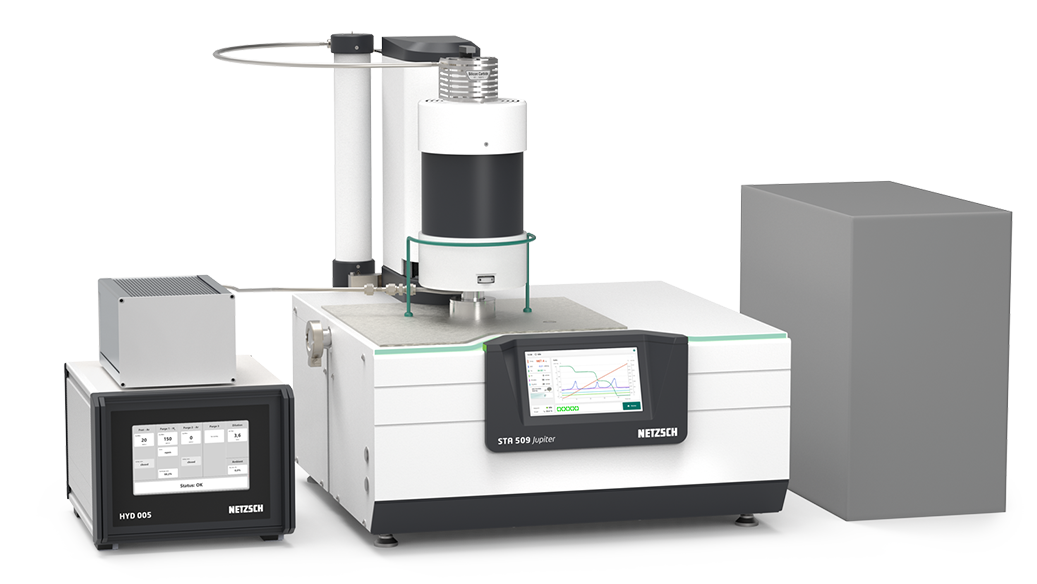
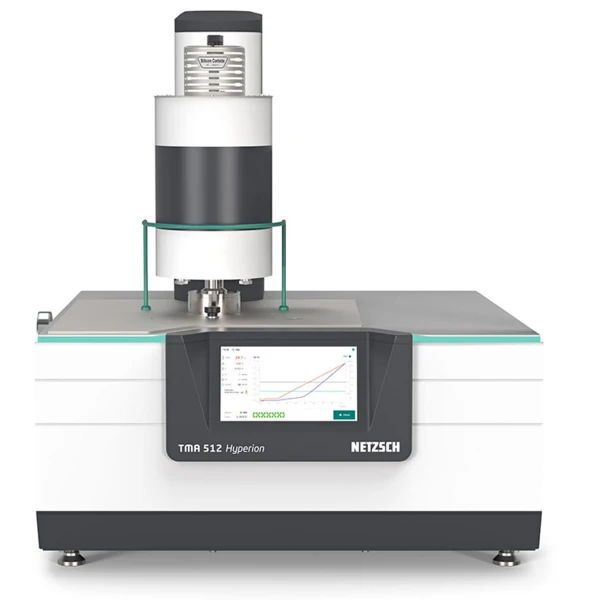
Set Up of the H2Secure Concept
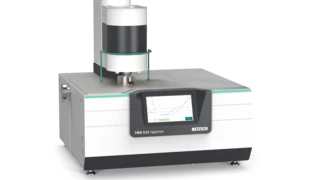
Concept for the TMA 512 Hyperion®
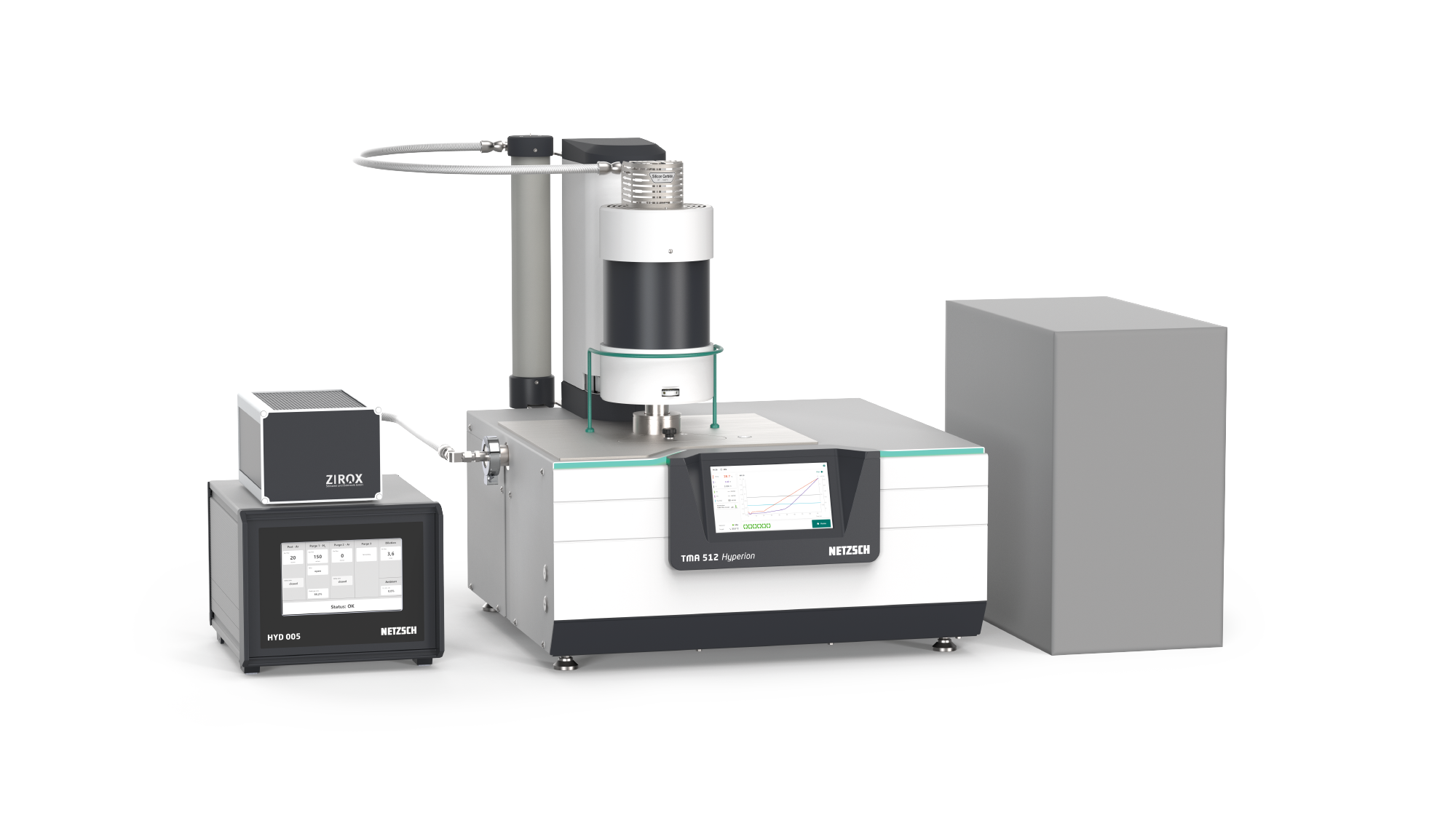
Specifications
| H2Secure for STA 449/509 | H2Secure for TMA 512 | |
|---|---|---|
| Furnace type supporting H₂ measurements | SiC | SiC |
| Temperature range | RT to 1600°C | RT to 1600°C |
| Sensor types* |
| |
| Thermocouple types* |
|
|
| Sensor type for reduction experiments only | W | |
| Optional 4-fold MFC | Possible switching between hydrogen and air atmospheres in one measurement | Possible switching between hydrogen and air atmospheres in one measurement |
| Hydrogen supply | Supplied by the operator, e.g., hydrogen generator, H₂ cylinder | Supplied by the operator, e.g., hydrogen generator, H₂ cylinder |
| H₂ and O₂ measuring cell | Included | Included |
| H₂Secure Box | Included | Included |
| Optional gas outlet treatment | H₂ dilution | H₂ dilution |
| Upgrade of previous models | Possible | On request |
* Possibility of reduced life time depending on experimental parameters.
Related Products
Upgrade for the STA 449 Series
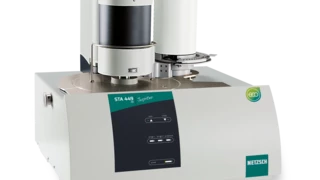
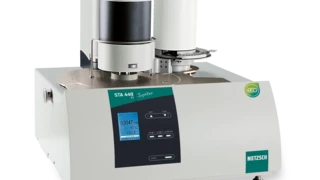
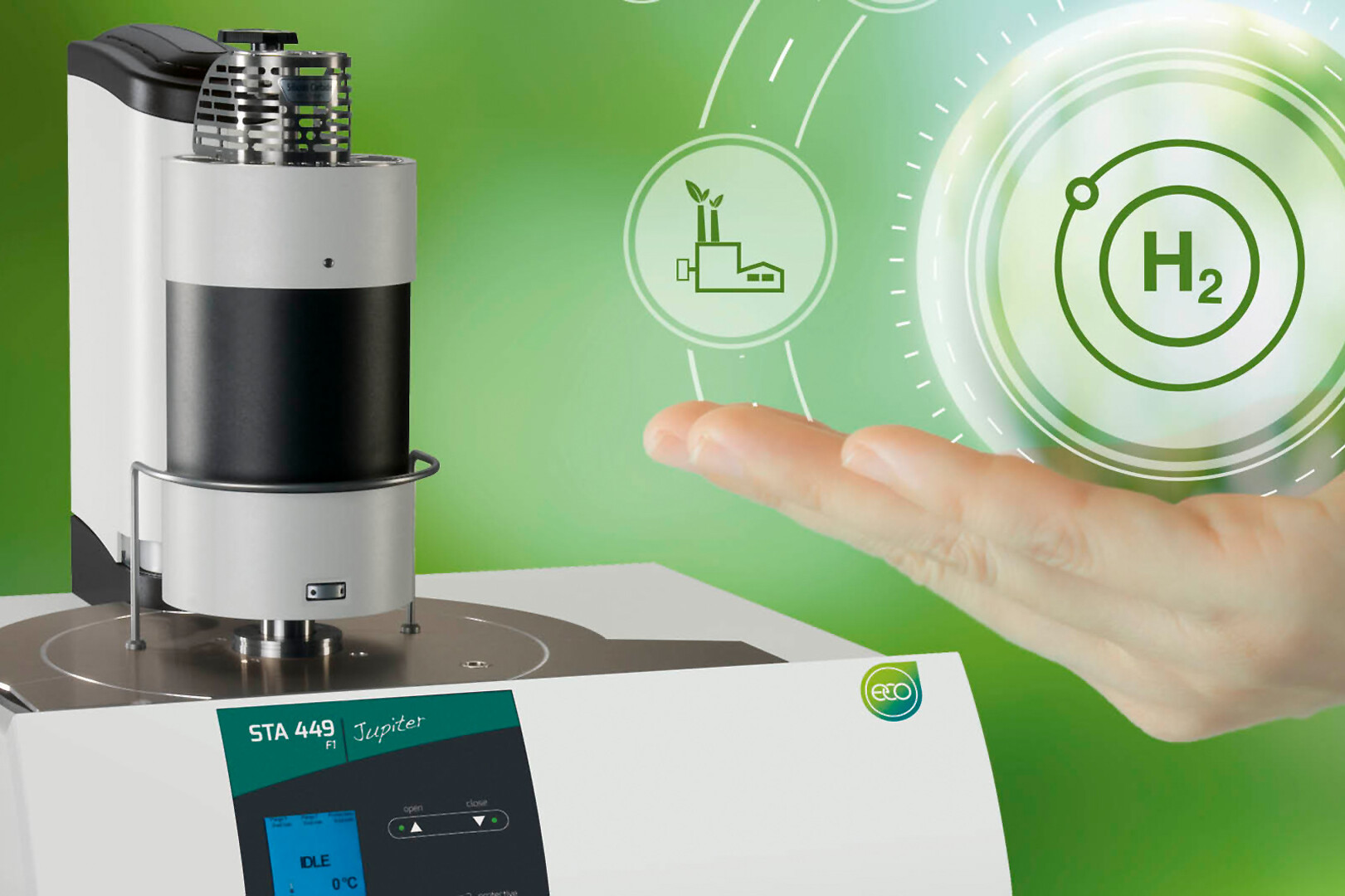
The H2Secure concept is readily accessible for all instruments of the STA 449 and 509 series, offering the flexibility of upgrading existing instruments. Upgraded instruments retain their complete functionality while also enabling safe operations with hydrogen. The upgrade encompasses all essential components and can be conveniently performed on-site by our service team.