STA 509 Jupiter® Classic
Exceptional Price-Performance Ratio
Highlights
Outstanding Performance Coupled with Cutting-Edge Design
Get the best price/performance ratio with the STA 509 Jupiter® Classic
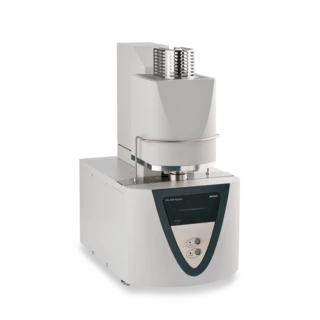
The STA 509 Jupiter® Classic offers exceptional value as the ideal affordable choice for routine high-performance simultaneous thermal analysis. Featuring a silicon carbide furnace reaching 1600°C and differential scanning calorimetry capabilities, this versatile instrument excels at typical applications like Thermal StabilityA material is thermally stable if it does not decompose under the influence of temperature. One way to determine the thermal stability of a substance is to use a TGA (thermogravimetric analyzer). thermal stability, Phase TransitionsThe term phase transition (or phase change) is most commonly used to describe transitions between the solid, liquid and gaseous states.phase transitions, OxidationOxidation can describe different processes in the context of thermal analysis.oxidation/reduction reactions, and Decomposition reactionA decomposition reaction is a thermally induced reaction of a chemical compound forming solid and/or gaseous products. decomposition processes across diverse materials and industries. Despite its outstanding price/performance ratio, the STA 509 Jupiter® Classic delivers reliable precision, accuracy, and repeatable results thanks to its robust construction and cutting-edge technology.
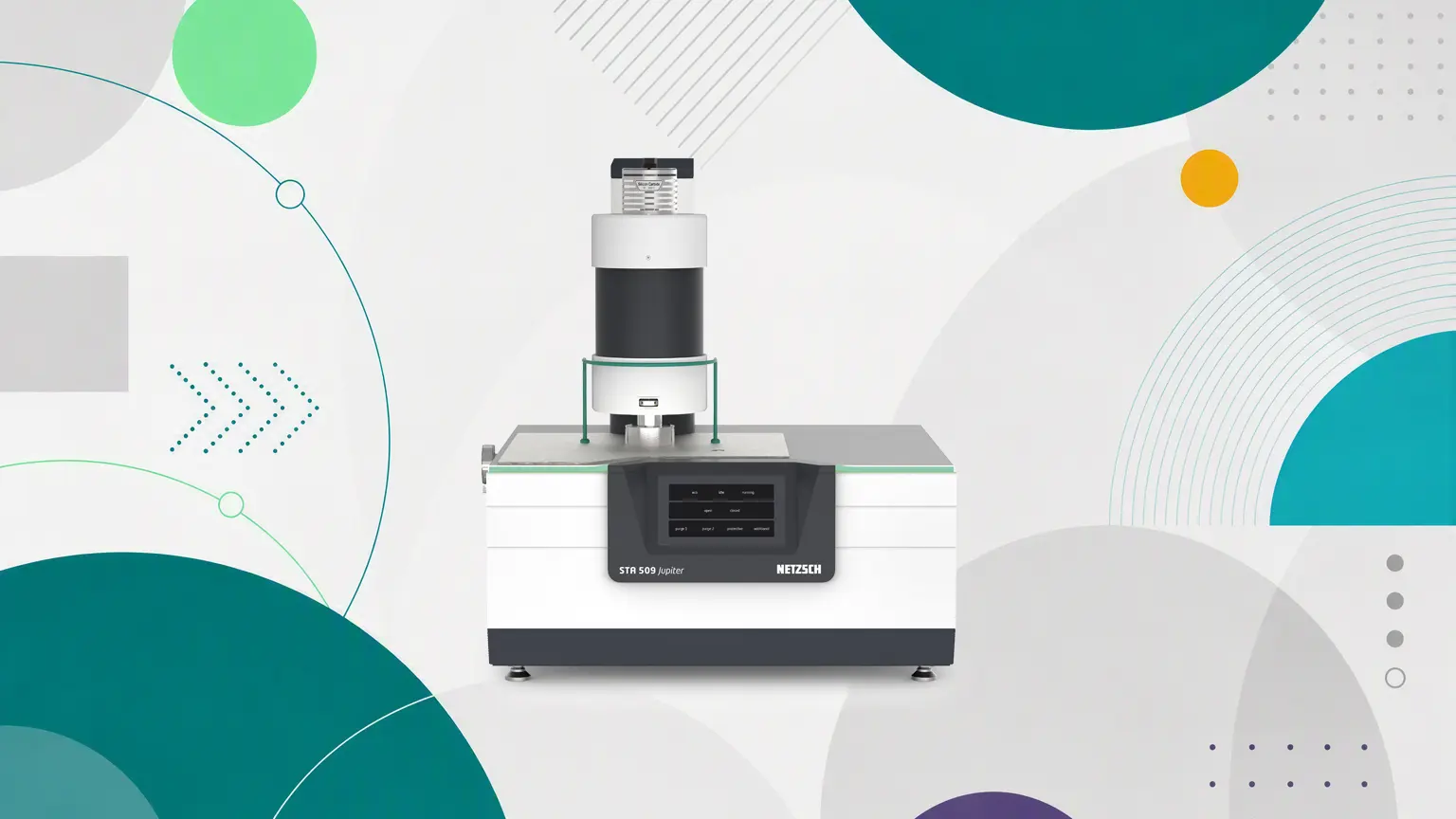
The STA Masterclass:
Your Monthly STA Webinar Series
Our webinar series brings you practical, application-first sessions on STA - from phase changes to OxidationOxidation can describe different processes in the context of thermal analysis.oxidation. Learn directly from NETZSCH experts and enhance your daily analysis work.

Improving Your Productivity and Workflow by Design
The STA 509 Jupiter® simplifies thermal analysis with its integrated color display to start pre-programmed measurements at a touch. Its LED light bar provides at-a-glance instrument status with color-coded indicators, allowing you to monitor measurements remotely without accessing a PC. This convenient design keeps you informed while streamlining your workflow.
Top Loading Balance Design
The top-loading, electronically compensated design provides optimal performance and ease of use. The ideal choice for flexible analytical systems and evolved gas analysis.
Defined Atmospheric Conditions
The vacuum-tight design and meticulous gas flow control enable precise handling of high-purity atmospheres, including inert, oxidizing, reducing, and corrosive gases.
Precision and Accuracy
The combination of nanogram balance and high performance heat flux DSC provides exceptional accuracy with minimal drift and unmatched flexibility for high sample loads.
Eco-Friendly Performance
The electronic thermal stabilization and Eco Mode optimize efficiency, delivering peak performance while reducing energy and gas consumption for substantial savings - promoting sustainability.
Accessories and Evolved Gas Analysis
Various sample holders broaden the range of applications. The integration of evolved gas analysis with MS, FT-IR or GC-MS extends the analytical capabilities of the STA 509 Jupiter® Classic.

The STA 509 Jupiter® Series
The modular design of the STA allows for easy exchange of furnaces and sensors to accommodate multiple applications over a wide temperature range from -150°C to 2400°C. The top-loading design provides ideal performance and easy of use, making it the obvious choice for a flexible analytical system and evolved gas analysis. The vacuum-tight design and meticulous control of gas flows allow precise handling of high-purity atmospheres with respect to various inert, oxidizing, reducing and corrosive gases.
A wide range of accessories, including humidity and water vapor generators, expand the application possibilities. Furthermore, the integration of Evolved Gas Analysis with MS, FT-IR, or GC-MS systems significantly enhances the analytical potential of the STA 509 Jupiter® series.

Our Quality Promise:
NETZSCH’s Unlimited Warranty
At NETZSCH, our commitment to quality goes beyond the instruments themselves. We understand that your investment in advanced technology is a long-term one, and and that’s why we offer something truly unique – our Unlimited Warranty.
Method
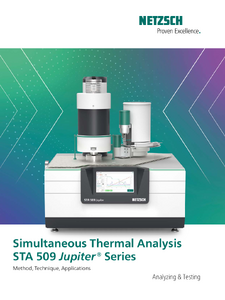
Simultaneous Thermal Analysis
Simultaneous Thermal Analysis (STA) is a method used to analyze the Thermal StabilityA material is thermally stable if it does not decompose under the influence of temperature. One way to determine the thermal stability of a substance is to use a TGA (thermogravimetric analyzer). thermal stability and composition of materials. It combines two techniques: Thermogravimetric Analysis (TGA) and Differential Scanning Calorimetry (DSC).
TGA measures the weight change of a material when it is heated or cooled, providing information on Decomposition reactionA decomposition reaction is a thermally induced reaction of a chemical compound forming solid and/or gaseous products. decomposition temperatures, moisture content, and Thermal StabilityA material is thermally stable if it does not decompose under the influence of temperature. One way to determine the thermal stability of a substance is to use a TGA (thermogravimetric analyzer). thermal stability. DSC measures the amount of heat required to increase the temperature of a sample, providing insights into Phase TransitionsThe term phase transition (or phase change) is most commonly used to describe transitions between the solid, liquid and gaseous states.phase transitions, heat capacity, and reaction enthalpies.
STA combines these two measurement methods by simultaneously recording weight change and heat flow of a sample. A small amount of the material is placed in a special container and is then heated or cooled. The STA instrument records both the weight changes and the heat absorbed or released by the sample. This method is particularly useful because it provides detailed data on the thermal properties and composition of a material, and its efficiency saves time and sample material.
STA is used in quality control, research and development, and failure analysis. It is essential for studying the behavior of polymers, pharmaceuticals, food, and other materials under different temperature conditions, making it an invaluable tool for scientists and engineers.

Measuring Principle
Here's how Simultaneous Thermal Analysis works:
- Sample Preparation: A small amount of the material (sample) is placed in a special container (crucible).
- Heating/Cooling: The sample is heated or cooled at a controlled rate.
- Measurement: As the temperature changes, the STA instrument records:
- Weight change: How much the sample's weight increases or decreases.
- Heat flow: How much heat is absorbed or released by the sample.
There are various thermophysical properties that can be measured using Differential Scanning Calorimetry:
- Specific Heat Capacity (cp)Heat capacity is a material-specific physical quantity, determined by the amount of heat supplied to specimen, divided by the resulting temperature increase. The specific heat capacity is related to a unit mass of the specimen.Specific heat capacity
- Melting Temperatures and EnthalpiesThe enthalpy of fusion of a substance, also known as latent heat, is a measure of the energy input, typically heat, which is necessary to convert a substance from solid to liquid state. The melting point of a substance is the temperature at which it changes state from solid (crystalline) to liquid (isotropic melt).Melting/CrystallizationCrystallization is the physical process of hardening during the formation and growth of crystals. During this process, heat of crystallization is released.crystallization behavior
- Solid-solid transitions
- PolymorphismPolymorphism is the ability of a solid material to form different crystalline structures (synonyms: forms, modifications).Polymorphism
- Glass Transition TemperatureThe glass transition is one of the most important properties of amorphous and semi-crystalline materials, e.g., inorganic glasses, amorphous metals, polymers, pharmaceuticals and food ingredients, etc., and describes the temperature region where the mechanical properties of the materials change from hard and brittle to more soft, deformable or rubbery.Glass transitions
- Degree of Crystallinity / Degree of CrystallinityCrystallinity refers to the degree of structural order of a solid. In a crystal, the arrangement of atoms or molecules is consistent and repetitive. Many materials such as glass ceramics and some polymers can be prepared in such a way as to produce a mixture of crystalline and amorphous regions.crystallinity
- Oxidative stability
- Curing (Crosslinking Reactions)Literally translated, the term “crosslinking“ means “cross networking”. In the chemical context, it is used for reactions in which molecules are linked together by introducing covalent bonds and forming three-dimensional networks.Cross-linking reactions
- TM-DSC
- Purity determination
- Kinetics simulations
- Thermal simulations
The following thermophysical properties that can be measured using Thermogravimetry:
- Mass changes
- Decomposition reactionA decomposition reaction is a thermally induced reaction of a chemical compound forming solid and/or gaseous products. Decomposition
- OxidationOxidation can describe different processes in the context of thermal analysis.Oxidation/reduction behavior
- Thermal StabilityA material is thermally stable if it does not decompose under the influence of temperature. One way to determine the thermal stability of a substance is to use a TGA (thermogravimetric analyzer). Temperature stability
- Compositional analysis
- Thermal Corrosion StudiesThermal corrosion or high-temperature corrosion is a chemical interaction of a material (typically a metal) with the surrounding gas atmosphere as a result of heating.Corrosion studies
- Kinetics simulations
- Thermal simulations
Specifications
Discover our carefully tailored Simultaneous Thermal Analyzer, designed to meet your needs:
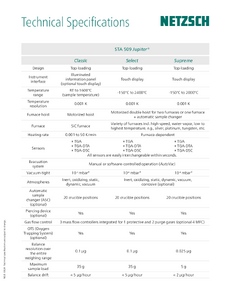
- Heating rate: 0.001 to 50 K/min
- Temperature resolution: 0.001 K
- Various Sensor Options: TGA, TGA-DTA, TGA-DSC
- Optional 20-position ASC


Day-to-Day Workhorse
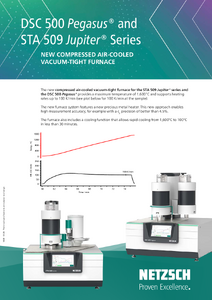
The silicon carbide furnace, the robust workhorse of the STA 509 Jupiter® , operates from ambient to 1600°C. Equipped with an aluminum oxide protective tube, it handles aggressive samples and corrosive atmospheres. Its user-friendly design allows for easy tube replacement by operators, ensuring minimal downtime.

Eco Mode - Thermal Analysis Made More Sustainable
70% LESS ENERGY AND COST – NO EXTERNAL TEMPERATURE CONTROL NEEDED
To obtain accurate thermogravimetric results with low drift behavior, most manufacturers have to resort to thermostatic control using a water circuit. Having to continuously run the thermostat consumes a lot of energy and produces waste heat, which subsequently needs to be regulated by air conditioning.
NETZSCH was able to eliminate the external thermostat. The temperature of the weighing chamber is now controlled electronically while maintaining excellent temperature stability. By eliminating the thermostat, the energy consumption of an STA 509 Jupiter® for an average user is reduced by 70% (when using the instrument 3 times a day on 250 days a year), which translates into a savings of 5,000 KW/h of electricity per year. Another way to run the unit more economically is to use the Eco Mode, which turns off the gases when they are not needed. All this makes the unit cheaper to run and effortlessly reduces your carbon footprint.
Hydrogen Research with
Thermal Analysis
Hydrogen (H2) is gaining attention for its potential role in sustainable practices and green technology. Research into the interaction of materials with hydrogen is critical for developing eco-friendly solutions that can significantly reduce environmental impact. One notable application is the use of hydrogen to mitigate high CO2 emissions from metallurgical processes through direct reduction, such as in iron ore reduction. The H2Secure concept developed by NETZSCH features a complete solution for conducting tests in environments with varying concentrations of hydrogen while providing utmost safety. This flexibility is achieved through a comprehensive safety protocol embedded in the system, enabling seamless performance of complex OxidationOxidation can describe different processes in the context of thermal analysis.oxidation-reduction cycles and precise analysis of reaction kinetics and material behavior under different conditions.

- The volume of H2 is precisely regulated by introducing hydrogen at the top of the furnace and confining it to a defined space above the continuously purged balance chamber.
- Gas concentrations of H2 and O2 are continuously measured for safe handling.
- The central communication unit, the H2Secure box, processes the overall information and controls the gas flows on the basis of pre-defined safety limits.
- Fail-safe operation is achieved by opening the magnetic valves in the event of a power failure, thus releasing an inert gas that removes the hydrogen from the system.
Evolved Gas Analysis
A significant feature of our thermal analysis instruments is their capability to be coupled with Evolved Gas Analysis (EGA) techniques. EGA is a powerful tool that enhances the functionality of thermal analysis by enabling the detailed study of gases evolved during heating and cooling. This coupling allows for a comprehensive understanding of the thermal behavior and composition of materials.
We offer coupling options with Fourier Transform Infrared Spectroscopy (FT-IR), Gas Chromatography-Mass Spectrometry (GC-MS), and Mass Spectrometry (MS). Each of these techniques provides unique advantages.
By integrating these advanced EGA techniques with our thermal analysis instruments, NETZSCH ensures that you receive comprehensive and accurate data for your research and development needs. Our commitment to innovation and quality guarantees that our instruments will meet your highest expectations.
Discover many more features:
The STA 509 Jupiter® series features an interchangeable sensor system that offers unparalleled versatility and adaptability in experimental setups. This capability allows researchers to tailor their testing approaches to match specific sample characteristics, environmental conditions, and research objectives. The Quick-Connect feature permits sensor changes to be made in seconds, ensuring seamless adaptation of the system to different potential applications, ultimately maximizing the utility and effectiveness of the testing system.
Sensor Thermocouples: we offer different thermocouples (S, P, E, K, W, etc.) suitable for most applications. For further information, see our accessories catalogue.
TGA-DSC and TGA-DSC (cp) sensors provide quantitative DSC testing in addition to TGA results, enabling comprehensive thermal analysis. In particular, the cp versions allow for highly accurate determination of the Specific Heat Capacity (cp)Heat capacity is a material-specific physical quantity, determined by the amount of heat supplied to specimen, divided by the resulting temperature increase. The specific heat capacity is related to a unit mass of the specimen.specific heat capacity, improving the accuracy of thermal measurements.
TGA-DTA sensors offer simultaneous measurement of weight changes and qualitative energetic effects, perfect for routine tests at an effective cost. In addition, TGA-DTA technology is adaptable to operating under extreme conditions, such as corrosive atmospheres or temperatures reaching up to 2400°C.
The TGA sensor enables precise measurement of mass changes combined with remarkable versatility to accommodate different sample shapes and volumes. Special versions with suspended or net-shaped sample supports are available to optimize sample-gas interactions for efficient analysis.

An automatic sample changer for up to 20 samples is optionally available. The sample changer is designed for optimum crucible placement and maximum throughput. Preprogramming allows measurements to be carried out during the night or weekend. The software can automatically carry out analyses using automatic or predefined evaluations.

The STA 509 Jupiter® Series can be equipped with various accessories and extensions for optimum adjustment of the system to your requirements.
Various cooling systems can be applied to cool the furnace, either back to room temperature via compressed air or down to -150°C by using liquid nitrogen cooling. The cost-efficient intracoolers offer an alternative to liquid nitrogen cooling.
Discover the potential of materials science with our extensive selection of crucibles. Crafted from top-quality materials such as highly sintered ceramics, refined metals, and pure graphite, our crucibles guarantee reliable measurements for challenging substances like high-melting alloys, molten salts, and refractory materials. Perforated crucibles and net-shaped sample holders enhance the interaction between reactive gases and the sample.
A wide variety of accessoroies can be found in our catalog. If you cannot find what you are looking for there, please do not hesitate to contact our sales department. At NETZSCH we will find a solution for your requirements.

An automatic piercing device attached to the gripper is optionally available; this opens the lids of aluminum crucibles shortly before the measurement starts.

The standard feet on the 509 Jupiter® series can be optionally replaced with a patented magnetic levitation system that effectively shields the instrument from external disturbances such as VibrationA mechanic process of oscillation is called vibration. Vibration is a mechanical phenomenon whereby oscillations occur about an equilibrium point. In many cases, vibration is undesirable, wasting energy and creating unwanted sound. For example, the vibrational motions of engines, electric motors, or any mechanical device in operation are typically unwanted. Such vibrations could be caused by imbalances in the rotating parts, uneven friction, or the meshing of gear teeth. Careful designs usually minimize unwanted vibrations.vibration. This feature provides reliable results that are unaffected by environmental fluctuations.

Explore the possibilities of materials science with our wide range of crucibles. Made of premium materials such as highly sintered ceramics, refined metals, and pure graphite, our crucibles ensure reliability for measurements on challenging materials such as highmelting alloys, molten salts, refractory materials, and more.


Proven Excellence in Service
At NETZSCH Analyzing & Testing, we offer a comprehensive range of services globally to ensure the optimal performance and longevity of your thermoanalytical equipment. With a track record of proven excellence, our services are designed to maximize the effectiveness of your devices, extend their lifespan, and minimize downtime.
Unlock the full potential of your equipment with our tailored solutions, backed by years of industry expertise and innovation.
Software
STA 509 Jupiter® with Proteus® - Our Powerful Analytical Software

AutoEvaluation – Fast and Objective Results Right After a Measurement
AutoEvaluation is the industry’s first self-operating evaluation system for TGA and DSC analyses. It automatically evaluates significant mass changes, endo- or ExothermicA sample transition or a reaction is exothermic if heat is generated.exothermic reactions, generates DTG curves, and identifies peak temperatures without user input. It provides real-time, post-measurement display of evaluated curves and allows customization of detection settings and displayed results. Offering time efficiency and objectivity, AutoEvaluation benefits both novice and expert users. An example application is the thermal analysis of CuSO4·5H2O, showing a water release below 300°C, Decomposition reactionA decomposition reaction is a thermally induced reaction of a chemical compound forming solid and/or gaseous products. decomposition of CuSO4 between 550°C and 800°C, and reduction of CuO to Cu2O above 800°C.
Identify – The Database for Material Identification and Quality Control
Identify is a unique software tool in the field of thermal analysis for the identification and classification of materials. The included NETZSCH libraries contain more than 1300 entries from the application areas of polymers, organics, pharmaceuticals, food, cosmetics, inorganics, ceramics, metals and alloys. Signal types currently supported include DSC, DSC Specific Heat Capacity (cp)Heat capacity is a material-specific physical quantity, determined by the amount of heat supplied to specimen, divided by the resulting temperature increase. The specific heat capacity is related to a unit mass of the specimen.cp, TGA, TGA-c-DTA®, STA, DIL/TMA and DMA. Users can expand the database with libraries containing an unlimited amount of their own data. Ultimately, this growing collection of database entries and measurement conditions can also be extremely useful in preparing future experiments.

It is particularly advantageous that Identify can even simultaneously incorporate two types of measurements, such as TGA and DSC or c-DTA®, during identification¹. As shown in the example above, analysis with Identify in the temperature range below 500°C reveals that the TGA-DSC results are very similar to those found for gypsum (dihydrate, CaSO4·2H2O) in the database. The DSC peak detected at 575°C, which is due to the structural α→β transition of quartz, occurs also in the most similar database curve in that temperature range. Above 600°C, the best hit from the database search is a measurement showing the Decomposition reactionA decomposition reaction is a thermally induced reaction of a chemical compound forming solid and/or gaseous products. decomposition of calcium carbonate. In summary, the investigation showed that the unknown material consists of gypsum, quartz and calcium carbonate.

This instrument is LabV®️-ready.
Turn data into better products with LabV®—a centralized, AI-driven material intelligence platform that integrates data from this instrument and any other data sources. Designed for R&D and QC engineers, LabV® enables data-driven decision-making to drive innovation and ensure consistently high-quality results.
Additional Software Capabilities
The BeFlat® software feature keeps a record of the temperature and other measuring influences – including the heating rate, the different purge gases and the gas flow rates – and can therefore provide the appropriate TGA and DSC corrections for the selected measurement conditions without having to carry out a blank value determination in the form of a correction measurement.
Proteus® Search Engine – Smart Data Management
When working with measurement and evaluation data for different materials and different measurement setups, it is enormously helpful to be able to directly access and sort data by certain criteria. Proteus® Search Engine automatically synchronizes with selectable directories and filters your data in a matter of seconds. Previews of measurement curves or analysis states are available with just one click. Users are able to create individual searches, for example “MyCeramics”, and switch easily between different existing searches. This makes Proteus® Search Engine a very powerful data management tool.
Advantages of Proteus® Search Engine
- Efficient data management
- Directly access and sort data by criteria
- Quickly view measurement and analysis previews without opening files ∙ Retrieve data quickly and easily
- Search, e.g., by instrument name, method, operator, file and signal type, date, measurement conditions or evaluated effects
Each operator can easily create their own report templates – including company logos, tables, description fields and plots. Several report examples are already included as templates in the Proteus® software. Results derived from Identify searches can also be included in reports.
For experimental curves exhibiting complexities such as overlapping mass-loss steps, overlapping DSC peaks, or MS/FT-IR peaks, our software is designed to assist in the separation of such effects. It facilitates the presentation of experimental data as a sum of individual peaks and enables analysis of each peak separately.
From the DSC signal, the Specific Heat Capacity (cp)Heat capacity is a material-specific physical quantity, determined by the amount of heat supplied to specimen, divided by the resulting temperature increase. The specific heat capacity is related to a unit mass of the specimen.specific heat capacity cp(T) can be calculated based on ratio and stepwise methods that are in accordance with ASTM E1269, DIN 51007 or DIN 11357-4 standards, but also directly and automatically from the DSC heat flow in accordance with DIN 51007. The cp(T) results can be shown together with uncertainty margin curves.
Kinetics Neo creates kinetic models of chemical reactions and physical processes based on a series of measurements under different temperature conditions. With the NETZSCH Kinetics Neo software, even multi-step processes can be precisely modeled by determining kinetic parameters such as activation energy, pre-exponential factor, and order of reaction. Thus, Kinetics Neo can be used to predict the behavior of chemical systems under user-defined conditions for process optimization.
Proteus® Protect is an option for all STA devices (incl. coupling) and meets the technical requirements of 21 CFR part 11
✅ = Included
?= Optional
⛔️= Not available
* included when MFC is selected
** requires Kinetics Neo
More features on request.
E-Learning

Downloads and Media
Application Literature
Our latest blog articles
- 19.05.2026
Understanding Cement Raw Materials: STA-FT-IR Analysis for Deeper Insight into Thermal Processes

- 05.05.2026
Thermogravimetry Meets Hydrogen (Part 3): Investigating Cu and CuO Redox Reactions under Hydrogen Atmospheres

- 11.03.2026
Thermogravimetry Meets Hydrogen (Part 2): Studying the Reduction of Fe₂O₃ under Different Hydrogen Concentrations

- 17.02.2026
Thermogravimetry Meets Hydrogen: Safe Thermal Analysis of Redox Reactions under Hydrogen Atmospheres

- 14.01.2026
Learn, Apply, Achieve: NETZSCH Launches Free E-Learning Courses on Thermoanalytical Methods

- 13.05.2025
Peace of Mind with NETZSCH: Introducing the Unlimited Warranty