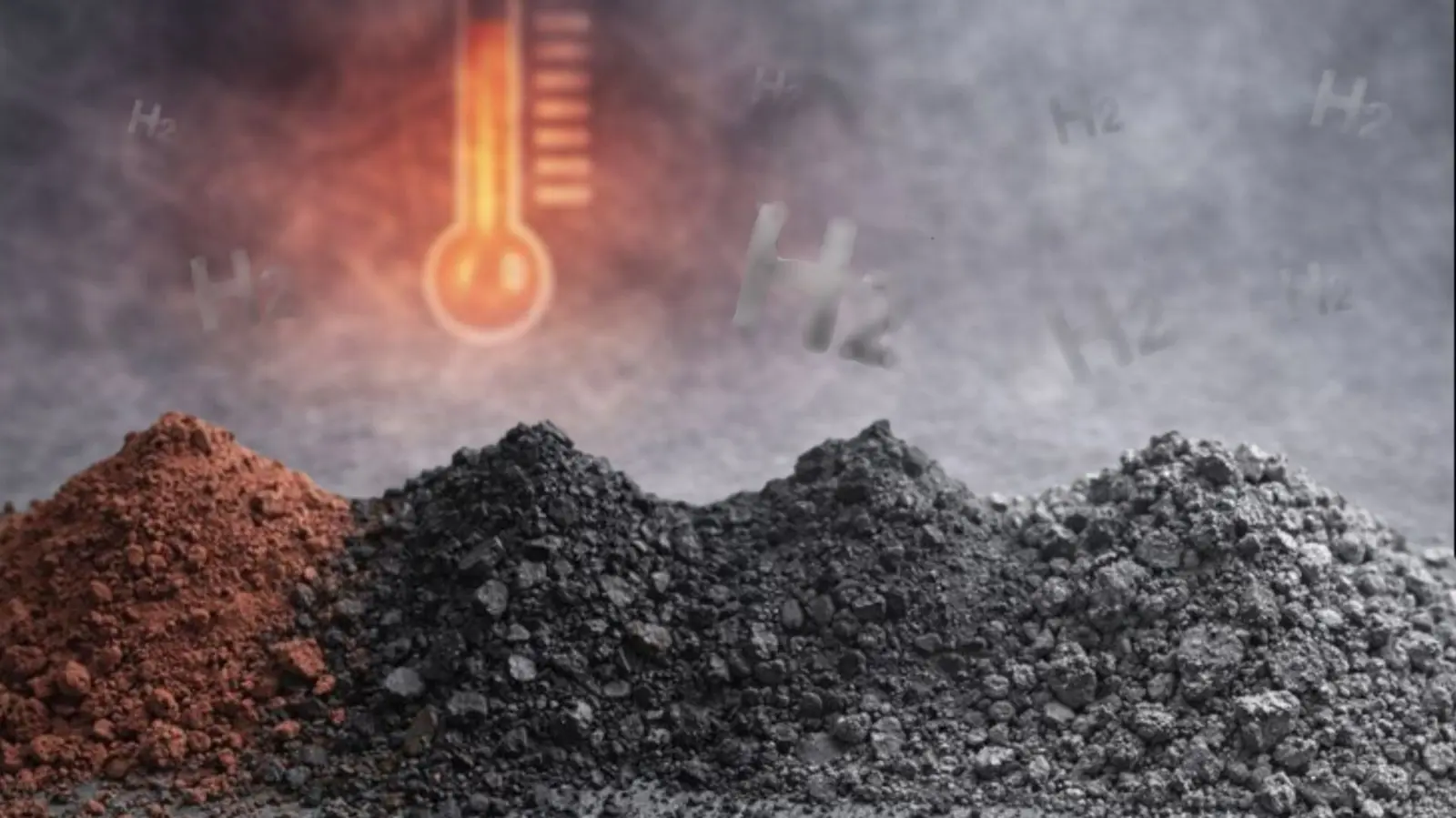
17.02.2026 by Aileen Sammler
Thermogravimetry Meets Hydrogen: Safe Thermal Analysis of Redox Reactions under Hydrogen Atmospheres
Learn how thermogravimetric analysis under hydrogen atmospheres supports the development of hydrogen technologies by revealing reduction behavior, reaction kinetics and material stability.
Why Hydrogen Matters for Materials Research
Hydrogen plays a central role in the global transition towards sustainable energy systems. From carbon-neutral metallurgy and thermochemical energy storage to catalytic processes and hydrogen-based reduction cycles, its potential reaches far beyond energy generation alone.
At the same time, hydrogen poses significant experimental challenges. Its high flammability and reactivity require precise control, robust safety concepts, and reliable analytical tools, especially at elevated temperatures. It is therefore essential for material scientists and process engineers to understand how materials behave under hydrogen-rich atmospheres.
This is where thermogravimetric analysis (TGA) becomes a powerful enabler.
Understanding Redox Reactions under Hydrogen Atmospheres
Thermogravimetric analysis allows researchers to monitor mass changes with high precision as a function of temperature and time. When applied under controlled hydrogen and oxygen atmospheres, TGA provides direct insight into reduction and OxidationOxidation can describe different processes in the context of thermal analysis.oxidation reactions of metals and metal oxides, which are key processes in hydrogen-based technologies.
In the new application note, NETZSCH demonstrates how the TGA method can be used to investigate reversible redox reactions. Such reactions are fundamental to applications including thermochemical energy storage, catalytic systems, and hydrogen-driven metallurgical processes. Repeated reduction and OxidationOxidation can describe different processes in the context of thermal analysis.oxidation cycles reveal not only reaction completeness, but also gradual kinetic changes caused by structural transformations, surface passivation, or particle agglomeration.
Safe Hydrogen Research with NETZSCH H₂Secure
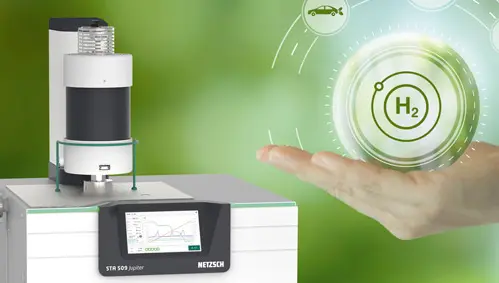
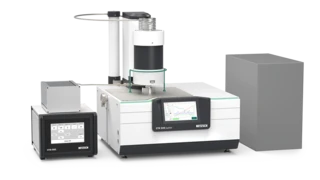
One of the main barriers to conducting hydrogen experiments at high temperatures is safety. NETZSCH addresses this challenge with the H₂Secure system, that can easily be integrated into its simultaneous thermal analyzers.
The TÜV-certified H₂Secure concept enables experiments with a hydrogen concentration of up to 100%, while ensuring maximum operational safety. Key features include real-time monitoring of hydrogen and oxygen concentrations, controlled gas routing, automatic inert gas purging in case of malfunction, and internal pressure monitoring. This allows researchers to focus on material behavior rather than experimental risks.
Combined with NETZSCH STA instruments, H₂Secure creates a controlled environment for studying redox kinetics under both IsothermalTests at controlled and constant temperature are called isothermal.isothermal and non-IsothermalTests at controlled and constant temperature are called isothermal.isothermal conditions at temperatures reaching well beyond typical laboratory limits.
NETZSCH Solutions for Hydrogen-Focused Applications
With its combination of advanced STA instrument and the H₂Secure system, NETZSCH provides a reliable platform for hydrogen research across academia and industry. Typical application fields include:
- Thermochemical energy storage materials
- Catalysis and surface reactivity studies
- Metallurgical process optimization
The ability to safely perform high-temperature experiments under hydrogen-rich atmospheres opens up new possibilities for developing and validating next-generation materials.
Want to Explore the Details?
The full experimental setup, measurement parameters, and detailed results can be found in the complete application note:
👉 Read the full Application Note:
In our next blog article, we will go one step further and show how controlled hydrogen atmospheres can be used to gain deeper insights into reduction behavior, reaction mechanisms, and material performance under application-relevant conditions. Stay tuned!
Become an Expert with our Free E-Learning Courses
All NETZSCH E-Learning Basic Courses are free of charge! The content is created by our laboratory method experts, who share their personal experiences with you. Take advantage of flexible online learning, fully adapted to your training needs!