10.02.2026 by Dr. Ligia de Souza
Predicting Protein Denaturation During Pasteurization with the NETZSCH Kinetics Neo Software
Learn how NETZSCH Kinetics Neo predicts protein denaturation during pasteurization and helps optimize food processing while preserving functionality.
Why Protein Denaturation Matters in Thermal Pasteurization
Pasteurization is one of the most important food processing technologies, providing microbial safety and extending shelf life. Although thermal treatments are designed to be gentle, they inevitably affect temperature-sensitive components, most notably proteins. Since proteins provide vital functional properties, such as solubility, gelation, and emulsification, it is essential to understand how they react to heat in order to develop high-quality food ingredients. Denaturation of proteins can affect the mentioned properties.
Traditional pasteurization techniques vary widely in temperature and duration. Batch or LTLT (low-temperature, long-time) treatments slowly heat products over several minutes, while HTST (high-temperature, short-time) processes, ultra pasteurization, and UHT (ultra-high temperature) expose foods to higher temperatures for a matter of seconds. Each method provides a different balance between microbial control and product quality. However, excessive heat can lead to protein denaturation, loss of nutritional value, and changes in texture or appearance. Despite the emergence of non-thermal alternatives, such as high-pressure processing and pulsed electric fields, thermal pasteurization remains dominant in many industry sectors. Consequently, predictive tools that can evaluate and optimize thermal effects on proteins are becoming increasingly valuable.
From DSC Curves to Kinetic Models: Predicting Heat-Induced Protein Changes
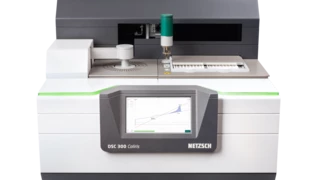
NETZSCH Kinetics Neo is a powerful software platform designed to model temperature-dependent reactions. By kinetic analysis of data from NETZSCH thermal analysis instruments, the software can construct both model-free and model-based descriptions of complex reaction pathways. For protein denaturation studies, this allows researchers to move beyond merely observing DSC curves and instead develop precise kinetic models that reveal how proteins unfold under specific temperature profiles. These models can then be used to predict the extent of denaturation under real processing conditions.
In a recent application note, we analyzed yeast protein dispersions using Differential Scanning Calorimetry, DSC, to determine their thermal behavior. During the first heating cycle, the protein exhibited a broad denaturation event between 44°C and 78°C. A second heating cycle produced no thermal effects, confirming the irreversibility of the denaturation. To establish the kinetics of this process, we conducted measurements at several heating rates. By means of the Kinetics Neo software, we evaluated these datasets and found excellent agreement using both the model-free Friedman analysis and the three-step model-based approach.

Optimizing Pasteurization Processes with Kinetics Neo Simulations
After establishing the kinetic parameters, Kinetics Neo was used to simulate protein denaturation under typical pasteurization conditions. The predictions revealed significant differences between the methods. Batch pasteurization led to nearly complete denaturation well before the full treatment time had elapsed. In contrast, UHT processing caused rapid and extensive conversion (after 1 s only approx. 10 % of the native protein are left). HTST was milder, yet it still affected a significant portion of the protein content. Ultra pasteurization was the only method that preserved most of the native protein because the very short exposure time limited overall denaturation.
This work highlights how kinetic modeling can support the optimization of pasteurization strategies. By using NETZSCH Kinetics Neo, food manufacturers can identify processing windows that maintain protein functionality, reduce the workload of experiments, and take a more controlled approach to thermal treatment. The result is a data-driven approach to designing processes that improves both product quality and development efficiency.
Read the full application note:





Watch also this webinar: