Thermogravimetric Analysis (TGA)

Find the Right TGA Instrument for Your Thermal Analysis

Understand How Your Materials Change with Temperature

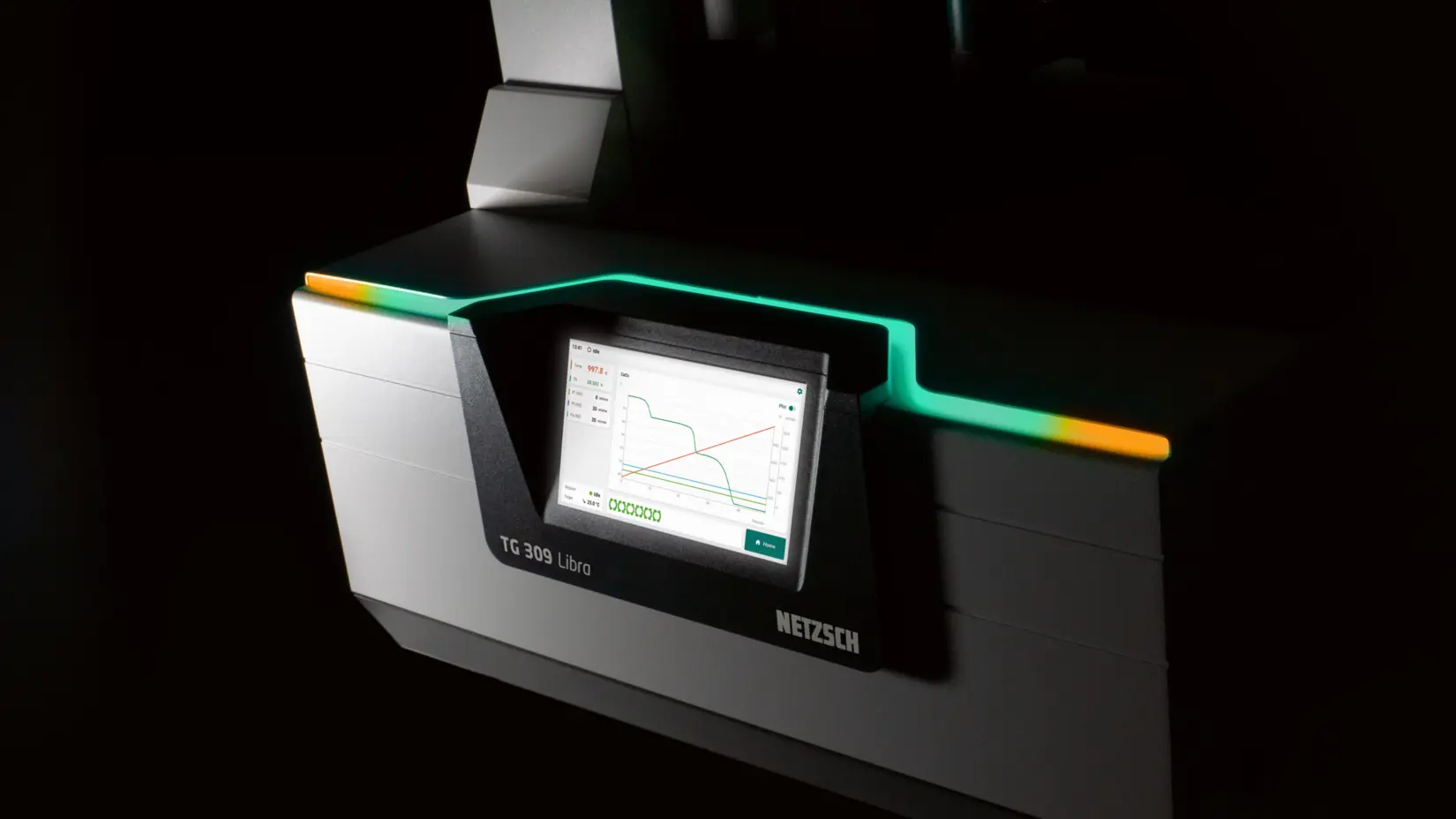
NETZSCH TGA instruments help you measure mass changes as a function of temperature, time and atmosphere. Characterize thermal stability, decomposition behavior, composition and OxidationOxidation kann im Zusammenhang mit thermischer Analyse verschiedene Vorgänge bezeichnen.oxidation processes with reliable thermal analysis solutions.

For R&D, quality control, material development and academic research.

Talk to a TGA Specialist

Tell us about your material and measurement requirements. Our sales and application specialists will help you identify a suitable solution.

Contact NETZSCH Sales

Why Use Thermogravimetric Analysis?

Gain clear insight into thermal stability, composition and mass-loss behavior.

Thermogravimetric analysis measures changes in a sample’s mass under controlled temperature and atmosphere conditions. It supports material characterization throughout research, development and quality control. 

Evaluate Thermal Stability
 
Identify temperature ranges in which your material remains stable and detect the onset of mass loss.
Analyze Decomposition Processes
Examine one or multiple mass-loss steps and investigate the thermal behavior of complex materials.
Determine Composition and Residual Content
Assess volatile components, fillers, moisture, ash content or residual mass, depending on the material and test method.

TGA Solutions Designed Around Your Measurement Requirements

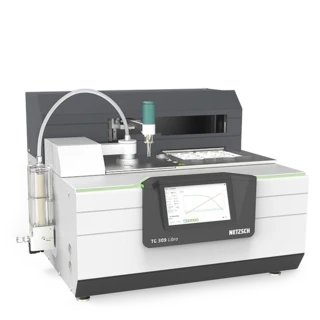
Explore the range of our NETZSCH TG Libra® Series

NETZSCH supports thermal analysis workflows from routine material characterization to advanced research applications. Our portfolio includes thermogravimetric analyzers and simultaneous thermal analysis systems that combine TGA with differential scanning calorimetry (DSC), depending on the required information.
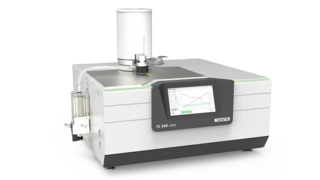
 

  • TG 309 Libra® Classic

    Sicherstellen von Produktqualität und -sicherheit durch Bestimmung von Massenänderungen

    • Wägeauflösung: 50ng
    • Temperaturbereich: RT (10°C) bis 1025°C an der Probe
    • Automatischer Probenwechsler: Platz für 20 Proben und Referenzen
  • TG 309 Libra® Select

    Sicherstellen von Produktqualität und -sicherheit durch Bestimmung von Massenänderungen

    • Wägeauflösung: 20ng
    • Temperaturbereich: RT (10°C) bis 1025°C/1100°C an der Probe
    • Automatischer Probenwechsler: Platz für 204 Proben und Referenzen
  • TG 309 Libra® Supreme

    Sicherstellen von Produktqualität und -sicherheit durch Bestimmung von Massenänderungen

    • Wägeauflösung: 10ng
    • Temperaturbereich: RT (10°C) bis 1100°C an der Probe
    • Automatischer Probenwechsler: Platz für 204 Proben und Referenzen

Get Help Selecting a TGA System

Describe your requirements - our team will help identify the right TGA setup for your application.

Contact NETZSCH Sales

What Can TGA Help You Investigate?

  • At what temperature does my material begin to decompose?
  • How thermally stable is my material?
  • Does the material lose moisture, solvents or other volatile components?
  • How does it behave in nitrogen, air or oxygen?
  • What is the remaining residue, ash or filler content?
  • Are there multiple decomposition steps?
  • How can I compare incoming materials or batches consistently?
The appropriate temperature range, crucible, gas atmosphere and heating rate depend on the sample and the measurement objective.

How Does TGA Work?

In a thermogravimetric analysis, a sample is continuously weighed while it is heated, cooled or held at a defined temperature under a controlled atmosphere. The resulting curve shows mass change as a function of temperature or time.

  • Prepare the sample
  • Define temperature program and gas atmosphere
  • Measure mass change during the test
  • Interpret the TGA curve and derivative signal (DTG), if required

Why Work with NETZSCH?

  • Thermal Analysis Expertise
    Benefit from specialized experience in thermal analysis and materials characterization.
  • Application-Oriented Consultation
    Discuss your sample, measurement objective and laboratory requirements with specialists.
  • Solutions for Different Laboratory Needs
    From routine measurements to more advanced thermal analysis configurations.
  • Support Beyond the Instrument
    NETZSCH offers instrument solutions alongside application knowledge, service and training resources.

Let’s Discuss Your TGA Requirements

Whether you are evaluating a new TGA instrument, comparing measurement configurations or investigating a specific material behavior, our team is ready to help.

Contact NETZSCH Sales

Typical TGA Applications

TGA Applications Across Materials and Industries

Professional man with glasses wearing a blue plaid shirt, looking confidently at the camera against a neutral background.
Polymers & Plastics

At what temperature does the polymer begin to decompose? What is the filler, plasticizer or residual ash content?

Professional man with glasses wearing a blue plaid shirt, looking confidently at the camera against a neutral background.
Pharmaceuticals

How much moisture or solvent remains in the sample? At which temperatures do active ingredients or excipients lose mass?

Professional man with glasses wearing a blue plaid shirt, looking confidently at the camera against a neutral background.
Coatings, Paints & Adhesives

What proportion of a formulation consists of volatile components, binders and inorganic residue? At which temperatures do curing or decomposition-related mass changes occur?

Professional man with glasses wearing a blue plaid shirt, looking confidently at the camera against a neutral background.
Batteries & Energy Materials

What is the thermal stability of electrode, electrolyte or separator materials? How do materials behave under inert versus oxidizing atmospheres?

Professional man with glasses wearing a blue plaid shirt, looking confidently at the camera against a neutral background.
Ceramics, Minerals & Building Materials

How much bound water, carbonate or organic content is present? What residual mass remains after thermal treatment?

Professional man with glasses wearing a blue plaid shirt, looking confidently at the camera against a neutral background.
Food & Agricultural Materials

What is the moisture content and thermal stability of the material? How much organic matter or ash remains after heating?

Discuss Your TGA Application

Tell us about your material and measurement requirements. Our sales and application specialists will help you identify a suitable solution.

Contact NETZSCH Sales

How the consultation works

Talk to a TGA Specialist

1. Tell Us About Your Requirement
Share your material, application, measurement objective and, if known, your desired temperature range.

2. We Review Your Needs
A NETZSCH representative or application specialist reviews the information with you.

3. Identify a Suitable Next Step
Receive guidance on a suitable TGA solution, configuration, application discussion or product demonstration.

Let’s Discuss Your TGA Requirements

Need support selecting a DSC instrument or evaluating a specific application? Send us your details and a NETZSCH sales representative will contact you.
 

FAQ

Frequently Asked Questions About TGA

Ready to Explore Your TGA Solution?

Talk to NETZSCH about your material, measurement challenge and laboratory requirements.

Contact NETZSCH Sales
AI Overview
An error occurred. Please try again.