Thermogravimetric Analysis (TGA)
Find the Right TGA Instrument for Your Thermal Analysis
Understand How Your Materials Change with Temperature
NETZSCH TGA instruments help you measure mass changes as a function of temperature, time and atmosphere. Characterize Thermal StabilityA material is thermally stable if it does not decompose under the influence of temperature. One way to determine the thermal stability of a substance is to use a TGA (thermogravimetric analyzer). thermal stability, Decomposition reactionA decomposition reaction is a thermally induced reaction of a chemical compound forming solid and/or gaseous products. decomposition behavior, composition and OxidationOxidation can describe different processes in the context of thermal analysis.oxidation processes with reliable thermal analysis solutions.
Talk to our team to find a TGA solution that fits your application and budget!
Talk to a TGA Specialist
TGA Solutions Designed Around Your Measurement Requirements
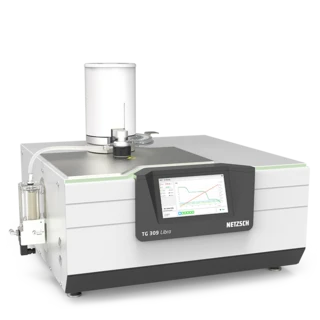
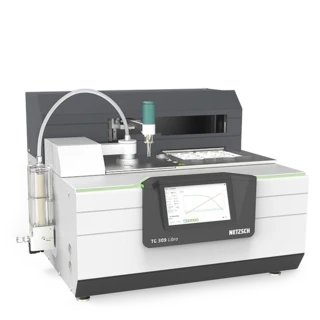
Explore the range of our NETZSCH TG Libra® Series
NETZSCH supports thermal analysis workflows from routine material characterization to advanced research applications. Our portfolio includes thermogravimetric analyzers and simultaneous thermal analysis systems that combine TGA with differential scanning calorimetry (DSC), depending on the required information.
Get Help Selecting a TGA System
Why Use Thermogravimetric Analysis?
Gain clear insight into Thermal StabilityA material is thermally stable if it does not decompose under the influence of temperature. One way to determine the thermal stability of a substance is to use a TGA (thermogravimetric analyzer). thermal stability, composition and mass-loss behavior.
Thermogravimetric analysis measures changes in a sample’s mass under controlled temperature and atmosphere conditions. It supports material characterization throughout research, development and quality control.
Evaluate Thermal Stability
Analyze Decomposition Processes
Determine Composition and Residual Content
Want More Details? Explore Our TGA Brochure
Get an overview of our TGA portfolio, key features and instrument options to support your evaluation.


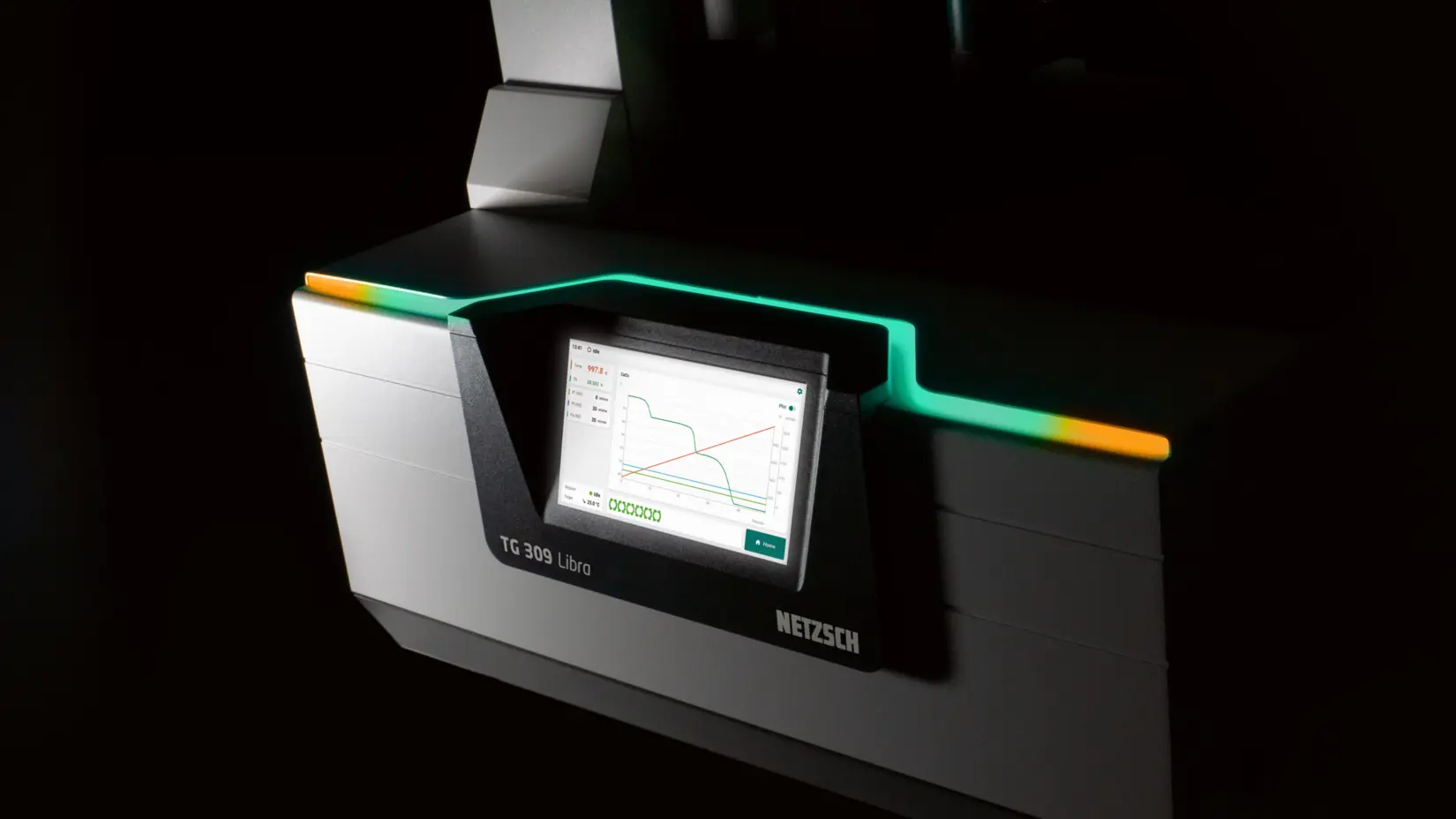
Take a Closer Look at the TG 309 Libra® Series
Why Work with NETZSCH?
TGA Solutions Matched to Your Measurement Requirements
A useful TGA setup depends on more than the method itself. Material type, expected transitions, temperature range, sample throughput, atmosphere and required sensitivity all influence the instrument configuration.
NETZSCH supports customers in selecting a TGA solution aligned with their analytical requirements - from routine measurements to demanding research applications.
- Thermal Analysis Expertise
Benefit from specialized experience in thermal analysis and materials characterization. - Application-Oriented Consultation
Discuss your sample, measurement objective and laboratory requirements with specialists. - Solutions for Different Laboratory Needs
From routine measurements to more advanced thermal analysis configurations. - Support Beyond the Instrument
NETZSCH offers instrument solutions alongside application knowledge, service and training resources.
Not Ready to Talk Yet?
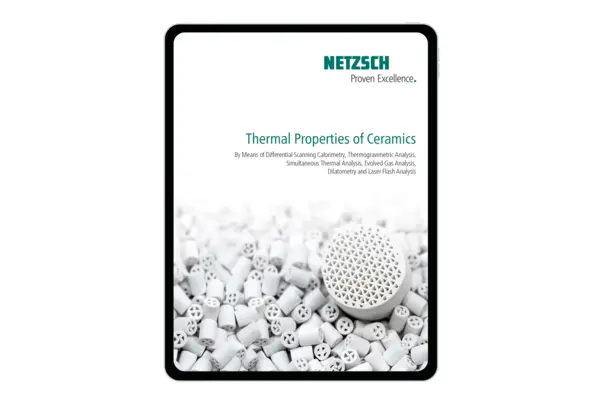
Explore the E-Book “Thermal Properties of Ceramics”
Learn how thermal analysis supports the characterization and development of ceramic materials. This handbook highlights practical applications of TGA and complementary techniques including DSC, STA, dilatometry and laser flash analysis.
Let’s Discuss Your TGA Requirements
Need support selecting a DSC instrument or evaluating a specific application? Send us your details and a NETZSCH sales representative will contact you.
Looking for the Right TGA Instrument?

Not Ready to Talk Yet?
Explore Our Free TGA E-Learning Courses
If you’d like to learn more about TGA and our instruments before contacting our team, explore our free E-Learning courses.
You May Also Be Interested In
Dive deeper into the world of NETZSCH Analyzing & Testing: explore our products, discover application insights, learn about our service offering or expand your expertise through e-learning resources.