Webinar
18.11.2026
Introduction to Rotational Rheology for Pharmaceutical Characterization
English
11 - 12 a.m. CET / 3:30 - 4:30 p.m. IST (Indian Standard Time)
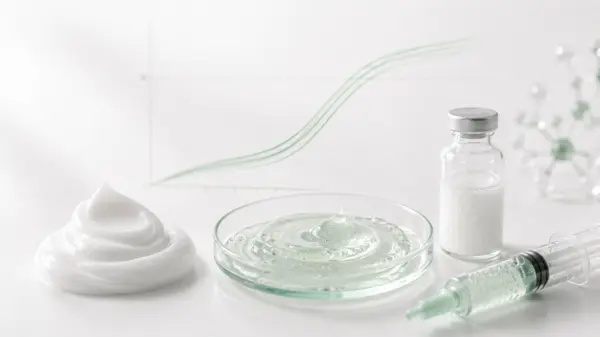
The flow behavior of pharmaceutical and cosmetic formulations influences every stage of the product lifecycle — from processing and filling to storage, application and final performance. Rotational rheology provides essential insights into viscosity, flow behavior and formulation consistency under different shear conditions.
In Part 5 of our Pharmaceutical Characterization Webinar Series, we introduce the fundamentals of rotational rheology. Learn how viscosity is measured, how flow curves are interpreted and how the right measuring geometry and test conditions are selected for reliable results.
Practical examples will demonstrate how rheology supports the development and quality control of creams, gels, ointments, injectable formulations, oral suspensions and raw materials. The following session will build on these fundamentals and explore oscillatory rheology for evaluating viscoelastic behavior, microstructure and formulation stability.
Topics Covered
- Rheology across the pharmaceutical and cosmetic value chain
- Viscosity, shear StressStress is defined as a level of force applied on a sample with a well-defined cross section. (Stress = force/area). Samples having a circular or rectangular cross section can be compressed or stretched. Elastic materials like rubber can be stretched up to 5 to 10 times their original length.stress and shear rate
- Newtonian and Non-NewtonianA non-Newtonian fluid is one that exhibits a viscosity that varies as a function of the applied shear rate or shear stress.non-Newtonian behavior
- Rheometer design, measuring geometries and sample loading
- Flow curves, Shear ThinningThe most common type of non-Newtonian behavior is shear thinning or pseudoplastic flow, where the fluid viscosity decreases with increasing shear.shear thinning and Shear ThickeningWhile most suspensions and polymer structured materials are shear thinning, some materials can also show shear thickening behavior where viscosity increases with increasing shear rate or shear stress.shear thickening
- Yield StressStress is defined as a level of force applied on a sample with a well-defined cross section. (Stress = force/area). Samples having a circular or rectangular cross section can be compressed or stretched. Elastic materials like rubber can be stretched up to 5 to 10 times their original length.stress, ThixotropyFor most liquids, shear thinning is reversible and the liquids will at some point in time gain their original viscosity when a shearing force is removed.thixotropy and time-dependent behavior
- Applications for creams, lotions, gels and ointments
- Injectable formulations and oral suspensions
- Raw material characterization
- Standard methods and measurement templates
- Automatic evaluation, model fitting and reporting
- Software compliance and data management
Join the webinar and discover how rotational rheology can help you better understand, optimize and control pharmaceutical and cosmetic formulations.
Register now free of charge!