Accelerating Rate Calorimeter 244 (ARC®)
Container volume between 1 ml and 130 ml
Highlights
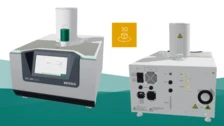
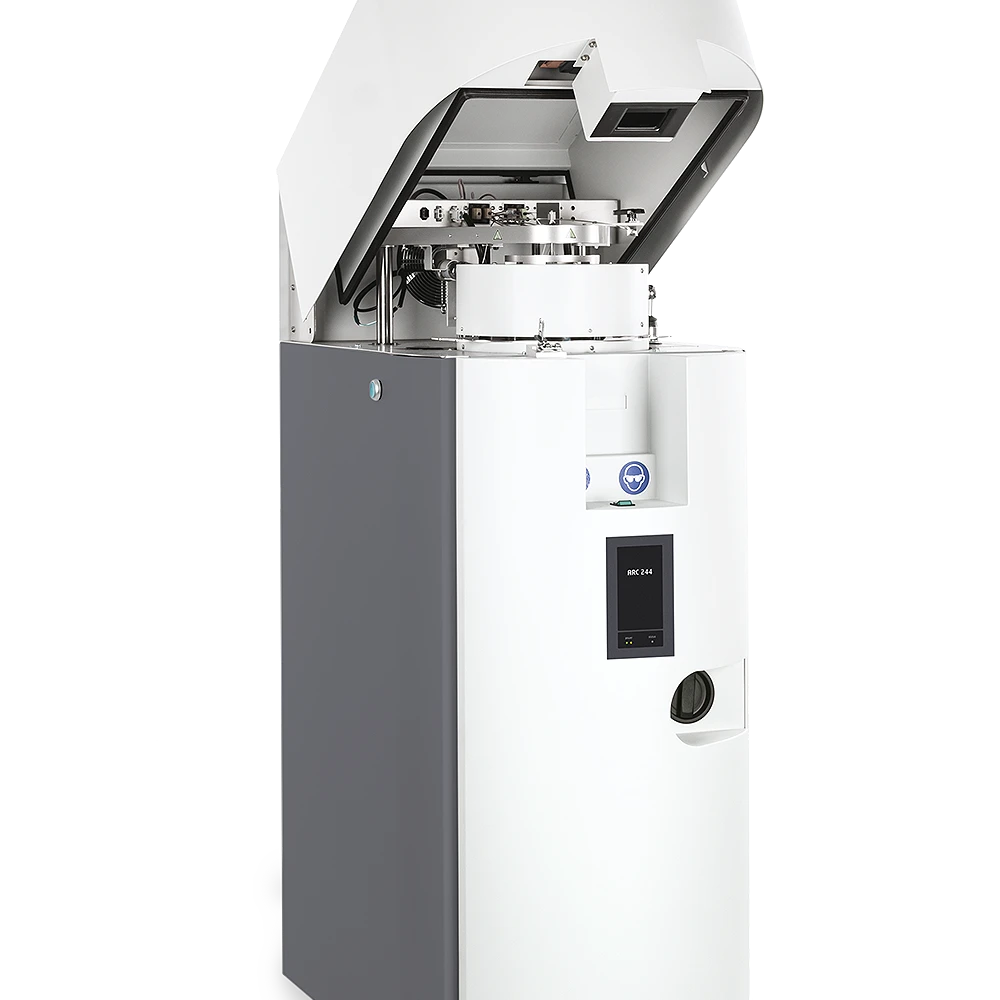
The cost‐effective Accelerating Rate Calorimetry (ARC)The method describing isothermal and adiabatic test procedures used to detect thermally exothermic decomposition reactions.ARC® 244 is designed to safely measure the amount and rate of heat release associated with the processing or storage of chemicals within a container volume between 1 ml and 130 ml.
This is the calorimeter which uses the same design as the first Accelerating Rate Calorimetry (ARC)The method describing isothermal and adiabatic test procedures used to detect thermally exothermic decomposition reactions.ARC® system developed by DOW for those customers interested in keeping the same platform.
This information is vital in developing and evaluating processes to ensure safe operation and to prevent Thermal runawayA thermal runaway is the situation where a chemical reactor is out of control with respect to temperature and/or pressure production caused by the chemical reaction itself. Simulation of a thermal runaway is usually carried out using a calorimeter device according to accelerated rate calorimetry (ARC).thermal runaway which can have devastating effects.
The Accelerating Rate Calorimeter 244 (Accelerating Rate Calorimetry (ARC)The method describing isothermal and adiabatic test procedures used to detect thermally exothermic decomposition reactions.ARC® 244) technology is integral to designing inherently safer batteries as well as measuring energetic materials used in such products as explosives, propellants, and air bags.
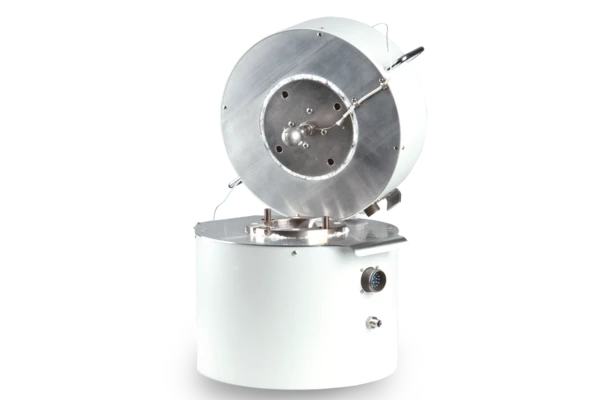
- Tube heater reduces heat losses due to reflux
- Windows 10™ operating system standard
- Smaller footprint
- Lift mechanism for calorimeter top
- Experimental wizards for easy test set-up
- Power Compensation Module (optional)
- Increased safety and interlock features
Method
The Accelerating Rate Calorimeter 244 (Accelerating Rate Calorimetry (ARC)The method describing isothermal and adiabatic test procedures used to detect thermally exothermic decomposition reactions.ARC® 244) simultaneously measures temperature and pressure. The sealed pressure system also allows the user to evaluate the effect of different gas atmospheres on the Thermal StabilityA material is thermally stable if it does not decompose under the influence of temperature. One way to determine the thermal stability of a substance is to use a TGA (thermogravimetric analyzer). thermal stability of the system.
The Accelerating Rate Calorimeter 244 (Accelerating Rate Calorimetry (ARC)The method describing isothermal and adiabatic test procedures used to detect thermally exothermic decomposition reactions.ARC® 244) simultaneously measures temperature and pressure. The sealed pressure system also allows the user to evaluate the effect of different gas atmospheres on the Thermal StabilityA material is thermally stable if it does not decompose under the influence of temperature. One way to determine the thermal stability of a substance is to use a TGA (thermogravimetric analyzer). thermal stability of the system.
Gaseous reaction products may be analyzed at the end of an experiment to help identify and understand the reaction mechanisms involved.
A single experiment provides data for use in the following:
- Thermal Hazard Evaluation
- Pressure Hazard Evaluation
- Thermokinetic Analysis
User safety is a key objective in the design of model 305. The user is protected by a series of safety systems that are completely independent of the control system. These safety systems work to protect the user in the event that the primary control system fails. Fully computer-controlled and highly automated, the Accelerating Rate Calorimeter (ARC® 305) features a graphical interface that is easy to learn and use.
The system is totally integrated into clean, modern designs in which all routinely used equipment is easily accessible.

Specifications
| Operating Test Cell Temperature Range: | RT to 500°C | |
| Primary mode of operation: | Heat-Wait-Search (HWS)Heat-Wait-Search is a measurement mode used in calorimeter devices according to accelerating rate calorimetry (ARC).Heat-Wait-Search | |
| Iso-Fixed/Iso-Track: | Iso-aging techniques for studying storage conditions/auto-catalytic reactions | |
| Ramp mode: | for screening unknown samples | |
| Scanning Mode: | with Power Compensation Module | |
| IsothermalTests at controlled and constant temperature are called isothermal.Isothermal Mode: | with Power Compensation Module | |
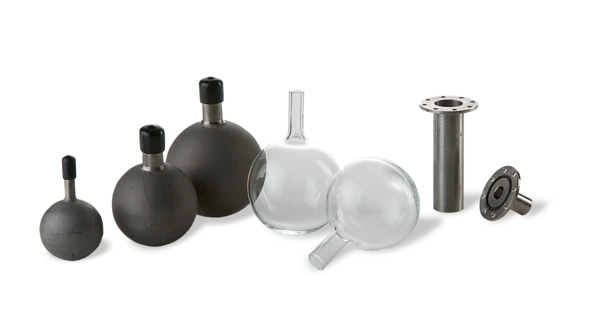
Test cell materials for spherical vessels with a wall thickness between 0.4 mm and 0.9 mm: | Hastelloy Stainless Steel Titanium (Volume: 1 ml to 130 ml) | |
Test cell materials for tube-type vessels with a wall thickness of 0.4 mm and 0.9 mm: | Stainless Steel Titanium(Volume: 1 ml to 8.5 ml) |
Brochures and Data Sheets:


Proven Excellence in Service
At NETZSCH Analyzing & Testing, we offer a comprehensive range of services globally to ensure the optimal performance and longevity of your thermoanalytical equipment. With a track record of proven excellence, our services are designed to maximize the effectiveness of your devices, extend their lifespan, and minimize downtime.
Unlock the full potential of your equipment with our tailored solutions, backed by years of industry expertise and innovation.
Software
NETZSCH Proteus® Measurement software: Proven Technology Leader
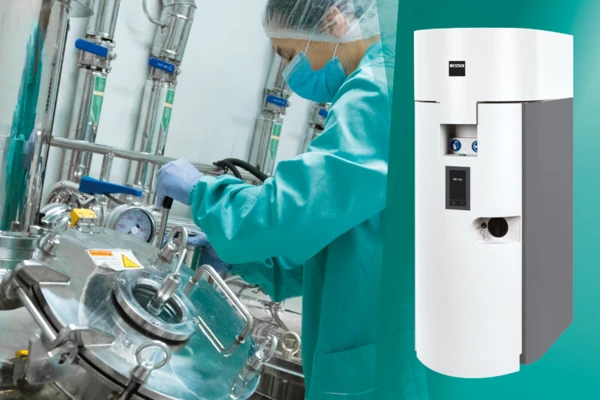
- Data is automatically saved to hard-drive throughout the run
- Intelligent Firmware monitors the status and health of key operating sensors and active components
- Safety integrated with hardware and firmware controls
- Seamless integration of data files to Proteus® Analysis, NETZSCH Advanced Software Tools or 3rd party software
Related Devices

Consultancy & Sales
Do you have further questions about the instrument or the method and would like to speak to a sales representative?
Service & Support
Do you already have an instrument and need technical support or spare parts?