Differential Scanning Calorimetry (DSC)
Find the Right DSC Instrument for Your Thermal Analysis
Characterize melting behavior, Glass Transition TemperatureThe glass transition is one of the most important properties of amorphous and semi-crystalline materials, e.g., inorganic glasses, amorphous metals, polymers, pharmaceuticals and food ingredients, etc., and describes the temperature region where the mechanical properties of the materials change from hard and brittle to more soft, deformable or rubbery.glass transitions, CrystallizationCrystallization is the physical process of hardening during the formation and growth of crystals. During this process, heat of crystallization is released.crystallization and Curing (Crosslinking Reactions)Literally translated, the term “crosslinking“ means “cross networking”. In the chemical context, it is used for reactions in which molecules are linked together by introducing covalent bonds and forming three-dimensional networks.curing with reliable Differential Scanning Calorimetry solutions from NETZSCH.
Whether you work in R&D, quality control, product development or academia, our DSC portfolio helps you generate the thermal data needed to understand, develop and validate materials.
Talk to our team to find a DSC solution that fits your application and budget!
Talk to a DSC Specialist
Our Differential Scanning Calorimeters
From Routine DSC Testing to Advanced Thermal Analysis
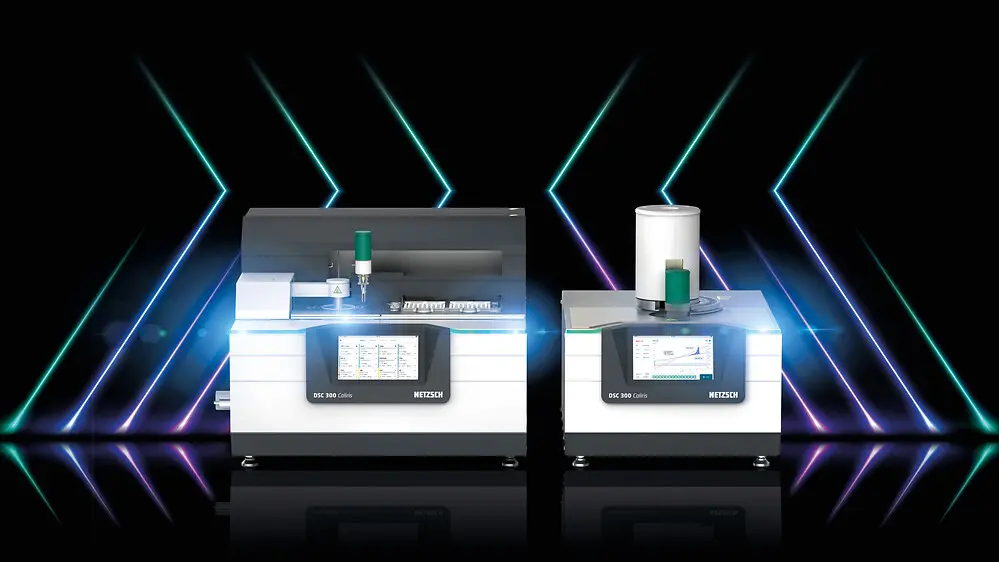
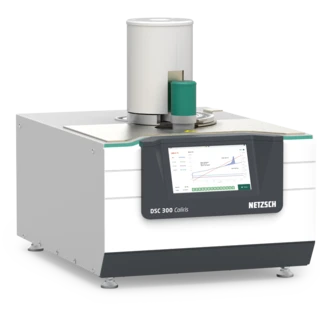
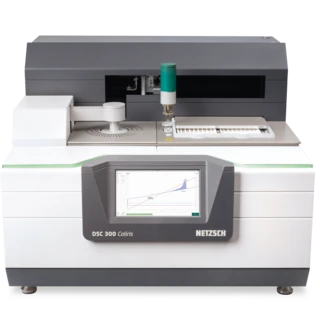
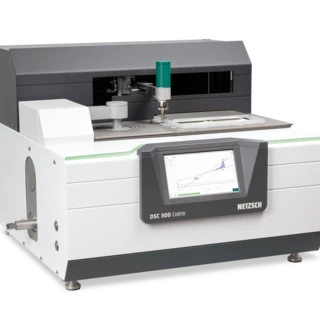
NETZSCH offers DSC instruments for different performance requirements, sample types and temperature ranges. Our team can help you narrow down the suitable configuration.
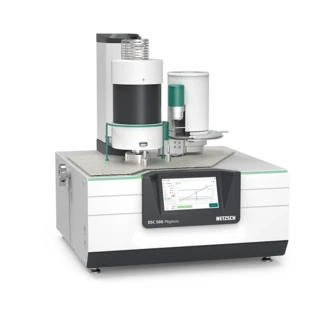
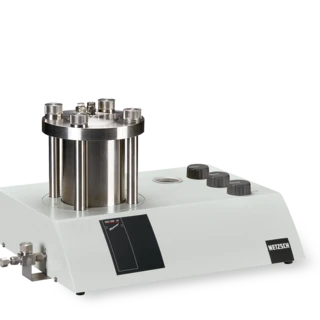
Get a Recommendation for Your DSC Setup
What can DSC help you understand?
Understand Thermal Transitions and Material Behavior
Differential Scanning Calorimetry measures heat flow associated with physical and chemical transitions in a material as a function of temperature or time. It is widely used to characterize thermal properties and support material development, process optimization and quality assurance.
Glass Transition (Tg)
Melting and
Crystallization
Curing and Reaction Behavior
Want More Details? Explore Our DSC Brochures
Get an overview of our DSC portfolio, key features and instrument options to support your evaluation.


Take a Closer Look at the DSC 300 Caliris® Classic
Why NETZSCH for DSC?
DSC Solutions Matched to Your Measurement Requirements
A useful DSC setup depends on more than the method itself. Material type, expected transitions, temperature range, sample throughput, atmosphere and required sensitivity all influence the instrument configuration.
NETZSCH supports customers in selecting a DSC solution aligned with their analytical requirements - from routine measurements to demanding research applications.
- Choose the Right Temperature Range
Select a system appropriate for your expected thermal events and operating conditions. - Fit Your Workflow
Match the solution to routine quality-control testing, product development or advanced research. - Work with Different Materials
Analyze polymers, pharmaceuticals, chemicals, metals, ceramics, composites and other material systems. - Get Application Support
Discuss measurement objectives, sample characteristics and suitable test conditions with thermal analysis specialists.
Not Ready to Talk Yet?
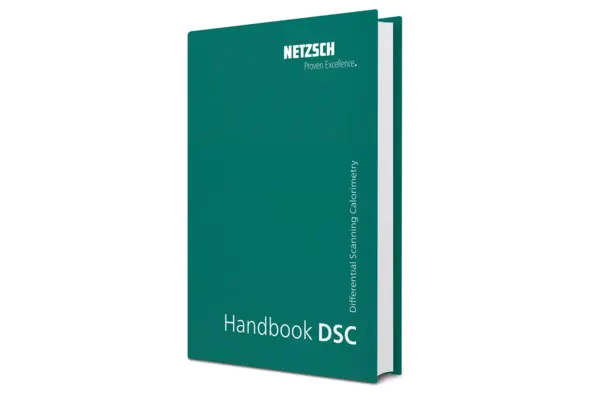
Explore the Handbook “DSC on Polymers”
If you’d like to learn more about DSC polymer testing before contacting our team, explore our handbook with practical measurement guidance and application insights.
Let’s Discuss Your DSC Requirements
Need support selecting a DSC instrument or evaluating a specific application? Send us your details and a NETZSCH sales representative will contact you.
Looking for the Right DSC Instrument?
Not Ready to Talk Yet?
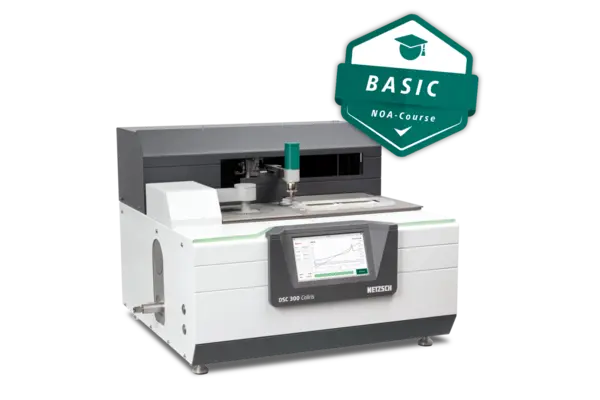
Explore Our Free DSC E-Learning Courses
If you’d like to learn more about DSC and our instruments before contacting our team, explore our free E-Learning courses.
You May Also Be Interested In
Dive deeper into the world of NETZSCH Analyzing & Testing: explore our products, discover application insights, learn about our service offering or expand your expertise through e-learning resources.