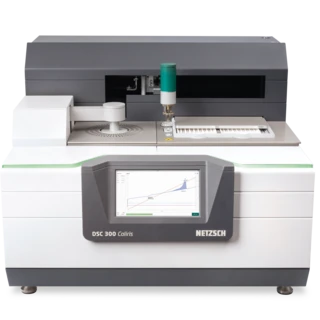
DSC 300 Caliris® Supreme
The most versatile DSC that you will ever have!
Highlights
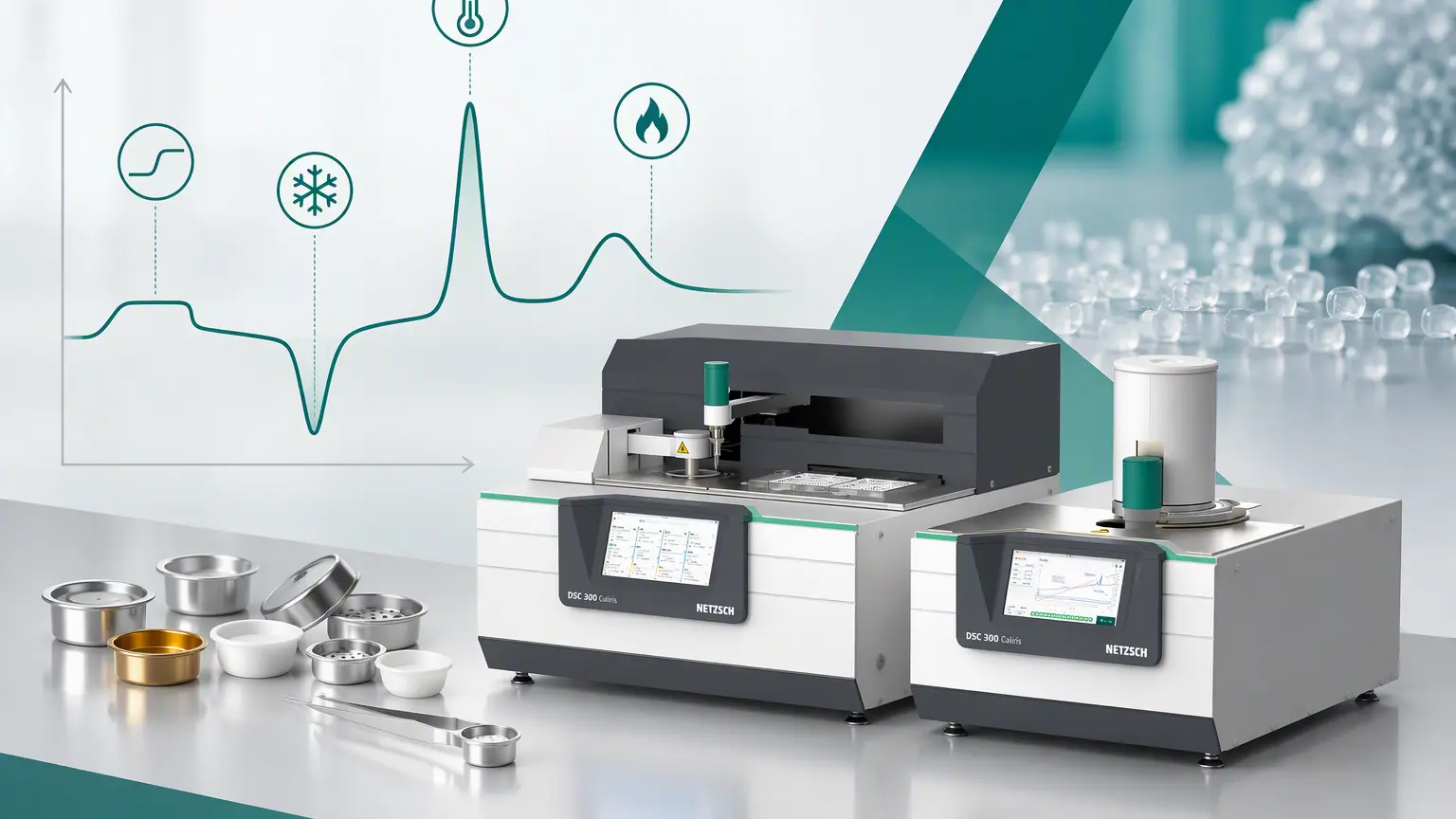
The DSC 300 Caliris® Supreme Is the Most Comprehensive, Most Reliable and Versatile DSC for Material Characterization on the Market.
No matter if you are working in research & development, quality control, contract testing or the specification of materials for certain applications, information about a material's behavior under changing temperature and different atmospheres is important.
The DSC 300 Caliris® can support:
- Material identification
- Process optimization
- Quality control
- Phase diagrams
- Kinetic analysis
- Compatibility


Our Quality Promise:
NETZSCH’s Unlimited Warranty
At NETZSCH, our commitment to quality goes beyond the instruments themselves. We understand that your investment in advanced technology is a long-term one, and and that’s why we offer something truly unique – our Unlimited Warranty.
The DSC 300 Caliris® Supreme – The Future-Proof Choice
This version offers a choice of currently three modules and can be configured to achieve an unrivaled maximum temperature range of -180°C to 750°C.
It is possible to update your device at any time to take advantage of the latest technological developments or to change your application. The choice of the module used remains unrestricted. Just choose between broad temperature range, fast heating rates or high sensitivity as needed.
Modular Design – Maximum Flexibility
Ever-accelerating new material developments, triggered by fast-moving mobility and technical trends, require continuous adaptability. The new generation of NETZSCH DSCs is based on a modular concept. The DSC 300 Caliris® is the only instrument of its kind with interchangeable and exchangeable sensor-furnace modules. The Supreme version of the DSC 300 Caliris® allows the exchange of modules, to be able to adapt to current and future needs.
H-Module
High-Performance Module
-180°C to 750°C
The premium module impresses with a perfect baseline and outstanding reproducibility. The very small peak-to-peak noise ratio allows the detection even of the smallest peaks – the gold standard for most DSC applications. In combination with the Supreme version, this module covers the entire temperature range from -180°C to 750°C. The H-Module is an ideal complement for advanced materials research and development in both industry and academia.
P-Module
The Polymer-Module
-170°C to 600°C
This module is perfect for all tasks in the polymer field. Its optimized low-mass furnace allows for heating rates of up to 500 K/min over a wide measurement range. Temperature profiles approximating real processing conditions can be realized. Additionally, one can speed up the measurements and thus save valuable time. The P-Module is perfect for research and development or quality control in the polymer processing industry.
S-Module
The Standard Module
-170°C to 600°C
The routine module combines high stability and optimized resolution of thermal effects. Laser-guided welding processes for the sensor disks and thermocouple wires yield true sensitivity and robustness. The monolithic DSC sensor features high metrological stability and optimal resolution. The easy to handle S-module is the module of choice for industry and contract laboratories when routine measurements are the main task.

Method
Differential Scanning Calorimetry (DSC) / Differential Thermal Analysis (DTA)
Differential scanning calorimetry (DSC) is most frequently used thermoanalytical method to determine EndothermicA sample transition or a reaction is endothermic if heat is needed for the conversion.endothermic and ExothermicA sample transition or a reaction is exothermic if heat is generated.exothermic transitions like the determination of transformation temperatures and enthalpy of solids and liquids. It measures the difference between the heat flow rate into a sample versus into a reference as a function of temperature/time.
DSC is widely used in various fields such as polymer science, pharmaceuticals, food and cosmetics, organics and inorganics. It provides critical information about material properties like melting points, CrystallizationCrystallization is the physical process of hardening during the formation and growth of crystals. During this process, heat of crystallization is released.crystallization temperatures, Phase TransitionsThe term phase transition (or phase change) is most commonly used to describe transitions between the solid, liquid and gaseous states.phase transitions and purity.
- Melting Temperatures and EnthalpiesThe enthalpy of fusion of a substance, also known as latent heat, is a measure of the energy input, typically heat, which is necessary to convert a substance from solid to liquid state. The melting point of a substance is the temperature at which it changes state from solid (crystalline) to liquid (isotropic melt).Melting temperatures and enthalpies (heats of fusion)
- CrystallizationCrystallization is the physical process of hardening during the formation and growth of crystals. During this process, heat of crystallization is released.Crystallization temperatures and enthalpies
- Post Crystallization (Cold Crystallization)The post crystallization of semi-crystalline plastics occurs primarily at elevated temperatures and increased molecular mobility above the glass transition.Post Crystallization
- Glass transition temperatures
- Oxidative-induction time (Oxidative-Induction Time (OIT) and Oxidative-Onset Temperature (OOT)Oxidative Induction Time (isothermal OIT) is a relative measure of the resistance of a (stabilized) material to oxidative decomposition. Oxidative-Induction Temperature (dynamic OIT) or Oxidative-Onset Temperature (OOT) is a relative measure of the resistance of a (stabilized) material to oxidative decomposition.OIT) and Oxidative-Induction Time (OIT) and Oxidative-Onset Temperature (OOT)Oxidative Induction Time (isothermal OIT) is a relative measure of the resistance of a (stabilized) material to oxidative decomposition. Oxidative-Induction Temperature (dynamic OIT) or Oxidative-Onset Temperature (OOT) is a relative measure of the resistance of a (stabilized) material to oxidative decomposition.oxidative-onset temperature (Oxidative-Induction Time (OIT) and Oxidative-Onset Temperature (OOT)Oxidative Induction Time (isothermal OIT) is a relative measure of the resistance of a (stabilized) material to oxidative decomposition. Oxidative-Induction Temperature (dynamic OIT) or Oxidative-Onset Temperature (OOT) is a relative measure of the resistance of a (stabilized) material to oxidative decomposition.OOT)
- Degree of Crystallinity / Degree of CrystallinityCrystallinity refers to the degree of structural order of a solid. In a crystal, the arrangement of atoms or molecules is consistent and repetitive. Many materials such as glass ceramics and some polymers can be prepared in such a way as to produce a mixture of crystalline and amorphous regions.crystallinity
- Solid-solid transitions
- Decomposition reactionA decomposition reaction is a thermally induced reaction of a chemical compound forming solid and/or gaseous products. Decomposition onset
- PolymorphismPolymorphism is the ability of a solid material to form different crystalline structures (synonyms: forms, modifications).Polymorphism
- Phase transitions
- Liquid crystal transitions
- Eutectic PurityA eutectic system is a homogeneous mixture of 2 components that melts and solidifies like a pure substance.Eutectic purity
- Purity Determination
- Reaction temperatures and enthalpies
- Curing (Crosslinking Reactions)Literally translated, the term “crosslinking“ means “cross networking”. In the chemical context, it is used for reactions in which molecules are linked together by introducing covalent bonds and forming three-dimensional networks.Cross-linking reactions (Curing (Crosslinking Reactions)Literally translated, the term “crosslinking“ means “cross networking”. In the chemical context, it is used for reactions in which molecules are linked together by introducing covalent bonds and forming three-dimensional networks.curing)
- Degree of Curing (Crosslinking Reactions)Literally translated, the term “crosslinking“ means “cross networking”. In the chemical context, it is used for reactions in which molecules are linked together by introducing covalent bonds and forming three-dimensional networks.curing
- Specific Heat Capacity (cp)Heat capacity is a material-specific physical quantity, determined by the amount of heat supplied to specimen, divided by the resulting temperature increase. The specific heat capacity is related to a unit mass of the specimen.Specific heat capacity Specific Heat Capacity (cp)Heat capacity is a material-specific physical quantity, determined by the amount of heat supplied to specimen, divided by the resulting temperature increase. The specific heat capacity is related to a unit mass of the specimen.cp
- Distribution of crystal molecular weight (qualitative, via peak shape)
- Compatibility
- Kinetic Studies
Measuring Principle of Differential Scanning Calorimetry
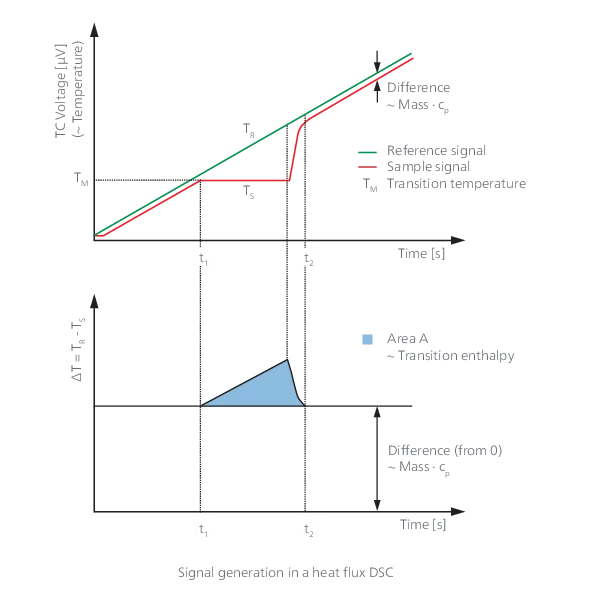
The measurement principle of Differential Scanning Calorimetry (DSC) is based on monitoring the difference in the amount of heat required to raise the temperature of a sample and a reference material at the same rate. Because the sample and reference are exposed to identical temperature conditions, any difference in heat flow between them is measured. This difference indicates that the sample is undergoing physical or chemical changes such as melting, CrystallizationCrystallization is the physical process of hardening during the formation and growth of crystals. During this process, heat of crystallization is released.crystallization, or chemical reactions that either absorb or release heat.
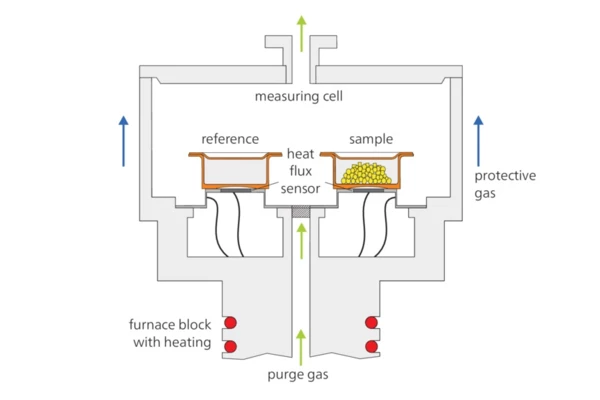
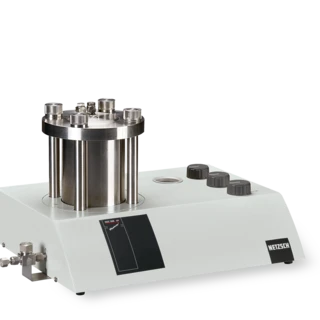
A DSC measuring cell consists of a furnace and an integrated heat-flux sensor with designated positions for the sample and reference pans.
The DSC instrument records these heat flow differences as the temperature changes, providing a detailed profile of the sample's thermal properties and transitions.
The DSC systems are based on relevant instrument and application standards, e.g., ISO 11357, ASTM E793, ASTM D3895, ASTM D3417, ASTM D3418, DIN 51004, DIN 51007.
Specifications
Technical Data

Enthalpy precision (H-Module):
± 0.05% for indium
Temperature precision (H- and P-Module):
± 0.01 K (standard deviation from mean value, indium)
Temperature accuracy (H-Module):
± 0.05 K (Indium)
Peak-to-peak noise (H-Module):
± 2 µW
Repeatability (H-Module):
± 0.3% (peak area; In,C10H16, Zn)
Gas atmospheres:
Inert, oxidizing, static and dynamic
Cooling options:
- Compressed air cooling (RT to 650°C/750°C)
- Vortex tube (compressed air): < 0°C to 650°C/750°C
- Compressed air with switch valve RT to 650°C/750°C
- IC40 (-40°C to 600°C)
- IC70 (-70°C to 600°C)
- IC90 (-90°C to 600°C)
- LN2 (-180°C to 650°C/750°C)
Heating/cooling rate:
- H-Module: 0.001 K/min to 200 K/min
- P-Module: 0.001 K/min to 500 K/min
(Maximum rates depend upon end temperature) - S-Module: 0.001 K/min to 100 K/min


UV-Accessory:
Investigate Curing Reactions with Photo-Calorimeter.
For investigating Curing (Crosslinking Reactions)Literally translated, the term “crosslinking“ means “cross networking”. In the chemical context, it is used for reactions in which molecules are linked together by introducing covalent bonds and forming three-dimensional networks.curing reactions initiated by irradiation, such as UV or light, the ideal instrument to use is a photo-calorimeter or UV-DSC. The DSC 300 Caliris®, equipped with a UV accessory, is specifically designed for this purpose. In this instrument, the light guides are permanently installed in the moving furnace lid, ensuring immediate readiness for UV measurements. When needed, it is simple to exchange the lid to switch back to conventional DSC measurements, thus covering the entire temperature range.
Recommended light sources:
- OmniCure®® S 2000: wavelength range 320 nm to 500 nm
- LX500: wavelengths of 365 nm, 385 nm, 395 nm and 405 nm.
- However, if desired, other commercial lamps can also be adapted for use.
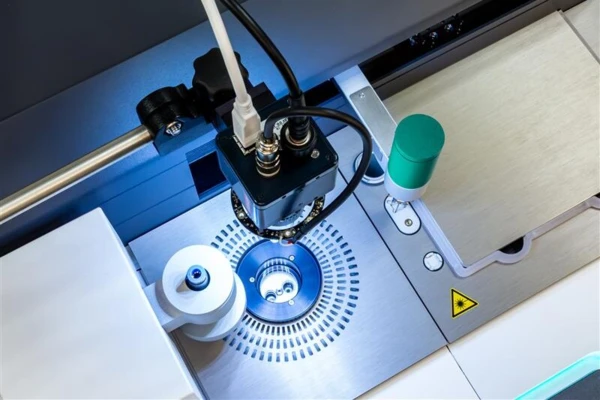
Adding a camera to your DSC
Discover our camera integration, which is designed to enhance your analysis by providing you with more detailed data and real-time insights. Track physical changes in your samples visually as they happen to gain a deeper understanding. Verify sample integrity and behaviour instantly throughout the measurement process. Optimise your sample preparation by identifying issues early on to ensure consistent, reliable results every time.
Control your measurements without logging into the PC
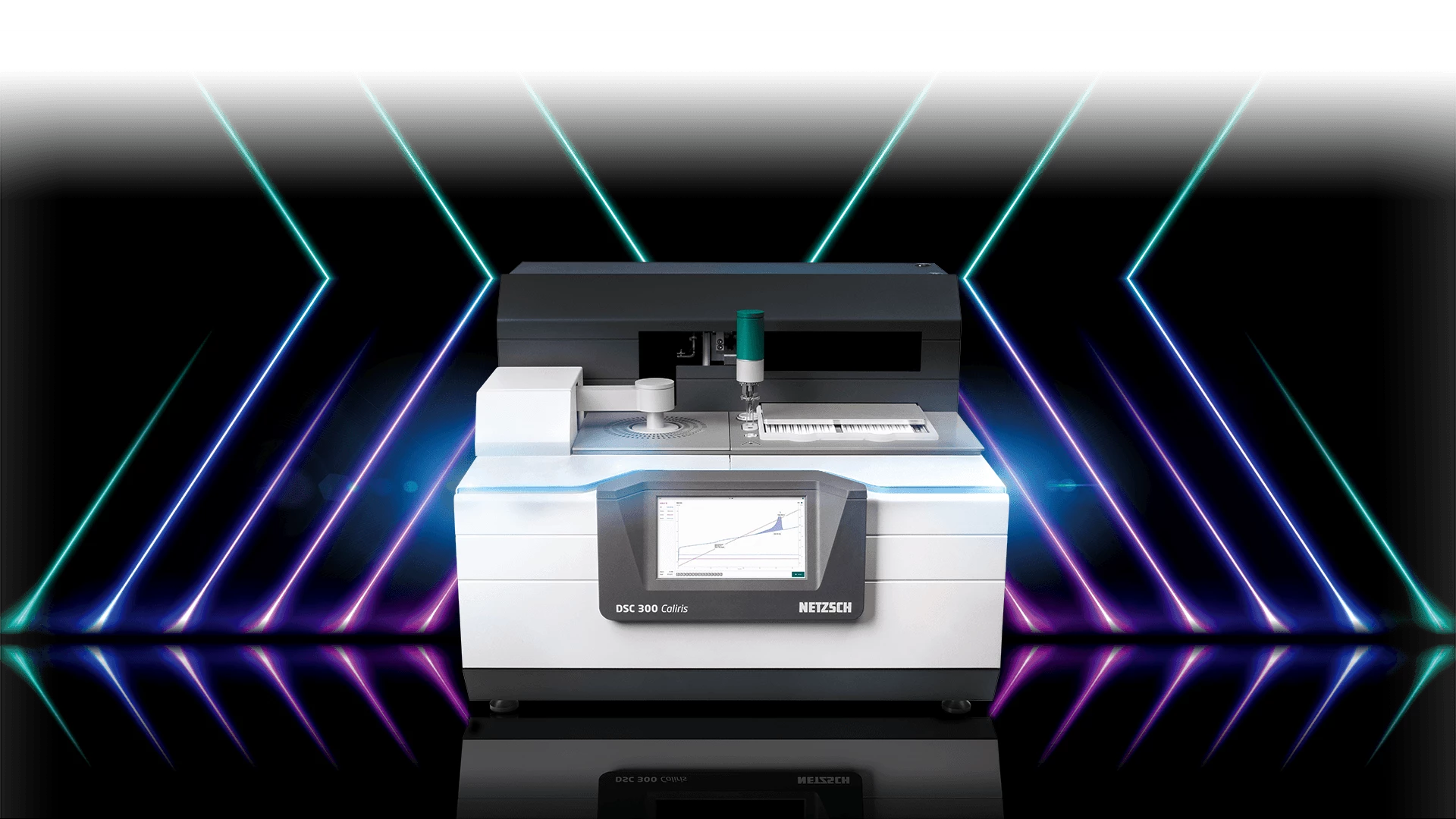
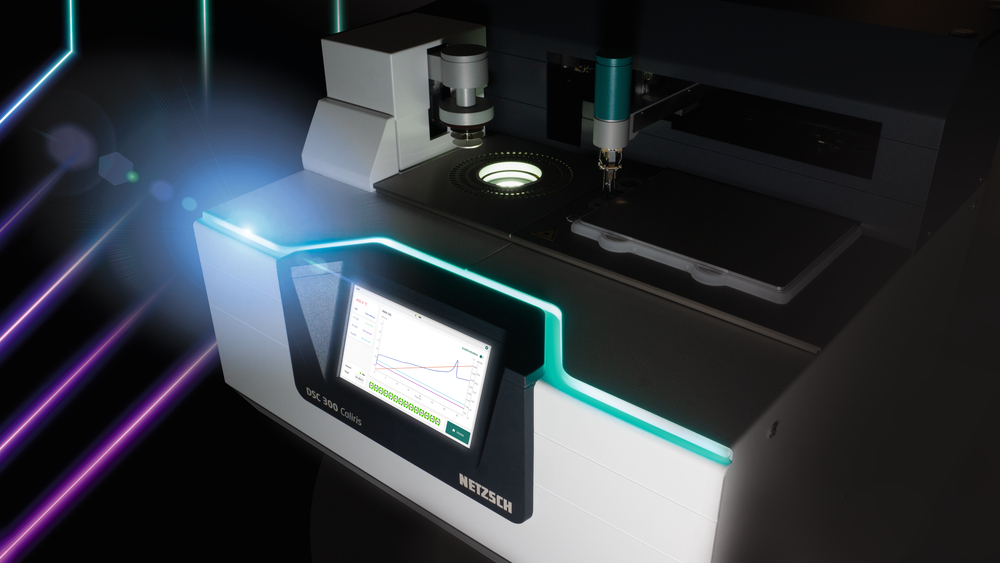
The DSC 300 Caliris® provides an LED light bar that allows you to check the status of your instrument as you walk by, with color adjusted accordingly. It is reassuring to see from afar without having to log into your PC, that your measurement is running smoothly and to be able to read instrument status notifications such as:
- Instrument is ready
- Measurement is running
- Measurement progress
- Heating/cooling to setpoint
- User interaction needed
Control over your measurements without logging into the PC
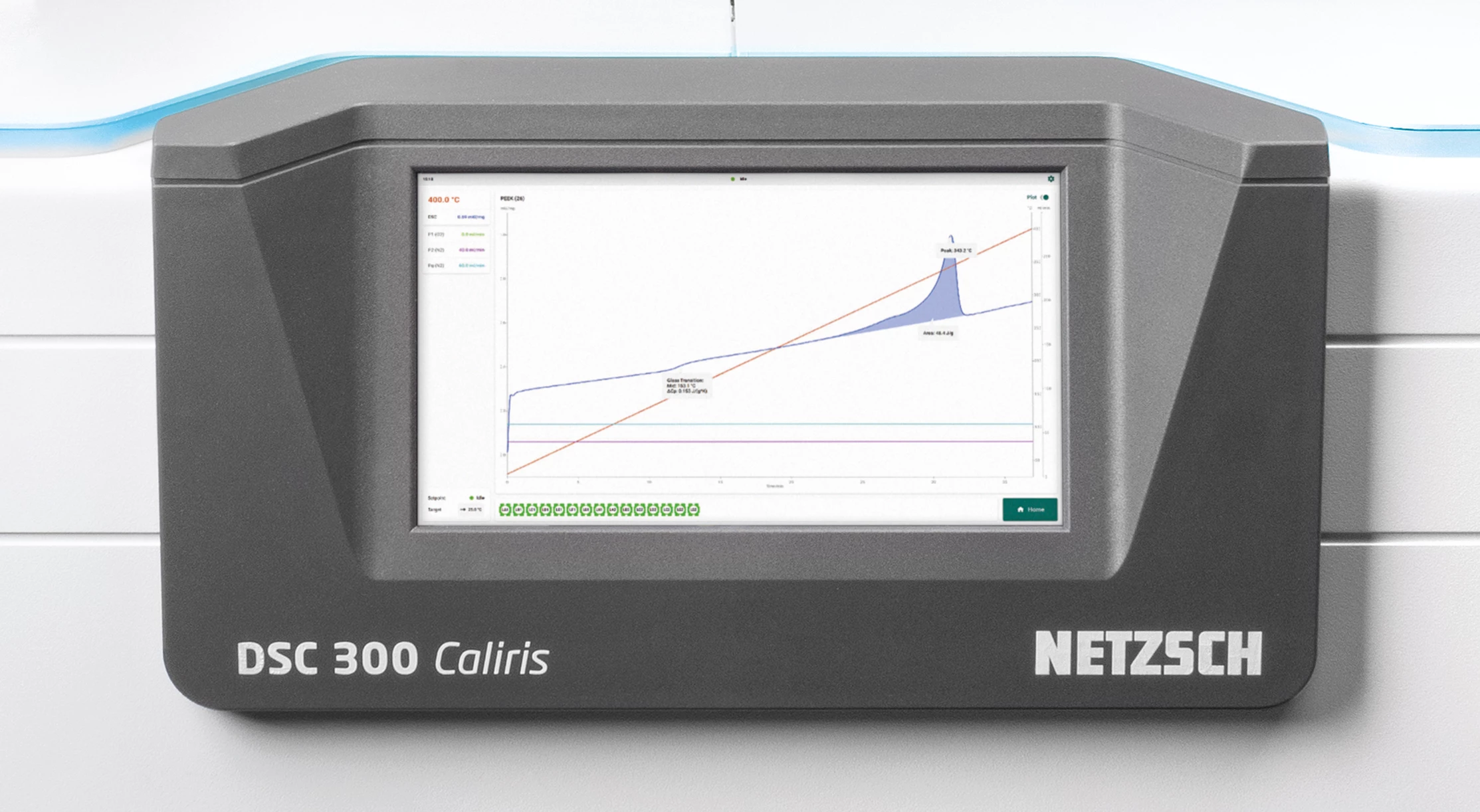
The integrated color display allows you to start a measurement that was previously prepared in the NETZSCH Proteus® software. Just touch the prepared measurement button on the display and you will be informed about the correct setup of the measurement. This moves the final check before you start a new measurement directly onto the instrument. The color touch display allows you to:
Start measurements by finger touch
Follow the measurement progress
∙ Check the execution list on recently finished measurements
∙ See the progress of your measurement and time remaining
∙ Check gases, idle states and the current temperature
∙ Get an immediate overview of the evaluated measurement results
Software
Proteus® Software – The Easy Approach to Your Work
Proteus®: Excellent Thermal Analysis Software
The DSC 300 Caliris® runs under Proteus® software on Windows and includes everything you need to carry out a measurement and evaluate the generated data. The combination of intuitive menus and automated routines makes data interpretation straightforward, even on advanced tasks. The Proteus® software is licensed with the instrument but can also be installed on other computer systems.
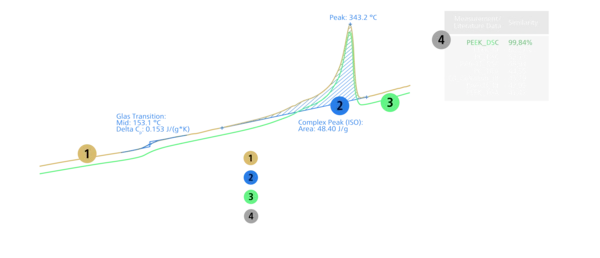
AutoEvaluation is an intelligent software allowing for the evaluation – self-acting or at the push of a button – of unknown curves. AutoEvaluation analyzes DSC curves by first recognizing any key effects such as Glass Transition TemperatureThe glass transition is one of the most important properties of amorphous and semi-crystalline materials, e.g., inorganic glasses, amorphous metals, polymers, pharmaceuticals and food ingredients, etc., and describes the temperature region where the mechanical properties of the materials change from hard and brittle to more soft, deformable or rubbery.glass transitions or melting peaks, and then properly interpreting side effects such as recrystallization effects in logical steps. For the first time, users have access to expert applications knowledge in the form of an intelligent software algorithm.
Identify is a unique software tool for the identification and classification of measurements via database comparison. In addition to allowing for one-on-one comparisons with individual curves and literature data, it also can check whether a particular curve belongs to a certain class. These classes can consist of curves of the same material type (material identification) or of reference curves for Pass/Fail testing (quality control).
The NETZSCH libraries provide about 1300 entries related to different application areas such as polymers, organics, pharmaceuticals, inorganics, metals/alloys and ceramics. The also available KIMW* database includes the DSC curves for another 1150 commercially available polymer products. Users can expand Identify as desired, adding unlimited amounts of their own data. In general, all database entries serve as a pool of results and useful measurement conditions.
* KIMW = Kunststoff-Institut Lüdenscheid, German
SmartMode is designed especially for routine measurements as common in quality control. It allows for quick and easy preparation and start of measurements, for tasks using clearly defined measurement procedures. Wizards (quick-start routines), user-defined or pre-defined measurement methods are helpful assistants.
Using the ExpertMode, the Sky is the Limit. This mode is designed for users preferring to access the full scope of Proteus® possibilities. It is perfect for advanced measurement tasks and offers infinite potential.
SmartMode and ExpertMode are part of the standard configuration of the Proteus® software and can always be found next to each other.

When working regularly with Proteus® analysis, it can be overwhelming to deal with all of the available functionalities. Take advantage of Proteus®Workspaces to tailor the Proteus® analysis menu and tool bar icons to your daily routine. Move all your frequently used items to the front, hide options you rarely or never use and save your preferred setup as your personal workspace. This is particularly useful for workstations used by more than one person. Users can easily switch between custom and joint workspaces.
Database Capability without the Need to Own a Database License
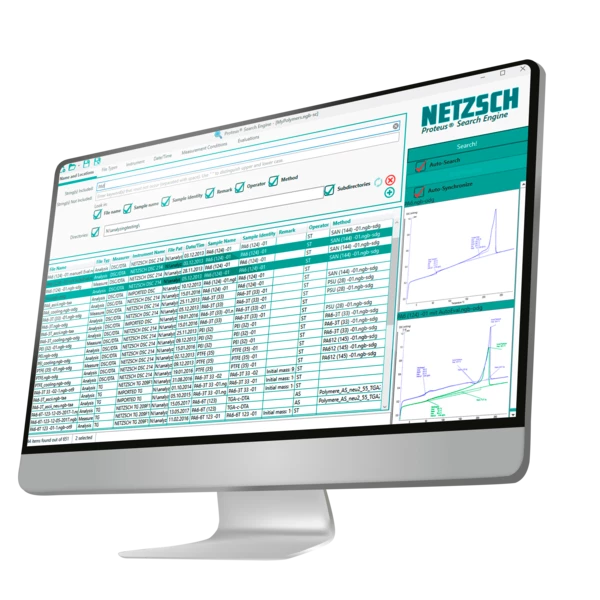
When working with measurement and evaluation data for different materials and from different measurement setups, it is enormously helpful to be able to filter by certain criteria. The Proteus®Search Engine filters your measurement data in a matter of seconds. It is a powerful data mining tool. After selection, previews of measurement curves or analysis status are displayed automatically. Folders in the file system can be opened simply with one click. Users can create individual searches, for example “MyPolymers”, and switch easily between different existing searches.
Filters can be set by:
- File and sample name
- Remark, operator, method
- Instrument name
- File and signal type
- Date of measurement
- Measurement conditions
- Evaluated effects (Glass Transition TemperatureThe glass transition is one of the most important properties of amorphous and semi-crystalline materials, e.g., inorganic glasses, amorphous metals, polymers, pharmaceuticals and food ingredients, etc., and describes the temperature region where the mechanical properties of the materials change from hard and brittle to more soft, deformable or rubbery.glass transitions, peaks, onsets, enthalpies)
In the pharmaceutical industry, compliance with regulatory standards is of utmost importance to ensure safety, efficacy and quality of drugs and medical devices. One very important regulatory framework is the United States Code of Federal Regulations (CFR) issued by the Food and Drug Administration (FDA).
Proteus® Protect is an option for all DSC Caliris® 300 instruments and meets the technical requirements of 21 CFR part 11 (electronic records; electronic signatures).
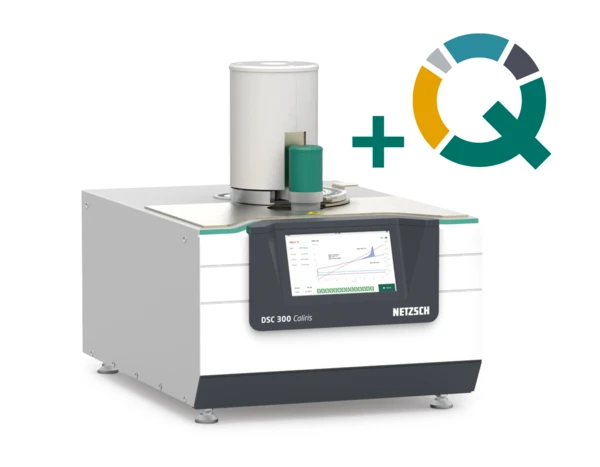
Proteus® Now Quantify, an AI-powered tool for fast, accurate polymer composition analysis.
Take NETZSCH instrument's DSC measurement, upload the data to the software, and get results in seconds—no interpretation needed. Its AI engine delivers expert insights for various polymers and blends, making material composition easy to confirm and detect deviations early, for those who aren't specialists. Quantify improves process control and product consistency and confidence in material quality and pricing, for recyclers, quality assurance professionals, R&D professionals, and material buyers. More information.

This instrument is LabV®️-ready.
Turn data into better products with LabV®—a centralized, AI-driven material intelligence platform that integrates data from this instrument and any other data sources. Designed for R&D and QC engineers, LabV® enables data-driven decision-making to drive innovation and ensure consistently high-quality results.
E-Learning

Downloads and Media
Brochures
- DSC 300 Caliris® SeriesBrochure(pdf – 2.75 MB)
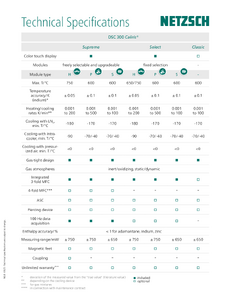
- DSC 300 Caliris® SeriesData Sheet (pdf – 53 KB)
- Shape the future of paints and coatingsBrochure together with Malvern Panalytical(pdf – 1.45 MB)

- Accessories for Differential Scanning Calorimeters and ThermobalancesAccessories Catalogue(pdf – 7.37 MB)

- Thermal and Rheological Characterization of PolymersBrochure(pdf – 6.2 MB)
Videos
AI-Powered Polymer Quantification with DSC 300 Caliris®
Application Literature
Our latest blog articles
- 15.06.2026
Understanding Molten Salts for the Next Generation of Nuclear Reactors

- 11.05.2026
How Glass Fillers Influence Powder Aging in Polymer Additive Manufacturing

- 10.02.2026
Predicting Protein Denaturation During Pasteurization with the NETZSCH Kinetics Neo Software

- 14.01.2026
Learn, Apply, Achieve: NETZSCH Launches Free E-Learning Courses on Thermoanalytical Methods

- 26.11.2025
Alternative Proteins: The Role of Thermal Characterization

- 03.11.2025
Adding New Features to Our Success Story: NETZSCH DSC 300 Caliris®