06.08.2025 von Dr. Chiara Baldini
Unlocking Waste Heat Recovery: Calcium Cobaltites at the Forefront of Thermoelectric Innovation
As the world faces both an energy crisis and growing environmental concerns, the need for clean, renewable and efficient energy solutions is more urgent than ever. Although sources such as solar and wind power are already in use, they have limitations such as weather dependency and infrastructure costs.
One promising alternative is thermoelectric (TE) energy harvesting – a technology that uses the Seebeck effect to convert waste heat directly into electricity. This makes it particularly attractive for industries and vehicles where large amounts of heat are often lost.
Among the oxides being explored for high-temperature thermoelectric applications, calcium cobaltites stand out due to their exceptional thermal stability and anisotropic transport properties. However, improving their thermoelectric efficiency in polycrystalline form remains challenging.
A New Path for Thermoelectric Oxides
The recent article, “Advances in Texturing and Thermoelectric Properties of a Calcium Cobaltite Ceramic via Combined Spark Plasma Sintering and Spark Plasma Texturing”, published in Advanced Functional Materials, presents an innovative two-step strategy to enhance the thermoelectric performance of polycrystalline calcium cobaltite ceramics ([Ca₂CoO₃–δ]₀.₆₂[CoO₂], commonly referred to as CCO).
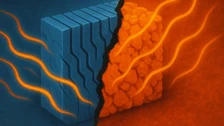
The researchers achieved a highly textured 'brick wall' microstructure with exceptional grain alignment by combining spark plasma sintering (SPS), a fast and efficient pre-sintering method that ensures high densification, with spark plasma texturing (SPT), a modified, edge-free configuration that allows grains to deform freely.
This optimized architecture significantly improves in-plane charge transport while reducing thermal conductivity, enabling the ceramic to achieve a record figure of merit (ZT) of 0.49 at 1073 K.
NETZSCH Thermal Analysis Is Essential to ZT Determination
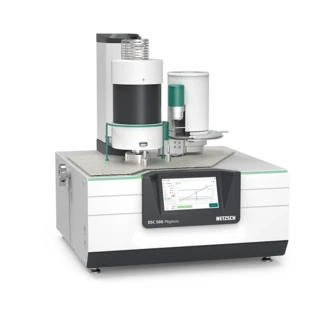
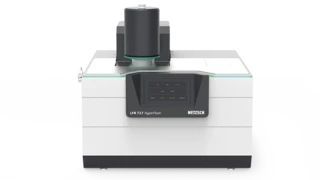
In this study, the NETZSCH Analyzing & Testing laboratories provided the high-precision thermal measurements required for determining thermal transport properties. The thermal diffusivity was measured with the NETZSCH LFA 467 HT HyperFlash and the specific heat capacity (cp) was determined with the NETZSCH DSC 404 F1 Pegasus®. These values were essential for calculating the thermal conductivity (λ) and, ultimately, the figure of merit (ZT) – the key indicator of thermoelectric efficiency.
To explore the full experimental details, data analysis, and implications of this innovative approach to thermoelectric material design, we invite you to read the original publication.
Acknowledgements
We would like to thank the teams at the Institute of Physical Chemistry and Electrochemistry, Leibniz University Hannover (Germany), the Wolfson Department of Chemical Engineering and the Grand Technion Energy Program (Technion, Israel), as well as the Technical University of Darmstadt (Germany), for incorporating NETZSCH Analyzing & Testing in this new joint research effort. We are proud to have supported the study with our thermal analysis expertise and instrumentation, providing high-precision data, essential for the accurate evaluation of the material’s thermoelectric performance.
Open access funding for this publication was enabled and organized by Projekt DEAL.
Learn more about NETZSCH DSC and LFA Instruments for High-Temperature Applications