03.03.2026 von Aileen Sammler
Scale-Up & Safety: How NETZSCH Termica Neo Predicts What Could Go Wrong
This blog article is the second of our five-part series “The New Dimension of Thermal Analysis with NETZSCH Termica Neo: Software for the Thermal Simulation of Chemical Reactions on an Industrial Scale.”
Stay tuned and read about the following topics over the next few weeks: From the Kinetic Model to Real-World Applications; Scale-up & Safety; Polymer Curing; Thermoplastic Crystallization (PA12); Ceramic Sintering

Initial Situation: The batch looked perfect on paper until the temperature began to climb.
Every DSC curve appeared within acceptable limits. Every small-scale test was stable. Then, in a 50-kilogram drum, heat built faster than expected from DSC data only.
With NETZSCH Termica Neo, you will never be surprised by such a moment. It reveals how heat travels, concentrates, and turns an ordinary formulation into a potential thermal runaway before the first large-scale trial begins.
From Insight to Prevention — A Continuation of Blog 1
In our previous article, we explored how Termica Neo brings kinetics to life in a 3D space. Now, this same spatial intelligence becomes a safety instrument, allowing engineers to predict thermal risk with scientific precision rather than relying on rules of thumb.

Why Traditional Safety Factors Miss the Real Hazard
The Φ-factor once seemed enough; a simple ratio to correct for thermal inertia. However, real materials rarely behave ideally:
- Liquids distribute heat by convection.
- Solids and viscous systems rely on slow heat conduction.
- Reaction fronts move unevenly, triggering secondary exotherms.
The result? Safety conditions can differ greatly for the same Φ-factor.
Predicting SADT with Termica Neo
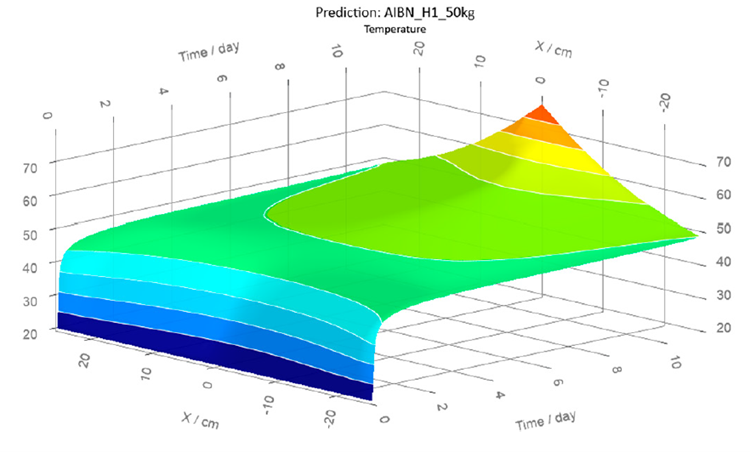
NETZSCH Termica Neo connects your kinetic data from the NETZSCH Kinetics Neo software with real geometry and boundary conditions. It automatically calculates the Self-Accelerating Decomposition Temperature (SADT), showing exactly where and when the temperature will exceed safe limits.
Users can:
- Switch between adiabatic and non-adiabatic scenarios.
- Test different container materials, diameters, and surrounding media.
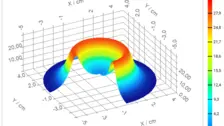
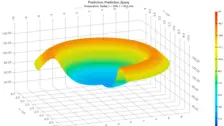
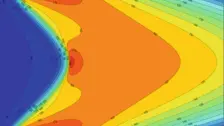
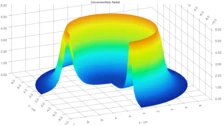
- Visualize temperature and conversion fields in 2D and 3D.
Case Study for the Same Φ-factor: When Size Changes Everything
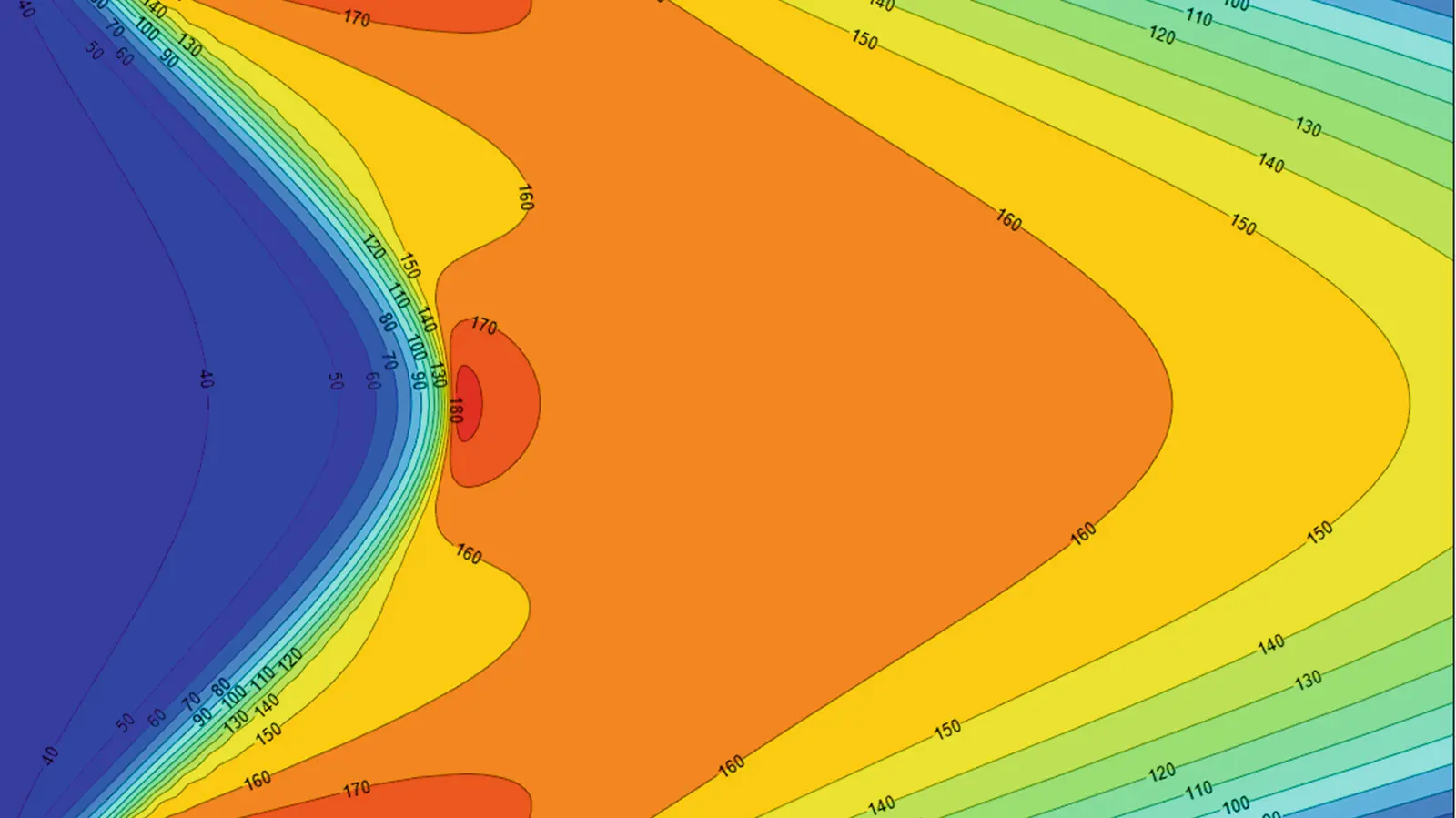
In a 7-cm sample, produced heat dissipates easily, whereas at 56 cm, it accumulates dangerously. Termica Neo shows how the core temperature in larger samples rises faster, igniting secondary decomposition. The initial temperature and Φ-factor remain constant, but the risk does not.

Reality Check – Accelerating Rate Calorimetry (ARC)Die Methode, die isotherme und adiabatische Testverfahren beschreibt, wird zur Detektion thermisch induzierter Zersetzungsreaktionen eingesetzt. Das Standardverfahren ist Heat-Wait-Search (HWS.ARC® Validation
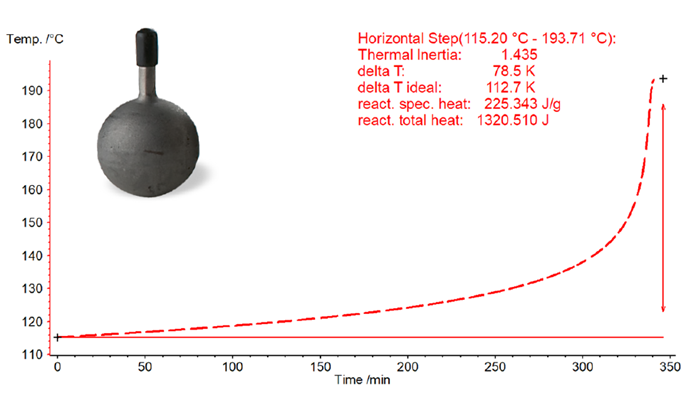
Simulations are only valuable when they mirror reality. NETZSCH validated Termica Neo results using the ARC® 305 Accelerating Rate Calorimeter with DTBP (di-tert-butyl peroxide) in toluene. The agreement between the simulated and experimental curves proves that Termica Neo captures both onset and peak temperatures with striking accuracy.
From Guesswork to Foresight
With the NETZSCH Termica Neo software, process and safety teams can:
- Quantify SADT and critical size limits before scale-up.
- Safely simulate Worst-Case-SzenarienIm Zusammenhang mit einem chemischen Reaktor ist ein Worst-Case-Szenario die Situation, in der die durch die Reaktion verursachte Temperatur und/oder Druckerzeugung außer Kontrolle gerät.worst-case adiabatic events on a screen.
- Identify hotspot locations that sensors might miss.
- Replace empirical safety margins with predictive confidence.
Rather than reacting to heat-runaway events, you can now prevent them.
About This Blog Series
This post continues the NETZSCH series: “The New Dimension of Thermal Analysis with Termica Neo.”
- Previously:From Kinetic Model to Real-World Application – How Termica Neo Brings Thermal Reactions to Life
- Coming next:
- Polymer Curing – How Termica Neo Makes Crosslinking Visible
- Thermoplastic Crystallization – Understanding PA12 in Cooling
- Ceramic Sintering – From Green Body to Density Gradient
Simulate Before You Scale. See your process before it happens. Explore NETZSCH Termica Neo.
--------------------------
Useful Links:
Get your free demo version:Request Demo Version of Temica Form - NETZSCH Termica Neo
Download the new brochure to learn more:Termica Neo Brochure
Direct contact:Feature Request - NETZSCH Kinetics Neo
Learn even more:Termica Neo - NETZSCH Termica Neo