13.07.2026 von Aileen Sammler
Thermoplastic Crystallization – Understanding PA12 During Cooling
This is blog 4 of the series: “The New Dimension of Thermal Analysis with NETZSCH Termica Neo: The Software for Thermal Simulation of Chemical Reactions on an Industrial Scale.”
Read about the following topics in this series: Understanding PA12 During Cooling

Cooling decides everything.
The moment PA12 (polyamide 12) transitions from a molten to a solid state, its internal structure forms: crystal by crystal and layer by layer. Small changes in the cooling rate can result in significant differences in crystallinity, shrinkage, strength, and dimensional stability.
With NETZSCH Termica Neo, you can see that transition as it happens: a moving crystallization front, heat release, and the shifting thermal field inside the material.
Why Crystallization Needs Spatial Understanding
Crystallization isn’t a uniform event. As PA12 cools:
- The surface solidifies first.
- The core stays warm for longer.
- An exothermic crystallization wave travels through the thickness.
- Final morphology depends on how quickly each region passes through the crystallization window.
DSC curves only show the bulk crystallization peak, not where or when structure forms inside the real part.
Termica Neo closes that gap.
How Termica Neo Simulates PA12 Crystallization
The NETZSCH software imports crystallization kinetics from Kinetics Neo and applies them to real-world geometry and thermal boundary conditions.
You define:
- cooling environment (air, mold, insulated)
- geometry (plate, cylinder, sphere, rotational body)
- initial melt temperature
- heat transfer coefficients and emissivity
Termica Neo calculates:
- temperature distribution during cooling
- local crystallization onset and rate
- movement of the crystallization front
- heat release from crystallization impacting nearby regions
The result is a full, spatially resolved view of polymer solidification.
The PA12 Case: What the Simulation Reveals
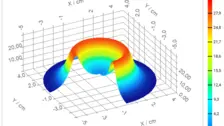
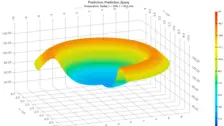
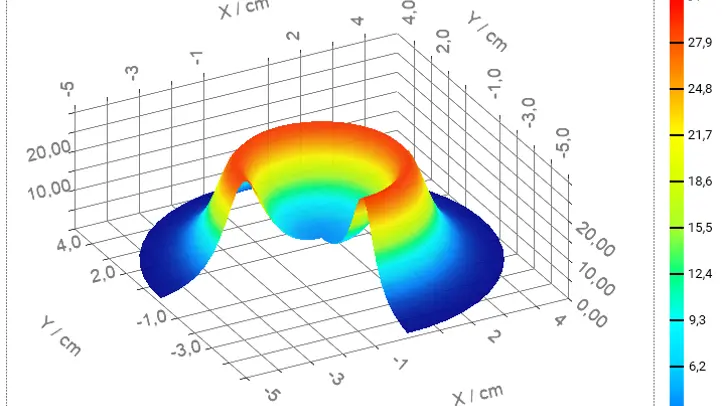
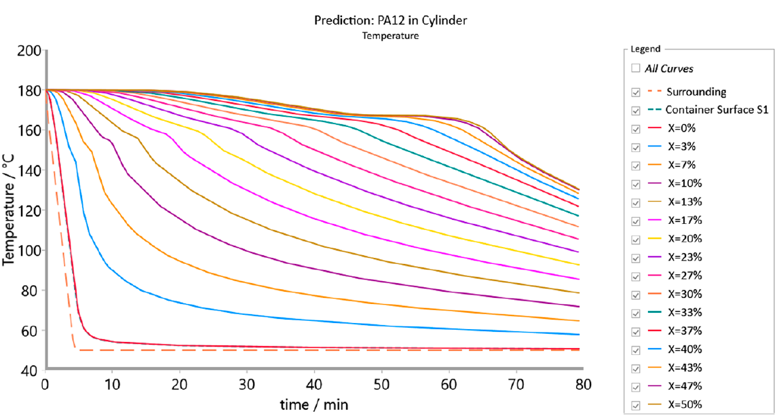
In the brochure’s PA12 example, Termica Neo simulates a long cylinder bar cooling from melt temperature down to 50°C. The results show:
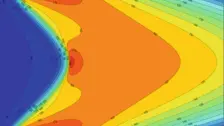
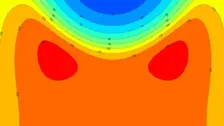
- A crystallization band forms between approx. 150–170°C.
- This band moves inwards, creating a visible reaction front.
- Faster cooling shifts crystallization to lower temperatures.
- Slower cooling yields a more uniform morphology but longer cycle times.
What you see is a dynamic transformation: thermal gradients driving structural gradients.
To learn more take a look at the brochure:
Why This Matters for the Process and the Product
Cooling is often the least controlled part of polymer processing, yet it determines:
- warpage and shrinkage
- mechanical consistency
- dimensional accuracy
- cycle time
- surface quality
Termica Neo lets you experiment virtually with cooling rates, tooling materials, and temperature programs until the internal structure of the part is exactly as you want it. No guesswork, no surprises. Just predictable solidification.
Benefits of Termica Neo
- Imports crystallization kinetics from Kinetics Neo
- Realistic simulation of cooling and crystallization coupling
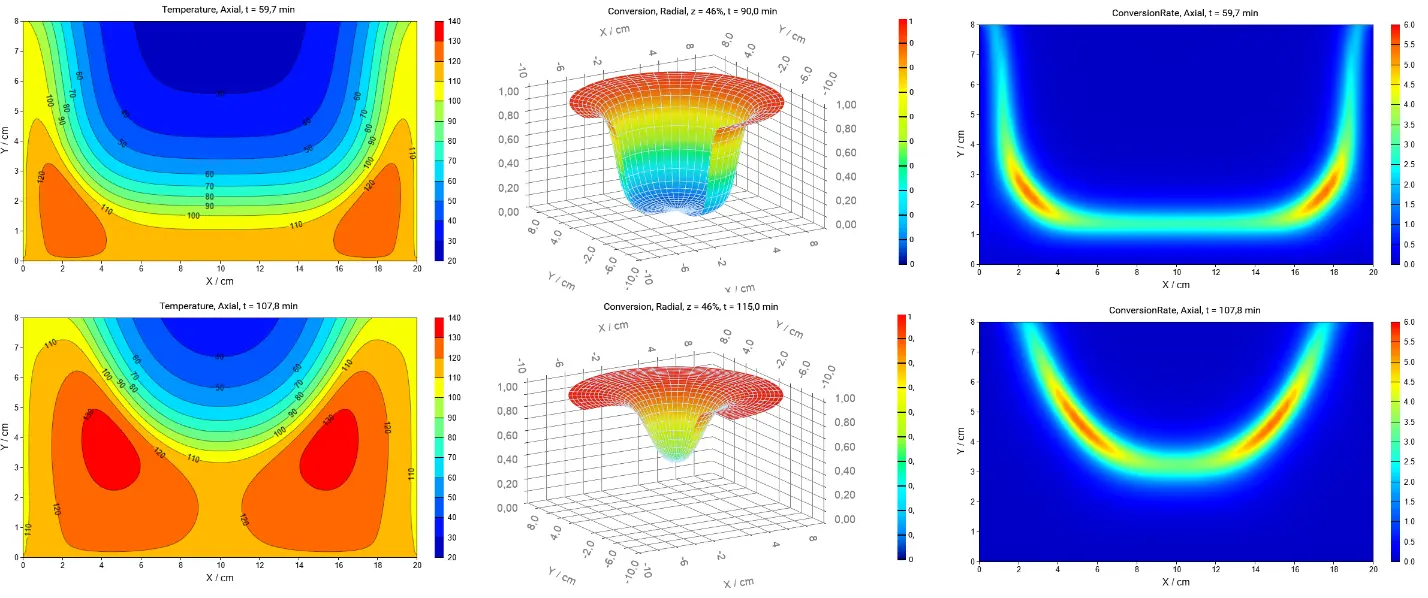
- 2D/3D visualization of temperature, crystallization rate, and degree of conversion
- Optimization of cooling strategies and morphology control
- Shorter development cycles | Fewer trials | Higher consistency
About This Blog Series
This article continues the NETZSCH series: “The New Dimension of Thermal Analysis with Termica Neo: Software for the Thermal Simulation of Chemical Reactions on an Industrial Scale.”
Already published articles: (see links below)
- From Kinetic Model to Real-World Application — turning 1-D data into 3-D insight.
- Scale-up & Safety — predicting runaways before they happen.
- Polymer Curing — How Termica Neo Makes Curing Visible
- Thermoplastic Crystallization– Understanding PA12 During Cooling
Stay tuned for our last article of this series: We will talk about ceramic sintering – from the green body to a density gradient with NETZSCH Termica NEO.
--------------------------
Useful Links:
Get your free demo version:Request Demo Version of Temica Form - NETZSCH Termica Neo
Download the new brochure to learn more:Termica Neo Brochure
Direct contact:Feature Request - NETZSCH Kinetics Neo
Learn even more:Termica Neo - NETZSCH Termica Neo