23.09.2025 by Aileen Sammler
How Material Thickness Influences Fire Testing – Key Insights by Means of Cone Calorimeter Analysis
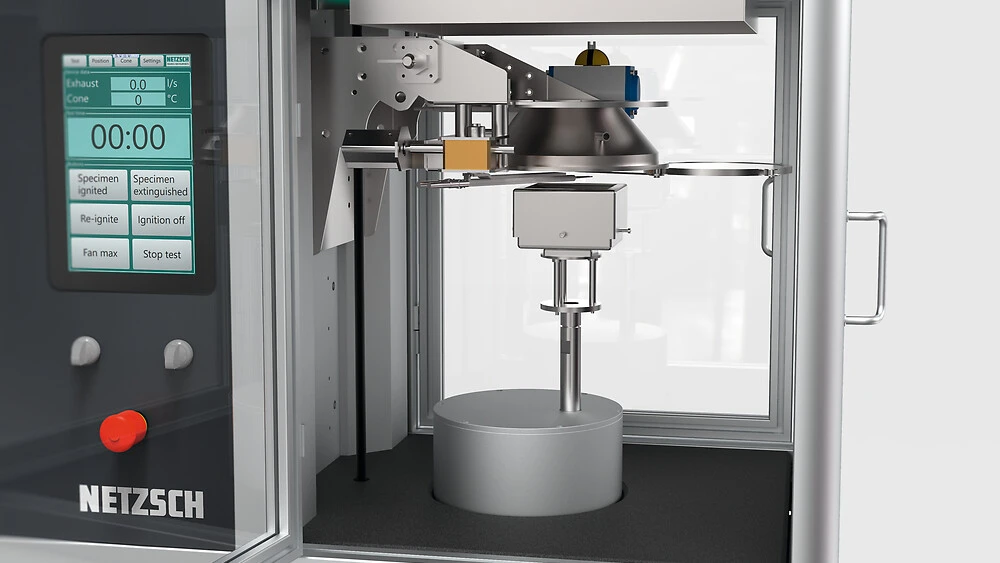
Understanding combustion behavior with the NETZSCH TCC 918 Cone Calorimeter
When it comes to fire testing of materials, every detail matters – especially sample geometry. Whether you're evaluating construction materials, polymers in electronics, or transport components, regulatory compliance demands accurate flammability data.
The NETZSCH cone calorimeter is the gold-standard instrument for reaction-to-fire testing in accordance with ISO 5660-1 and ASTM E1354. It measures how a material ignites, how much heat it releases, how much mass it loses, and how much smoke it produces.
But how much does sample thickness impact these results? The NETZSCH Applications Laboratory explored this question using PMMA* in a detailed case study.
*PMMA stands for polymethyl methacrylate, commonly known under brand names such as Plexiglas®, acrylic glass, or Altuglas®. Depending on the type, PMMA is a thermoplastic material that is characterized by properties such as good weather and UV resistance as well as relatively low ignition temperature. Transparent PMMA is also characterized by excellent light transmission. In this study a black version of PMMA was used.
The Sample Thickness Affects Flammability Test Results
Our cone calorimeter tests, which were carried out on accordance with ISO 5660-1, showed that the thickness of the material significantly influences fire behavior. Specifically, the burning time, the total heat released (THR), and the smoke production (TSP) increased with increasing the thickness of the PMMA samples – although the ignition time remained unchanged.
These results highlight the importance of always using consistent sample thicknesses in fire tests and for approval testing in order to enable reliable comparisons. Thanks to the linear relationships observed, results for other thicknesses can be reliably inter- or extrapolated.
Fire Testing Performed with the TCC 918 Cone Calorimeter
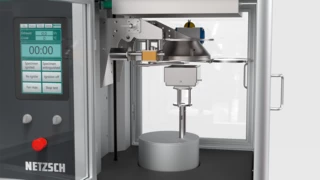
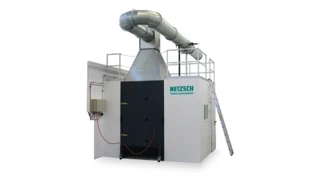
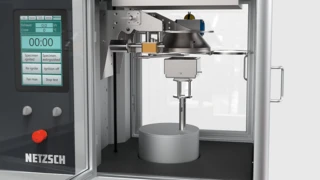
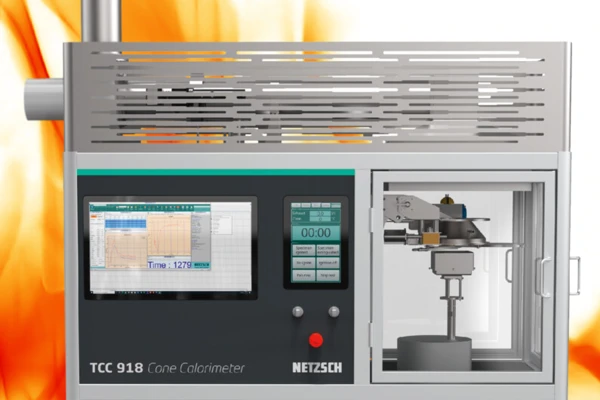
The tests were carried out using the NETZSCH TCC 918, a high-precision instrument for advanced fire testing.
It offers:
- An electric cone heater (5 kW) for uniform heat exposure
- A Siemens ULTRAMAT/OXYMAT gas analyzer for O₂, CO₂, and CO
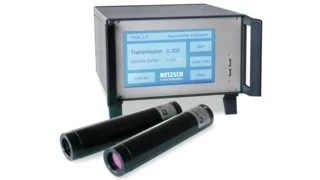
- A laser-based smoke detection system
- A precision Sartorius load cell (0.01 g)
- Real-time synchronization via EtherCAT
- A user-friendly touchscreen software with automatic gas control and calibration
These features make the NETZSCH TCC 918 ideal for research, development, material classification, and testing in accordance with ISO 5660-1.
Get the Full Report!
Want to see in detail how the heat release rate (HRR), the total heat release (THR), and the smoke production vary with thickness? Curious about what this means for fire safety engineering and regulatory compliance?
Go to TCC 918 product page
MEASUREMENT WANTED?
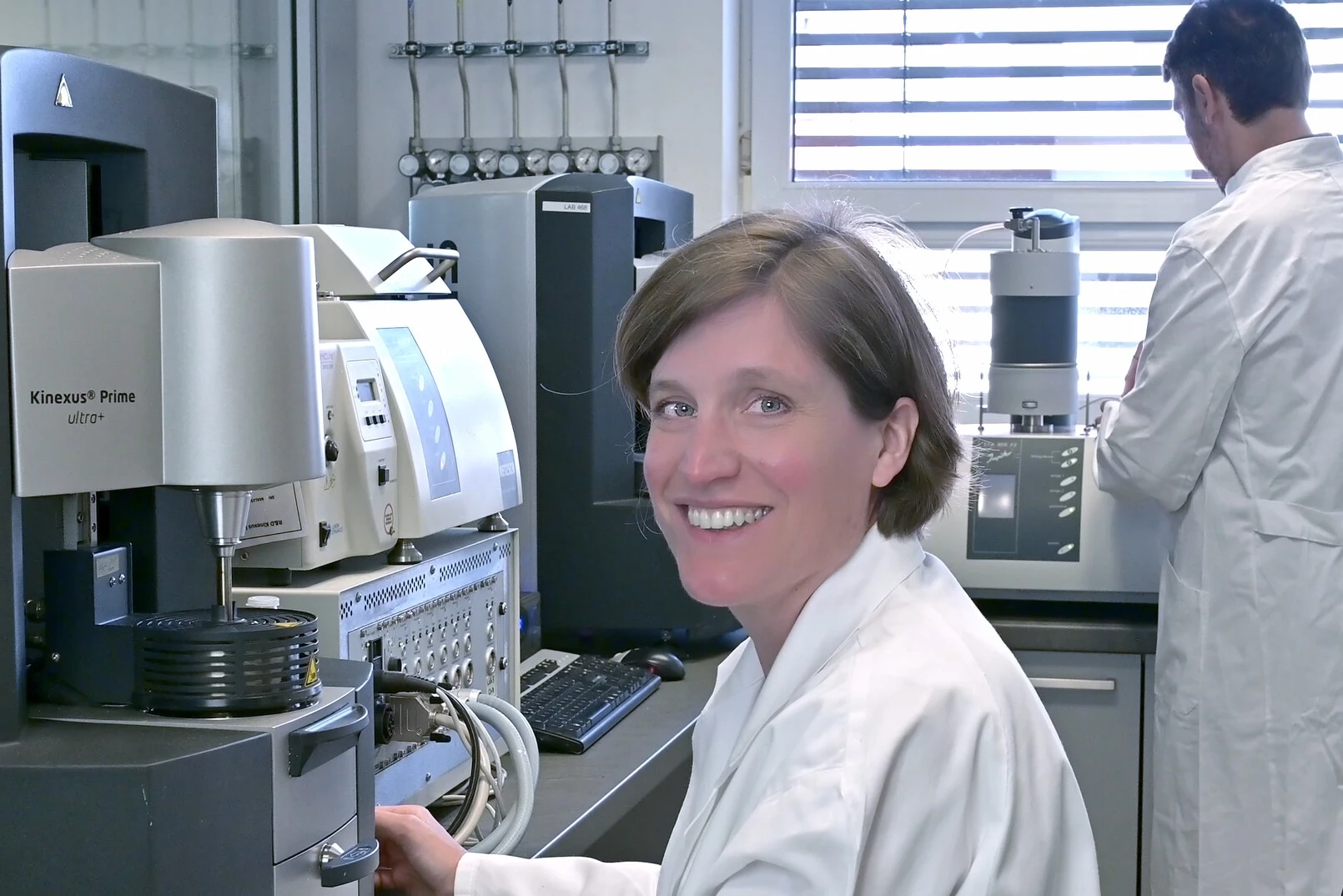
Our NETZSCH applications laboratory is providing contract testing services for a wide range of industries and research centers.
NEW: It is equipped with state-of-the-art Cone Calorimeter testing instruments allowing for a variety of fire testing measurements to be carried out.
Consult with the experts in our applications lab!