2020
- Polymers
- Additive Manufacturing
- DSC 214 Polyma
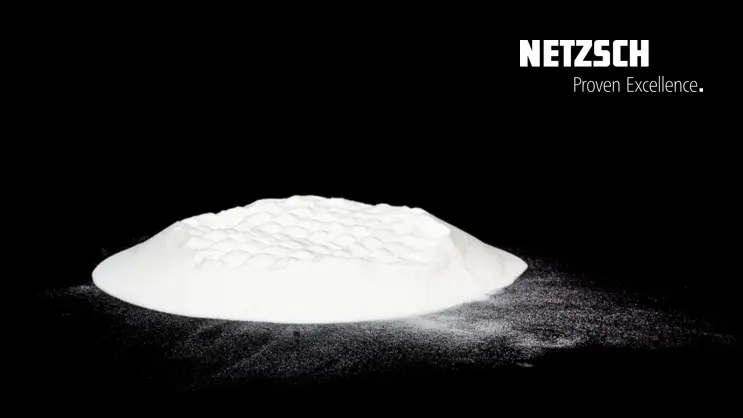
17.12.2020How to Study the Isothermal Crystallization Behavior of SLS Powder Using DSC
In a previous article, the process window in the Selective Laser Sintering process with polyamide 12 powder was determined with dynamic measurements. In this article, we explain how isothermal measurements can be used for more advanced studies.
- Pharma
- DSC
16.12.2020Thermal Analysis in the Characterization of Nano-based Drug Delivery Systems
Our new video series comprises contributions in various forms and aims to bring expert insights from the field of pharmaceuticals to you. Our first guest is Christian Grune, pharmacist and PhD student. His work is focused on the characterization of nano-based drug delivery systems.
- Polymers
- Additive Manufacturing
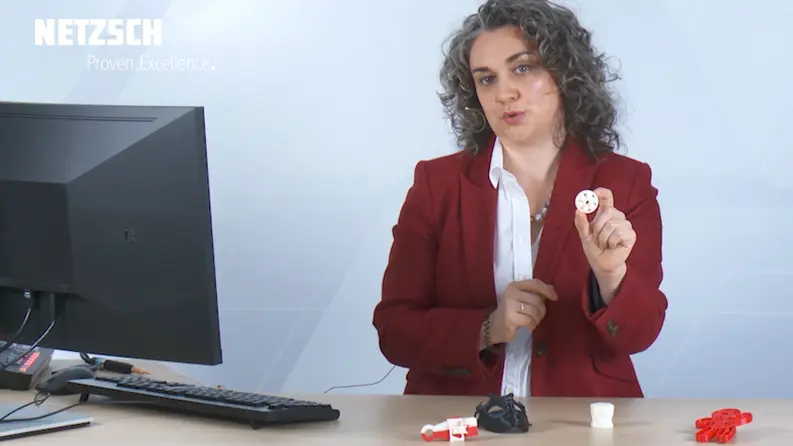
09.12.2020Material Extrusion: Material Science in Additive Manufacturing
Material Extrusion is the most widespread Additive Manufacturing technology. This week, we look at the process principle, materials used and at benefits and applications of this technology.
- Rheology
- Rheometer
- Rosand RH2000
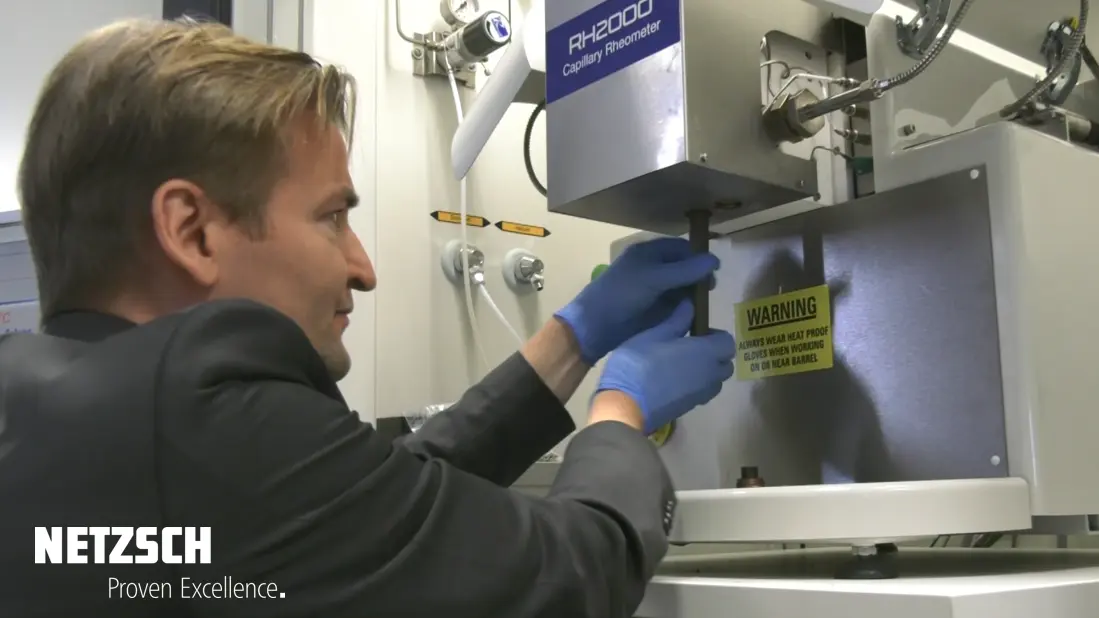
08.12.2020How to Operate the Rosand RH2000 Capillary Rheometer
The Rosand RH2000 Capillary Rheometer is an instrument that analyzes the flow properties of any type of material under processing conditions, like high forces and high speeds. Our rheology specialist, Torsten Remmler, shows how to prepare the instrument for an experiment and gives important tips when operating it.
- Polymers
- DSC
- Additive Manufacturing
- FT-IR Coupling
- DSC 204 F1 Phoenix®
- Photo-DSC 204 F1
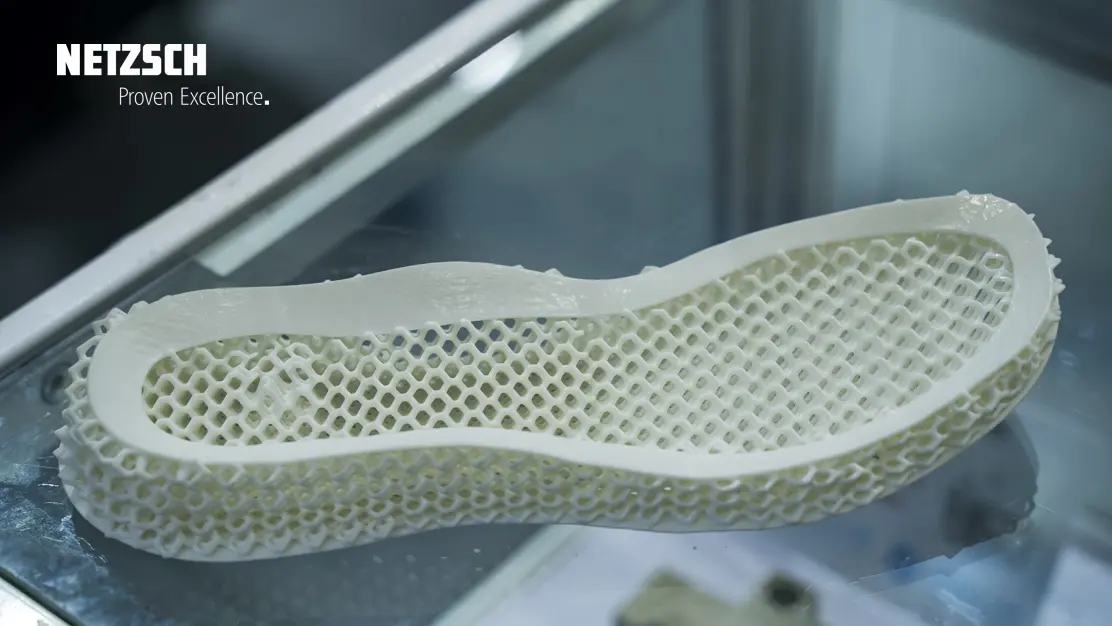
04.12.2020Investigating Dual Curing Resins for Digital Light Synthesis (DLS) with the Photo-DSC 204 F1 Phoenix®
Photopolymers used in the Additive Manufacturing technology Digital Light Synthesis (DLS) are challenging materials. Little is known so far about the consequences of increased temperatures, e.g., due to higher room temperatures. A research paper aims to investigate the influence of temperatures on such dual curing resins and finds that the Photo-DSC is most effective in tracking the thermal conversion as well as to Identify optimal exposure times.
- Polymers
- Additive Manufacturing
- Metals and Alloys
02.12.2020Variations of Powder Bed Fusion: Material Science in Additive Manufacturing
Powder Bed Fusion (PBF) is one of the oldest Additive Manufacturing technologies invented in the 80s. However, its suitability for end-use parts and its constant innovations are driving this technology further ahead. This week we look at two important variations of Powder Bed Fusion.

- Software
- Polymers
- Proteus®
- Identify
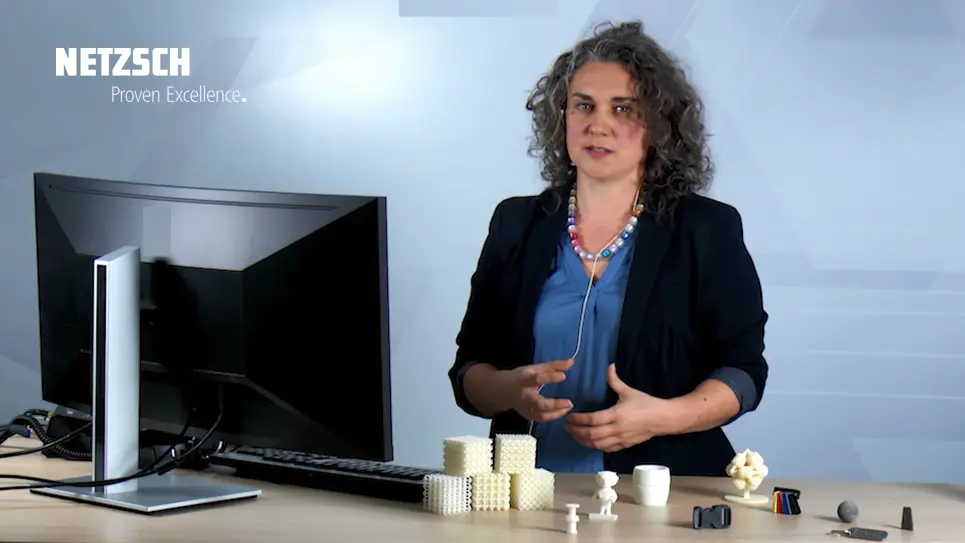
30.11.2020Smart Thermal Analysis: Measurements Wanted?
Imagine the typical situation in everyday laboratory work: A new sample has to be analyzed, but what are the suitable measurement conditions such as temperature program, sample mass or the right crucible? And what measurement results can be expected? Perhaps such kind of sample was already measured by you in the past ‒ or maybe by NETZSCH. Wouldn’t it help a lot to simply search in a database for thermal analysis? Identify, which is a part of the Proteus®® analysis software, is the solution!
- Polymers
- Additive Manufacturing
- DSC
- DSC 214 Polyma
30.11.2020How to Determine the Process Window for SLS Powders Using DSC
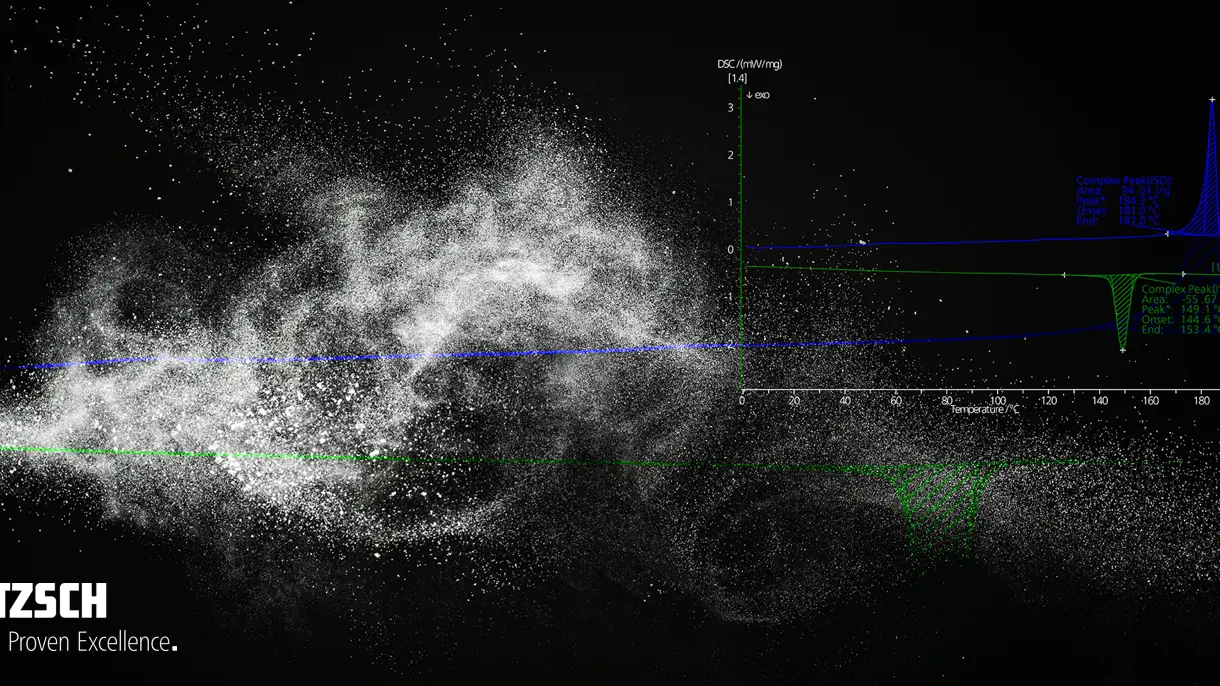
Powder Bed Fusion (PBF), often called Selective Laser Sintering (SLS), the component is built up in layers in a powder bed using a laser beam that passes over the cross-section of the layer to locally melt the powder. In order to characterize a polymer powder for its suitability for SLS and to determine the possible process window, Differential Scanning Calorimetry (DSC) is used. Learn how to set up and interpret the measurements!
- Polymers
- Additive Manufacturing
- DSC
26.11.2020How Does Selective Laser Sintering (SLS) Work?
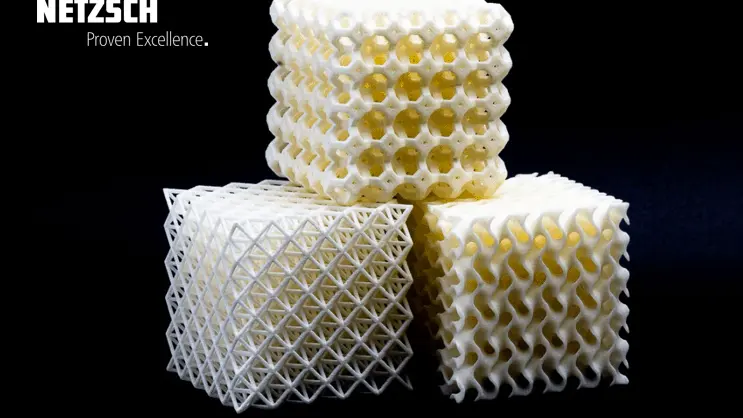
Powder Bed Fusion (PBF), often called Selective Laser Sintering (SLS), is one of the most used Additive Manufacturing technologies to produce structural plastic parts. In this article, we explain the process principle and materials used in the SLS process.
- Polymers
- Additive Manufacturing
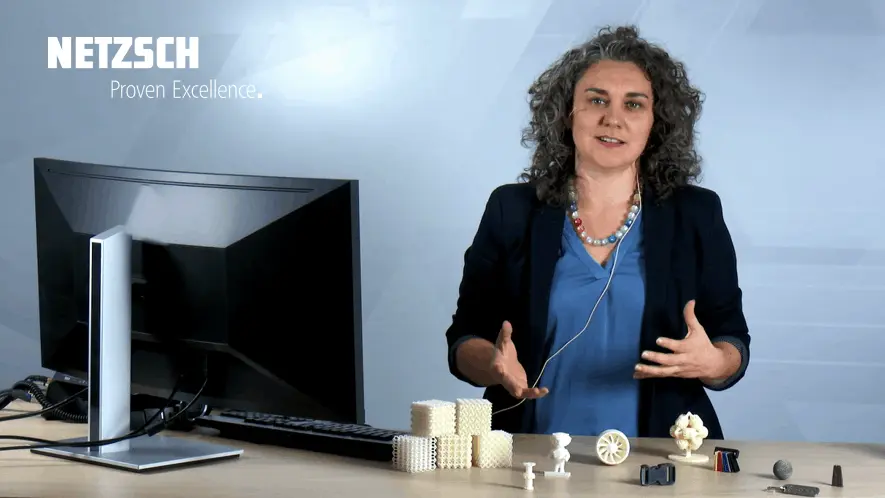
25.11.2020Powder Bed Fusion: Material Science in Additive Manufacturing
This week, we are moving from thermosets to thermoplastics and specifically the Powder Bed Fusion process. It is an Additive Manufacturing process in which thermal energy selectively fuses regions of a powder bed (ASTM F42 Committee).