
19.12.2025 by Aileen Sammler
Frost Under the Christmas Tree: Why Material Testing Below 0°C Is Important
How frost, UV exposure, and temperature cycling affect outdoor holiday decorations - and how NETZSCH thermal analysis makes materials winter-ready.
A Look Behind the Festive Glow
When you hang up the sparkling star outside and the air is already wintery cold, few people think about materials science. Instead, they think about lights, warm mulled wine, and the magic of the Christmas season. But while we comfortably celebrate indoors, outdoor decorations are exposed to frost, temperature fluctuations, moisture, and UV light.
Behind every LED snowflake, every plastic ball, and every coated Christmas sign are materials or combinations of materials that are put to the test in winter. For product developers, this season therefore presents real challenges.
In this article, we demonstrate how thermo-analytical methods help ensure that festive decoration materials continue to function reliably even during a long, cold winter.
Winter: A Beautiful but Demanding Test Chamber
Outdoor decorations look magical, but they must sometimes withstand extreme conditions. Temperatures drop below freezing at night and rise again during the day. Snow reflects UV light; materials absorb moisture, freeze, and thaw again. Plastics, metals, and coatings expand and contract again. In short: The decorations may shine, but are under high StressStress is defined as a level of force applied on a sample with a well-defined cross section. (Stress = force/area). Samples having a circular or rectangular cross section can be compressed or stretched. Elastic materials like rubber can be stretched up to 5 to 10 times their original length.stress in the background.
Thermal analysis is essential to help that material behavior does not cause any "surprises after Christmas Eve."

The most important material challenges – and how NETZSCH makes them visible
1. The Glass Transition TemperatureThe glass transition is one of the most important properties of amorphous and semi-crystalline materials, e.g., inorganic glasses, amorphous metals, polymers, pharmaceuticals and food ingredients, etc., and describes the temperature region where the mechanical properties of the materials change from hard and brittle to more soft, deformable or rubbery.glass transition: When plastics lose their flexibility
The Glass Transition TemperatureThe glass transition is one of the most important properties of amorphous and semi-crystalline materials, e.g., inorganic glasses, amorphous metals, polymers, pharmaceuticals and food ingredients, etc., and describes the temperature region where the mechanical properties of the materials change from hard and brittle to more soft, deformable or rubbery.glass transition temperature (Tg) is a crucial parameter for polymers, not only in winter. Above T(g) a plastic remains flexible, but below this temperature, it becomes hard, brittle, and can break. This means that the viscoelastic properties of the polymer change significantly in the Glass Transition TemperatureThe glass transition is one of the most important properties of amorphous and semi-crystalline materials, e.g., inorganic glasses, amorphous metals, polymers, pharmaceuticals and food ingredients, etc., and describes the temperature region where the mechanical properties of the materials change from hard and brittle to more soft, deformable or rubbery.glass transition range. Knowledge of the Glass Transition TemperatureThe glass transition is one of the most important properties of amorphous and semi-crystalline materials, e.g., inorganic glasses, amorphous metals, polymers, pharmaceuticals and food ingredients, etc., and describes the temperature region where the mechanical properties of the materials change from hard and brittle to more soft, deformable or rubbery.glass transition temperature is therefore very important for evaluating mechanical behavior as well as processing and application temperatures.
Let's take polypropylene (PP) as an example: It is lightweight and inexpensive and is often used for outdoor Christmas stars. However, its Glass Transition TemperatureThe glass transition is one of the most important properties of amorphous and semi-crystalline materials, e.g., inorganic glasses, amorphous metals, polymers, pharmaceuticals and food ingredients, etc., and describes the temperature region where the mechanical properties of the materials change from hard and brittle to more soft, deformable or rubbery.glass transition temperature (Tg) is typically between –20°C and +20°C – exactly in the range of winter temperatures. This means that during typical winter nights, PP can transition from a flexible material to a much stiffer and more brittle state. This increases the risk of cracking or failure, even under small mechanical stresses such as wind, handling, or mounting forces.
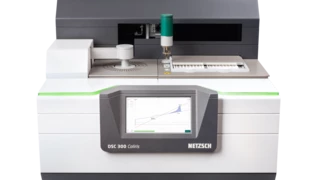
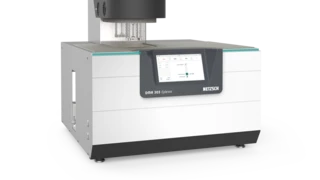
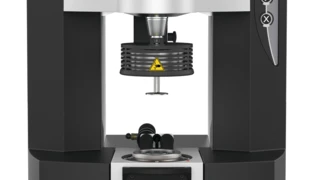
Since PP is semi-crystalline, the glass transition in DSC (differential scanning calorimetry) measurements can be detected to varying degrees depending on the degree of Crystallinity / Degree of CrystallinityCrystallinity refers to the degree of structural order of a solid. In a crystal, the arrangement of atoms or molecules is consistent and repetitive. Many materials such as glass ceramics and some polymers can be prepared in such a way as to produce a mixture of crystalline and amorphous regions.crystallinity of the polymer. This makes additional analysis methods useful, such as DMA (dynamic mechanical analysis) or rotational rheometry (oscillation mode). Feel free to contact us, and we will help you choose the right method for your material.
Another is the thermal characterization of PTFE using a combination of DSC, DMA, and rheology: The following NETZSCH Application Note demonstrates that detecting the glass transition in semi-crystalline polymers using DSC can be challenging. This behavior is also relevant for plastics that are typically used in Christmas decorations, such as PET or PP. Here, the combination of DSC and rheological or dynamic mechanical analysis also provides a more complete picture of the thermo-mechanical transition behavior.
Another application example is the thermal characterization of PTFE, a polymer frequently used in outdoor applications. Here, the combination of different analysis methods – DSC, DMA, and rheometer – provides a more complete picture of the thermal and viscoelastic behavior.
Read the full application note here:
2. Dimensional Stability, Warping & Material Mixtures
Many outdoor decorations consist of several materials, such as plastic housings, metal brackets, adhesives, or coatings. These materials react differently to temperature changes and contract or expand to varying degrees in the cold or heat.
What happens then? Warping, delamination, microcracks, or StressStress is defined as a level of force applied on a sample with a well-defined cross section. (Stress = force/area). Samples having a circular or rectangular cross section can be compressed or stretched. Elastic materials like rubber can be stretched up to 5 to 10 times their original length.stress build-up in the adhesive or coating layers can occur.
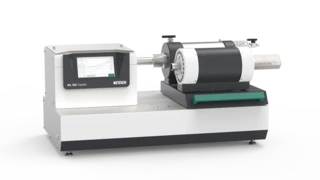
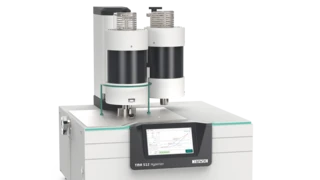
Using TMA (thermomechanical analysis) or DIL (dilatometry), we determine precisely how the dimensions of materials change with temperature changes and where potential risks in the product may lie as a result.
Read our blog article "The coefficient of thermal expansion: A crucial material property" for more information. It emphasizes that the coefficient of thermal expansion (Coefficient of Linear Thermal Expansion (CLTE/CTE)The coefficient of linear thermal expansion (CLTE) describes the length change of a material as a function of the temperature.CTE) is an essential parameter for understanding the temperature behavior of materials – especially when combining different materials.
3. Winter Sun and UV Radiation: The Silent StressStress is defined as a level of force applied on a sample with a well-defined cross section. (Stress = force/area). Samples having a circular or rectangular cross section can be compressed or stretched. Elastic materials like rubber can be stretched up to 5 to 10 times their original length.Stress on Materials
UV aging does not only occur in summer. Winter sun, snow reflections, and even street lighting can also generate UV exposure, further weaking plastics such as polypropylene (PP). Possible consequences include discoloration (yellowing), cracking, or loss of mechanical properties.
Photo-DSC technology, a combination of DSC (e.g., the NETZSCH DSC 300 Caliris®) and an OmniCure® UV light source, is particularly suitable for investigating photo-induced reactions and the influence of UV stabilizers. This allows materials to be thermally analyzed under UV exposure.
Learn more about analysis using photo-DSC:
In addition, determining the OxidationOxidation can describe different processes in the context of thermal analysis.oxidation induction time (Oxidative-Induction Time (OIT) and Oxidative-Onset Temperature (OOT)Oxidative Induction Time (isothermal OIT) is a relative measure of the resistance of a (stabilized) material to oxidative decomposition. Oxidative-Induction Temperature (dynamic OIT) or Oxidative-Onset Temperature (OOT) is a relative measure of the resistance of a (stabilized) material to oxidative decomposition.OIT, IsothermalTests at controlled and constant temperature are called isothermal.isothermal or OxidationOxidation can describe different processes in the context of thermal analysis.oxidation induction temperature (Oxidative-Induction Time (OIT) and Oxidative-Onset Temperature (OOT)Oxidative Induction Time (isothermal OIT) is a relative measure of the resistance of a (stabilized) material to oxidative decomposition. Oxidative-Induction Temperature (dynamic OIT) or Oxidative-Onset Temperature (OOT) is a relative measure of the resistance of a (stabilized) material to oxidative decomposition.OOT, dynamic) using DSC allows conclusions to be drawn about the relative oxidative stability of a polyolefin. While the Oxidative-Induction Time (OIT) and Oxidative-Onset Temperature (OOT)Oxidative Induction Time (isothermal OIT) is a relative measure of the resistance of a (stabilized) material to oxidative decomposition. Oxidative-Induction Temperature (dynamic OIT) or Oxidative-Onset Temperature (OOT) is a relative measure of the resistance of a (stabilized) material to oxidative decomposition.OIT is determined at a constant temperature, the Oxidative-Induction Time (OIT) and Oxidative-Onset Temperature (OOT)Oxidative Induction Time (isothermal OIT) is a relative measure of the resistance of a (stabilized) material to oxidative decomposition. Oxidative-Induction Temperature (dynamic OIT) or Oxidative-Onset Temperature (OOT) is a relative measure of the resistance of a (stabilized) material to oxidative decomposition.OOT describes the temperature point in a dynamic measurement at which the reaction begins in an oxygen-containing atmosphere. Both methods provide information on whether materials are already damaged or whether the selected stabilizers are suitable or sufficient for the intended use in terms of type and quantity.
This is an indicator for estimating how well a decoration will withstand several winters – not just the first one.
Read an example application of the OxidationOxidation can describe different processes in the context of thermal analysis.oxidation resistance of polymers here:
Christmas Scenes – Seen through the Eyes of NETZSCH Analyzing & Testing
The polypropylene snowflake pendant: It sparkles on the tree, but a temperature of -10°C can already be in or below the glass transition range. If the ornament loses its flexibility, the risk of cracking and breaking increases – especially if UV light has previously weakened its polymer chains.
An LED-illuminated wreath: Even though LEDs generate very little heat, the plastic housing and cable insulation must remain flexible. DSC and DMA show when this can become critical.
The "Merry Christmas" outdoor sign: Plastic plate meets metal bracket. Different thermal expansions can lead to warping and tension. TMA detects this effect at an early stage.
The coated decorative figure: Coatings can fatigue due to exposure to cold, UV radiation and temperature cycles. The differential scanning calorimetry analysis method helps identify aging mechanisms in good time.
What does this mean for your development and testing strategy?
The most important tools for this are:
- DSC to reliably determine the glass transition (Tg) and thermal transitions
- DMA/rheometry to test cold behavior and stiffness change
- TMA/DIL to evaluate thermal expansion in material combinations
- Combined tests with frost, UV light, and temperature cycles to simulate actual conditions of use
When the lights twinkle outside and the frost makes your Christmas decorations sparkle, materials science uses DSC, DMA, rotational rheometry and TMA to allow for robust and flexible outdoor products – even in freezing temperatures. This keeps your decorations durable and reliable, no matter how cold it gets.
Here's to a sparkling Christmas season – and materials that will give you lasting pleasure!
NETZSCH wishes you and your families a Merry Christmas, peaceful holidays, and a Happy New Year 2026!🎄✨