Thermogravimetry Meets Hydrogen
Understanding Redox Reactions under Hydrogen Atmospheres
Hydrogen is a key enabler of future energy and industrial technologies. Whether in hydrogen metallurgy, chemical looping, energy storage, or advanced reactor concepts, understanding how materials behave under hydrogen atmospheres is essential.
The 3-Part Blogseries
Our blog series "Thermogravimetry Meets Hydrogen" demonstrates how thermogravimetric analysis (TGA) can provide valuable insights into reduction and OxidationOxidation can describe different processes in the context of thermal analysis.oxidation processes, reaction kinetics, material stability, and long-term redox behavior under controlled hydrogen conditions.
Explore the series and discover how hydrogen-compatible thermal analysis supports the development of next-generation materials and processes.
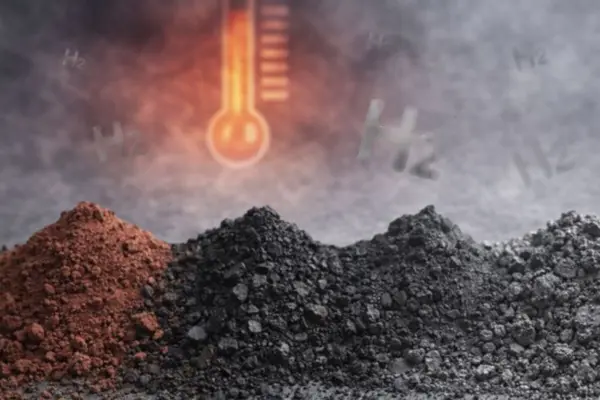
Part 1: Safe Thermal Analysis of Redox Reactions under Hydrogen Atmospheres
Hydrogen measurements require more than analytical precision. Due to hydrogen's flammability and reactivity, safety concepts are essential.
In the first part of the series, we introduce the fundamentals of thermogravimetric analysis under hydrogen atmospheres and explain why controlled experimental conditions are critical for studying hydrogen-related materials.
Learn about:
- Why hydrogen matters for materials research
- The role of TGA in studying redox reactions
- Experimental challenges associated with hydrogen
- The importance of safe measurement concepts
Part 2: Reduction of Iron Oxide under Different Hydrogen Concentrations
How does hydrogen concentration influence reduction kinetics?
Using Fe₂O₃ as a model system, this article demonstrates how thermogravimetric analysis can reveal the impact of hydrogen concentration on reduction behavior and reaction rates.
Discover:
- How Fe₂O₃ reduction changes with 10%, 50%, and 100% hydrogen
- The influence of hydrogen concentration on reaction kinetics
- Why reduction rates accelerate at higher hydrogen contents
- How TGA helps understand complex reduction mechanisms

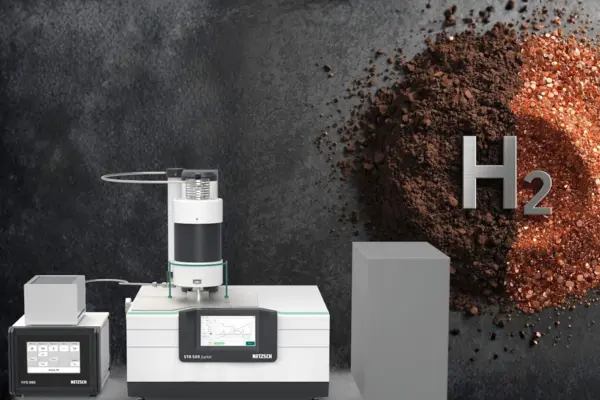
Part 3: Investigating Cu and CuO Redox Reactions under Hydrogen Atmospheres
Repeated reduction and OxidationOxidation can describe different processes in the context of thermal analysis.oxidation cycles are common in many hydrogen-related applications. But how stable are materials over time?
Using the CuO/Cu redox couple, this article illustrates how cyclic thermogravimetric measurements can uncover reversibility, degradation effects, and long-term redox stability.
Learn more about:
- Cyclic reduction and OxidationOxidation can describe different processes in the context of thermal analysis.oxidation behavior
- Redox reversibility under hydrogen atmospheres
- Changes in OxidationOxidation can describe different processes in the context of thermal analysis.oxidation performance over repeated cycles
- How TGA reveals subtle degradation effects
Ready to Explore Hydrogen Applications in Thermal Analysis?
Whether you are investigating reduction mechanisms, evaluating redox stability, or developing hydrogen-related materials, NETZSCH supports you with safe and reliable thermal analysis solutions.
👉 Contact our experts to discuss your hydrogen application and learn more about suitable measurement solutions.

Local Contact
Learn more about our products