11.05.2026 von Dr. Chiara Baldini
How Glass Fillers Influence Powder Aging in Polymer Additive Manufacturing
The open-access study (International Journal of Polymer Analysis and Characterization) investigates how glass fillers influence the aging behavior of nylon-12 powders recovered after Additive Manufacturing (AM) builds.
Aging of Reused Nylon-12 Powders in Polymer Additive Manufacturing
The open-access study (International Journal of Polymer Analysis and Characterization) investigates how glass fillers influence the aging behavior of nylon-12 powders recovered after Additive Manufacturing (AM) builds. Held at elevated temperatures, these powders undergo molecular changes that impact reuse quality. NETZSCH Differential Scanning Calorimetry (DSC) and rheology analysis instruments enabled precise thermal and viscoelastic analysis, supporting more sustainable polymer AM workflows.
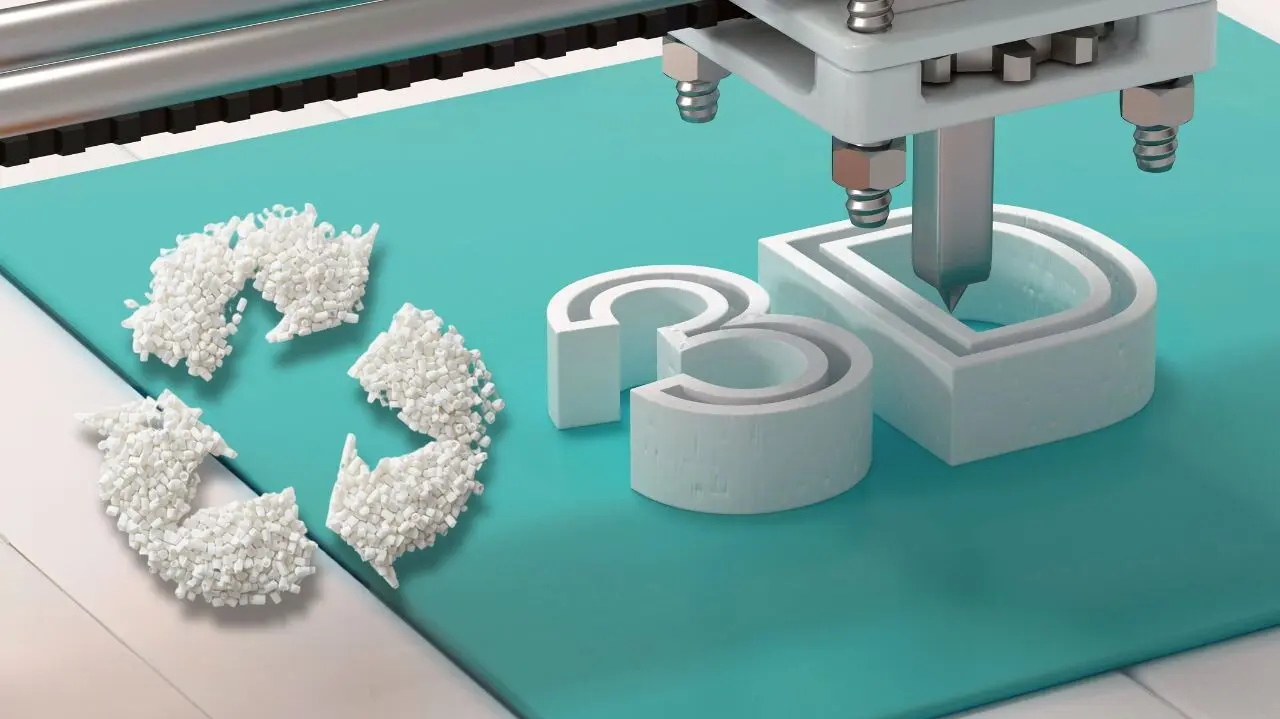
Powder-based additive manufacturing (AM) processes, such as Selective Laser Sintering (SLS), High-Speed Sintering (HSS), and Multi Jet Fusion (MJF), are transforming polymer processing, offering greater design freedom and improved material efficiency.
A key advantage of these techniques is the possibility to reuse polymer powders from previous builds.
Upon completion of the manufacturing process, unmelted powder can be recovered from the build chamber and, depending on its quality, reused for future part manufacture. However, when exposed to elevated temperatures for extended periods, these powders undergo significant molecular and thermal changes, which may compromise their performance in subsequent cycles.
A study, published in the International Journal of Sustainable Engineering and co-authored by Dr. Natalie Rudolph and Dr. Shona Marsh from NETZSCH Analyzing & Testing, together with experts from Malvern Panalytical and the University of Sheffield, investigates how glass fillers influence the aging behavior of nylon-12 powders used in AM.
Advanced Characterization with NETZSCH Solutions
The experimental work relied on advanced polymer characterization techniques to compare unfilled and glass-filled PA12 materials exposed to controlled thermal aging.
NETZSCH instruments played a central role in analyzing the thermal and rheological evolution of the powders. More specifically:
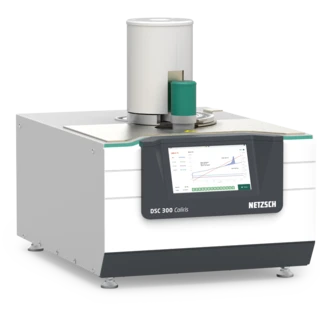
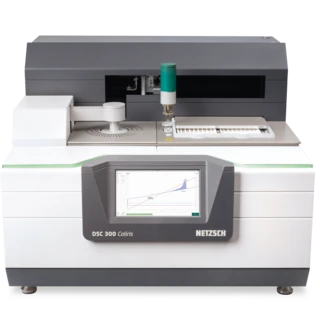
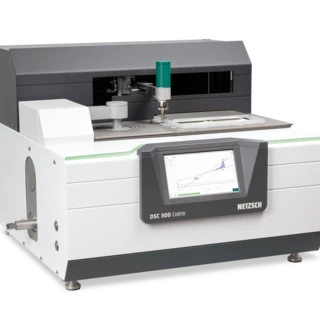
- The DSC 214was used to measure the melting and crystallization behavior, helping define the processing window for HSS and related AM processes.
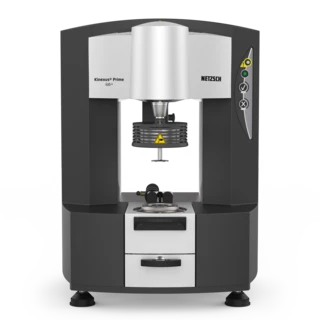
- The Kinexus Ultra+ rotational rheometer provided detailed insight into viscoelastic changes associated with powder aging and molecular weight growth.
By combining thermal analysis and rheological measurements, the study demonstrates how NETZSCH analysis solutions allow for a deeper understanding of polymer powder behavior, supporting the development of more reliable and sustainable additive manufacturing workflows.
This research enhances our understanding of how the filler content and polymer chemistry influence powder recyclability and part performance in polymer AM, offering valuable data for optimizing process parameters, minimizing waste, and extending material usability.
Gain access to all experimental details and data:
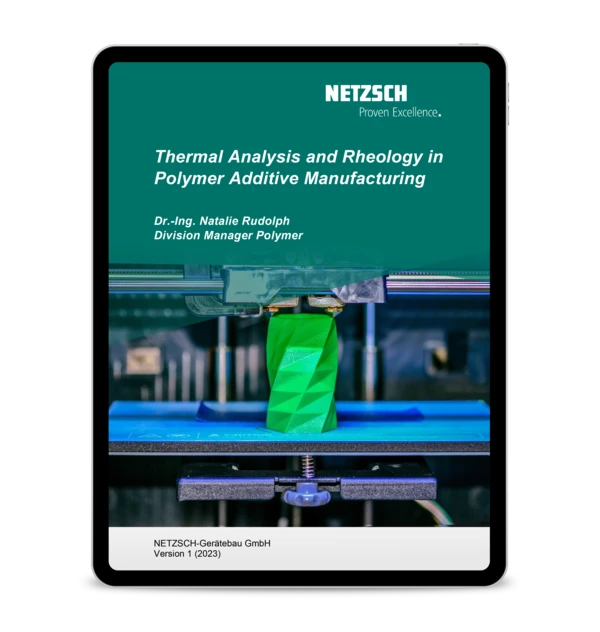
Discover the ebook: Thermal Analysis and Kriechen (Rheologie)Creep is one of the earliest “controlled stress” rheometer tests that quite literally “creeps” the material, i.e. we measure over a relatively prolonged period the small movement (the creep defined as creep compliance, J) of the sample by applying a small constant stress.Rheology in Polymer Additive Manufacturing
The importance of AM in polymer processing is closely linked to its capability of fabricating complex and customized polymer structures with precision.
Our ebook delves deep into the heart of AM, unveiling the power of reliable material characterization techniques, specifically thermal analysis and rheology.
Explore various thermal analysis methods like DSC, TGA, TMA, LFA and DMA! Dive into the world of rheology with rotational, oscillation and capillary rheometry, as NETZSCH Analyzing & Testing is the only company on the market who offers all rheological methods!
Learn how these techniques shape the behavior of materials in AM processes like Powder Bed Fusion, Material Extrusion, Vat Photopolymerization and more.
The ebook is free of charge. Download it here:
Learn more about NETZSCH products and methods:
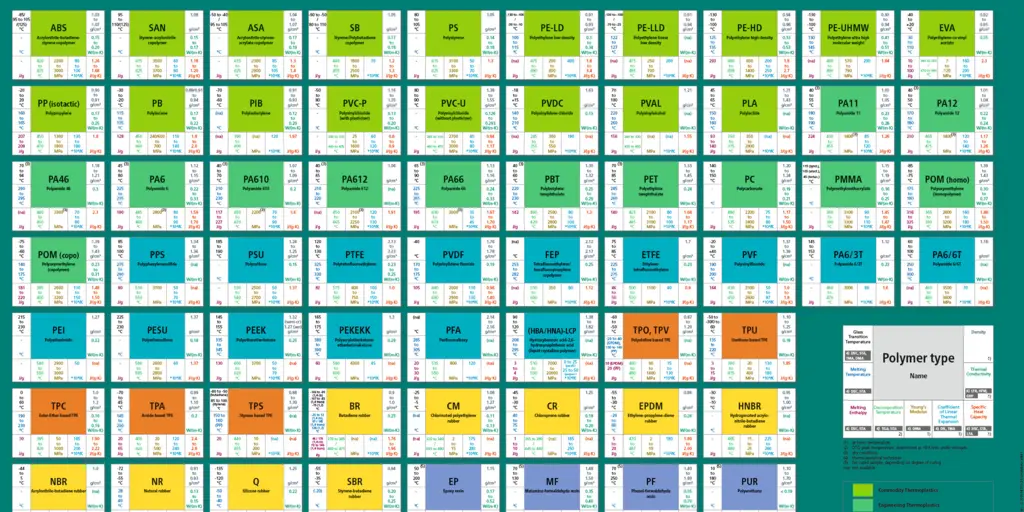
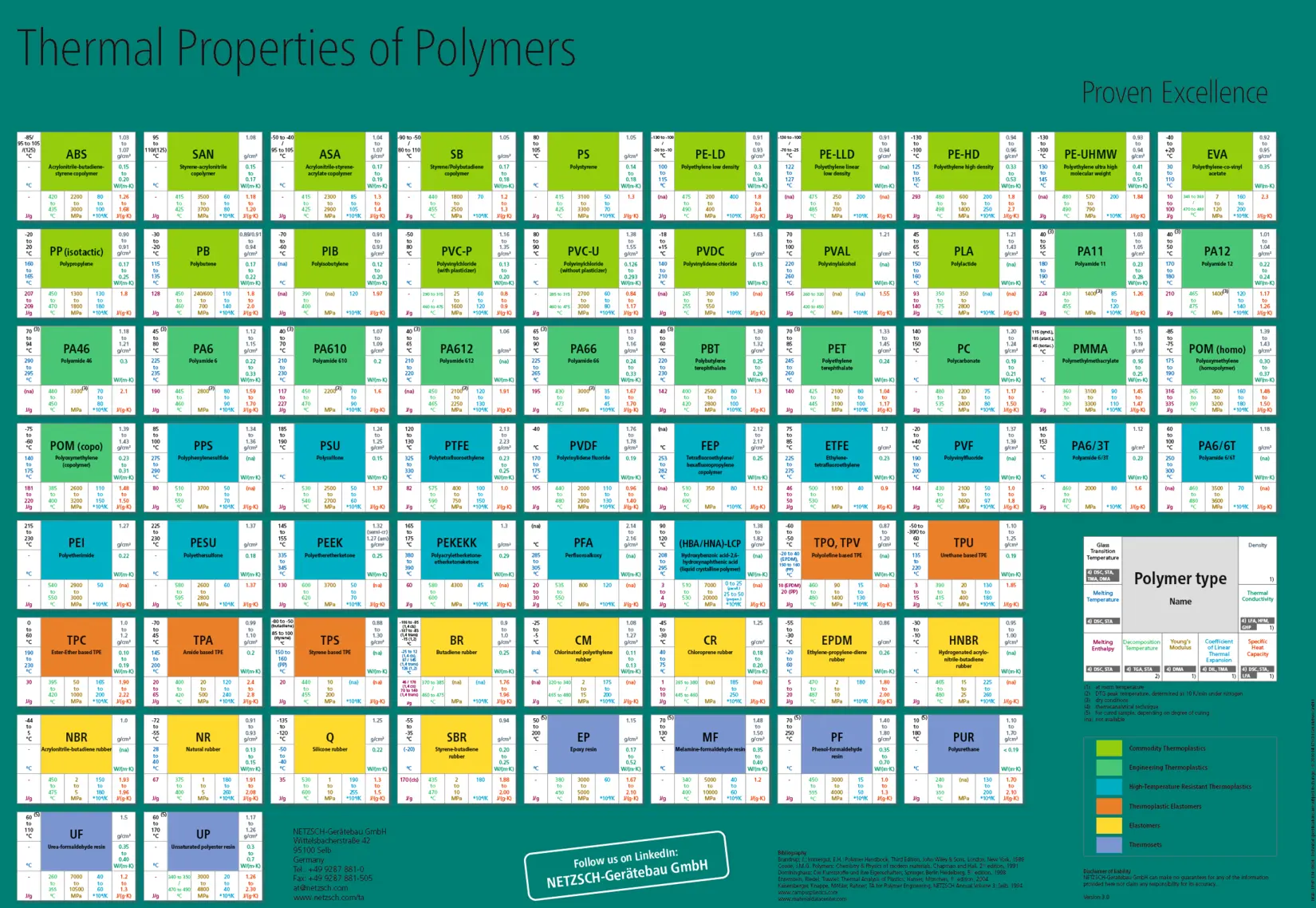
Thermische Eigenschaften von Polymeren im Überblick
Erhalten Sie Zugang zu einer umfassenden Datenbank über verschiedene Polymertypen und deren thermische Eigenschaften, die auf echten thermischen Analysemessungen basiert.