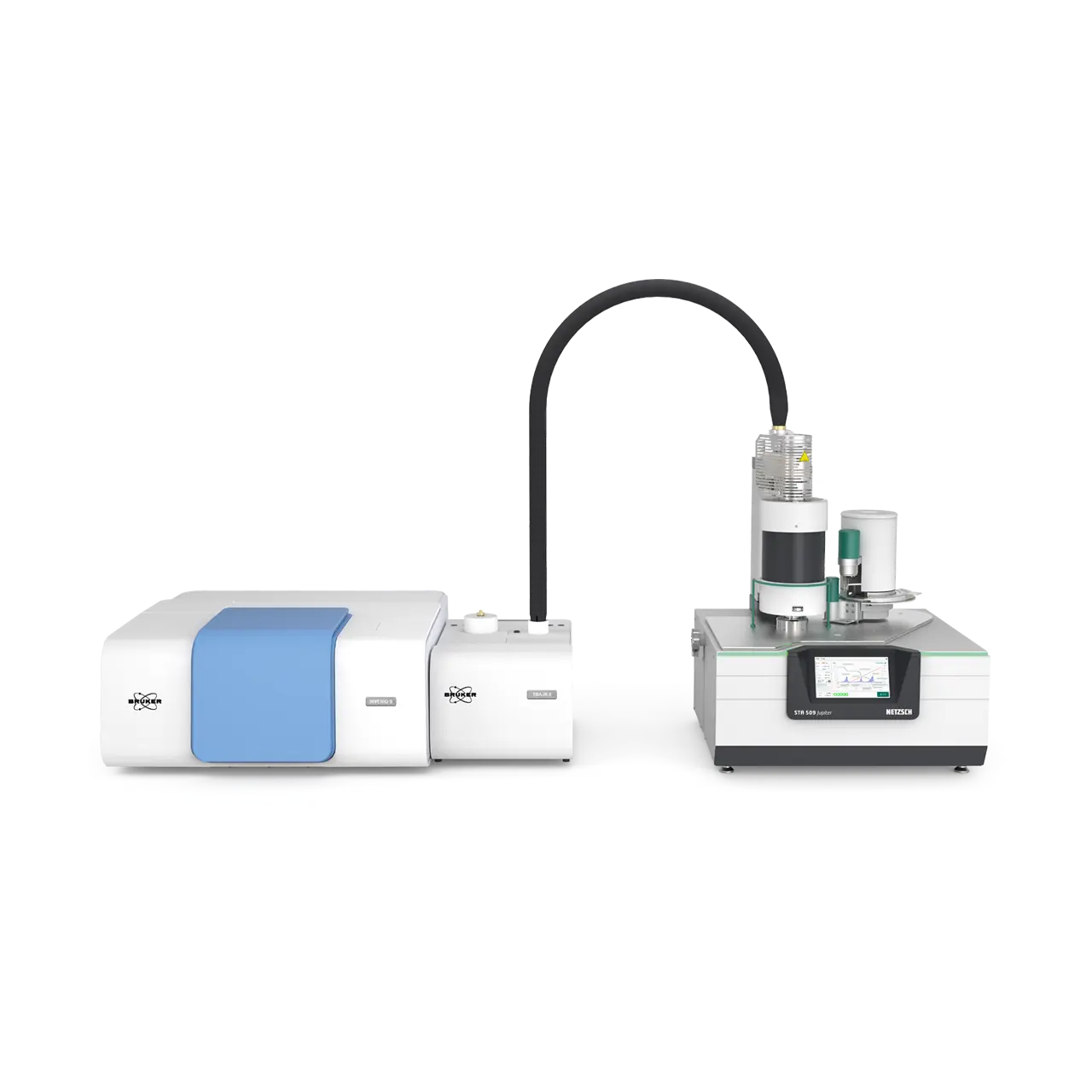
STA 509 Jupiter® über Transferleitung mit dem INVENIO von Bruker gekoppelt
Die Revolution in der STA-FT-IR-Kopplung
Highlights
Nahtlose STA-FT-IR-Kopplung für fortschrittliche Gasanalyse
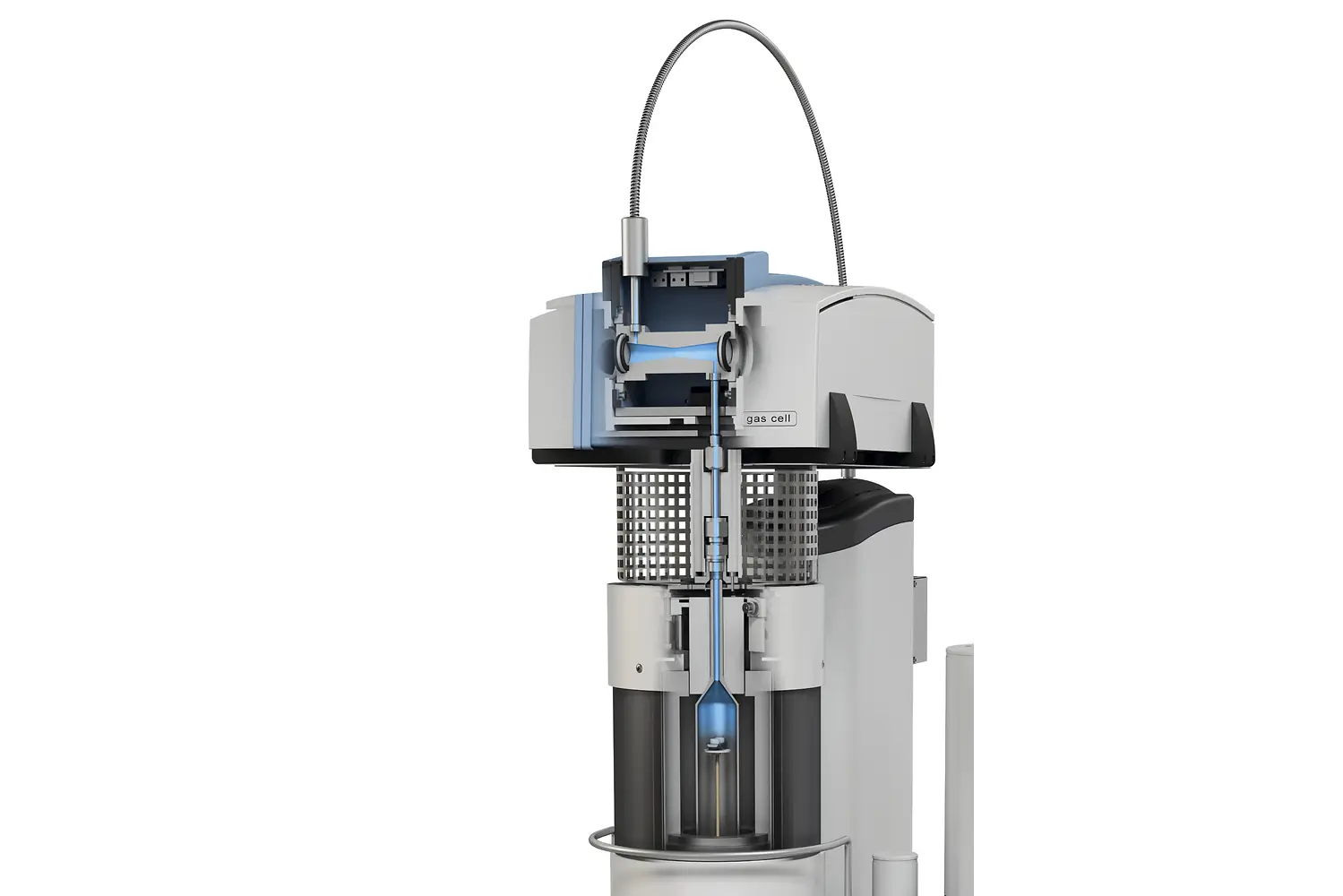
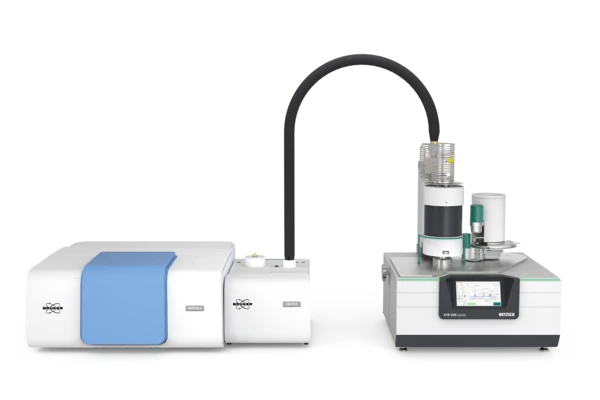
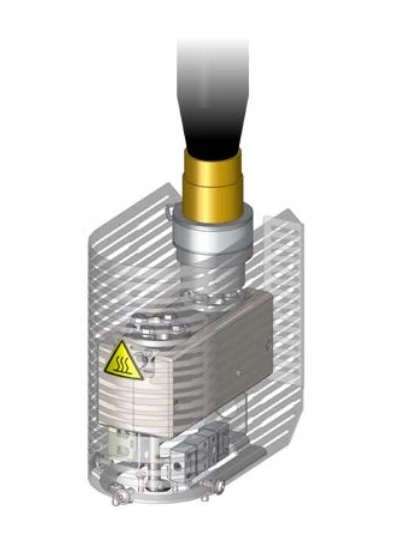
Das PERSEUS® STA 509 Jupiter® mit Transferleitungs-Kopplung kombiniert die simultane thermische Analyse (STA) mit fortschrittlicher Gasphasendetektion mittels FT-IR-Spektroskopie. Diese leistungsstarke Konfiguration bietet umfassende Einblicke in thermische Zersetzung, Oxidation und chemische Reaktionen, indem sie die Identifizierung der während des Erhitzungsprozesses entstehenden Gase ermöglicht.
Ausgestattet mit einer beheizten Transferleitung bietet das System maximale Flexibilität bei der Laboranordnung, sodass das Bruker FT-IR-Spektrometer unabhängig vom STA-Gerät positioniert werden kann. Alle Komponenten des Gaswegs – vom STA-Ofen bis zur FT-IR-Gaszelle – sind temperaturgeregelt, wodurch sichergestellt wird, dass selbst kondensierbare oder reaktive Gase präzise und verlustfrei transportiert werden.
In Kombination mit der leistungsstarken Bruker INVENIO FT-IR-Plattform bietet das System eine hervorragende spektrale Auflösung und Empfindlichkeit über ein breites Anwendungsspektrum hinweg, von Polymeren und Verbundwerkstoffen bis hin zu Chemikalien, Pharmazeutika und anorganischen Materialien. Die vollständige Integration der NETZSCH-Proteus®- und der Bruker OPUS-Software gewährleistet eine synchronisierte Datenerfassung und ermöglicht es, Massenänderungen und kalorimetrische Ereignisse mit spezifischen gasförmigen Zersetzungsprodukten zu korrelieren.
Bestehende NETZSCH-STA 509 Jupiter®-Systeme können mit der Transferleitungskopplung nachgerüstet werden und bieten so eine flexible und zukunftssichere Lösung für die fortschrittliche Materialanalyse.
Methode
Fourier-Transform-Infrarot (FT-IR)-Spektrometer in Verbindung mit thermischer Analyse
Die thermische Analyse bietet ideale Werkzeuge zur Charakterisierung einer Vielzahl organischer und anorganischer Feststoffe und Flüssigkeiten. Thermodynamische Übergänge, Thermische StabilitätEin Material ist thermisch stabil, wenn es sich unter Temperatureinfluss nicht zersetzt. Eine Möglichkeit, die thermische Stabilität einer Substanz zu bestimmen ist die Verwendung eines TGA (thermogravimetrischer Analysator).thermische Stabilität, Zersetzung und chemische Reaktionen lassen sich über einen breiten Temperaturbereich mit hoher Genauigkeit nachweisen und quantifizieren.
In einigen Fällen sind jedoch Informationen über die Art der entstehenden Gase erforderlich, um ein klareres Verständnis der Chemie hinter den Prozessen zu erlangen. Die Kopplung der thermischen Analyse mit leistungsstarker Infrarotspektroskopie zur Gasanalyse schließt diese Lücke. Sie ermöglicht einen tieferen Einblick in das Verhalten des Materials und liefert einen spektralen Fingerabdruck der Gase, die bei der Aufheizung aus der Probe freigesetzt werden.
Die Proteus®-Software für die thermische Analyse und die OPUS-Software für FT-IR-Messungen sind nahtlos integriert, um eine effiziente Kopplung von thermischer Analyse und FT-IR zu ermöglichen. Die Temperatur- und Zeitkorrelationen aller experimentellen Daten werden während des gesamten Prozesses sorgfältig beibehalten.
Infrarotspektroskopie
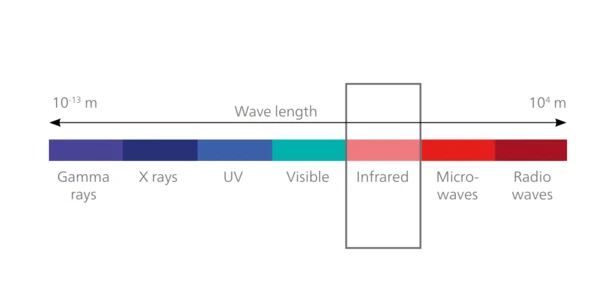
Die Infrarotspektroskopie ist eine klassische Technik, die auf der Absorption von Infrarotstrahlung durch molekulare Bindungsschwingungen basiert. Diese Absorption tritt auf, wenn Bindungen auf bestimmte Weise schwingen. Allerdings können nur jene Schwingungen mit IR-Licht in Wechselwirkung treten, die eine Änderung des Dipolmoments bewirken. Aus diesem Grund erzeugen die meisten Substanzen ein charakteristisches Spektrum, während homonukleare Moleküle – wie O₂ und N₂ – oder Edelgase keine fundamentalen IR-Absorptionsbanden aufweisen, da bei ihren Schwingungen keine Änderungen des Dipolmoments auftreten.
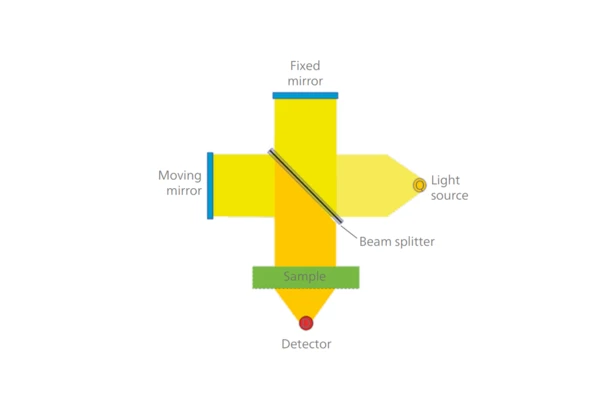
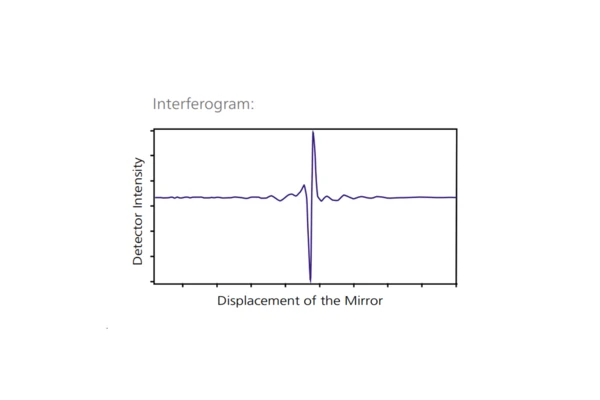
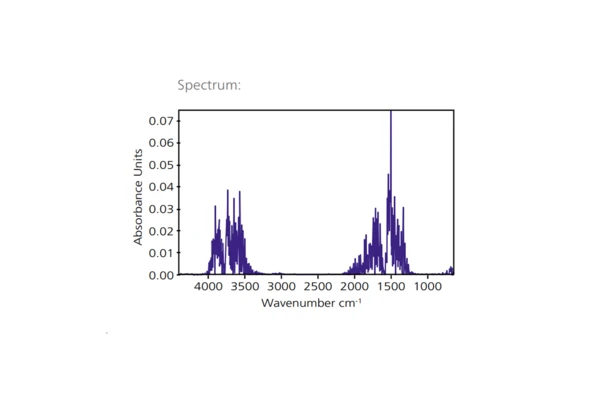
Funktionsprinzip eines FT-IR-Spektrometers
Ein Infrarotstrahl, der in der Abbildung als von der Quelle auf der rechten Seite kommend dargestellt ist, wird durch einen Strahlteiler in zwei Strahlengänge aufgeteilt. Ein Strahlengang wird auf einen feststehenden Spiegel gerichtet und reflektiert, während der andere von einem beweglichen Spiegel reflektiert wird.
Nach der Reflexion werden die beiden Strahlen wieder vereinigt und interferieren miteinander. Das resultierende Interferenzmuster hängt vom Abstand zwischen den beiden Spiegeln – der sich ändert, wenn der bewegliche Spiegel seine Position verschiebt – und den im Strahl vorhandenen Frequenzen ab.
Dieser Vorgang erzeugt ein Interferogramm, ein Signal, das typischerweise durch einen zentralen Peak und flache Flügel gekennzeichnet ist. Der zentrale Peak tritt auf, wenn beide Spiegel den gleichen Abstand zum Strahlteiler haben, sodass alle Frequenzen konstruktiv interferieren können.
Schließlich wird das Interferogramm mithilfe einer Fourier-Transformation mathematisch in ein Spektrum umgewandelt, wodurch die Infrarot-Absorptionseigenschaften der Probe sichtbar werden.

Über 30 Jahre erfolgreiche Zusammenarbeit
Seit über 30 Jahren arbeiten NETZSCH und Bruker zusammen, um integrierte Lösungen für die thermische Analyse und Gasanalyse anzubieten. Diese langjährige Partnerschaft verbindet das Know-how von NETZSCH in der thermischen Analyse mit der Führungsrolle von Bruker in der FT-IR-Technologie und bietet Kunden zuverlässige, hochwertige Systeme, die auf ihre Bedürfnisse zugeschnitten sind. Gemeinsam liefern wir innovative, benutzerfreundliche Lösungen aus einer Hand und gewährleisten einen reibungslosen Betrieb sowie einen hervorragenden Support.
Die Vorteile unserer Zusammenarbeit auf einen Blick:
- Nahtlose Integration: Optimierte Kopplung von NETZSCH-Thermoanalysatoren mit Bruker-FT-IR-Spektrometern für eine zuverlässige und effiziente Analyse der entstehenden Gase.
- Bewährte Fachkompetenz: Jahrzehntelange gemeinsame Erfahrung gewährleistet hochwertige, innovative Lösungen, die genau auf die Kundenbedürfnisse zugeschnitten sind.
- Komfort aus einer Hand: Vollständig kompatible Systeme mit umfassendem Support durch beide Partner.
- Verbesserte Leistung: Die präzise Abstimmung der Geräte liefert genaue und reproduzierbare Ergebnisse.
- Kontinuierliche Innovation: Die Zusammenarbeit fördert die Entwicklung modernster Technologien und Funktionen für fortschrittliche Analysen.
- Mühelose Kompatibilität mit der OPUS-Software von Bruker: Bei NETZSCH bieten wir nahtlose Kompatibilität mit der OPUS-Software von Bruker, was einen reibungslosen Arbeitsablauf zwischen beiden Systemen ermöglicht. Dies gewährleistet eine integrierte und effiziente Arbeitsweise, bei der das Potenzial beider Geräte optimal ausgeschöpft wird.
Technische Daten
Volumen und Länge der Gaskammer
Temperatur der Übertragungsleitung
Detektor
Wellenzahlenbereich:
FT-IR: 8000 cm-1 bis 340 cm-1
Kopplung: 4400 cm-1 bis 600 cm-1
Auflösung:
besser als 0,4 cm-1
Ofenadapter:
max. 400 °C
Material der Übertragungsleitung:
Edelstahl (austauschbar)
Material des Fensters der Gazenzelle:
KBr
Erfahren Sie noch mehr über die Transferleitungs-Kupplung



Proven Excellence im Service
NETZSCH Analysieren & Prüfen bietet Ihnen weltweit ein umfassendes Angebot an Services, um die optimale Leistung und Langlebigkeit Ihrer thermoanalytischen Geräte zu gewährleisten. Wir helfen Ihnen dabei, die Effektivität Ihrer Geräte zu maximieren, ihre Lebensdauer zu verlängern und Ausfallzeiten zu minimieren.
Schöpfen Sie das volle Potenzial Ihrer Geräte mit unseren maßgeschneiderten Lösungen aus, die auf jahrelanger Branchenerfahrung und Innovation beruhen.
Software
Bruker OPUS und NETZSCH Proteus® – Unübertroffene Kombination für maximale Benutzerfreundlichkeit


Die Anbindung der NETZSCH Proteus®-Software an die OPUS FT-IR-Software basiert auf einem synchronisierten Datenaustausch, der einen koordinierten Betrieb der gekoppelten Systeme ermöglicht. Die Messungen werden über die NETZSCH Proteus®-Software gestartet, die gleichzeitig die Datenerfassung in OPUS auslöst. Der Anwender muss den Befehl zum Messstart und zur Datenerfassung nur einmal eingeben; sowohl OPUS als auch Proteus® arbeiten dann mit den vordefinierten Parametern. Die Online-Datenerfassung ist vollständig synchronisiert, wodurch bei der Auswertung eine präzise Zeit- und Temperaturkorrelation zwischen allen Signalen der beiden gekoppelten Geräte gewährleistet ist. Die beiden Softwarepakete können von einem einzigen Computer aus bedient werden, sodass Anwender jederzeit Zugriff auf die gesamte Bandbreite der Datenauswertungs- und Ergebnisdarstellungsoptionen in beiden Umgebungen haben.
Erfahren Sie noch mehr über die Software:
- Vollständige Software-Integration – Online-Datenaustausch zwischen den beiden Gerätesoftwarepaketen während des laufenden Experiments
- Nahtlose Gerätesteuerung, Messdefinition für TGA und FT-IR vollständig über die Proteus®-Software gesteuert
- Segmentweise Aktivierung oder Deaktivierung der FT-IR-Kopplung mit einem Mausklick
- Automatisches Speichern der Datensätze beider Messungen (TGA und FT-IR) unter identischen Dateinamen (jedoch mit unterschiedlichen Dateiendungen) in denselben Verzeichnissen
- Messungen mit automatischem Probenwechsler ermöglichen individuelle FT-IR-Messparameter für jede Position
- Gemeinsame Darstellung des Gram-Schmidt-Diagramms sowie von bis zu 30 vorab ausgewählten Kurven zusammen mit den thermischen Analysekurven in der Proteus®-Software während des Experiments
- Online-Auswertung (SNAP SHOT) von TGA-/STA-/DSC-Messungen bereits unter Einbeziehung der FT-IR-Daten während der Messung
- Kurvenberechnungen mit Auswertung charakteristischer Temperaturen und Peakflächen zusammen mit TGA- und DSC-Kurven
- Kombinierte Analysediagramme von thermischen Analysen und FT-IR-Signalen
- Mehrkomponentensuche in OPUS
- Identifizierung anhand verschiedener Gasphasenbibliotheken, z. B. der TGA-FT-IR-Bibliothek für Polymere von NETZSCH
Ähnliche Geräte


Beratung & Vertrieb
Haben Sie weitere Fragen zum Gerät oder zur Methode und möchten Sie mit einem Vertriebsmitarbeiter sprechen?
Service & Support
Besitzen Sie bereits ein Instrument und benötigen technische Unterstützung oder Ersatzteile?