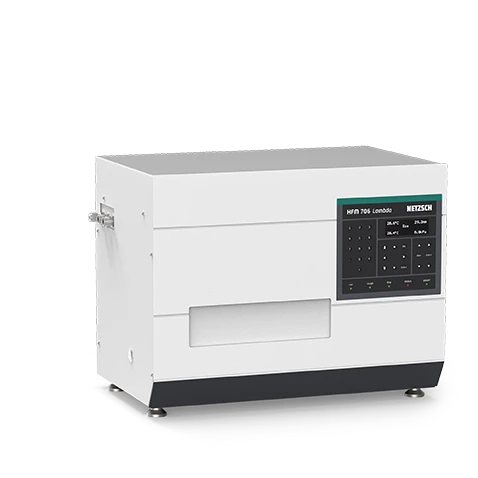
HFM 706 Lambda Small
Heat Flow Meter
Highlights
HFM 706 Lambda Series: Precision Thermal ConductivityThermal conductivity (λ with the unit W/(m•K)) describes the transport of energy – in the form of heat – through a body of mass as the result of a temperature gradient (see fig. 1). According to the second law of thermodynamics, heat always flows in the direction of the lower temperature.Thermal Conductivity Measurements
Tailored to Your Sample Size
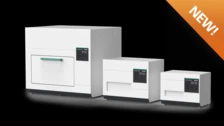
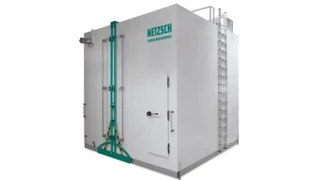
Three Instrument Versions for Every Sample Size: Small, Medium, and Large
The HFM 706 Lambda Series offers three versatile instrument versions designed to fit your unique sample dimensions perfectly. Whether you're testing small laboratory specimens or large industrial materials, our models ensure precise and reliable measurements.
The HFM 706 Lambda Small is Ideal for Samples up to 203 mm x 203 mm x 51 mm in Height.
The Medium and Large versions can accommodate larger samples, providing flexibility across applications.
High-Sensitivity Heat Flux Transducers for Accurate Thermal Analysis
The HFM 706 Lambda Series is equipped with dual heat flux transducers that continuously monitor heat flow with exceptional sensitivity and accuracy. Our advanced calibration process uses reference materials with known Thermal ConductivityThermal conductivity (λ with the unit W/(m•K)) describes the transport of energy – in the form of heat – through a body of mass as the result of a temperature gradient (see fig. 1). According to the second law of thermodynamics, heat always flows in the direction of the lower temperature.thermal conductivity. By combining multiple calibration methods, we guarantee a high measurement precision. This way, you get reliable, reproducible data, every time.
Achieve Faster Results and Enhanced Performance with Modern Peltier Technology
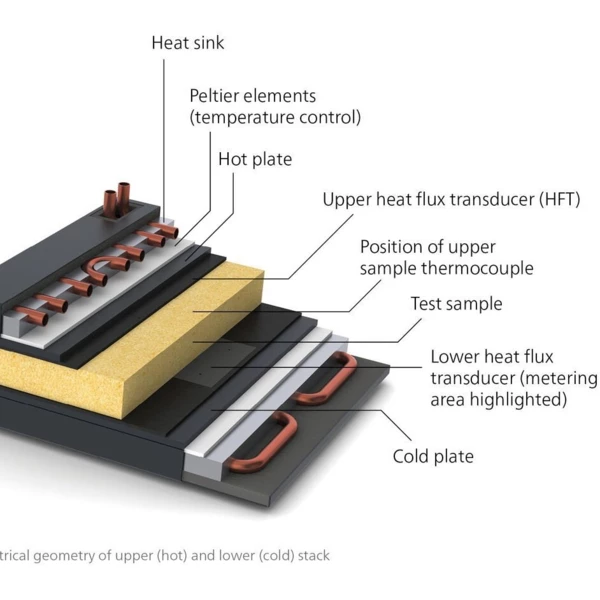
Experience precise temperature management with our advanced Peltier temperature control system for hot and cold plates. Powerful, bidirectional Peltier elements paired with an external chiller ensure rapid and accurate heating and cooling of each plate. This optimized temperature control quickly achieves thermal equilibrium, providing reliable, consistent data in less time and boosting your laboratory’s productivity and efficiency.
Optimized Test Chamber Design Provides Reliable Results and Minimal Condensation
Our innovative test chamber minimizes environmental interference and significantly reduces reduces condensation effects inside the testing chamber and on the plate surfaces. For even better control, an optional dry gas purge feature maintains optimal humidity levels, creating consistent test conditions and enhancing measurement reliability.
Beyond Thermal ConductivityThermal conductivity (λ with the unit W/(m•K)) describes the transport of energy – in the form of heat – through a body of mass as the result of a temperature gradient (see fig. 1). According to the second law of thermodynamics, heat always flows in the direction of the lower temperature.Thermal Conductivity: Analysis of the Specific Heat Capacity (cp)
The HFM 706 Lambda hardware and software determine the Specific Heat Capacity (cp)Heat capacity is a material-specific physical quantity, determined by the amount of heat supplied to specimen, divided by the resulting temperature increase. The specific heat capacity is related to a unit mass of the specimen.specific heat capacity (cp) of your samples, providing a complete thermal profile. This dual-function capability enhances the versatility of your measurements and provides deeper insights into material properties for research and quality control.

Energy-saving Eco and Idle modes
Today, global attention towards saving and efficiently using energy has never been higher. Industries and academia worldwide are actively researching ways to conserve energy and utilize alternative resources.
To support this, the HFM 706 Lambda Series offers two programmable energy-saving standby modes: Eco Mode and Idle Mode. In Eco Mode, both the plate temperature control and the chiller are completely turned off, which reduces energy consumption to nearly zero during long idle periods, such as nights and weekends. This significantly lowers operational costs and environmental impact. In Idle Mode, the chiller runs at low power (0.5–1.0 kW) to maintain plate temperatures at preset levels, enabling a fast restart of measurements while still saving energy compared to full operation.
These modes optimize energy efficiency, reduce CO₂ emissions, and enhance lab sustainability without compromising readiness or performance.
Method
Measurement of Thermal ConductivityThermal conductivity (λ with the unit W/(m•K)) describes the transport of energy – in the form of heat – through a body of mass as the result of a temperature gradient (see fig. 1). According to the second law of thermodynamics, heat always flows in the direction of the lower temperature.Thermal Conductivity - Improving Energy Efficiency
Thermal conductivity is a measure of a material's ability to transport energy. It quantifies how well heat can move through a substance. The most common method for measuring Thermal ConductivityThermal conductivity (λ with the unit W/(m•K)) describes the transport of energy – in the form of heat – through a body of mass as the result of a temperature gradient (see fig. 1). According to the second law of thermodynamics, heat always flows in the direction of the lower temperature.thermal conductivity is the steady-state method, also known as the heat flow meter method.


The HFM is an exact, fast and easy-to-use instrument for measuring the low Thermal ConductivityThermal conductivity (λ with the unit W/(m•K)) describes the transport of energy – in the form of heat – through a body of mass as the result of a temperature gradient (see fig. 1). According to the second law of thermodynamics, heat always flows in the direction of the lower temperature.thermal conductivity λ of insulation materials.
In a heat flow meter (HFM), the test specimen is placed between two heated plates controlled to a user-defined mean sample temperature and temperature gradient to measure heat flowing through the specimen. The sample thickness L is measured by an internal thickness gauge. Alternatively, the user can enter and drive to the desired thickness, which is of particular interest for compressible samples. The heat flow Q through the sample is measured by two calibrated heat flux transducers covering a large area of both sides of the specimen.
After reaching thermal equilibrium, the test is done. The heat flux transducer output is calibrated using a reference standard. For the calculation of the Thermal ConductivityThermal conductivity (λ with the unit W/(m•K)) describes the transport of energy – in the form of heat – through a body of mass as the result of a temperature gradient (see fig. 1). According to the second law of thermodynamics, heat always flows in the direction of the lower temperature.thermal conductivity λ and the thermal resistance R, the average heat flux Q/A, the sample thickness L, and the temperature gradient ΔT are used, in accordance with Fourier’s Law.
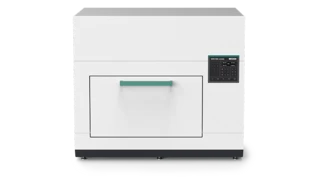
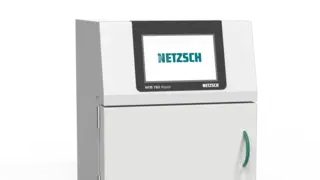
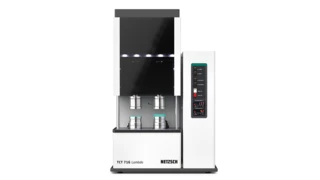
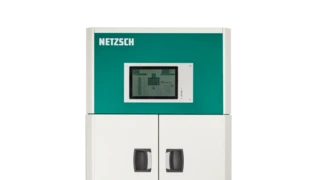
NETZSCH offers more exciting products that support you in measuring Thermal Conductivity:
Specifications
| HFM 706 Lambda Small | |
|---|---|
| Standards | ASTM C518, ISO 8301, JIS A1412, DIN EN 12667, DIN EN 12664 |
| Type | Bench-top device |
| Thermal conductivity range | 0.007 to 2 W/(m·K)**
2.0 W/(m·K) achievable with optional instrumentation kit, recommended for hard materials and those with higher thermal conductivity Performance data:
→ All performance data is verified with NIST SRM 1450 D (thickness 25 mm) |
| Plate temperature range | -20°C to 90°C |
| Air-tight system | Sample compartment with possibility to introduce purge gas |
| Metering area heat flux transducer | 102 mm x 102 mm |
| Chiller system | External; constant temperature setpoint over plate temperature range |
| Plate temperature control | Peltier system |
| Plate motion | Motorized |
| Plate thermocouples | Three thermocouples on each plate, type K (two extra thermocouples with instrumentation kit) |
| Thermocouple resolution | ± 0.01°C |
| Number of setpoints | Up to 99 |
| Specimen sizes (max.) | 203 mm x 203 mm x 51 mm |
| Variable load/ contact force | 0 to 854 N (21 kPa on 203 x 203 mm²) Force-controlled adjustment of the contact force or the desired thickness, and thus DensityThe mass density is defined as the ratio between mass and volume. density, of compressible materials |
| Thickness determination |
|
| Software features |
|
** Please note: In the very low thermal conductivity range, accuracy of Lambda (λ) values can be limited
Accessories and more:
Brochures and Data Sheets


Software
Software highlights at a glance
Highest level of comfort
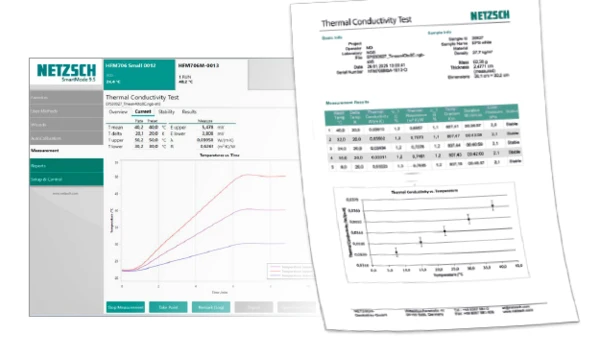
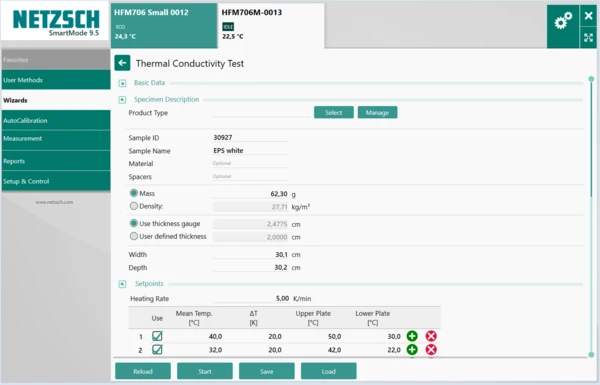
SmartMode is the user-friendly, smoothly running user interface of the HFM Proteus® software. It is characterized by a logical structure which quickly gives a clear overview of the current measurement status and provides various report and export possibilities. After completing the test, all relevant results can be directly printed out by the integrated printer or a report can be created by the software when a PC is connected.
Calibration in Next to no Time
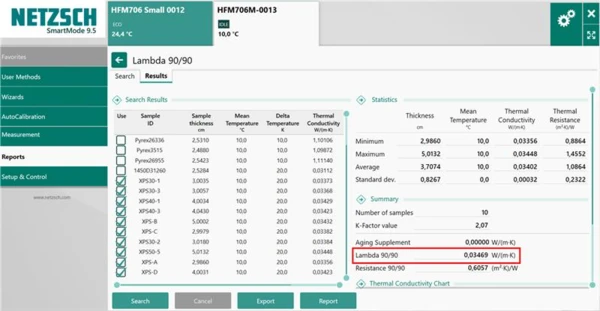
For calibration purposes, the thermal conductivity values of the most common certified reference materials, such as NIST SRM 1450d, are already stored in the software. However, AutoCalibration also offers the ability to create calibration curves for any user-defined material on the basis of up to 99 freely selectable temperatures.
The MultiCalibration function combines calibrations of the same type and thickness to reduce uncertainty or of different types and thicknesses to measure samples of different thicknesses. It's more flexible and convenient.
Find out even more:
E-Learning
Become an Expert with our Free E-Learning Courses
All NETZSCH E-Learning Basic Courses are free of charge! The content is created by our laboratory method experts, who share their personal experiences with you. Take advantage of flexible online learning, fully adapted to your training needs!
Related Devices

Consultancy & Sales
Do you have further questions about the instrument or the method and would like to speak to a sales representative?
Service & Support
Do you already have an instrument and need technical support or spare parts?
Downloads and Media
Brochure
Videos
Engineered for Excellence – Discover the New HFM 706 Lambda Series by NETZSCH