03.08.2023 by Aileen Sammler
The Science Behind Nail Gel Hardening

Have you ever wondered about the fascinating science behind the simple act of Curing (Crosslinking Reactions)Literally translated, the term “crosslinking“ means “cross networking”. In the chemical context, it is used for reactions in which molecules are linked together by introducing covalent bonds and forming three-dimensional networks.curing nail gel under a UV lamp? Dive into our latest application note as we unravel the secrets of this everyday phenomena.
While the first selection criterion is often an aesthetic one, the consumer also wants a product that is practical to use and provides the desired finish and performance. For that, the perfect nail gel or polish should feel relatively liquid for an easy brush application but without flowing outside the nail. The drying or Curing (Crosslinking Reactions)Literally translated, the term “crosslinking“ means “cross networking”. In the chemical context, it is used for reactions in which molecules are linked together by introducing covalent bonds and forming three-dimensional networks.curing time should be as low as possible and lead to a smooth surface for a flawless appearance. Finally, it is also desirable for the manicure to be long-lasting, without it being too difficult to remove.
Using advanced NETZSCH thermal and rheological analysis techniques, we unravel the mysteries of nail gel Curing (Crosslinking Reactions)Literally translated, the term “crosslinking“ means “cross networking”. In the chemical context, it is used for reactions in which molecules are linked together by introducing covalent bonds and forming three-dimensional networks.curing:
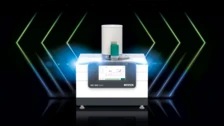
Differential Scanning Calorimetry (DSC) and rotational rheometry are two complementary methods for the characterization of the Curing (Crosslinking Reactions)Literally translated, the term “crosslinking“ means “cross networking”. In the chemical context, it is used for reactions in which molecules are linked together by introducing covalent bonds and forming three-dimensional networks.curing of nail gels. Both methods highlight the Curing (Crosslinking Reactions)Literally translated, the term “crosslinking“ means “cross networking”. In the chemical context, it is used for reactions in which molecules are linked together by introducing covalent bonds and forming three-dimensional networks.curing speed. The new NETZSCH DSC 300 Caliris® additionally provides information about the energy released during curing, while measurements with the Kinexus rotational rheometer compare the properties of the different products during and after curing.
From temperature dynamics to viscosity changes, the research with NETZSCH instruments provides a new perspective for quality assurance in the nail care industry.
Want to know more? Read our latest application note:
More Blog Articles related to Cosmetics
- 09.09.2026
Introduction to the Rheology of Dispersions – Fundamentals, Influencing Factors and Measurement Methods
- 08.04.2026
Brand-new: The NETZSCH STA 319 Jupiter® – The Cost Effective Solution for Reliable Simultaneous Thermal Analysis to 1100°C

- 18.01.2024
Exploring Rheology: NETZSCH's Top-Ranked Blogs and Webinars

- 08.01.2024
Using Rheology for Faster, Smarter Material Formulation

- 15.09.2023
From Drug Delivery to Cosmetics: A Deep Dive into Thermal Analysis of Electrospun Polymeric Nanofibers
- 28.08.2023
Introducing the DSC 300 Caliris® Classic – Our Working Horse for the Quality Control of Polymers, Food and Cosmetics