28.10.2025 by Aileen Sammler
NETZSCH Proteus® AutoEvaluation and Identify: Intelligent Analysis at Your Fingertips - Part 2
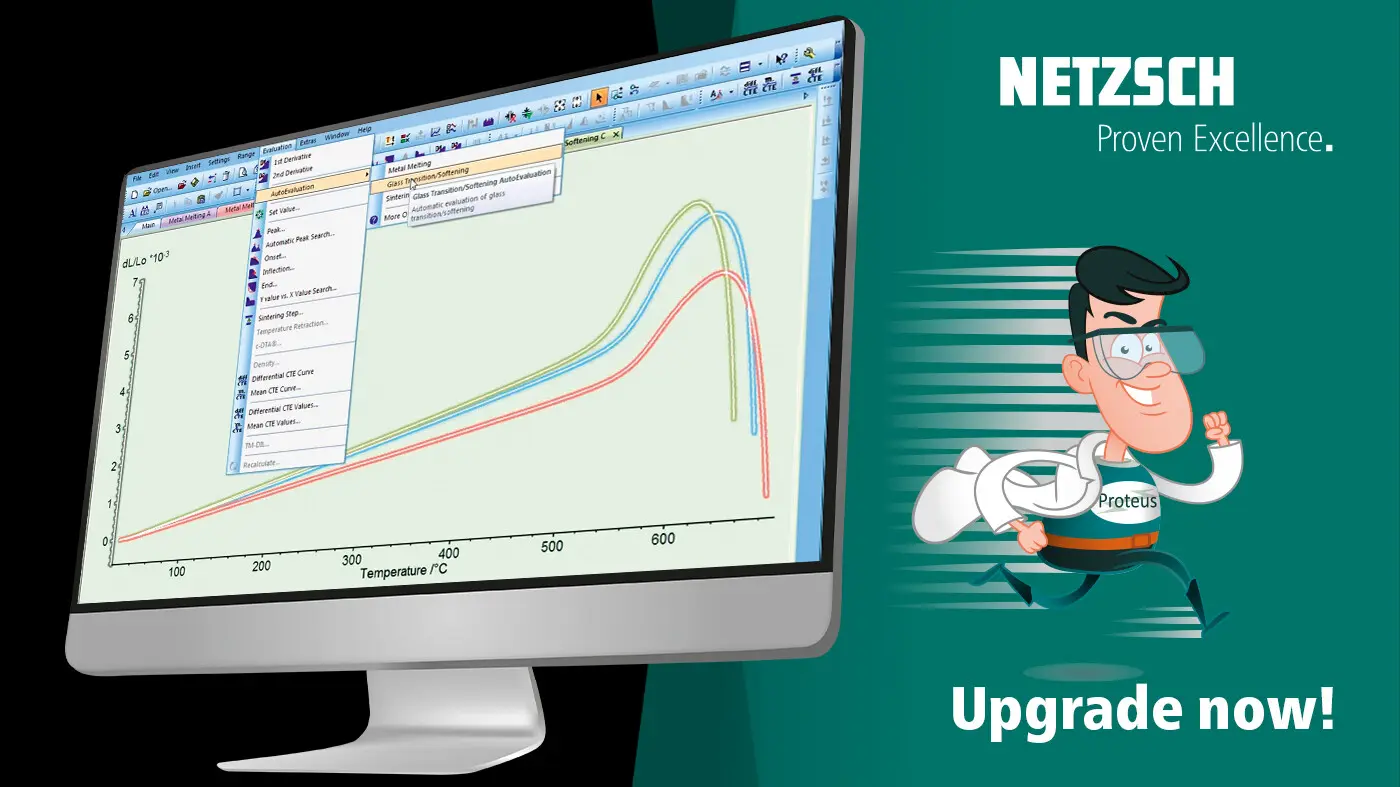
In thermal analysis, the software is as important as the instrument itself. With the release of Proteus® 9.7, NETZSCH introduces its most advanced generation of measurement and analysis software. Read about its features in our latest blog series. Here comes part 2 focusing on the tools Autoevaluation and Identify!
Thermal analysis data is rich with information but often challenging to evaluate. Overlapping transitions, subtle Glass Transition TemperatureThe glass transition is one of the most important properties of amorphous and semi-crystalline materials, e.g., inorganic glasses, amorphous metals, polymers, pharmaceuticals and food ingredients, etc., and describes the temperature region where the mechanical properties of the materials change from hard and brittle to more soft, deformable or rubbery.glass transitions, or light-induced effects require skill, time, and experience for a correct interpretation. The measurement and analysis software NETZSCH Proteus® 9 addresses this challenge with intelligent analysis tools that transform raw signals into reliable, reproducible results. Two of the most powerful tools are AutoEvaluation and Identify.
Missed blog part 1? Here you are:
AutoEvaluation – Consistency and Speed in Complex Data
Traditionally, evaluation of DSC or TG curves depends on the user’s experience. Two scientists might arrive at slightly different onset values or transition enthalpies, depending on the evaluation method chosen. AutoEvaluation eliminates this variability by applying intelligent mathematical algorithms that autonomously find and evaluate all effects in the measurement curve.
In polymer blends and mixtures, where multiple Glass Transition TemperatureThe glass transition is one of the most important properties of amorphous and semi-crystalline materials, e.g., inorganic glasses, amorphous metals, polymers, pharmaceuticals and food ingredients, etc., and describes the temperature region where the mechanical properties of the materials change from hard and brittle to more soft, deformable or rubbery.glass transitions or melting peaks may overlap, AutoEvaluation is capable of intelligently resolving these automatically.
For example, in a blend of PA6 (polyamide 6) and ABS (acrylonitrile butadiene styrene), both transitions are detected and reported without manual intervention. Similarly, in LDPE/PP (low-DensityThe mass density is defined as the ratio between mass and volume. density polyethylene/polypropylene) mixtures, multiple melting peaks are correctly assigned. This saves plenty of time and allows for consistency across users and laboratories.
Another application is in UV-Curing (Crosslinking Reactions)Literally translated, the term “crosslinking“ means “cross networking”. In the chemical context, it is used for reactions in which molecules are linked together by introducing covalent bonds and forming three-dimensional networks.curing studies. When analyzing light-curable adhesives, coatings, or 3D printing resins, the DSC signal is often distorted by heat input from the UV source. AutoEvaluation in Proteus® 9.7 automatically corrects this signal, evaluates reaction enthalpies, and calculates the Degree of CureThe degree of curing describes the conversion achieved during crosslinking reactions (curing). degree of cure. Results are available at the end of the measurement, without the need for lengthy manual corrections.
Glass transition analysis is also standardized. Proteus® 9.6 and higher support all evaluations defined in DIN EN ISO 11357-2, including onset, endset, inflection point, midpoint, and equal-areas methods. This allows for international comparability and compliance in quality-critical industries.
Read our latest software innovation sheets to learn more:
Identify – Database Power for Rapid Classification
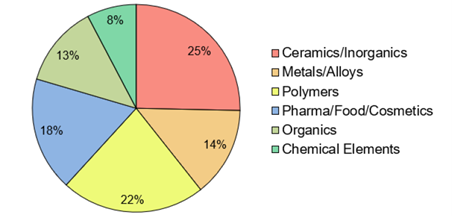
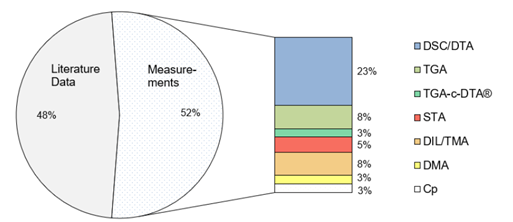
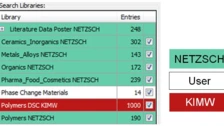
While AutoEvaluation focuses on signals, Identifyfocuses on materials. By comparing experimental curves to reference data, Identify delivers classification results in seconds. The built-in database now contains 2,600 entries, covering polymers, organics, pharmaceuticals, metals, alloys, ceramics, and inorganics.
Identify is generally used for automatic curve and material recognition and thus for interpretation, quality control and as an archive for measurements and measurement conditions.
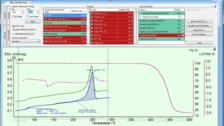
The workflow is straightforward: a curve is loaded and Identify instantly produces a hit list with similarity rankings. Any candidate can be superimposed onto the experimental curve for visual confirmation. Even unevaluated data can be compared, which considerably accelerates screening workflows. For quality control, Identify confirms whether an incoming material matches the expected batch. In research, it helps scientists recognize unknown materials or contaminants more quickly.
The NETZSCH database, which is included as standard in Identify has been expanded to a total of 1350 entries. This database scope is available from Proteus® 9.7 onwards.

SmartMode and ExpertMode – Usability for Everyone
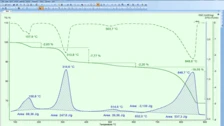
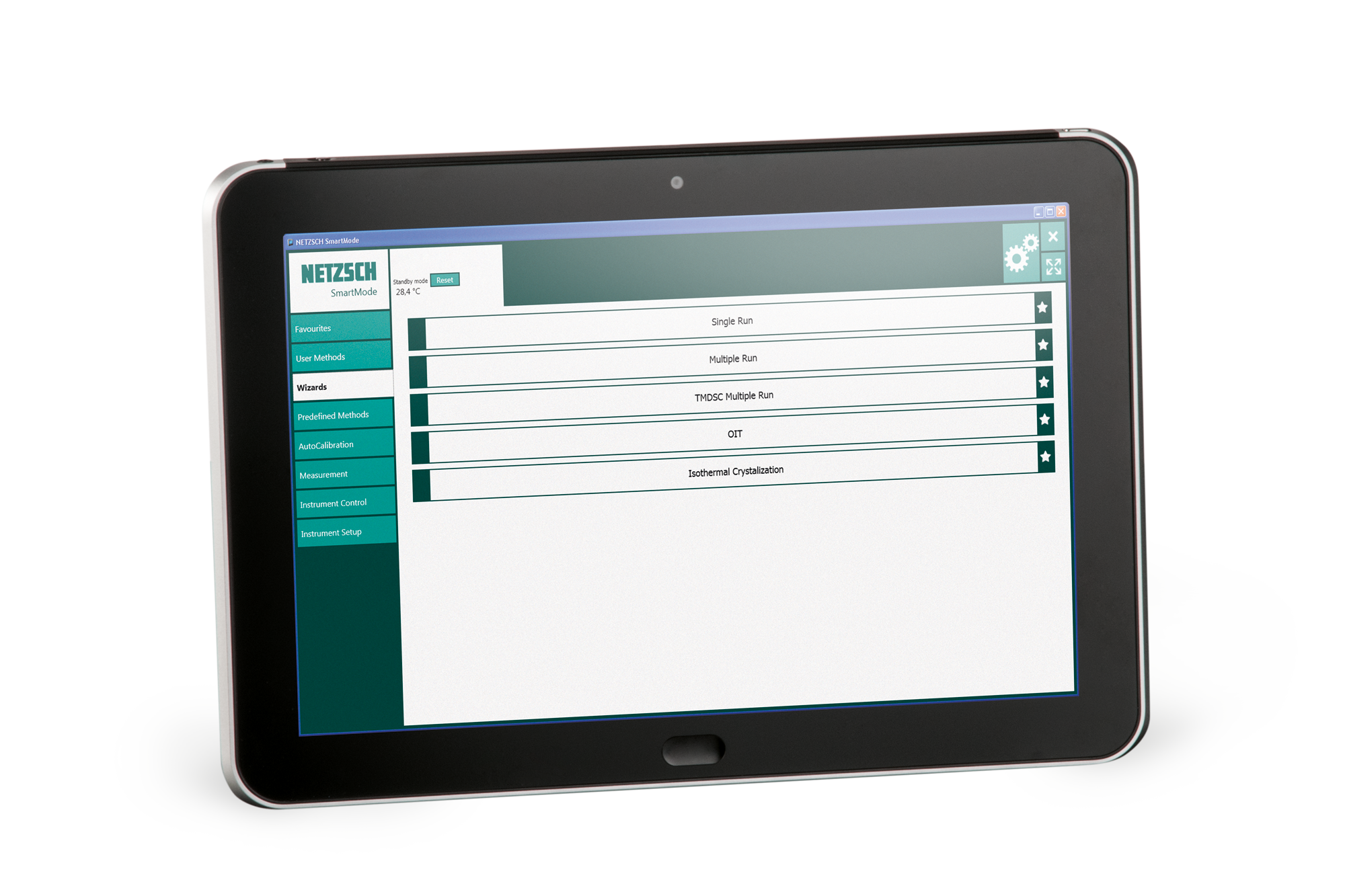
In Proteus®’ SmartMode, users are guided by wizards and pre-defined methods, enabling quick starts and reducing training time. ExpertMode provides full toolbar access for experienced users who wish to fine-tune evaluations or test alternative approaches.
Having both modes available means that laboratories can cater to diverse user needs without losing flexibility.
Upgrade Process Made Simple
Upgrading to Proteus® 9.7 is straightforward. Customers should first contact their local NETZSCH sales or service representative. A compatibility check is then performed to confirm which electronics and coupling devices are supported. If a lab uses multiple instruments, analysis-only product keys can be provided so that all data can be processed in Proteus® 9, even if only one system is upgraded. Based on this assessment, a tailored offer is created, with optional installation assistance by NETZSCH service. The installation can then be carried out either by the customer or NETZSCH service engineers.

Compatibility Across the NETZSCH Portfolio
Proteus® 9 is designed to be the single software generation for all NETZSCH thermal analysis instruments. The July 2025 release of version 9.7 provides even greater support.
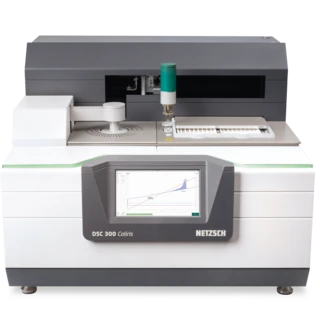
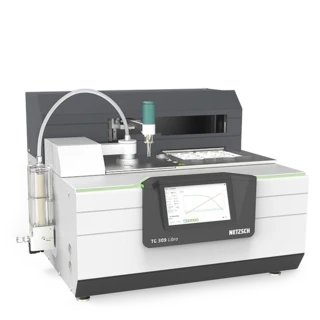
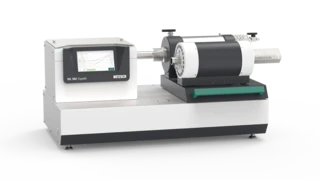
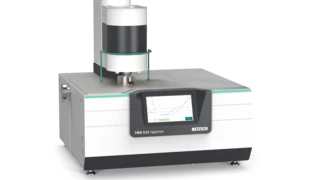
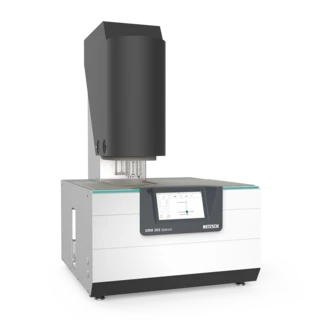
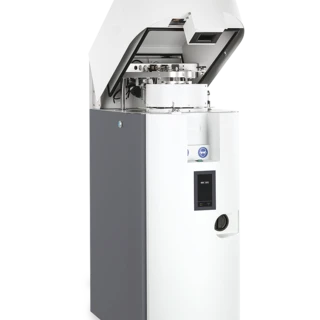
- Current instruments series:DIL 502 Expedis® (Supreme, Select, Classic) and TMA 512 Hyperion® (Supreme, Select), Accelerating Rate Calorimetry (ARC)The method describing isothermal and adiabatic test procedures used to detect thermally exothermic decomposition reactions.ARC® 244 (new), ARC® 305, DMA 303 Eplexor®, DSC 300 Caliris® (Supreme, Select, Classic), DSC 500 Pegasus®, HFM 706 Lambda, LFA 717 HyperFlash®, MMC 274, STA 509 Jupiter® (Supreme, Select, Classic), TG 309 Libra® (Supreme, Select, Classic).
- Previous and older generation instruments: DSC 200 F3 Maia, DSC 204 F1 Phoenix®, DSC 214 Polyma, DSC 404 Pegasus® (F1 /F3 ), DSC 3500 Sirius, TG 209 F1 Iris/Libra®, TG 209 F3 Tarsus®, Accelerating Rate Calorimetry (ARC)The method describing isothermal and adiabatic test procedures used to detect thermally exothermic decomposition reactions.ARC® 244, Accelerating Rate Calorimetry (ARC)The method describing isothermal and adiabatic test procedures used to detect thermally exothermic decomposition reactions.ARC® 254, HFM 436, HFM 446 Lambda, LFA 467 HyperFlash®, STA 449 Jupiter® (F1 /F3 /F5 ).
This broad coverage means that nearly every NETZSCH customer can benefit from the new software generation, regardless of their instrument’s age.
Benefits for Laboratories
The impact of these features is clear. Data consistency is improved because evaluations no longer depend on individual user interpretation. Efficiency increases as repetitive manual tasks are replaced by automation. Reliability is ensured because evaluations comply with ISO and ASTM standards. And most importantly, insight is accelerated: whether it is identifying an unknown polymer blend or validating the cure degree of a resin, Proteus® 9 turns measurement data into actionable knowledge faster than ever before.
Conclusion
With AutoEvaluation and Identify, Proteus® 9 transforms thermal analysis into an even smarter, more reproducible process. Laboratories save time and gain deeper insights into their materials characteristics. By combining intelligent algorithms with powerful databases, NETZSCH provides tools that not only make life easier for experienced scientists but also empower newcomers to deliver high-quality results.
Contact your local NETZSCH representative to learn more about enabling AutoEvaluation and Identify in Proteus® 9.

Local Contact
More about our instruments and software options